The Cubs Picked Up Are All Villains - Reviews

The Cubs Picked Up Are All Villains
+Add to Custom List
Sort
Add review
... Read More
I literally squealed at the beginning of this chapter. The little dragon cub climbing up Ruan Shiqing's pant leg shouting "I have a loud voice! I'll cheer for Luther!" and then Nota immediately one-upping him and the mermaid just slapping water because it can't even speak — I was not okay. Pure dopamine. And then the author doesn't even let me recover. One scene break and suddenly we're in Rong Heng's territory, alone, receiving life-shattering news. The transition is almost brutal in how quick it is. That's the thing about this author's pacing — they know exactly when to pull the rug. The domestic sweetness isn't wasted; it makes the political blow hurt more because we just spent twenty minutes falling in love with these cubs snuggling into bed. The chapter closes on Marlin's video call and I have so many questions. But honestly, I think the real structural genius here is the ending beat with Rong Heng lying down among the cubs after wiping his surveillance records. One moment he's a shadow operator erasing his digital footprint, the next he's just a guy breathing in the smell of a clean bedroom. The rhythm between tension and tenderness is what keeps me turning pages at 2 AM.
... Read More
I need everyone to talk about Rong Heng because I am NOT okay with the way this chapter handles him. He's hiding in the shadows the ENTIRE time while Ruan Shiqing is being threatened, and his internal monologue is just… oh my god. "Would Ruan Shiqing still remember me?" WHAT. A CROWN PRINCE. Standing there, holding back, running through every possible scenario of how to intervene without crossing some invisible line. "If he knocked down Marlin and proposed a partnership, would Ruan Shiqing agree?" Friend, you're literally a crown prince and you're over here worrying about whether the guy you have feelings for will REMEMBER YOU after you save him? But then when Ruan Shiqing wins the whole thing on his own—elegant, composed, completely in control—and Rong Heng is just watching from the dark with "a mix of admiration and astonishment." THE TENSION. I am vibrating. Meanwhile the Ruan Shiqing and Marlin dynamic is its own genre of awful. Marlin tries the whole flattery routine—"Your work on Gaia and your self-made energy gun are awe-inspiring"—but it rings so hollow because underneath it's just a transactional power grab. And Ruan Shiqing sees right through it. His response about coming to find a partner, not a superior, is one of the most quiet power moves I've read in a while. He doesn't raise his voice. He doesn't threaten. He just states a fact and watches Marlin realize he's been completely outplayed.
... Read More
This chapter starts with an alert that reads like emergency services dispatch — clinical, detached — and within three paragraphs we've gone from machine voice to a human heart skipping a beat. That transition is so smooth it's almost invisible, but it's doing heavy lifting. The discovery of the little fox happens at the perfect speed: not rushed, not dawdling. There's a deliberate cadence to Ruan Shiqing picking her up, noticing the tube, the pause where he just holds the nutritional supplement she kept all this time... that's the kind of beat that makes you put the book down for a second. And then the chapter accelerates — medical consultation, trip to the store, negotiation, purchase, return home — all moving fast enough to feel urgent but slow enough to breathe. The ending with the dragon cub climbing onto 09's head is pure pacing alchemy. After all that tension, a kid asking about getting a sister is the gentlest release imaginable. The author trusts you to hold both feelings at once. Also hot take: Gu Feng's promotion subplot is genius side-quipping. Twelve paragraphs of small talk that simultaneously advance character AND explain how the medical pod exists in this economy without a single info-dump. I love an author who can do three things at once.
... Read More
There's this pervasive theme of broken things finding new purpose that runs through this entire batch. 09 literally goes from scrap metal to a functioning assistant. His old body is buried with ceremony beneath the Fallen Star vines—seasons changing, decay feeding new growth. It's a cycle, isn't it? Death leading to life, endings becoming beginnings. The Fallen Star fruits themselves feel symbolic. Golden, falling into soil, like stars returning to the galaxy. There's something mythic about that image—celestial bodies dying to fertilize the earth below. It mirrors 09's own burial of his old chassis. Something sacred happening in ordinary moments. Luther's hovercar is another broken thing waiting for transformation. Old, paint peeling, cables exposed—but with a replacement generator, it could fly. The question is whether he'll use it wisely or recklessly. His casual dismissal of accident risk—"Accidents happen every year"—speaks to a certain fatalism, a willingness to gamble with his life. And Ruan Shiqing? He's the catalyst, the one who fixes and nurtures. The mermaid, the pup, the robot—all depend on him in different ways. He's surrounded by vulnerable beings he's taking care of, which makes me wonder about his own backstory. What was broken in him that led to this life as a quiet shopkeeper on the edge of an underground racing scene? The imagery of stars, soil, and rebirth creates this thematic tapestry that feels intentional rather than accidental.
... Read More
So after all that chaos with the swamp and the dragon attack, we finally get to the aftermath—and honestly, this is where the chapter really surprised me. The house is wrecked, the Falling Star Vines are in the pond like some tragic metaphor, and Ruan Shiqing is just standing there trying to figure out what comes next. But what's interesting is how the plot quietly pivots from survival mode to something more intimate—the cubs wanting to save their things, 09 digging up his old shell like it's a buried memory, Heli breaking a chair and immediately feeling guilty. It's not dramatic or explosive, but there's this undercurrent of "this is home, and it's broken, and we're going to fix it together" that hits harder than any action scene would. I also noticed the way the narrative dangles that last line—"What to do about Heli?" and then cuts off mid-thought about adult dragons being able to control their size. That's a proper cliffhanger, especially since we've been following Heli's growth arc this whole time. The author knows exactly how to keep you hooked without resorting to cheap tricks.
... Read More
Okay I need to talk about this little moment between Ruan Shiqing and the dog/Rong Heng because it genuinely got to me. On the surface it looks like pure comedy—this proud, dignified crown prince being treated like a pet, being carried in a coat pocket, having his status questioned over a single star coin. But then you hit THIS part: "If it got lost, the boy would surely cry." He moved his paw aside. "His temporary owner was even poorer than he'd imagined." Rong Heng pulled the coin BACK INTO the pocket. The COWN PRINCE of who knows what kingdom—a being who has apparently never seen such a worthless denomination—decided, on his own, to protect something worth 100 star coins because his temporary companion would be upset if it disappeared. And he does it completely silently. No one sees this. Ruan Shiqing just thinks the dog was "curious" about the coin. The dramatic irony here is so sharp it cuts. Every time Rong Heng says "…" I lose it. It's his entire personality right now. The crown prince reduced to ellipses. And yet—this is the creature who trails behind Ruan Shiqing into the underground market, hidden in his coat, watching over him while he navigates a world where he doesn't speak the language and could be killed by anyone. That final image of him tucked inside that coat as Ruan Shiqing walks cheerfully toward danger, completely unaware of the two brothers stalking them… I'm not crying, you're crying. The bond between them isn't declared or discussed. It's shown in actions—protecting a worthless coin, following a boy into a dangerous market, enduring humiliation without complaint. That's so much more powerful than any sentimental dialogue could be.
... Read More
Okay so let me just say this: the scene where Xiong Yuanyuan loses Snowball is probably one of the most comedic moments in the entire book, and I'm not even mad about it. The way he's sitting there sweating bullets, feeling like he's guarding some kind of ancestor, and then he turns around and the pup is GONE—only to reappear on Ruan Shiqing's seat like nothing happened?chef's kiss. But here's what actually got me: when Rong Heng sneaks off to the storage area and finds the crystal cage with the Nine-Tailed Fox cub inside. He uses his Ymir aura to intimidate her, she flinches but then DARES to bare her fangs at him, and his reaction? "As blind as ever, that Nine-Tailed Fox clan." Wait—what does that mean? Is there history here? Did the fox clan wrong him somehow? And why does he already know she's a Nine-Tailed Fox? These questions are eating me alive. Also, the auction structure itself is interesting—the first half has the big items, but everyone knows the second half usually disappoints. Yet today feels different, and the fact that the Silver Falcon engine/drive gets announced as the FINAL item of the second auction? That's a classic power move by the author to keep us hooked. The plot is clearly building toward something bigger, and I have a feeling Ruan Shiqing's crashed spacecraft is way more important than he realizes—especially since the appraiser's reaction literally changed when he saw the falcon emblem. The pacing here is solid, moving from comedic relief to mystery to tension without missing a beat.
... Read More
Okay so I need to talk about this scene where Rong Heng pulls up the Sikkim Daily and casually drops the bomb that ALL FOUR conglomerate heads are attending the coronation. Like, this is the kind of moment where you pause the book and just let it sink in. The four powerhouses of the Empire — Naxi Group, Quark Dockyards, Planck Energy, Schwarz Transport — and they NEVER show up in person. EVER. And now they're all at the same event? That's not a coincidence, that's a conspiracy with benefits. What I love about how the plot is structured here is that Rong Heng doesn't react with panic. He just... calculates. 'There's no point in showing up now.' Boom. He reads three days of news while everyone else was presumably just vibing on a spaceship. This is the difference between him and Dares — one is playing 4D chess while the other is still learning the rules of checkers. And then the Death Troopers reveal at the end? Classic author misdirection — we get comfortable with the corporate conspiracy angle and THEN hit us with literal humanoid weapons of war. My jaw dropped. The plot is weaving multiple threads (corporate deals, regicide, forbidden experiments, a secret council) and they're all converging on that one ceremony. Three days until detonation.
... Read More
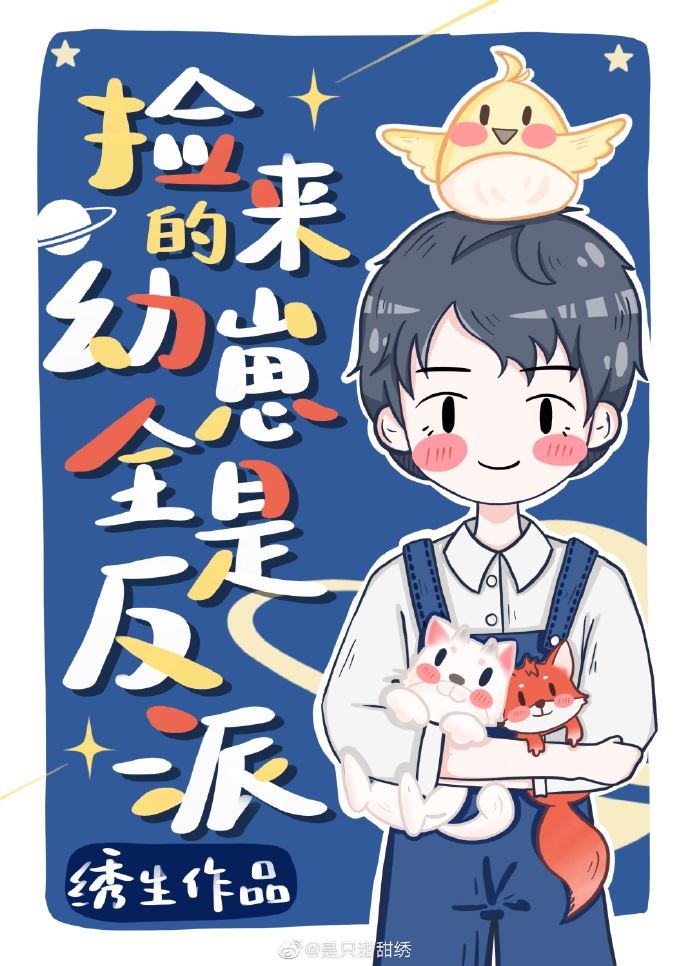
This entire arc about Heli eating those gemstones and transforming is such a rich symbolic layer about growing up, about unintended consequences, and about the pain of outgrowing the spaces that once held you. The gemstones represent power and transformation, but they are also a trap. Heli did not mean to destroy anything—he just wanted to grow, to become majestic and powerful like he dreamed as a cub. But growth came at a cost, and that cost was his home, his family's stability, his sense of safety. The line that broke me was 'Growing up was too painful for a dragon.' It is simple but it carries so much weight about the universal experience of maturation. The empty gemstone box in the rubble is such a perfect symbol. It represents absence, loss, the thing that caused everything but is now gone. Ruan Shiqing staring at that empty box and finally understanding what happened—it is the moment knowledge replaces ignorance, but knowledge brings its own kind of pain. The Lost Marsh works symbolically too. It is a place of decay and toxicity, where things break down and release poison. Heli is trapped there, literally sinking into the mud, unable to control his massive new body. The swamp mirrors his internal state—overwhelmed, guilty, lost, unable to find solid ground anywhere. And then there is the contrast between the little dragons huddled together at Fragrance Tower Manor, still small and innocent, versus Heli out there struggling through miles of toxic marshland. They still dream of growing up; he has learned that growing up means losing everything you love. That irony is devastating. The author never explains these themes directly—they emerge through action and image, and that is what makes them resonate so deeply.
... Read More
I need to talk about the Gu Feng friendship thread because it deserves its own section and possibly therapy. Here's the thing — Gu Feng isn't just a side character handing Ruan Shiqing money. He's someone who was AT rock bottom, someone who attended that support meeting last year when he was struggling, and someone who is fiercely loyal without being sycophantic. When Ruan Shiqing transfers 350,000 star coins and casually says 'I just finalized a deal,' the reader sees the full picture but Gu Feng just sees his creditor finally paying up. The asymmetry of information here is so tastefully handled. But then Ruan Shiqing does something unexpected. He doesn't just accept the repayment — he expands Gu Feng's worldview. 'Maybe one day, you'll leave Planet B3024 and find even better opportunities.' This is the kind of thing people who genuinely care about you say. Not 'good job, now go away,' but 'I see you, and I want MORE for you than this planet can give.' Gu Feng never considered leaving. Ruan Shiqing just handed him permission to imagine a different life. That's not just friendship — that's the kind of bond that shapes who someone becomes. And the supporting meeting invitation coming to BOTH of them? The author is setting up a convergence that I am NOT ready for. Shen Wuzhuo mentioning 'Luther attended before — that's where I met him' — this is worldbuilding disguised as casual conversation, and it's making me feel things I didn't expect to feel from a scene about a community gathering.
... Read More
Let me just start by saying: the passive aggression in this text is UNMATCHED. "Some were awestruck, others curious, while a few couldn't help but wonder how much such rare cubs might be worth. However, any ill intentions were quickly quashed by fear." — This ONE PARAGRAPH contains more tension than half the action scenes in typical web novels. People are literally calculating the monetary value of children in their heads, and the only thing stopping them is the memory of three evolvers who learned what happens when you cross Ruan Shiqing. The GRUESOME FATE. Not described, not shown, just LEFT as this hanging threat that makes the whole crowd behave. And then we get to the real conflict: the race. Larkin says it outright — "Do you even know your odds? They're 20.8 to 1." He's not just confident, he's using NUMBERS as a weapon. He's reducing Luther's entire existence to a statistical probability and presenting it as objective truth. "Real strength is measured in cold, hard cash. There's no such thing as a dark horse on this track." But here's what makes the stakes TERRIFYING: this isn't just about winning or losing. For countless spectators, this race means the difference between "striking it rich or losing everything." The betting angle transforms a sporting event into a MASS-scale gamble where ordinary people's livelihoods are tied to Larkin's victory. That's not background flavor — that's a ticking time bomb the author is planting. The cubs experiencing this conflict is what really gets me though. They're so YOUNG and so PURE in their loyalty — they didn't come here for money or drama, they came to cheer for Luther. And when the entire crowd turns against him just for being ancient human, those little voices ringing out with their megaphones? That's the moment the conflict becomes PERSONAL. It's no longer just about a race. It's about whether kindness and belief can survive in a world that measures everything by odds and currency. "Luther is number one!" the crowd mocks, but the cubs mean it. And I believe them too.
... Read More
The conflict here operates on multiple levels, and the stakes keep rising. At the micro level, Ruan Shiqing installs a defense system and trackers to protect the cubs from further abduction. The stakes are their safety, their freedom, their very lives. We saw what happened to the dragon cub; the threat is real. At the macro level, Nota's plight introduces a new, immediate danger. She's not just hungry; she's being hunted. The figures tracking her for three days represent a predatory world where the weak are prey. When they ambush her outside the barrier, the tension is palpable. They hesitated near the repair shop because of Endor and Carl's fate—a reminder that Ruan Shiqing is dangerous to those who threaten his circle. But Nota, unaware and alone, is an easy target. The author masterfully switches perspective to show the captors' caution, then drops us into Nota's vulnerability. The stakes are life or death, but also dignity and hope. Nota's attempt to apologize, her carefully cleaned appearance, her refusal to eat the ‘gift' supplements—all of it underscores what she stands to lose: the last shred of her self-respect, the dream of belonging. When she's captured, the abandoned tube labeled "This is a gift" becomes a tragic symbol of everything she offered and lost. The narrative doesn't let up; it moves from protective precautions to helpless victimization in a few paragraphs, keeping the reader on edge. What happens next? How will Ruan Shiqing respond if he finds out? The suspense is gripping because we care deeply about both the protectors and the threatened.

Leave a comment

You must be logged in to leave comments. or
