The Cubs Picked Up Are All Villains - Reviews

The Cubs Picked Up Are All Villains
+Add to Custom List
Sort
Add review
... Read More
The scene where the three cubs sprawl across Rong Heng's bed and he just... accepts it. Has to accept it. He's trapped between synthetic scales and tiny horns and a head on his paw, and his entire internal resistance collapses into "Forget it." That's the moment I knew this story was going to wreck me. Not because of anything dramatic. But because of how quietly everything changes. He came back with disdain in his expression. By dinner time, "even they seemed less annoying than before." By night, he's sleep-deprived and exhausted and apparently had a dream about spring meadows and vibrant life. And then Dares shows up. The kids defending him like he's theirs—"Snowball is ours!"—that line destroyed me. Because they don't know the truth yet. They think Snowball is their dad, their family member. And honestly? He IS theirs, even if he has to go back. Ruan Shiqing's explanation is so gentle: "If he's still on B3024 in the future, we can always invite him over as a guest." The word guest hangs in the air like a knife. Guests leave. Family stays. Rong Heng just realized which category he falls into.
... Read More
There's a line in these chapters that stuck in my craw and wouldn't let go: 'After all, this wasn't a fair competition; it was a blood-soaked gamble tainted by greed and chaos.' That's not just worldbuilding—that's the thesis statement. The entire racing circuit operates on a principle where sabotage is expected, where the strongest cunning wins, and where the rules are whatever you can get away with. But then the story gives us Ruan Shiqing's response to that reality, and it's brilliant. When Luther tells him about the rotary blade sabotage, Ruan Shiqing doesn't install smooth protective plating. He installs TWO JAGGED SPIKE-COVERED plates. The symbolism is almost too on-the-nose but it WORKS: in a world that fights dirty, the response isn't to play fair—it's to fight dirtier. The spikes transform Gaia from a victim of violence into an instrument of it. The engine becomes a weapon not just for speed but for retaliation. And when Luther uses that weapon—swerving hard, letting inertia swing those spiked plates into Larkin's car, sending it flying through scrap metal—the story is completing a thematic circuit. Betrayal met with escalation. A blood-soaked gamble answered with a blood-soaked move. But here's what makes it more than just 'reprisal porn': Ruan Shiqing is the one who chooses this path. He's the calm, clean-handed person who gets grease on his face and makes the call to arm the enemy's weapon. The spikes are his idea. The overdrive is his call. The entire revenge sequence is orchestrated by someone who could have walked away but chose to get involved. There's a moral complexity here that the author isn't shy about—the story doesn't pretend this is noble or fair. It knows what it is. And that honesty about the nature of competition, about how systems of greed corrupt everything they touch, is what gives these chapters their weight. The spikes aren't just metal—they're a statement.
... Read More
The dialogue in this section is genuinely good because everyone sounds different. The dragon cub is ALL confidence and entitlement: 'Even though you hatched earlier than me, our family goes by the rule of first come, first served. So, you have to call me big brother!' Complete nonsense logic delivered with absolute conviction. He believes his own myth. And it's adorable. Nota's voice is quieter, more hesitant: 'I'm sorry.' Three words carrying guilt, confusion, and relief all at once. When she whispers it, you know exactly what she's apologizing for—even though she has no idea what she actually did. Rong Heng barely speaks. He bites the dragon cub's scruff, drags him out, shuts the door. His dialogue is minimal but his actions communicate everything. 'What are you doing?' the cub asks, and Rong Heng doesn't even respond. He just leaves. The narrative voice itself has this dry, slightly wry tone that fits perfectly. It doesn't over-explain emotions—it lets actions and small details carry weight. The mermaid producing the star silently, Nota's realization about holding two stars instead of gazing at untouchable ones. The writing trusts the reader to feel without being told how to feel.
... Read More
Can we talk about Rong Heng for a second because THIS MAN. He's this fierce warrior type who can bench press hovercars probably, but he also gets like 47 different internal monologues about personal space and physical affection. The whole "Biting the end of his pen, he paused" energy? Chef's kiss. But then when he's actually touching the mermaid and his ears get warm? "Not exactly. Rong Heng leaned back, lifting a paw to push Ruan Shiqing's face away. He coldly flicked his ears, which had grown uncomfortably warm. Fine, one nuzzle is tolerable, but this is just too much." I'm dying. He's clearly fond of him but also deeply committed to maintaining boundaries and I respect it. And the mermaid! The little guy leaning on his barrel watching Ruan Shiqing leave, stretching his neck to follow him with his eyes? That broke me a little. There's something so vulnerable about creatures who can't fully express what they're feeling but do it anyway through gestures. "I'll bring you a gift when I get back"—Ruan Shiqing really just casually sweet-talking his aquatic companion like it's no big deal while I'm over here having full emotional episodes. The bond between these characters feels earned. It's not instant friendship; it's built through shared projects, quiet moments, and the kind of consideration that shows up in small actions rather than grand declarations.
... Read More
'Only we can define who we are.' This line from Ruan Shiqing hit me so hard I had to stop reading for a second. The whole passage about ancient humans being called a 'discarded species' and Beastkin who can't achieve perfect human forms being labeled 'defective'—it's not just worldbuilding, it's a mirror held up to real-world prejudice and it's devastating how effective it is. But the brilliance is that Ruan Shiqing doesn't just preach about equality from some moral high ground. HE IS the living proof. He's an ancient human—supposedly inferior, supposedly discarded—and yet he's the one showing compassion to creatures that the Empire's hierarchy would consider beneath him. When he tells the Xiong brothers their bear ears are 'adorable,' he's doing something radical: he's actively rejecting the beauty standards and hierarchy that the Empire has instilled in them. And then the merfolk child appears—literally carved from a discarded spacecraft hull, hidden like trash, with his tail 'stripped of its scales and gruesomely mutilated.' How many layers of symbolism is that? He's treated as disposable. His own race may have abandoned him. And yet his 'features were delicate yet handsome'—the Empire's definition of beauty is still there, buried under the violence done to him. The quote 'Every race that endured had its own unique strengths' echoes Rong Heng's mother Queen Farrah's lifelong fight for racial equality. It's a generational theme. The Empire has been rotting because it refuses to see the worth in those it calls 'inferior,' and Ruan Shiqing—this boy who should be at the bottom of the hierarchy—is the one embodying the antidote. I keep thinking about that image of him: 'like a young sapling, deeply rooted, basking in sunlight and rain, destined to grow into a towering tree.' The Empire is already a rotten tree. He's the new growth.
... Read More
This chapter is a masterclass in controlled pacing and I need to break down why it works so well. It opens at the service center — bureaucratic, tense, almost claustrophobic. The clerk scene is sharp and quick, no wasted words. You feel the friction immediately. Then they leave and Xiong Yuanyuan makes that frog joke and the tension breaks. Good. Necessary breath. Then comes the transition to the Inner City. The text slows down deliberately here, letting us absorb the contrast: neat streets versus garbage-filled chaos, orderly buildings versus overcrowded collapse, airships and hovercars versus whatever the Outer City has. This isn't filler — it's worldbuilding through sensory detail, and it makes the economic inequality VISUAL before we even get to the mall. Inside the mall, the pacing does something really interesting. It starts slow and observational as Ruan Shiqing takes in the crowd, then picks up speed once Gu Feng enters the scene. The three snickering Beastkin sales reps — their dialogue is quick, biting, almost comedic in its cruelty. Then Gu Feng freezes. The moment stretches. And then the purchase happens. Eighty-eight thousand star coins dropped like it's nothing. The relief on Gu Feng's face. The sarcastic mic drop at the end. What I love is how the author uses Ruan Shiqing's internal thoughts as punctuation marks. After the mall scene, we get his reflection on racial discrimination — brief, sharp, almost dismissive in tone. He doesn't wallow. He files it away. That restraint is what makes the emotional beats land harder when they do hit. The chapter ends on a note of quiet amusement rather than drama, which is a bold choice. It says: we've won this round, but the war is bigger than this. And somehow that's more satisfying than any cliffhanger could be.
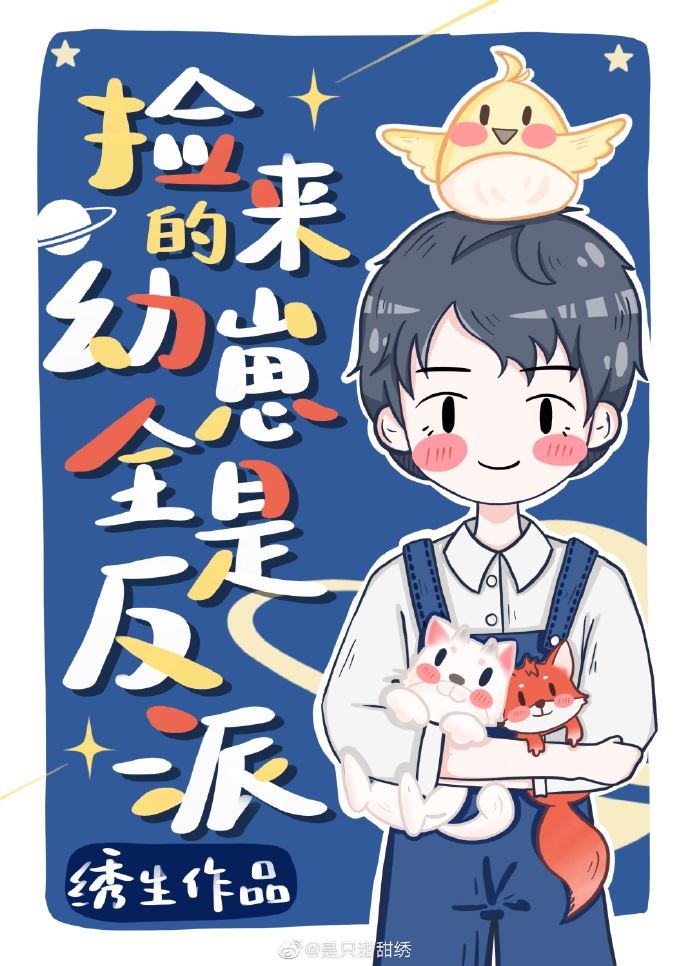
... Read More
Okay, first of all, the line "Are you going to hit us again?" delivered by a grown man while he's sitting on the ground clutching his head and sniffing is one of the funniest things I have ever read in a novel. That is not a joke. That is literature. But beyond the comedy, the dialogue in this chapter does a lot of heavy lifting for character voice. Xiong Yuanyuan is clearly the talker—he goes from crying to info-dumping about the local criminal hierarchy in about two breaths. And somehow it doesn't feel forced because he's literally filling the silence, still hyped up from the confrontation. His brother Xiong Fangfang is the quiet one, barely speaking until he's ready to declare war on Cardrew, and that contrast between them feels authentic. Ruan Shiqing's dialogue is sparse but telling. He says almost nothing but every line carries weight. "Here. Eat up, and then find some honest work. Don't go around robbing people anymore." That's it. That's the whole speech. No moralizing, no lectures, just practical advice from someone who's already moved on to the next problem. The narration itself has this dry, slightly bemused tone that matches Ruan Shiqing's internal voice perfectly. Things like "Ruan Shiqing: …" and "Even he was startled" give you this sense of a narrator who's right there alongside the protagonist, reacting to the absurdity. And the author's use of internet-speak moments—"Our little Ruan Ruan isn't as silly as he looks! Or maybe he's just weak towards cute cubs lol~"—breaks the fourth wall in a way that feels playful rather than jarring. It's a specific voice and I immediately recognized it.
... Read More
Okay so I need to talk about Rong Heng because this chapter is absolutely giving main character energy and I am HERE for it. The moment he just... vaults over the school wall after sending a text? Like bro you are literally a crown prince and you just escaped a school. That is not the behavior of someone who follows rules. And then he flies ALL THE WAY to Luso Star by himself because "someone will pick him up"—wait, who IS the someone? Because Mo Li sent them under the pretense of Rong Heng's request? That plot thread about Ruan Shiqing being subtly surveilled is sitting in the back of my brain like a smoldering ember. But the real character gold? The way he interacts with the cubs. He pretends to be annoyed at their affection but honestly? He let them cling to him. When the little dragon cub pounced on him and nearly crushed him, his expression darkened but he still pried them off gently. And then—when they couldn't read the word "ten days" on the screen—he internally goes on this little rant about not studying making you trash. Classic tsundere grandpa energy. But here's the thing: he actually stayed to answer their questions. He didn't just ghost them. And the goodbye scene? Ruan Shiqing ruffling Snowball's head, the cub rubbing against his palm like a cat. That quiet moment where everyone understands something big is happening but nobody says it out loud. These cubs already have this deeply embedded bond with him, don't they? They don't just accept him as a guardian—they NEED him. That little mermaid figuring out the number ten with his fingers while the other two are completely lost? Perfect characterization in one beat. Rong Heng is playing this whole father-figure role and I can tell he's NOT as cold as he pretends to be. The fact that he risked a dangerous solo mission for the dragon cub proves it.
... Read More
Okay so this batch is a rollercoaster and I need to talk about it. The way the plot unfolds here is honestly impressive. We start with this quiet moment—Ruan Shiqing giving the Xiong brothers this really powerful speech about racial equality and self-definition, right? It's deeply personal, it ties into his own identity as an ancient human who people call 'defective.' And then within the same chapter structure, BAM—Xiong Yuanyuan shows up with a merfolk cub he 'found' in a spacecraft hull. The tonal whiplash is wild but it works. What I love about the plot construction is how Ruan Shiqing doesn't even plan on taking in another 'cub' but sees the merfolk child and immediately can't walk away. That's character-consistent plotting. His compassion isn't performative—it's just who he is. The Xiong brothers brought him this child thinking they were doing something nice ('You like that nine-tailed fox cub, right? Raising a merfolk cub is just as good!') and Ruan Shiqing's internal reaction of just… silence… is everything. Then there's the subplot tension about WHERE this merfolk child came from. Was he stolen? Abandoned by his own people? The fact that a merfolk cub ended up gravely injured on a garbage planet is a mystery that's going to explode later. Xiong Fangfang literally says this might get them in serious trouble if they go to the hospital. The plot is layering stakes on top of stakes and I am HERE for it. The structure also does this cool thing where Rong Heng—the nine-tailed fox cub—is physically present the whole time, being treated by a doctor, while simultaneously Ruan Shiqing is making this new discovery. Two wounded children, two healing arcs running parallel. My theory is these two characters are going to have some kind of bond that becomes really important later.
... Read More
After everything that just happened—the swamp, the dangerous dragon, the near-death experience—you'd think the stakes would feel lower now that they're safe. But honestly? The tension didn't disappear, it just changed shape. On the surface, the conflict is domestic: the house is destroyed, belongings are scattered, and they have to figure out how to rebuild. But underneath that, there are real questions being asked. What happens to Heli now that he's grown into this massive form? The chapter ends mid-sentence about adult dragons controlling their size, which suggests this isn't just a passing concern—it's going to be a central tension going forward. Then there's Rong Heng's unspoken grievance. He saved them all, in his tiny form, and was completely ignored. That's not just a funny beat—it's a relationship fault line. How long can he hold onto that resentment? What does he need from Ruan Shiqing that he's not getting? And the most haunting conflict might be the quietest one: 09 clutching his old, dirt-covered robot shell to his chest. He survived by leaving that body behind, by becoming something new. But holding it now—there's grief in that. Loss of who he was, even if he had to shed it to survive. The stakes here aren't about life and death anymore; they're about identity, belonging, and whether home can be rebuilt after it's been shattered. The author understands that the most powerful conflicts aren't always the ones with explosions. Sometimes they're the ones that happen in the silence after everything falls apart.
... Read More
The dialogue in this chapter is deceptively simple but each character has such a distinct voice it's almost comedic. Ruan Shiqing speaks in short, practical commands. "Come up. Now." "Can you climb up yourself?" "Then we'll have to wait here for rescue." He doesn't do monologues. When he finally says something emotional—"No matter what you become, you're still my Heli. Daddy will never abandon you."—it lands HARD because it's so uncharacteristically vulnerable from a man who otherwise communicates in instructions. Heli's dialogue is minimal and childlike. "I… I can still go home?" "Daddy was really tired… so he fell asleep." The ellipses matter. He's always half-speaking, holding back, afraid his words will make things worse. Even his one exclamation in the author's note—"AAAAAAAAAAH HELI MY BABY!!!!"—is pure feral reader emotion, which honestly matches Heli's energy throughout. Rong Heng is the best. His dialogue is sharp, slightly sarcastic, but every line reveals something tender underneath. "I'll deal with this one." (Translation: I love you kid let me carry you.) "Take your people and go." (Translation: I need a private moment with this awkward teenager.) The mock-stern tone before transforming? That's Rong Heng being Rong Heng—never saying what he means directly, wrapping care in attitude.
... Read More
Can we talk about how Rong Heng speaks versus everyone else? His dialogue is so sparse but every word carries weight. "I'm the person taking your ship." Not "I am taking your ship" — no contraction, no casualness. He literally enunciates his authority with every syllable. And then the Andrew scene, Noah's voice being described as "calm and steady" while threatening someone with arrest? That contrast between soft delivery and hard content is just *perfect* writing. The pirates' dialogue though — oh my god. "If I catch him messing around in the cockpit again, I'll castrate him!" This is such a specific, stupid, human thing to say. It tells you everything about these characters in one line. Drunken, petty, violent, distracted. They're not evil masterminds — they're idiots with guns. Which is exactly why Rong Heng wipes them out so easily. And Hector's internal voice — "Hector: ???" — wait, is that the narration or his actual thought? Because if that's narration, the author is inserting internet-speak into a space opera about interstellar pirates and dragon blood and I am HERE FOR IT. Also love the detail of his tongue flicking against the roof of his mouth. That's not dialogue, that's body language-as-voice, and it distinguishes Hector from literally every other character. The author's narrative voice shifts between cold precision (Rong Heng's scenes) and something almost breathless (Hector's escape attempts). That tonal flexibility is what keeps the reading experience fresh across different perspectives.

Leave a comment

You must be logged in to leave comments. or
