The Cousin Has No Interest in Climbing High - Reviews

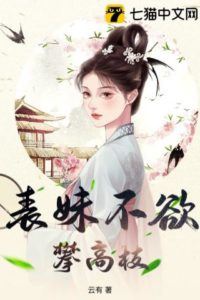
The Cousin Has No Interest in Climbing High
+Add to Custom List
Sort
Add review
... Read More
There's something deeply symbolic about the courtyard assignment that I can't stop thinking about. Jinlan Courtyard—the orchid courtyard—was the late wife's space. By placing Ming Shu there, Yan Wei is making a statement about absence and replacement, about who gets to occupy the emotional center of a household. But he never explains it. That silence IS the theme: women's positions are decided by men's unspoken decisions, and they're expected to navigate it gracefully. The jade is everywhere, and it's not accidental. Ming Shu receives a white jade hairpin carved with peonies from Yan Wei—a gift that marks her as his responsibility, his political arrangement. Then Gu Yingzhen gives her a white jade bracelet, and the difference is night and day. One jade binds; the other adorns. One jade is duty; the other is affection. And the carriage! Two carriages, one superior to the other. Ming Shu naturally heads for the inferior one, showing how thoroughly she's internalized her subordinate position. But Yan Wei corrects her—"The carriage behind is for your maids." She's not a maid. She's not quite a mistress either. She exists in this in-between space that the whole novel seems obsessed with. Even the Lotus Pavilion matters. Built over water, open on all sides—no walls, no barriers. It's the only space in this entire section where Ming Shu can just... be. No one is watching. No one is calculating. The lotus itself is a symbol of purity rising from mud, and Gu Yingzhen, who sees through Ming Shu's modest deflections immediately, is the only character who treats her as a person rather than a position.
... Read More
The crabapple blossom keeps appearing and I can't stop thinking about what it represents. In Tianlu, peonies are the queen of flowers—symbolizing grace and wealth, the acceptable choice, the prestigious choice. But Ming Shu explicitly said she only loves crabapple blossoms. So when Cui Zhen presses one into his poetry collection, he's not just being romantic. He's affirming her identity, her defiance of convention. The peony would have been the safe choice for a scholar to give a noble lady. The crabapple is personal. It says I see you, not your family name. And then there's the storybook itself—'The Fragrance of Pear Blossoms.' Three different flowers, three different meanings. The peony as societal expectation, the crabapple as personal truth, the pear blossom as... what? A fragrance that lingers but belongs to no one? The poems Cui Zhen wrote are described as 'captivating the soul,' thread by thread. Language itself becomes a vehicle for emotion that cannot be spoken directly. In a world where a young woman's safety depends on veils and chaperones, where the Emperor's decrees can uproot lives overnight, poetry and storybooks become the only honest communication available. The silence between what is said and what is meant is where the real story lives.
... Read More
Okay, I need to talk about this scene where Ming Shu finds the storybook and I literally screamed. The book is called 'The Fragrance of Pear Blossoms' and it's basically a fictionalized version of her own life with Yan Wei. A cousin living under another's roof, a general with illustrious military achievements, subtle hints leading to actual feelings—this isn't coincidence, this is someone watching her and turning it into entertainment. Tang Li's reaction alone tells you everything. She tries to snatch it away, guilty as sin, which means she probably knows who wrote it or at least suspects. And then Yan Wei sees the book fall, glances at the cover, and thinks NOTHING. He has no idea it's about him and his cousin. The dramatic irony here is absolutely delicious. Meanwhile, the imperial decree arrives right after, forcing them to travel to the capital together. The plot is stacking up like a house of cards in a windstorm—every scene pushes them closer together while simultaneously threatening to tear them apart. I'm obsessed.
... Read More
There's so much going on beneath the surface in these two chapters and I can't stop thinking about the symbolism. Let me start with the teacup scene. Guan Wan swirling her teacup while discussing whether women can stand on their own—it's not accidental. The teacup is delicate, ornamental, something displayed. That's exactly how society views these women at the banquet. But then Ming Shu mentions widows who establish their own households, and suddenly the symbolism shifts. The teacup cracks. The author keeps returning to this tension between appearance and reality, between what women are expected to be and what they could be. And then there's the nameless young lady. She has no name in this passage, no family identified. She's defined only by her beauty and her invitation from the princess. What does that mean? Is she a symbol of possibility—a woman who exists outside the normal structures? Or is she a plot device, a wildcard in the political game? Even the folding fan snapping shut feels symbolic. That sharp sound marks the moment the male gaze fixes on her, and then the Fifth Prince's arrival shatters that entire dynamic. The banquet itself is a microcosm of the empire—beautiful on the surface, riddled with power struggles underneath.
... Read More
This chapter is a masterclass in controlled pacing. Let me walk through why it works so well. It opens with an intimate, almost domestic conversation between Ming Shu and Guan Wan about women's independence—very slow, very grounded. Then the author drops in a visual shift: men in gold and jade approaching, a folding fan snapping shut. The rhythm quickens. We get dialogue between the male characters, building a sense of curiosity and intrusion. And then—the Fifth Prince arrives and the tempo changes again. Suddenly everyone is on edge. The structure here is brilliant because it mirrors what's happening narratively: the peaceful surface of the banquet is cracked open to reveal the political undercurrents beneath. The transition from the pavilion scene to the banquet hall feels natural but purposeful. There's no dragging, no filler. Even the brief exchange with Princess Yiyue at the end serves double duty—she's worried about them, yes, but she's also hinting that she expected something to happen. The pacing never lets you settle. You finish this chapter feeling like you've been on a rollercoaster that looked like a leisurely stroll. Which is exactly the experience the characters are having.
... Read More
Okay so I have to talk about the Jinlan Courtyard thing because it literally gave me chills. Ming Shu gets assigned to the main courtyard—the one that belonged to the late wife—and Yuan Rong's internal panic is EVERYTHING. Could the general's arrangement be a signal to the household that he intended to treat Miss Biao as the future mistress? This one detail does SO much work. It establishes Ming Shu's precarious position immediately: she's not just a guest, she's being positioned, and everyone around her is reading the signals. And then the carriage scene! "Move in closer." Three words that carry so much weight. Yan Wei isn't just telling her to shift her body—he's making a statement about proximity, about how she exists in his world. The fact that he notices when she nearly gets thrown out and frowns... that tiny crack in his ice-cold exterior is what gets me. The Gu family visit then becomes this beautiful counterpoint. Gu Yingzhen is like, "I saw a woman three times more beautiful than Sister Guan" and immediately latches onto Ming Shu. Their interaction in the Lotus Pavilion feels like the first genuine, uncalculated moment in the entire story. When Gu Yingzhen insists on giving her the white jade bracelet—"This is a major occasion for us women"—it's not political. It's just... human warmth. And I love that Tang Li has to navigate this by reading her mistress's subtle head shake. The plot is building this web of relationships where every gesture has layers. Yan Wei's silence about Jinlan Courtyard speaks louder than any explanation would.
... Read More
Let me just say—this section is a masterclass in controlled pacing. The author could have spent pages on the journey north, but instead we get one tight paragraph: "For the next several months, they traveled northward, crossing waterways and passing through gorges, arriving safely in Yun Jing." BOOM. Done. The travel is summarized, and we're immediately dropped into the rich social landscape of the capital. Then the structure does something really interesting. It bounces between three spaces: the Yan residence (private, tense, full of unspoken rules), the Gu residence (public, performative, but with genuine warmth breaking through), and the Lotus Pavilion (liminal space where Ming Shu and Gu Yingzhen connect without the weight of propriety). The chapter transitions are smooth too. Chapter 8 ends with Tang Li quietly closing the door after preparing Ming Shu for the visit, and Chapter 9 opens with "Early the next morning"—but the real transition is emotional. We move from preparation to performance. The makeup scene in Chapter 9 is almost comedic in its detail ("five parts of beauty appear as nine") before we hit the actual social encounter. What I love is how the author uses silence as pacing. Yan Wei barely speaks across these chapters. His silence creates gaps that the reader fills with anxiety. And then Gu Yingzhen's relentless chatter acts as pressure release. The rhythm between tension and relief is almost musical.
... Read More
Okay so this chapter is basically the calm before the storm and I love how the author sets it up. You've got these three women just enjoying a banquet, chatting about something seemingly unrelated—women's independence, marriage, all that—and then BAM, the Fifth Prince shows up and the whole atmosphere shifts. The plot is quietly building this web of political tension beneath what looks like a social gathering. I noticed how the author introduces this mysterious young lady who supposedly outshines Guan Wan, the number one beauty in Yunjing. Who is she? Why is she here? Princess Yiyue personally invited her. That detail alone sent me spiraling into theories. And then the Fifth Prince—someone who absolutely should NOT be at a princess's residence—just appears. The plot is threading these needles so carefully. Every character's reaction tells you something: Guan Wan's immediate urge to flee, Gu Yingzhen's polite deflection, Ming Shu's quiet observation. The narrative arc here is all about foreshadowing. The banquet hasn't even properly started and already the reader knows this is going to be anything but ordinary. The author doesn't spell it out, which is exactly what makes it work. You're left connecting dots, and that's the fun part.
... Read More
'That one... it seems Princess Yiyue personally sent the invitation. I haven't heard which family she belongs to.' This line gave me chills and I need to talk about why. Because on the surface, this is just gossip between noblemen at a banquet. But read it alongside everything else and it's absolutely terrifying. The stakes here are enormous and the author makes you feel it without ever stating it outright. The Fifth Prince is competing for the throne. The Crown Prince hasn't been appointed. The Emperor is aging. And he shows up at a princess's banquet where three noblewomen are present—one of them a complete mystery. Guan Wan's reaction is the key moment: 'That's the Fifth Prince. We should leave first.' She doesn't want to run into him. Why? Because being seen by the wrong prince at the wrong event could mean being pulled into a political game you never asked to play. Marriage alliances, favoritism, rivalry between princes—these women are pawns and they know it. Ming Shu understands this best. She spots the man who stands out immediately and signals the others to leave. The conflict isn't a sword fight or a shouted argument. It's quieter, more dangerous. It's the tension of existing in a space where a single glance could change your entire fate. And the author sustains this throughout the entire passage without a single explicit threat. Brilliant.
... Read More
Can we just take a moment to appreciate Tang Li's dialogue because this maid has more personality than half the nobles in the story. Her lines are pure gold. When she says 'Even Steward Tang wouldn't drink such stale tea'—that's world-building in three words. You learn about Steward Tang's gluttony, her size, her reputation, and the quality of tea in this household all at once. And then the conversation about marriage later? 'This servant hasn't even held a man's hand before. I've heard they're very warm.' I literally laughed out loud. Ming Shu's dead inside, contemplating becoming a nun, and Tang Li is over here romantically curious like it's a casual Tuesday. The contrast is perfect. And Tang Li's guilt when the storybook falls—that mumbled 'Miss, let this servant fetch you another one' while twisting her fingers? You can see her entire panic in that action. The author gives each character a distinct voice without any exposition. You know who's speaking before you even see the name tag. That's craft.
... Read More
Let's talk about stakes because this book doesn't mess around. Ming Shu goes out with literally one maid to meet an informant, and the man tries to grab her. Tang Li's scream nearly pierces eardrums, the servant boy gets knocked unconscious, and Ming Shu's wrist is left red and swollen. This isn't background danger—this is the story telling you that the world outside the mansion walls is actively hostile. And yet the bigger threat is inside those walls. The Emperor is recalling regional generals. Yan Wei is being summoned to the capital. A princess might be married off to curb military power. Ming Shu's cousin-by-marriage status puts her in the crossfire of political maneuvering she doesn't fully understand. She tries to brush it off with humor—'at worst I'll become a nun'—but the narration undercuts that immediately: 'But she hadn't even tasted the vexing sweetness of love yet!' The author is stacking external threats (the burly man, the Emperor's decree, the journey to the capital) against internal ones (unspoken feelings, the storybook that exposes her life, Cui Zhen's attention). Every scene raises the temperature. By the time Yan Wei tells her to pack and accompany him, you realize this isn't a rescue—it's a relocation. She's being moved into closer proximity with the very person whose world she's about to enter, and she has no idea what she's walking into. The wrist bruise is the smallest injury in this story, and it's the one that hurts the most to think about.
... Read More
I need to talk about the stakes because they're HIGHER than they appear on the surface. Yes, this looks like a domestic novel about a woman arriving in a new household, but read between the lines and there's a whole political minefield. Lord Gu's warning to his wife is the key: "He is now a prominent general. Although our two families are close, things are no longer the same as before." This isn't just about etiquette—it's about survival. The Yan family's alliance with the Gu family carries political weight, and Ming Shu's presence in Yun Jing is part of that calculation. If she offends the wrong person, if she misreads a situation, it's not just her reputation at stake. But the real tension is internal. Ming Shu's constant self-monitoring—tightening her grip on her chopsticks, furrowing her brows, carefully modulating her responses—this is a woman who knows that one wrong move could cost her everything. She has no family behind her, no power of her own. Her only protection is being acceptable, and she's acutely aware of how thin that line is. Yan Wei's behavior is both her protection and her threat. He places her in Jinlan Courtyard without explanation. He tells her to move closer in the carriage. He decides who she associates with. He's keeping her close, which sounds warm, but it's really about control. And the stakes of that control are enormous—because if he withdraws his protection, who is she? The scene where Gu Yingzhen says "You, although you're a cousin of the Yan family, don't need to be so cautious" hits differently when you understand what caution is keeping alive.

Leave a comment

You must be logged in to leave comments. or