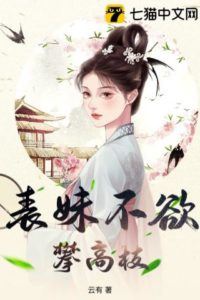
The Cousin Has No Interest in Climbing High
Novel Info
  • Author:
  • 雲有
  • Status:Ongoing

Summary

... Read More

Ming Shu is the only daughter of Deputy General Ming, who died in battle. On his deathbed, he entrusted her to General Yan, her nominal cousin, and she has since lived in the Yan household as a respected cousin despite her orphaned status. The Yan household is currently led by General Yan Wei, a formidable military commander who recently returned from the border after sustaining a severe injury that was kept secret from the public. Ming Shu, aware of her precarious position and dependence on Yan Wei’s goodwill for her future marriage prospects, maintains a careful and dignified distance, suppressing her own desires to avoid becoming a burden or a target of gossip.

Yan Wei’s return to the capital is not merely a recovery visit but a strategic maneuver. He learns from his advisor, Elder Feng, that the aging Emperor intends to marry imperial princesses to regional generals to curb their military power and consolidate central control. To prevent the Emperor from using a forced marriage to bind him, Yan Wei fabricates a betrothal. He uses a surviving letter from his deceased mother to claim that he and Ming Shu were engaged by their parents, forging a reply in his mother’s handwriting to solidify the pretense. He orders Ming Shu to accompany him to the capital, presenting her as his fiancée to the court and the public, thereby neutralizing the Emperor’s political leverage.

During the journey, Yan Wei orchestrates several situations to strengthen their cover. He assigns a skilled female guard, Yuan Rong, to protect Ming Shu, and ensures she is housed in the prestigious Jinlan Courtyard, formerly occupied by his late wife, signaling her status as the future mistress of the estate. Ming Shu, initially confused and wary, gradually realizes the depth of Yan Wei’s protection. She is also courted by Cui Zhen, a scholar from her former academy, who expresses romantic interest through poetry. However, Ming Shu remains focused on her survival and the complex political landscape, while Yan Wei secretly investigates Cui Zhen’s background, viewing him as a potential threat to his carefully constructed plan.

Upon arriving in Yunjing, the capital, Ming Shu navigates high society with the guidance of Gu Yingzhen, the lively daughter of a noble family who becomes her close friend. Gu Yingzhen introduces Ming Shu to Princess Yiyue and Guan Wan, another prominent young lady, integrating her into the capital’s elite social circle. Through these interactions, Ming Shu gains confidence and support, while Yan Wei continues to manage the political fallout of his return. The Emperor’s eunuchs monitor the General closely, but Yan Wei’s fabricated engagement provides a plausible shield against immediate imperial interference.

The core conflict revolves around the tension between Yan Wei’s political survival and Ming Shu’s personal autonomy. While Yan Wei treats Ming Shu with a mix of cold duty and hidden care, she begins to question the nature of their relationship. She discovers that Yan Wei’s injury was not as life-threatening as claimed, revealing that his return was a calculated decision rather than a desperate flight. Meanwhile, Ming Shu’s growing feelings for Cui Zhen are complicated by her duty to Yan Wei and the dangerous court intrigues surrounding them. The story moves toward a climax where the Emperor’s true intentions become clearer, forcing Ming Shu and Yan Wei to decide whether their partnership is merely a political convenience or the foundation of a genuine alliance, if not love, in a world where women are often pawns in the game of power.

Novel Items

More
Food
Breakfast food cooked by Lu Shen for Jiang Rao along with boiled bird eggs before they head to the threshing ground for land distribution.
Item
Flower branch picked by Lin Tingyu on his way home from school, placed in a discarded glass bottle with water by Xu Jingchu and set by the window.
Clothing
An old garment from the bottom of Ming Shu's wardrobe, which she wears to appear plain and frail, making it seem as if the manor has mistreated her.
Item
A prized vase belonging to the Empress Dowager in Cining Palace. She smashed it on the floor in a rage upon hearing about Chen Zhiwei's new title and authority over the Bureau of Agriculture.
Currency
Silver currency stored in a box within Chi Yu's Pocket Dimension. Sixty taels were counted out and wrapped in cyan linen cloth to break a hundred-tael banknote for charcoal payments.
Document
A letter submitted by Ming Shu to the headmaster of Shanjuan Academy through a page, explaining her departure from the academy due to unforeseen circumstances.
Latest Release
DateGroupRelease
2026-08-11shanghai fantasy c12
2026-08-11shanghai fantasy c11
2026-08-11shanghai fantasy c10
2026-08-11shanghai fantasy c9
2026-08-11shanghai fantasy c8
2026-08-11shanghai fantasy c7
2026-08-11shanghai fantasy c6
2026-08-11shanghai fantasy c5
2026-08-11shanghai fantasy c4
2026-08-11shanghai fantasy c3
2026-08-11shanghai fantasy c2
2026-08-11shanghai fantasy c1

Community Reviews

Rating(4 / 5.0, 13votes)
5 stars
6(46%)
4 stars
1(8%)
3 stars
6(46%)
2 stars
0(0%)
1 stars
0(0%)

Popular reviews

... Read More
There's something deeply symbolic about the courtyard assignment that I can't stop thinking about. Jinlan Courtyard—the orchid courtyard—was the late wife's space. By placing Ming Shu there, Yan Wei is making a statement about absence and replacement, about who gets to occupy the emotional center of a household. But he never explains it. That silence IS the theme: women's positions are decided by men's unspoken decisions, and they're expected to navigate it gracefully. The jade is everywhere, and it's not accidental. Ming Shu receives a white jade hairpin carved with peonies from Yan Wei—a gift that marks her as his responsibility, his political arrangement. Then Gu Yingzhen gives her a white jade bracelet, and the difference is night and day. One jade binds; the other adorns. One jade is duty; the other is affection. And the carriage! Two carriages, one superior to the other. Ming Shu naturally heads for the inferior one, showing how thoroughly she's internalized her subordinate position. But Yan Wei corrects her—"The carriage behind is for your maids." She's not a maid. She's not quite a mistress either. She exists in this in-between space that the whole novel seems obsessed with. Even the Lotus Pavilion matters. Built over water, open on all sides—no walls, no barriers. It's the only space in this entire section where Ming Shu can just... be. No one is watching. No one is calculating. The lotus itself is a symbol of purity rising from mud, and Gu Yingzhen, who sees through Ming Shu's modest deflections immediately, is the only character who treats her as a person rather than a position.
... Read More
The crabapple blossom keeps appearing and I can't stop thinking about what it represents. In Tianlu, peonies are the queen of flowers—symbolizing grace and wealth, the acceptable choice, the prestigious choice. But Ming Shu explicitly said she only loves crabapple blossoms. So when Cui Zhen presses one into his poetry collection, he's not just being romantic. He's affirming her identity, her defiance of convention. The peony would have been the safe choice for a scholar to give a noble lady. The crabapple is personal. It says I see you, not your family name. And then there's the storybook itself—'The Fragrance of Pear Blossoms.' Three different flowers, three different meanings. The peony as societal expectation, the crabapple as personal truth, the pear blossom as... what? A fragrance that lingers but belongs to no one? The poems Cui Zhen wrote are described as 'captivating the soul,' thread by thread. Language itself becomes a vehicle for emotion that cannot be spoken directly. In a world where a young woman's safety depends on veils and chaperones, where the Emperor's decrees can uproot lives overnight, poetry and storybooks become the only honest communication available. The silence between what is said and what is meant is where the real story lives.
... Read More
Okay, I need to talk about this scene where Ming Shu finds the storybook and I literally screamed. The book is called 'The Fragrance of Pear Blossoms' and it's basically a fictionalized version of her own life with Yan Wei. A cousin living under another's roof, a general with illustrious military achievements, subtle hints leading to actual feelings—this isn't coincidence, this is someone watching her and turning it into entertainment. Tang Li's reaction alone tells you everything. She tries to snatch it away, guilty as sin, which means she probably knows who wrote it or at least suspects. And then Yan Wei sees the book fall, glances at the cover, and thinks NOTHING. He has no idea it's about him and his cousin. The dramatic irony here is absolutely delicious. Meanwhile, the imperial decree arrives right after, forcing them to travel to the capital together. The plot is stacking up like a house of cards in a windstorm—every scene pushes them closer together while simultaneously threatening to tear them apart. I'm obsessed.
... Read More
There's so much going on beneath the surface in these two chapters and I can't stop thinking about the symbolism. Let me start with the teacup scene. Guan Wan swirling her teacup while discussing whether women can stand on their own—it's not accidental. The teacup is delicate, ornamental, something displayed. That's exactly how society views these women at the banquet. But then Ming Shu mentions widows who establish their own households, and suddenly the symbolism shifts. The teacup cracks. The author keeps returning to this tension between appearance and reality, between what women are expected to be and what they could be. And then there's the nameless young lady. She has no name in this passage, no family identified. She's defined only by her beauty and her invitation from the princess. What does that mean? Is she a symbol of possibility—a woman who exists outside the normal structures? Or is she a plot device, a wildcard in the political game? Even the folding fan snapping shut feels symbolic. That sharp sound marks the moment the male gaze fixes on her, and then the Fifth Prince's arrival shatters that entire dynamic. The banquet itself is a microcosm of the empire—beautiful on the surface, riddled with power struggles underneath.
... Read More
This chapter is a masterclass in controlled pacing. Let me walk through why it works so well. It opens with an intimate, almost domestic conversation between Ming Shu and Guan Wan about women's independence—very slow, very grounded. Then the author drops in a visual shift: men in gold and jade approaching, a folding fan snapping shut. The rhythm quickens. We get dialogue between the male characters, building a sense of curiosity and intrusion. And then—the Fifth Prince arrives and the tempo changes again. Suddenly everyone is on edge. The structure here is brilliant because it mirrors what's happening narratively: the peaceful surface of the banquet is cracked open to reveal the political undercurrents beneath. The transition from the pavilion scene to the banquet hall feels natural but purposeful. There's no dragging, no filler. Even the brief exchange with Princess Yiyue at the end serves double duty—she's worried about them, yes, but she's also hinting that she expected something to happen. The pacing never lets you settle. You finish this chapter feeling like you've been on a rollercoaster that looked like a leisurely stroll. Which is exactly the experience the characters are having.
... Read More
Okay so I have to talk about the Jinlan Courtyard thing because it literally gave me chills. Ming Shu gets assigned to the main courtyard—the one that belonged to the late wife—and Yuan Rong's internal panic is EVERYTHING. Could the general's arrangement be a signal to the household that he intended to treat Miss Biao as the future mistress? This one detail does SO much work. It establishes Ming Shu's precarious position immediately: she's not just a guest, she's being positioned, and everyone around her is reading the signals. And then the carriage scene! "Move in closer." Three words that carry so much weight. Yan Wei isn't just telling her to shift her body—he's making a statement about proximity, about how she exists in his world. The fact that he notices when she nearly gets thrown out and frowns... that tiny crack in his ice-cold exterior is what gets me. The Gu family visit then becomes this beautiful counterpoint. Gu Yingzhen is like, "I saw a woman three times more beautiful than Sister Guan" and immediately latches onto Ming Shu. Their interaction in the Lotus Pavilion feels like the first genuine, uncalculated moment in the entire story. When Gu Yingzhen insists on giving her the white jade bracelet—"This is a major occasion for us women"—it's not political. It's just... human warmth. And I love that Tang Li has to navigate this by reading her mistress's subtle head shake. The plot is building this web of relationships where every gesture has layers. Yan Wei's silence about Jinlan Courtyard speaks louder than any explanation would.
See all reviews

Characters

See all characters

Custom lists

Oops…There is nothing here.