The Beasts are Ensnared This Way - Reviews

The Beasts are Ensnared This Way
+Add to Custom List
Sort
Add review
... Read More
"This is dependency." Three words and Kagura basically just diagnosed himself like a doctor delivering a terminal prognosis. Like, bro, you literally clutch that key like it's a lifeline and then call yourself pathetic when you're caught. But here's the thing — I get it. I genuinely get why he's terrified of this. Zero isn't just some toxic ex he can't let go of. Zero is someone who dirtied his hands for Enwu, who survived on the margins, who exists outside the law in every possible way. And Kagura? He's a cop. A detective with a badge and a heartbeat and a moral compass that's currently spinning like a top. The car scene with Kiriyama is where this really gets messy. "You and Zero seem to have a habit of collecting vulnerabilities." That line hit different because Kiriyama isn't wrong. They're both hoarding the worst parts of themselves like precious stones. And then Kiriyama drops the bomb about holding leverage over Kagura — working with Toono Ryouji and Li Azhar — which makes you realize this isn't just a romantic entanglement. This is a hostage situation disguised as a love story. What kills me is that Kagura knows he's holding Zero back. "In this foggy state of mind, far from fighting alongside Zero, he was only holding him back." That self-awareness should make him stronger. Instead it makes him weaker. He's trapped between wanting to protect Zero and knowing that proximity to Zero means proximity to hell. And Zero, lurking somewhere in that Nakameguro apartment, pretending to fall for every single one of Kagura's provocations just to give him the release he craves — that's not love. That's codependency wearing a very expensive costume.
... Read More
Okay so let's talk about Kagura for a sec because this guy is... complicated. Like, he's got Sanae breathing down his neck asking about his mood and he just deflects with the most absurd non-sequitur about sea otters ever? "You're not sea otter material yet"—what does that even mean? It's so painfully Kagura to use childhood drinking stories as a shield instead of just... communicating. But here's what really gets me: the reason he's deflecting isn't ego, it's protection. He literally thinks "I can't involve him in anything more dangerous." That's the kind of self-sacrificial loner energy that makes me want to shake him AND cry for him simultaneously. And then Zero. Zero is this enigmatic figure who runs Enwu—the group of unregistered Non-citizens—while also being Kagura's ally and apparently someone Kagura has some pretty complicated history with (they went to Niigata together?!). The text says Zero made "a decision characteristic of Zero" when protecting Ao, the spy who brainwashed by fear served Toono. Zero chose sympathy over punishment. That tells you everything about who this person is. The dynamic between Kagura and Zero feels like it's built on years of shared secrets and impossible choices. Kagura lies to Sanae about his relationship with Zero, calling them high school acquaintances, but Sanae clearly sees through it. There's this whole emotional ecosystem around Kagura where he pushes everyone away to protect them, including the reader honestly. Who else is carrying this much alone?!
... Read More
Let me just say this: the description of Keihinjima Island is one of the most vivid settings I've read in a long time. "Fewer than ten residents officially registered." "Rows of factories and warehouses, barren and lifeless." "An area devoid of any signs of daily life." This is a man-made island in Tokyo Bay that exists almost entirely outside the normal human experience. It's a liminal space — not quite city, not quite wilderness, a place where things happen that nobody in central Tokyo knows about. The contrast with the earlier scene is chef's kiss. You had this opulent room with Arabic-style tea sets, leather sofas, two powerful men discussing the future of global order like it's a casual afternoon. Then BOOM — you're on a barren industrial island with two detectives chasing rumors of black-market labor trafficking. The worldbuilding here spans from boardrooms where the fate of nations is discussed to warehouses where forgotten people are exploited. Both feel equally real. And the plane imagery at the start of Chapter 24 — watching an airplane ascend from Haneda into the high autumn sky — that moment of suspension between departure and arrival, between the safety of Tokyo and whatever trouble awaits on that island... it's almost poetic. The fact that this location connects to foreign crime organizations AND black-market worker recruitment means Keihinjima is probably a nexus point — a literal and figurative crossing point where different storylines converge. I have a very strong feeling that this 'bust' is not going to end with anyone going to jail. Maybe it won't even end today.
... Read More
Okay can we just talk about Sanae for a second because WOW. This guy goes from "I'm calling for reinforcements" to basically burying his face in Kagura's stomach and soaking his shirt with tears and snot. I'm not even joking. The author just casually drops this devastating image and I'm over here completely wrecked. What makes it hit so hard is how much they know each other. Kagura literally says "I trust you" and Sanae's entire demeanor shifts. He takes off his glasses, covers his face, and lets it all out. And then his line: "You've made me work so hard for you all this time. Don't let it be for nothing—make sure you come back safe." CHOKING UP JUST TYPING THIS. The dynamic between them is everything. Sanae is clearly the moral compass, the one holding onto ideals and principles, while Kagura is spiraling toward something darker. But instead of fighting him about it, Sanae just... accepts it? He knows stopping Kagura would be futile. He sees where this is going. And still, he makes him promise to come back safe. I love how Kagura places a hand on Sanae's head afterward. Such a small gesture but it says everything. He's sorry, he knows what he's asking, he knows he's dragging Sanae into his mess. And Sanae, despite everything, is still there. That's the kind of bond that makes or breaks a story for me. Also side note: the way Kagura says "As Sanae Suguru, you won't do that. I trust you" before Sanae even makes his decision? That's not confidence, that's intimacy. He knows his friend better than anyone. And honestly, that's what makes me saddest—Sanae knows Kagura too well to believe he'll actually be stopped.
... Read More
The pacing in these chapters is so deliberate and effective. We open with Kagura recovering in this liminal space — not quite prisoner, not quite guest. The author spends time establishing his physical and mental state, letting us feel the weight of those three days and nights in feverish sleep. Then Li Azhar arrives and the scene shifts entirely. The tea ceremony, the calm conversation, the underlying tension — it's like watching a predator circle its prey while maintaining perfect politeness. The dialogue flows naturally but every exchange builds pressure. What I love is how the chapter breaks work. We get a pause after Li Azhar leaves, then three hours pass before Kiriyama arrives. That time jump creates real anticipation — who is this mysterious 'owner' Li Azhar hinted at? The structure also plays with information beautifully. We learn things gradually: the auction price, Toono's location, the debt Kiriyama owes, the geopolitical conspiracy. Each revelation opens new questions while answering old ones. And that trigger warning placement — right before the sexual assault depiction — it changes how we read the scene. We approach it differently, more carefully. The author is aware of the reader's experience and structures accordingly. Some might find the first few paragraphs slow, but they're necessary setup. Without feeling Kagura's exhaustion and isolation, the emotional payoffs wouldn't land as hard. Well-paced throughout.
... Read More
The dialogue in these chapters is basically everyone weaponizing language. Even the mundane exchanges feel like a knife between ribs. Renjou's voice is the most distinctive — he talks like a child playing dress-up in someone else's violence. 'Like an American businessman who's into dismantling bodies, a German noble who makes human wax dolls as a hobby, and oh, an Arab king who likes to feast on human flesh.' That casual listing of horror like he's reading a menu at a restaurant. And then 'Pulling out all the teeth makes it easier to do certain things.' The omission is doing SO much work there. Toono is different — shorter sentences, raspier, more clinical. 'As long as he lasts until tonight, that's enough.' That's not cruelty, that's logistics. He's already moved on to the next thought. The auctioneer speaking in English while everyone else speaks Japanese is a weird texture choice that I appreciate — it creates this layer of internationalized depravity, like this is a global industry and language is just another commodity. And Li Azhar? He says almost nothing. Two lines. 'One hundred million.' 'Take him to my room.' The fewer words, the more power. Perfectly calibrated.
... Read More
Let's talk stakes because they went from 'investigate human trafficking in Macau' to 'you are about to be destroyed in front of an audience of masked elites' real quick. The brilliance here is how the conflict operates on so many levels simultaneously. Physically—Kagura is getting beaten in a cage match against someone who fought him to a standstill before and still won. Mentally—he's being humiliated publicly, reduced to a spectacle. Existentially—that's the part that haunts me. When he's on his knees and thinks "I exist but do not exist. My existence has no value," that's not just defeat talking. That's the core conflict of this entire story crystallizing. What does it mean to be someone in a world that decides your worth? And the stakes keep escalating even within the fight itself. Renjou doesn't just want to win—he wants to make an example. Toono doesn't just want Kagura defeated—he wants to sell him. "Wouldn't this be a fitting end?" he says, like it's a punchline. The suspense isn't whether Kagura will survive (we know he will, he's the protagonist), it's WHAT will be taken from him before he gets out of this. Every blow landing, every "Bravo" from the crowd, every second of that fight raises the question: how much can one person absorb before something breaks?
... Read More
Let's talk stakes because OH MY GOD the stakes just keeps climbing. On the external level: Kagura is going up against a human trafficking ring led by (probably) Toono Ryouji, who apparently has enough connections to summon Japanese police to Macau and evade capture. That's not just a criminal mastermind—that's someone with institutional power. And if Li Azhar is involved, Kagura's facing private armies of snipers. His life is genuinely on the line, and he knows it. But the INTERNAL conflict is where it really hurts. Kagura is choosing to abandon his identity as a detective. 'From here on out, I'm prepared to stop being a detective.' This isn't just a career change—it's a fundamental rejection of everything he stood for. The 'civilized world' with its rules and protections? He's walking away from it. And Sanae—oh god, Sanae. He represents everything Kagura is leaving behind. The ideals, the principles, the belief that you can work within the system to reduce victims 'even if it's by just one.' Sanae literally bows his head and glares through reddened eyes, fighting for his friend's soul. The stakes are also personal in ways that destroy me. Kagura's cousin Haruka died because someone failed to protect her. Now he's putting himself in the same position—walking into 'hell' voluntarily, knowing he might not come back. But he's also doing it to protect OTHERS from the same fate. The trafficking victims, potential future Harukas. His vengeance has expanded into something larger, and that's what makes it tragic. "Even if it meant losing the 'light', even if it led to something Zero wouldn't want." This line is everything. Kagura knows where this path leads. He's conscious of the cost. And he's choosing it anyway. That's the highest possible stakes—not just death, but damnation. Loss of self. Becoming the very darkness he's fighting. The suspense maintenance is brutal too. We know Kagura is walking into a trap. We know Toono is probably waiting. We know the 'Invincible Castle' is protected by 'absolute extraterritoriality.' And yet he descends into that basement like a modern Orpheus heading to the underworld. The tension is suffocating because we're helplessly watching our protagonist choose destruction. "I have to see hell with my own eyes." This isn't bravery. This is obsession. And that's what makes me most afraid for him—because obsessed people don't stop, even when they should.
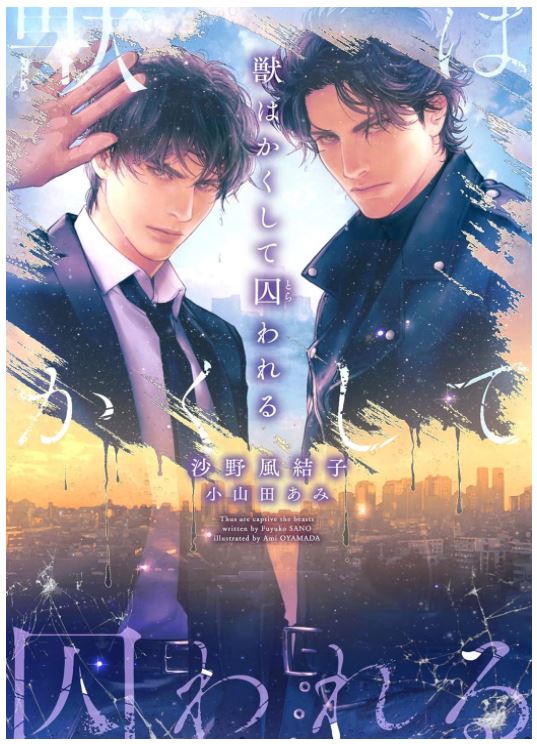
... Read More
I need to talk about the jacket. Because I know this is supposed to be a dark novel and Li Azhar isn't some nice guy — we literally just established he's the puppeteer of the world's underworld and he bought a human being — but WHEN HE DRAPS HIS JACKET OVER KAGURA'S BODY. Kagura is exposed, humiliated, barely conscious, and this man who just outbid every other monster in that room does ONE thing that looks almost gentle. 'Without a word, Li Azhar removed his jacket and draped it over Kagura's body.' No speech, no grand gesture, just... coverage. I kept re-reading that and I don't know whether to trust it or be scared of it. Is this genuine? Is this manipulation dressed as kindness? Or is it some combination of both? Because here's the thing that got me — Li Azhar has no mask. In a room full of people wearing Noh masks and gas masks, hiding behind personas, this is the first character who shows his face. That detail screamed something to me. And then the translator literally breaks the fourth wall with 'Translating this chapter was difficult. It was hard to stomach what was happening.' I felt that in my soul.
... Read More
There's a moment in this section that I can't stop thinking about. Kagura stays up on the sofa, watching the dawn spread over Cotai, and falls asleep like that. Not because he's tired from the journey, but because he can't afford to let his guard down even for a second. The text says he was "exhausted from keeping his guard up to protect Kagura" about Sanae, but honestly, isn't Kagura doing the exact same thing? Both of them are running on fumes, both of them are choosing vigilance over rest, and neither of them will admit it out loud. That's the emotional core of this arc—it's not about big declarations or dramatic confessions. It's about two people who care deeply for each other expressing it through sleepless nights and forced smiles. And then there's Zero, looming in the background like a ghost. "He lacked the courage to see what became of the girl with the rabbit mask." That line breaks my heart every time I read it. It's not cowardice in the traditional sense—it's the terror of confronting something that might change everything you thought you knew. The emotional landscape here is all about what characters refuse to feel out loud. Kagura won't say he's afraid. Sanae won't say he's worried. Zero won't say he's haunted. And yet the author makes you feel all of it through what they DON'T say. The rabbit mask girl's image keeps returning like a wound that won't close. That's good writing—that's the kind of emotional resonance that stays with you long after you put the book down.
... Read More
Let's talk about Kiriyama because this guy is fascinating and terrifying in equal measure. The novel paints him as someone who literally controls both sides of the chessboard — prosecutor by day, underworld fixer by night. That duality isn't just cool flavor text, it shapes EVERY interaction he has. When he agrees to meet Sanae secretly about Kagura's disappearance without any hesitation, you realize this man plans three moves ahead of everyone else. But here's what gets me: he also warns Sanae not to tell Elio about Kagura vanishing. Is that genuine care or purely tactical? I genuinely can't tell, and that's what makes Kiriyama so compelling. His dynamic with Kagura is the main event though. 'You've come back. That means you've decided to trust me,' he says like he already knew this outcome. He orchestrated the entire situation and Kagura barely realizes it. The power imbalance is delicious and deeply uncomfortable. And then Kiriyama drops that ultimatum — if you work with me, you sever all ties with Zero — and watches Kagura break slightly inside. That man plays people like instruments.
... Read More
Okay so the nightmare sequence at the end is clearly significant and I've been thinking about it nonstop. The elevator. The girl in the rabbit mask inside a box. The version of himself that wants to kick his hesitant self forward. This is symbolically loaded stuff. The elevator represents inevitability—once you get on, there's no going back to the person you were. But Kagura refuses. He crouches and waits for the nightmare to end rather than face whatever's on the other side. And the rabbit mask girl? That connects to whatever trauma Zero is carrying (the title itself mentions beasts being ensnared, and there's clearly a pattern of vulnerable people being trapped). The "black children"—heihaizi, two hundred million of them—unregistered, unseen by the state, swept into criminal organizations. This number is staggering, more than Japan's population. The author keeps weaving these images together: unregistered children, VIP facilities that only the ultra-wealthy can enter, the underground trade happening beneath glittering resorts. What's the core theme here? I think it's about invisibility. Who gets seen and who doesn't. Li Azhar's invitation cards cost up to 3 billion yen—that's a literal barrier between classes. And Kagura, who was once connected to Zero's world of unregistered children, is now investigating from the outside. The nightmare isn't just psychological; it's moral. He's afraid of what he might have to become—or what he might fail to prevent. The mist emanating from himself? That's the author telling us the darkness isn't external. It's within.

Leave a comment

You must be logged in to leave comments. or
