The Beasts are Ensnared This Way - Reviews

The Beasts are Ensnared This Way
+Add to Custom List
Sort
Add review
... Read More
The stakes in this arc are enormous and they escalate beautifully. On the personal level: Kagura is physically traumatized, psychologically tortured, and romantically devastated — all while desperate to reach Zero. That's a lot of pressure on one character. But the external stakes are just as compelling. Li Azhar's vision of a world approaching singularity, where chaos becomes sustenance and the Eastern Alliance transforms into global criminal power — this isn't just background. It's actively shaping what happens to Kagura. His body is a battleground in a much larger conflict. The conflict between Kagura and Kiriyama is particularly tense because it's so asymmetric. Kagura has no real power here — he's been sold, he's injured, he's isolated. Kiriyama holds all the cards and makes no attempt to hide it. 'You're already my property' — that declaration raises the stakes immediately. What keeps me engaged is the uncertainty. Will Kagura escape? Can he reach Zero? What role will he play in Li Azhar's grand scheme? The narrative dangles every possibility without committing to any resolution. The financial stake — 1.6 billion yen — also matters. That's real money changing hands, real power being displayed. When Kiriyama mentions owing that debt, it suggests there are larger financial conflicts at play beyond the personal drama. I'm completely invested in seeing how this resolves. The tension never drops, even in quiet moments.
... Read More
There's something deeply symbolic about a freezer warehouse being the site where this story's emotional core crystallizes. Freezers preserve things—literally. They stop time, they stop decay, they keep everything exactly as it is. And these two men, trapped in that suspended cold, are essentially preserved in a moment of absolute vulnerability. No pretenses, no hiding, just raw need to survive and to be close to another living soul. The ice cream detail keeps looping in my head. Sanae, delirious, apologizing to 'nee-san' for eating her ice cream. Ice cream = something sweet, something temporary, something that melts. And then there's the cold itself—the very thing trying to kill them becomes the thing that forces intimacy, that strips away everything artificial. Kagura wrapping Sanae in boxes, wrapping his arms around him, Zero melting frost off Kagura's face with his hands—every act of warmth is also an act of defiance against the cold that wants to freeze everything solid. And the mountaineer hallucination story that Sanae tells—that's the meta-theme right there. In extreme situations, the mind conjures what it needs most. Kagura imagined Zero. And THEN Zero actually appeared. Was it fate? Was it the author giving us the emotional payoff we'd been starving for? Or is the point that when you want something badly enough, the universe rearranges itself to deliver it? The warehouse was once used for rare imported goods, now just dust and abandoned equipment. But what was really stored there all along was the potential for this exact moment. The Beasts are ensnared, yes—but sometimes the trap is exactly where you find what you're looking for.
... Read More
I need to talk about Itou because WOW. This guy is easily one of the most unsettling characters I've encountered and I'm obsessed. The way the text describes him — perpetually squinting eyes, white gloves, a tear-shaped mole beneath his left eye — every detail screams control and calculation. He barely reacts when Kagura climbs into the front seat (a breach of protocol, probably), but his grip tightens on the steering wheel. That's it. That's the entire moment. A slight pressure change on a steering wheel and suddenly you realize this man could end you. But what broke me was his answer about Kiriyama: "Measuring a master's worth or expecting something in return is repulsive." Not 'I don't care about reward.' Not 'loyalty is its own reward.' He said the very CONCEPT of transactional loyalty is disgusting to him. This isn't a hired gun — this is a devotee. Raised from birth to serve, to the point where devotion has become indistinguishable from religion. And Kagura's internal monologue about him? "Depending on circumstances, eliminating Itou before Kiriyama is also an option." Bro is assessing whether he should MURDER his ride home. And Itou responds with the gentlest, most earnest piece of advice: "Take a good look at 'Shungo-sama' at least once. Make sure you won't regret it." The fact that this man is BOTH the most dangerous person in the room and genuinely trying to HELP Kagura is the kind of character writing that keeps me up at night. Also — he's been with Kiriyama since childhood. Generations of family service. The weight of that history is staggering. Who IS this man underneath all that polish?
... Read More
The metaphor of sand runs through this entire section and it's haunting me. Li Azhar describes his position on Toono as "fluid as sand" — dunes reshaped by wind, landscape transformed instantly. Sand is beautiful and useless and ancient and shifting. It's the perfect metaphor for a man who has built an empire on adaptability rather than principle. But sand also GRINDS. It gets everywhere. It wears down stone over time. There's violence in that gentleness. And then there's the whole discussion about 'order' — what Kiriyama fears losing and what Li Azhar sees as merely a "temporary construct set within the short span of human history." The irony is thick: these two men are having a philosophical debate about the collapse of civilization while apparently deciding whether someone lives or dies. Their 'thought experiment' has a body count attached to it, and they're not even pretending otherwise. The image that absolutely destroyed me though was this: "In the eyes of the two enjoying this lofty thought experiment, the image of people wailing in agony from the collapse of order did not appear. Or perhaps it did, but it wasn't worth their attention." That's the whole book in one sentence. The powerful don't refuse to see suffering — they just can't be bothered by it. And then we cut to Keihinjima, where the people who actually WAIL are the black-market workers, the foreign laborers, the invisible humans being trafficked through warehouses on a barren island. The leapfrog theory becomes flesh and blood somewhere else. Also the Arabic tea set in a Japanese boardroom? That's not just aesthetic. That's Li Azhar's entire identity — rooted everywhere and nowhere, comfortable in any culture, belonging to no one.
... Read More
This section hits different because it moves at two different speeds and I think that's intentional. It opens with PURE CHAOS — Renjou leaping through sparks, explosives detonating, electricity coursing through Kagura's body. The prose is fast, fragmented, almost breathless. 'One by one, his senses went numb, and eventually, he could perceive nothing at all.' Boom. Fade to black. Then — absolute silence. The medical room. The IV drip. The doctor speaking with an accent. Toono's raspy voice being casually dismissive. Time slows down and you feel Kagura's consciousness slipping away. It's meditative in a horror way, like sinking. Then Chapter 13 drops you into the auction like a body drop. The pacing accelerates again — elevator descent, the weapons room tour, the threat from behind, the platform rising, the spotlight hitting Kagura. And then the bidding starts and it's almost too fast, like the author wants you to feel the rush of losing control. And then Li Azhar walks in and EVERYTHING stops. One line: 'One hundred million.' The pacing goes SILENT. Every head turns. The rest of the chapter is almost dreamlike, subdued. That structure — chaos, stillness, chaos, stillness — it's working on my nerves in the best way.
... Read More
Can we just appreciate the visual composition of this dinner scene for a second? The longest table you've ever seen, blue flowers spaced perfectly along it, candelabras casting light onto enormous windows that show the ENTIRE NEON-LIT MACAU NIGHTSCAPE. And somehow both the candlelight AND the city lights are reflecting simultaneously, creating this surreal double exposure effect. I swear to god the author is writing cinematography here. No masks needed on the top floor — Li Azhar's private space, above everything, above the rules. And then the huqin playing classical music underneath all this tension? The contrast between something so delicate and soft and the fact that two men are about to possibly DIE at this table is absolutely chef's kiss. French course appetizers, jewel-like gelatin, six glasses of aperitif, and someone's last supper. The aesthetic layering here is insane. It feels like a stage set where everyone knows they're performing except they don't know their lines.
... Read More
Let me just say this: Toono Ryouji is one of the most infuriating villains I've encountered and I am OBSESSED. The text makes it crystal clear why Kagura's rage is so personal—he's responsible for Kagura's cousin Haruka's death. And what's worse, he's not just hiding; he's EXPANDING. The Eastern Alliance has gone from infighting to systematically targeting Enwu, and they have a SPY inside. Ao, brainwashed as a child, now leaking information to Toono. The stakes aren't abstract—they're about people Kagura loves being hunted. But the external conflict is massive too. The Invincible Castle isn't just a brothel-casino-den; it's a node of global power. Li Azhar connects politicians, tycoons, and police officials across borders. Murder becomes "inconsequential" there. Toono doesn't need terrorist schemes because he already owns the system. This isn't a detective vs. gangster story—this is one man vs. an entire architecture of corruption that spans from Tokyo to international waters. And the internal conflict? Kagura is losing weight. He's having nightmares he can't escape. He lies to his partner to protect him. He enters a nightmare-world wearing a sheep mask because the alternative is doing nothing. Every choice he makes is weighted with the knowledge that getting closer to the truth might get Sanae killed, or Zero killed, or himself. The elevator scene crystallizes this perfectly: he tries to move to save Haruka, he gets thrown back by Renjou, the cables snap, and he's falling. He CAN'T save everyone. That's the core horror. The stakes keep rising with every paragraph and I am physically unable to put this down. How does a story make you feel both hopeless and desperate to keep reading? This one does.
... Read More
I keep coming back to the prince motif and I can't stop thinking about what it represents. Zero's mother saw the "eyes of the prince" in her son. She projected an entire fairy tale onto a child — a man who abandoned them, a death row inmate's legacy, a dream she mistook for salvation. The word "prince" here is loaded with irony. Zero grew up thinking he was chosen, that he had some royal blood running through him, when really he was just a mistake someone wanted to erase. And then Kagura calls him a "worthless prince" and Zero agrees. There's something devastating about two people agreeing on their own worthlessness in the same breath. It's self-loathing shared between two people who should be each other's antidote. The darkness and light imagery throughout this passage is also worth unpacking. Kiriyama operates in pure darkness — emotionless, calculating, a statue. Zero exists between both worlds, cursed with his father's intensity but refusing to become him. And Kagura? He's the one who steps INTO Zero's darkness. "The light that binds you is gone now," he says. Not the light that saves you — the light that restrains you. The moral compass that kept him from becoming something else. Kagura is choosing to walk into the shadows with Zero, and that's both the most romantic and most terrifying thing I've read all year. The setting too — the "Invincible Castle" they escape from, the return to Nakameguro apartment, the van with the nickname "Runaway Uncle" — every location feels like a character. They move from a place of violence back to a place of familiarity, but everything has changed. The apartment looks the same but they don't.
... Read More
Let me just gush about how sharp the dialogue is in this section. Every single line between these characters carries weight, sometimes two or three layers. Take Kiriyama: 'So Enwu did have eyes and ears in this Castle as well.' Sounds casual, almost conversational, but he's basically confirming that Zero infiltrated their operation. He doesn't react with shock or anger — just observational, like he anticipated it. That's Kiriyama for you. And then Li Azhar drops 'To this being your last supper' in unexpectedly fluent Japanese. Theaudacity. The sheer theatricality of it. He's not even apologizing for the menace, he's celebrating it. Meanwhile Kagura's internal voice is so different — urgent, fragmented, racing. 'I have to act before Zero does. If I let Zero act, he'll never leave this place alive.' The contrast between Kagura's panicked inner monologue and the calm, coded exteriors of everyone else is what makes the dialogue work so well. No one says what they really mean. They negotiate through implication and threat. It's elegant and exhausting.
... Read More
The structure of these chapters is doing some serious work and I need to unpack it. We open with exposition—Toono's return, the Eastern Alliance shifting tactics, Enwu, the spy Ao. This is the 'investigation' frame. Then we cut to Kagura and Sanae in a car, domestic banter about sea otters, Sanae pressing about Kagura's mood, Kagura deflecting. It feels calm. Safe, even. Then BOOM—we're in the nightmare. The Invincible Castle sequence reads like a fever dream that keeps escalating. The elevator rises, the girl enters, the pressure builds, the doors open to that Final Judgment mural, Haruka appears in the rabbit mask, Ryouji reveals himself, Renjou announces he'll kill Kagura, the cables SNAP, and the elevator plummets. The pacing here is breathless. Short sentences. Fragments. "The cables had snapped." Full stop. No decoration. Just falling. And then—this is the masterstroke—it cuts to a GLOSSARY. A literal translator's note and character introduction table. Seated at the dining table: Renjou, Zero, Kagura, Kiriyama. From left to right. Like a family photo of people who are definitely not a family. This structural choice is wild. It snaps us out of the nightmare and drops us into a scene that we KNOW is coming, but we don't know the context yet. The chapter ends on an image, not an action. The pacing goes from slow-burn investigation → explosive nightmare → dead stop on a tableau. I stayed up way too late reading this. The author knows exactly how to hold your attention and then yank the rug out.
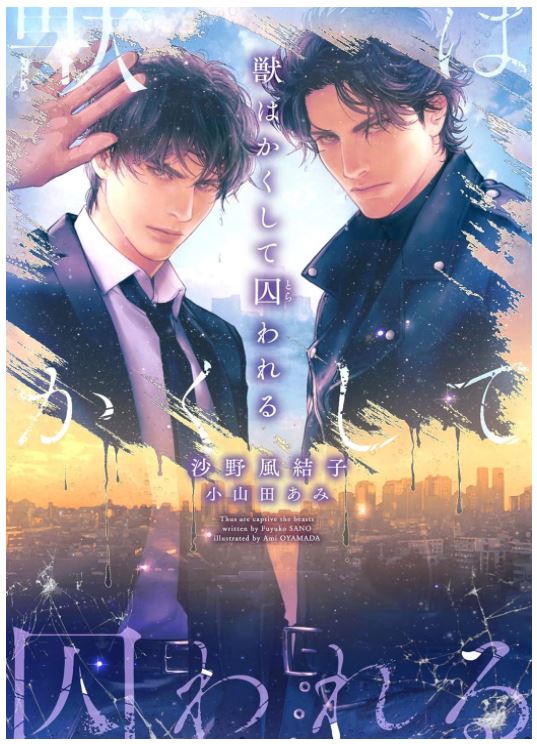
... Read More
I genuinely cannot stop thinking about this line: "Then we should simply move to the side that wields the new order." Said while smiling and turning his palm upward "as though the entire Earth was resting on that hand." This man is a VILLAIN protagonist and I am HERE for it. The way his dialogue contrasts with Kiriyama's is fascinating — Kiriyama is all careful analysis and bitter acknowledgment of consequences, while Li Azhar speaks in declarations and metaphors. He doesn't negotiate with reality, he claims it. And Kagura's dialogue throughout this scene is perfect in its restraint. He doesn't grandstand. He asks direct questions. "Where is Toono now?" "Do you want to protect Toono, destroy him, support him, or do you simply not care?" When he asks to kill Toono, it's delivered almost casually — "In that case..." — as if he's just making a reasonable request rather than proposing murder. That's Kagura for you: sharp, efficient, refusing to dramatize even the most dramatic moments. The language-switching detail is also brilliant writing. Kiriyama responds to Kagura's Japanese question in English. Li Azhar switches to fluent Japanese. This tiny detail tells you SO MUCH about power dynamics without ever stating it outright. English is Li Azhar's territory — his language of business and global influence. When he speaks Japanese, he's making an effort, which is either more manipulative OR more genuine than we realize. Sanae's cheerful deflection about "that other rumor" was such a perfect character beat too. Detective humor as emotional armor.
... Read More
That sea bridge — the world's longest — stretching across the ocean to Hong Kong. It's such a loaded symbol in this context. A connection between two places that used to require ferries, representing how technology collapses distance. But Kagura is trapped in a room with floor-to-ceiling windows, staring at this bridge he can never cross. The parallel is clear: humanity builds bridges to connect, but in this world, connections can only trap you further. Li Azhar's philosophy about synchronization and change mirrors this — the world is becoming faster, more connected, and yet individuals are losing control. Kagura's burned back is another powerful symbol. Fire destroyed part of him, but it also freed him from being merely a 'Citizen' — he took his first step outside those barriers. The scars are permanent reminders of both his suffering and his transcendence. The tea itself — sweet, loaded with sugar, almost undrinkable — represents the cruel sweetness of false comfort. Li Azhar offers hospitality, but it's a gilded cage. Kagura can't even swallow the tea without discomfort. And ownership as a recurring theme: who owns whom, who pays whom, who owes whom. The entire system of human trafficking and debt creates a web where people become commodities. Li Azhar's discussion of a world without borders or rules suggests that when society collapses, these power structures will only intensify. The symbolism throughout is dense but never heavy-handed. Every image serves the themes.

Leave a comment

You must be logged in to leave comments. or
