The Beasts are Ensnared This Way - Reviews

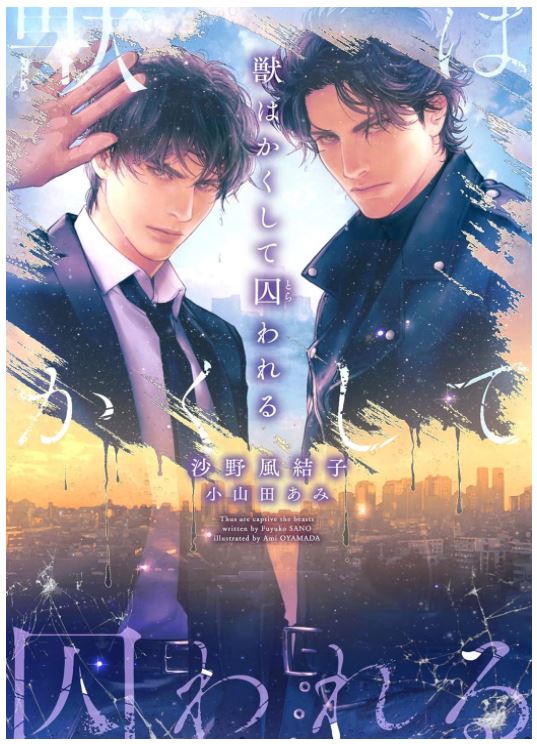
The Beasts are Ensnared This Way
+Add to Custom List
Sort
Add review
... Read More
The structural choices in these chapters are wild. We open mid-confrontation — Kiriyama standing, Zero frozen, Itou with a gun, Kagura holding a knife. No warmup, no setup, just BAM we're in the room with live explosives. The author doesn't give us a single moment to breathe before dropping the paternity bomb. That's not subtle, that's aggressive storytelling and I respect it. Then the scene transitions to the van ride home — quick, almost casual, with Haiiro's dialogue providing what feels like comedic relief. The translator's note about "Runaway Uncle" being the chapter title is such a tonal whiplash moment and honestly it works. After the intensity of the confrontation, we get humor to let readers exhale. But then — Chapter 30, "Returned" — and suddenly we're in domestic space. Five months have passed. They're sitting on a sofa like it's any other day. The shift from violent confrontation to quiet apartment conversation is jarring in the best way. The pacing slows down intentionally here, letting the revelation breathe. Kagura processes the Kiriyama connection, pieces together the implications, and Zero falls apart quietly on the sofa instead of dramatically in a fight. The mature content section is...存在. But what follows it is the real killer — the conversation in the dark. Zero asking if Kagura really wanted to kill Itou. Kagura admitting he would have, without hesitation. The chapter ends on this note of darkness acknowledged and accepted rather than resolved. No neat bow, no catharsis. Just two people lying in bed, one injured, both changed, and the question hanging: what happens now?
... Read More
The title of this novel is The Beasts Are Ensnared This Way and I think I finally understand what that means after this chapter. "Ensnares." That's the word the entire relationship revolves around. Kiriyama literally says it - Kagura is ensnared by Zero, Zero is ensnared by Kagura. They're both beasts caught in each other's trap. But here's what's beautiful and terrible about it: they ENJOY being ensnared. The sex scene in this chapter isn't just hot (though it is) - it's Kagura actively CHOOSING to be trapped, choosing the paralyzing sensation, choosing to let Zero's hands trace his scars because those scars are proof of survival and Zero sees them and doesn't look away. Then there's the stars. Kagura looks up from the balcony and sees that most stars are drowned out by city lights but "he knew they were still there, countless and chilling in their enormity." RIGHT AFTER thinking about the Invincible Castles. The victims in Macau's underground auction. The Japanese counterpart. These horrors are out there - real, enormous, countless - but invisible to ordinary people because the city lights are too bright. "Amidst all this, Kagura wondered if there was anything he could truly do. Even so, I will accomplish whatever lies within my reach." And the keychain. The matching keys. Zero now holds a matching key with the identical strap. It's domestic, it's intimate, it's a symbol of belonging - and in the final scene, Kagura walks away from it all, clutching that keychain in his pocket, and it feels weightless. Like the bond itself has become something he carries without necessarily needing to use it right now. Or maybe the weightlessness IS the horror - that he might be walking away from something that was supposed to anchor him.
... Read More
The stakes in this arc are genuinely escalating and it's not even subtle about it. First we learn about human trafficking in Macau—then it's the two hundred million unregistered children in China being absorbed by triads—then Li Azhar, who basically rules Macau like a monarch and commands private military forces from multiple countries. That's not a crime boss; that's a warlord operating at a geopolitical level. And Kagura is sitting across from Elio learning all of this after barely sleeping, carrying the weight of whatever happened with Zero and the rabbit mask girl. The external conflict is massive—international criminal networks, private armies, a man whose wealth exceeds entire national economies. But the internal conflict is what makes me actually care. Kagura knows he's being watched. He knows an attack could come from anywhere, even his hotel room. So he stays in public places with witnesses—not because he's brave, but because survival instinct has replaced whatever confidence he had before. "Even if Kagura stayed confined to his hotel room, an attack was still possible." This isn't a superhero story. This is a man who is outgunned, overtowered, and still showing up. The suspense works because the author never lets us forget that Li Azhar is real, powerful, and already three steps ahead. Every casual conversation between Kagura and Elio could be the last intel before everything collapses.
... Read More
I need to talk about that scene where Kagura digs his nails into his palms until they bleed. "His palms were slick with blood from his nails digging in." I read that three times. Three times. Because something about the physicality of his pain—the fact that he needs to hurt himself to feel something real—hit me like a truck. This is a man who is drowning in grief and guilt and can't even cry about it. So his body screams for him instead. Blood on the palms. Trembling hands. Vision wavering. This isn't just stress, this is trauma manifesting physically, and the author doesn't soften it one bit. What killed me most was the dream sequence. Kagura trapped in the mist, paralyzed, watching his own fear control him. He says the elevator is his only way to reach Toono, but he can't move. He can't choose. And then he slams his fist into the ground and forces himself up anyway. That moment—when he chooses to walk into hell despite knowing he might not come out—made my chest ache. The relationship between Kagura and Zero is the emotional core here, and it's tragic because it's built on sacrifice rather than partnership. Zero risks his life constantly. Kagura watches him do it and feels powerless. "A mere Citizen like you, who can only protect the man he loves through self-sacrifice, has no right to stick his neck into this world." Kiriyama's words cut deep because they contain truth. Kagura doesn't know how to protect Zero any other way. And Sanae—oh God, Sanae. His concern feels so real. Wiping Kagura's face with a towel, watching him closely, asking if he's alright. There's something tender in that moment, this quiet caretaking that exists beneath all the chaos. Maybe that's the kind of love Kagura needs but doesn't know how to accept. I'm sitting with this image of Kagura in the mist, fists bleeding, heart pounding, and I just want to wrap him in a blanket and tell him he doesn't have to do this alone.
... Read More
Let's talk about Renjou, because this character broke me. Here's this guy who got saved by Toono—literally pulled out of whatever hell he was in—and instead of running, he sticks around. Not because Toono is good to him. Not even close. The text says Toono forces him into sexual services, uses him, manipulates him, and yet Renjou still bears that lizard tattoo like it's a badge of honor. That's not loyalty, that's something deeper and more messed up. What strikes me is how the narrative frames this. It doesn't judge him outright. It says Renjou "treasures" the tattoo. That word choice hits hard. This is someone who has been so thoroughly conditioned that his sense of self-worth is tied to the abuser who owns him. And Kagura sees this and freezes. He can't move. Not because he's afraid of Toono and Renjou together—he's afraid because he recognizes something in Renjou's devotion that mirrors his own relationship with Zero. Kagura and Zero's dynamic is its own kind of tragedy. Kagura wants to protect Zero, but every time he tries, Kiriyama finds a way to weaponize it. Zero becomes both his motivation and his weakness. The text literally says Kagura is "masking his lack of resolve by relying on Zero"—that's the core of his character arc right there. He hasn't figured out how to be strong without someone else as his reason for existing. And then there's Sanae, who actually calls Kagura out. "You haven't been in the best shape." It's said casually, but it's devastating because it's true. Kagura has been running on fumes, fueled by fear and obligation, and his body is finally showing it. The real question hanging over all of this: what happens when Kagura stops being able to protect Zero? What does he become without that anchor?
... Read More
Okay so this chapter is absolutely PEAK relationship dynamics and I need to talk about it immediately. Kagura and Zero's breakup isn't some clean dramatic split—it's this quiet, aching thing where they BOTH know they're right but it STILL hurts. The fact that Kagura is now functioning like a machine, cold and efficient, while simultaneously recalling Zero's scent? That's not detachment, that's suppressed grief. And then there's Kiriyama. This man is fascinating and deeply unsettling. On one hand, he's genuinely helping dismantle the criminal organizations threatening Japanese citizens. On the other—he kisses Kagura to PROVOKE a reaction, then asks pointed questions about why Kagura chose him over Zero, and leaves his jacket behind on purpose. I am CONVINCED Kiriyama deliberately left something behind just to force an interaction with Itou at Kagura's door. This is a man playing 4D chess while pretending to sip tea. What really gets me is how Kiriyama says choosing him is "the right thing to do." Is that genuine belief? Or is he telling himself that narrative? The text specifically says "his jet-black, abyss-like eyes" stir something in Kagura—and that word CHOSEN carefully. Kiriyama wants this partnership to mean something. Whether he's aware of what he wants is the real question. Also, Itou? The guy who looks forgettable but carries a lawyer's sunflower badge AND drives Kiriyama around? He's clearly important and the author is being SLOW about it.
... Read More
There are three objects in this chapter that I cannot stop thinking about: a hand gripping a shoulder, an invisible key, and a tablet showing food. Let me start with the key. Kagura wakes from a dream and finds his fingers reaching into his inner pocket, clasping around his apartment key — the one to HIS place, which he now shares with Zero despite having just ended their sexual relationship. This is such a devastating detail. The key is supposed to represent access, ownership, belonging. But in this context, it represents something else entirely: he's holding onto a physical symbol of a connection he claimed to be severing. His body knows before his mind accepts it. And then there's the contrast of Zero's grip. Zero physically grasps Kagura's shoulder with force — "talons of a raptor sinking in" — while Kagura unconsciously reaches for a key that holds nothing. One man's love is aggressive and present; the other is a ghost object clutched in sleep. The body keeps the score, yeah? The empty pocket is another thing. Kagura stops having nightmares because he's stopped sleeping at home. But when he does sleep at home, the old habit resurfaces. The trauma response is literally written into his muscle memory. On the theme level, this chapter is obsessed with dependency and the architecture of control. Li Azhar controls police executives through leverage. Zero controls Kagura through emotional dependency. Kagura tries to control the situation by controlling his own needs. And the Macau assignment — forced upon him, disguised as duty — is the ultimate expression of someone else dictating his movements. The title of the novel itself, "The Beasts are Ensnared This Way," feels like it's describing exactly this moment: Kagura as a caged animal, not because of bars or walls, but because of the invisible ties he can't quite sever. He thinks he's breaking free, but his own hands keep reaching back.
... Read More
Okay so the pacing in these chapters is MASTERFUL and I need to break down exactly why. Chapter 27 starts with an intimate confession scene—Kagura revealing his cousin's story to Sanae. This is heavy emotional content, slow-paced, letting you sit with the grief. And then—BAM—chapter transition and suddenly we're in action mode. Kagura slipping out while Sanae sleeps, watching defeated gamblers along the roadside, plotting his next move. The structure here is deliberate: emotion → action → escalation. Each beat pushes harder than the last. Kagura observes the 'Invincible Castle,' realizes it's probably a trap, and instead of backing away, he moves toward danger. The pacing accelerates as he heads to Taipa Village, then the Outer Harbor area, then THAT basement. Let me talk about the cliffhangers though, because they're lethal. Ending a chapter with 'A demon with the head of a goat: Baphomet' and having Kagura's flashlight freeze on that image? Then layering in the goat mask memory? I was literally gasping. And then 'Suddenly, he felt a chilling sensation, as if he himself had become the sacrificial...' CHAPTER END. No explanation. No relief. Just dread. The author also uses environmental pacing brilliantly. The early morning casino district is sluggish, almost dreamlike. Afternoon Taipa is mundane, waiting. But that basement? The prose slows down, every detail magnified—the non-functional escalator, the graffiti, the darkness. Time stretches. You feel Kagura's heartbeat. And the internal monologue throughout—those long em-dash thoughts—create this rhythm of action and reflection. Kagura moves, pauses to think, moves again. It mimics his actual journey: physical descent paired with psychological unraveling. What really sells the pacing is how the author controls information release. We learn about Haruka gradually—first her accident, then the addiction, then the prostitution, then her death. Each revelation hits harder than the last. By the time Kagura says 'I'm pursuing Toono Ryouji out of personal vengeance,' you already understand the full weight. Also: the chapter title 'Total Darkness' is perfect. Not just describing the basement, but Kagura's entire trajectory. He's stepping out of civilization's protection and into a world without rules. The pacing of his moral descent matches the physical descent perfectly. I couldn't put this down. Every chapter ended at the exact right moment to make me read 'just one more.'
... Read More
The stakes in this chapter are multi-layered in the best way possible. On the surface: Kagura is working with Kiriyama to dismantle the Eastern Alliance and take down Toono Ryouji. Simple enough. But the moment you realize that Kiriyama is ALSO feeding information to the Special Investigations Unit about the same criminal organizations, the picture gets messier. Who's using whom? Who knows what? The deeper layer is the emotional conflict, which the author handles brilliantly by making it parallel the external plot. Kagura and Zero broke up because their partnership was becoming too dangerous—too entangled. And now Kagura is partnering with Kiriyama, who is explicitly calling out the fatal nature of his bond with Zero. Is history repeating itself? Is Kiriyama saving him or repeating the same trap? But the REAL game-changer at the end of this chapter: Itou. This forgettable-looking man in his thirties who drives Kiriyama's car, who has a LAWYER'S SUNFLOWER BADGE, and who shows up at Kagura's apartment at an unusual hour to retrieve a deliberately-forgotten jacket. The sunflower badge—Kiriyama is connected to legal or investigative institutions beyond just his detective role. And the fact that the chapter ENDS with this entrance rather than resolving the previous scenes tells me everything I need to know about where the narrative momentum is heading. What I find most compelling is how the author balances internal conflict with external stakes. Kagura's personal unraveling isn't separate from the plot—it IS the plot. Every emotional choice has tactical consequences. Every moment of weakness could compromise the mission. And the question hanging over everything: can these characters survive their own connections to each other while taking down organizations that prey on exactly that vulnerability? I need to know what happens next. Immediately.
... Read More
I need to talk about how this chapter shifts tones because honestly it's kind of violent. We open with what is arguably THE most emotionally devastating scene between Kagura and Zero — the breakup conversation, the physical grip, the raw admission that he's too dependent on him — and then within three paragraphs we're suddenly in a conference room discussing overseas investigations like nothing happened. At first I was like "what" but then I re-read it and I think the author is doing something really deliberate here. The shift from intimate emotional collapse to bureaucratic procedure IS the point. Kagura literally steps out of a personal crisis and straight into a professional one without any time to process. There's no scene transition, no "later that day," no moment of breathing. One beat he's confessing his dependency to the man he just cut off, the next he's reading spy files on a plane to Macau. This is actually brilliant pacing because it mirrors what Kagura does — he buries himself in work. The narrative structure itself refuses to let him sit with his feelings. The chapter itself is structured in two clear halves: the Zero confrontation and the assignment briefing. Both sections build tension but in opposite directions. The first half is an implosion — emotions compressing inward until something has to give. The second half is an explosion waiting to happen — external threats multiplying faster than Kagura can process them. I also want to highlight the dream sequence detail: Kagura waking up gripping his apartment key unconsciously. That's the only quiet moment in the entire chapter, and it comes sandwiched between two high-tension scenes. It's like the author knew the reader needed to exhale but didn't want to slow things down, so they tucked it into the flight. The cliffhanger quality at the end is subtle — it's not a dramatic moment but rather the slow dawning that Kagura is walking into something dangerous alone, and the only person he could've been honest with is the person he just shut out. Which is… tragic in the best way.
... Read More
I need to talk about this scene where Kagura walks home and his hand keeps drifting into his inner pocket. That's it. That's the review. He's literally walking through the government district in 30-degree weather, sunlight beating down, and his body betrays him — hand goes to the pocket, fist clenches around that key, and suddenly he's not walking anymore, he's running from himself. "Feeling an uncomfortable itch in his heart, he quickened his pace." An itch. Not a pain. Not a ache. An ITCH. Like his soul has something crawling under the surface and he can't scratch it because the scratching involves riding his bike at 2 AM to an apartment in Nakameguro where Zero will be waiting with that same devastating patience. The worst part is how normal the narrator makes this sound. Just casual observation — he walks, he clutches, he mutters "how pathetic" to empty streets. No dramatic music, no internal screaming. Just this quiet, grinding erosion of a man who thinks he's making progress while absolutely floundering. And then Kiriyama appears like a ghost in a limousine and somehow makes everything worse. "Wouldn't you have business with me?" That casual cruelty. The fact that Kagura's weakness is also his professional liability creates this delicious tension where every emotional beat doubles as a tactical disadvantage. I'm genuinely worried about him. Not in a fiction-character way — in a "should I call someone" way. There's a moment where he wonders if Haruka would choose Toono Ryouji over everyday life, and it's clear he's projecting his own impossibility onto her. He can't imagine choosing anything but the person who destroys you, so he assumes everyone else can't either.
... Read More
"While other senses could be blocked, smell seemed to have a direct link to his emotions, leaving him unsettled." This line. THIS LINE. I had to stop reading for a full five minutes because it captured something so painfully true about how grief and attachment work. Kagura is supposed to be moving on. He SEVERED ties with Zero. He's working with Kiriyama. He's dismantling the Eastern Alliance like the efficient killer machine Aizawa described. But NO—smell bypasses all his defenses. Zero's fragrance rises "unbidden from memory" while he's literally trying to wash away Kiriyama's scent in the shower. The body doesn't care about his decisions. And the kiss in Macau—"their last supper"—where Kagura recognized they were becoming too entangled, too dependent on each other to maintain their objectives. That wasn't weakness. That was LOVE, and they were smart enough to know it would destroy them both if they stayed together. "They couldn't afford to lose sight of their goals by holding each other ensnared." The title of this entire novel keeps echoing in my head at this exact moment. The most devastating part? Kagura probably felt the same thing about Zero. He says it explicitly: "what he felt, Zero must have felt the same." Mutual understanding, mutual sacrifice. They CHOSE apart because staying together was the real danger. And now here he is, hollowed out and operational, wondering why Kiriyama keeps digging at the wound he tried to stitch closed. The text ends with him throwing on clothes over damp skin to answer the door. After everything—after the kiss with Kiriyama, the shower, the cigarette, the existential spiral—he's still just a man in sweatpants hoping, however faintly, that it might be someone else at the door.

Leave a comment

You must be logged in to leave comments. or
