The Beasts are Ensnared This Way - Reviews

The Beasts are Ensnared This Way
+Add to Custom List
Sort
Add review
... Read More
I need to talk about Renjou because this character is DESTROYING me. On the surface he's a brute—a fighting machine who kicks metal boxes and delivers bones with his feet. But then he says the most unhinged yet heartbreaking thing I've ever read: "Renjou didn't have a conscience, so Renjou has to suffer endlessly? If Renjou had one, would Renjou have avoided horrible things done to Renjou?" He refers to himself in third person. He doesn't just LACK a conscience—he literally questions whether having one would have changed anything, and the tragedy is he already knows the answer. His entire identity is built around the absence of something he never had the chance to develop. And then there's this scene where he nuzzles against Toono's shoulder like a cat and accepts a cigar from him. It's intimate, sure, but it's also deeply unsettling. Who holds that kind of power over someone? Is it abuse? Is it dependency? Is it something else entirely? Meanwhile Toono—oh my god, Toono is the kind of villain who genuinely believes he's being merciful. "I'm merciful, so I'll give you a chance." No, you're not, you magnificent monster. The three-way dynamic between Kagura, Renjou, and Toono is electric with unspoken history. You can feel that Renjou knows Kagura, that there's something between them beyond this forced fight, and that adds this whole layer of tension every time they lock eyes in that arena.
... Read More
I need to address the elephant in the room, or rather, the sasadango keychain in the room. This detail absolutely destroyed me and I am not okay. Think about it: Zero deliberately bought matching keychains. Two grown men, one runs an underground organization, the other works for the police, and they're doing couples shit with bamboo-leaf-wrapped dumpling charms. And Kagura's reaction? He slams the key down, walks out, and mutters 'What are we, boyfriends or something?' with this bitter, self-mocking tone. But here's what gets me - he didn't throw it away. He didn't even hide it. He just... couldn't handle facing it. The whole bedroom scene is fascinating on so many levels. Kagura shows up at 1am, half-unconscious from nightmares, seeking physical comfort from Zero. And then in the morning, he's too embarrassed to even look at him. The power dynamic here is constantly shifting - Zero has the emotional clarity (he planned this whole thing down to the keychains), while Kagura is running on fumes and trauma. Yet Zero follows him anyway. Shows up. Waits. That's not weakness, that's a different kind of strength. And then there's the whole dynamic with Enwu. These people are hardened criminals who live by no rules, but Kagura keeps finding himself drawn into their orbit. Haruka is dead. The rabbit-masked girl is trapped. And Zero is the only person who seems to understand both his pain and his limitations. The line 'the only one I can kill is Toono' hit me like a truck. He's acknowledging his own moral boundary, knowing full well that crossing it would change everything between them.
... Read More
Here's the thing about this chapter that caught me off guard—the crime plot is happening in the BACKGROUND and it's doing its job perfectly. Sanae drops this information casually while driving: the Eastern Alliance has been quiet all year. Last year they were tearing each other apart with internal conflicts, and now suddenly everything's calm. Why? Because Toono Ryouji—a wanted man—managed to evade police and return to Japan. He showed he could come and go freely. And now the fracturing group has reorganized. That's it. That's the whole exposition dump and it's genuinely chilling because of what it implies. This isn't some cartoonish villain monologue. This is a detective and his rookie partner having a normal conversation about a criminal organization that's suddenly become too quiet. You know what quiet means in police procedural terms. Quiet means they're planning something. And then you layer this on top of Zero's personal stakes—he's been hiding from 'monsters' his whole life, and now we're told there's an entire criminal syndicate moving pieces on a board he doesn't even know exists. The parallel is uncomfortable. Is Zero connected to this? The content warnings mention human trafficking specifically. I'm looking at Sanae saying "Toono might be preparing some kind of new plan" and I'm already drafting funeral poems in my head. The tension here isn't in action scenes—it's in the gap between what the characters know and what the reader knows is coming. And honestly? That's worse.
... Read More
Okay so let me just say this chapter is a masterclass in escalating tension. You've got Kagura walking into what is literally called his 'last supper' — and then Li Azhar goes and TOASTS to it like he's at a wedding. The way the plot layers here is wild. On the surface it's a hit job setup, but underneath there's this whole web of loyalties and threats. Two LifeCards, two targets, one rule that basically says if either of you steps out of line, you both die. And the best part? Kiriyama is smiling the whole time. The man is playing 4D chess while everyone else is sweating over checkers. Also — and this is the part that keeps me up at night — Kiriyama mentions he's been watching people move around like pieces on a board, and Kagura senses there's SOME UNSEEN FACTOR driving both him and Li Azhar. What does that mean? Who pulled the strings before the strings? I need the next chapter NOW.
... Read More
Honestly, the Sanae-Kagura dynamic in this section is what kept me coming back. It's not just buddy-cop filler—it's layered. There's this one line where Sanae shakes Kagura awake and asks why he didn't sleep on the bed, and it sounds casual but it's dripping with care. He's always watching out for him, even when Kagura pushes him away like that whole "I'm too dependent on you" moment. Speaking of which—"I'm too dependent on you. If I don't break away, I won't even be able to fight." Kagura says this to Zero, but reading it in context, isn't he really saying it to himself? He's caught between needing people and terrifyingly aware that dependency makes you vulnerable. And then there's Elio, who seems like just exposition delivery at first, but the way he manages to make Sanae feel welcome—language skills, Harvard connection, genuinely warm—adds texture. He's not a plot device; he's a person who chose to help. That small detail about Sanae keeping them in crowded tourist areas "to ensure Kagura's safety" even while speaking lightly? Chef's kiss. The author doesn't spell it out, but you can feel the weight of someone who has learned to protect through distraction.
... Read More
Let's talk about STAKES because this chapter is a masterclass in layering them. On the surface, Kagura just took down criminal organizations in Dubai and Vietnam in three months. The Aizawa-Somei team secured evidence linking the Eastern Alliance to an investment scam involving Macau's integrated resorts. This incident redefined the Eastern Alliance from a domestic semi-criminal group to an internationally recognized organization. That's HUGE. That's career-making, life-altering stuff. But here's the thing - and this is what makes the conflict so agonizing to read - none of that external victory matters when you get home and your partner is staring at you like you might disappear again. Zero's question about Li Azhar isn't just jealous rambling. Kagura was BOUGHT at an auction. A human trafficking auction. And someone with ZERO power over him simply decided to purchase him. The stakes weren't theoretical - Kagura was literally sold like cargo and barely escaped. Kiriyama's warning cuts both ways: "As long as you're together, you'll only grow weaker and more restricted." But is that true? Or is it the voice of someone who doesn't understand that sometimes being ensnared by another person is the ONLY thing keeping you human in a world full of Invincible Castles? And Toono Ryouji - the core of the entire network - has vanished. Likely sheltered by Li Azhar in some country's version of the Castle. The monster you hack one arm off grows another. Avalokiteśvara imagery for a reason. The chapter ends with Main Story 1 wrapping up and the translator literally calling it a breakup sex scene. But I don't think it IS a breakup. I think it's something more terrifying - two people who know they're destroying each other and can't stop.
... Read More
Let me just say: the author's description of Macau is absolutely phenomenal. From the opening shot of the casino kingdom to the descent into that basement, every location feels alive and deliberately chosen. The contrast between the glittering first-class hotels and the decaying apartments of Taipa Village is stark. You can feel the wealth disparity just from the prose. And that black obelisk-like tower—the 'Invincible Castle'—standing out among the luxury hotels with its 'ominous and oppressive presence.' I could literally see this on screen. It's giving major cinematic vibes. But the real masterpiece is the basement scene. Kagura descending into that unlit space, flashlight cutting through darkness, finding abandoned bars and bowling alleys with psychedelic graffiti covering the shutters. Thousand-Armed Kannon, Madonna and Child, Ganesha, Poseidon, Egyptian gods... and then Baphomet. The goat-headed demon. And suddenly Kiriyama's black goat mask overlays in his mind. THIS IMAGE. THE SATANIC IMAGERY MIXED WITH BUDDHIST AND CHRISTIAN SYMBOLS. It's not just atmosphere—it's foreshadowing. The author is screaming that this place is hell on earth, and Kagura is walking into it willingly. "...A fitting entrance to hell," Kagura mutters. And he descends. The escalator is non-functional, of course. Of course it is. The symbolism is so heavy you could sink a ship with it. What I love most is how the locations mirror Kagura's internal journey. He's moving from the bright, chaotic casino district (where everything seems possible) to the dark, forgotten underground (where truth and horror live). Every step downward is a step further from the world of rules and into Zero's territory. The author also drops little details like the size comparison to Tokyo's Itabashi Ward, the history of foreign investment and withdrawal, the transformation from hotbed of violent crime. It's not just pretty descriptions—it's worldbuilding with purpose. Macau isn't backdrop; it's the stage for Kagura's descent, and every neon-lit street and crumbling apartment tells you something about the story.
... Read More
I need to talk about the sensory texture of these chapters because the author is doing something really specific with atmosphere and I keep coming back to it. The opening image — Kagura waking up blurry, Zero's dark eyes uncomfortably close, the warmth of the car heater — that's immediately grounded in physical sensation. You can FEEL the cold of the room he leaves behind versus the warmth Zero brings. And then that cut to the moonlit ryokan bath in Niigata. One sentence, basically: "That night, the world had felt as though it was cut away, leaving only the two of them." But it works because it contrasts so violently with everything else. Tokyo Bay's harsh reflected sunlight later. The sterile interrogation room. The penthouse bedroom with its floor-to-ceiling windows showing off the night view like a trophy. None of those places offer the same kind of intimacy as that open-air bath, and that contrast is doing heavy thematic lifting. What I also want to highlight is the Keihin Bridge crossing scene. Kagura driving away, sunlight reflecting off Tokyo Bay, pressing harder on the accelerator like speed can physically separate him from what just happened. The geography of Tokyo becomes emotional geography — he's literally putting distance between himself and Zero, and the bridge is the threshold. Jonanjima, the cold storage warehouse, the penthouse in Shirokanedai, the police station — every location has a different temperature, a different mood, a different kind of danger. The Vietnamese interrogation room scene is notably sparse on atmosphere, which is itself a choice. Clinical. fluorescent. The contrast with everything else makes it feel even colder.
... Read More
The elevator scene is giving me serious film-noir energy. Let me paint this for you: Kagura in a wheelchair, half-naked, burns on his back, face half-covered by a Zorro mask — which is somehow both ridiculous and tragic — and the walls are ALL MIRRORS. He sees himself. Everyone sees themselves. It's like the whole building is forcing you to confront what you've become. And then the description of the holding room, oh god. Hospital-white corridors, linoleum floors, shelves lined with instruments that look like they came from a dentist's office crossed with a medieval torture chamber. The author just casually writes 'tools, costumes, and torture devices' like hey here's a menu, pick your poison. But the moment that really locked me in? When Renjou kicks the staff member and the platform rises. The whole auction room design is basically a colosseum for human trafficking, with buyers in designer tracksuits and Islamic attire and flamboyant striped suits all casually bidding on a person. The ordinariness of it is what chills me. These people are shopping.
... Read More
I need a minute. I genuinely need a minute after the scene where Kagura grabs Zero by the neck and kisses him like his life depends on it. Let me walk you through what just happened because this is peak emotional devastation disguised as romance. Zero has just learned that his entire identity was built on a lie — his mother saw a prince in his eyes, chased a dream man who turned out to be worthless, and died alone with her sisters dead and her son illegitimate. Zero is trembling on the sofa, oscillating between crying and laughing, calling himself a "damn worthless prince." And Kagura — this man who just survived a fight, who has cuts and bruises, who just came face to face with the truth that his partner's entire bloodline is tangled in darkness — does something incredibly simple. He grabs Zero's neck, pulls him halfway, and kisses him. Not a gentle kiss. Not a romantic movie kiss. The text says their lips were "rubbed, bitten, and licked" and Kagura's breathing became uneven from just the kiss. This is desperation and devotion and I can't handle it. Then Kagura says the line that absolutely destroyed me: "If it's not with you, there's no point in doing anything." Even if it means pulling each other down. Even if it means gaining fatal weaknesses. He's not saying this lightly — he's saying it after everything they've been through, after watching Zero's world crumble, choosing to stay anyway. And Zero responds. Not with words. With rough movements, fierce回应, testing the waters with a look that's both threat and vulnerability. This is two broken people holding each other together in the dark, and I am emotionally compromised.
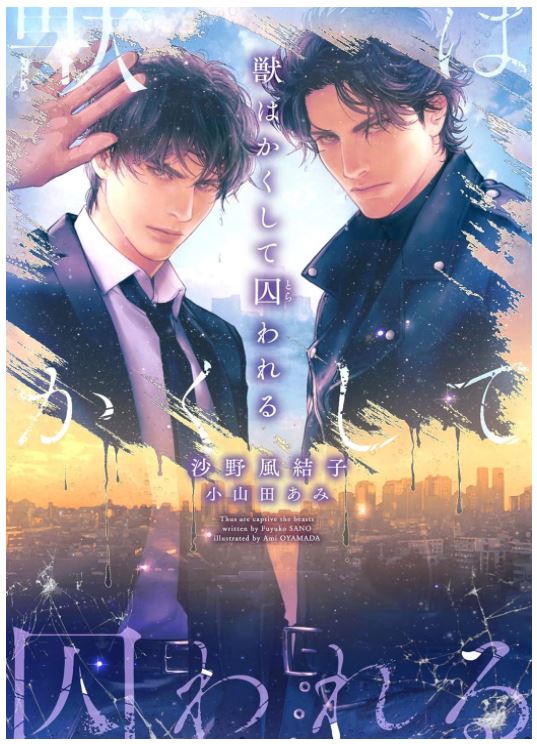
... Read More
"Toono got her addicted to drugs and forced her into prostitution." I need a minute. Just one sentence and the entire weight of Kagura's vengeance crashes down on you. This backstory about his cousin Haruka is... devastating. She was his first, apparently. The girl who tried her hardest to cook terrible meals for him. Sweet, broken, and completely trapped by Toono's manipulation. The fact that she saw her degradation as love—abandoning herself body and soul to prove it—is such a cruel tragedy. And Kagura knew this. He tried to tell her, tried to make her understand, but it was too late. "If he could turn back time, he would have risked everything to warn Haruka to stay away from that man." I keep coming back to this line. How much guilt is sitting on his shoulders? How many nights has he replayed every moment, wondering if he could have done something differently? And then the worst part—she died in the crossfire of a suicidal client. Not even by Toono's hand directly, but because of the world he created around her. Kagura watching this happen, feeling helpless, and deciding that vengeance is the only path left. I get it. I absolutely get it. But it breaks my heart for him. The parallel with Zero is killing me though. Kagura says he's prepared to stop being a detective, to go beyond the protective rails of the civilized world. He's essentially saying he's becoming like Zero, embracing darkness. And Sanae—poor Sanae—has to watch his friend walk away from everything he believed in. "Even so… I wanted to save her. I wanted Haruka to live." The simplicity of that line. No dramatic flair, just raw grief. And Kagura carrying this alone while trying to protect Sanae from his darkness? That's the kind of emotional complexity that keeps me up at night.
... Read More
The bedroom scene in Chapter 3 is one of those moments that just exists outside of normal storytelling logic and becomes something else entirely. Let me just say this: 'The bed, bathed in moonlight and tinged with blue, was still disheveled from the previous morning.' That's it. That single sentence does more worldbuilding and emotional heavy lifting than entire chapters of exposition in lesser novels. The color palette the author uses throughout these chapters is striking. Blue moonlight. Cold sweat. The dim apartment in Nakameguro. Everything has this watery, submerged quality to it, like the characters are constantly operating just below the surface of whatever normal life looks like. Even the shower scene - Kagura stepping in fully clothed, waterlogging his clothes until they weigh him down and he collapses to the floor. That's not just atmosphere, that's physical manifestation of drowning in grief. And the contrast with the 'Invincible Castle' scenes is brutal. On one hand you have this intimate, almost sacred space where two broken people find temporary relief in each other. On the other, you have Li Azhar's global casino empire, the organized crime infrastructure, the third basement level where girls disappear. The world feels layered - like each location has its own gravity, its own rules, its own temperature. Roppongi Hills at night when Kagura unconsciously rides his bike there, the police station with Takizaki's booming voice, Zero's apartment on the seventh floor. Each place tells you something about who these people are and what they're running toward or away from.

Leave a comment

You must be logged in to leave comments. or
