The Abyss Game - Reviews

The Abyss Game
+Add to Custom List
Sort
Add review
... Read More
Let me just say upfront — I have never met someone I simultaneously want to protect and also worry will absolutely destroy everyone around him if given the chance. Qiao Jingting is... complicated. Really complicated. Here's a guy getting his spine cracked open, bleeding from his face, and his first instinct isn't to beg or break down. It's to spit blood and call his attacker "scum." Then when he's literally dying on the ground, he channels every ounce of remaining life into strangling the man who was beating him. Not running. Not negotiating. Choking him while four other guys are hitting him and he just won't let go. "Kill him! Kill him! Even in death, he would take this beast with him!" And the narrator describes him at that moment as looking like a demonic ghost from hell, veins bulging, eyes wide, radiating nothing but pure murderous intent. This is the same person who was terrified in the water, thinking about his grandmother, wanting to survive? Yes. Both things are true at once. Brother Wei is the kind of villain who exists specifically to make you furious. He's petty, cruel, and yet there's this almost pathetic quality to him — the guy who needed to break someone smaller to feel big. When he says "If you had been obedient, you could have become a good dog" — that's the exact kind of line that makes me want to throw my phone. But what fascinates me most is Qiao Jingting's relationship to his own body and agency. He has nothing. His grandmother depends on him. He's in a game where death is real. And yet the moment he gets that chance to bite back — even if it costs him his arm — he takes it without hesitation. That's not recklessness. That's something else. That's a person who refuses to be a victim, even when being a victim would be smarter. I need to know what happens to this person next and I am not ready for it.
... Read More
This doumu area hit different. You'd think being thrown into a blizzard would feel like punishment—cold, desolate, barely any souls around—but the author flips it on its head. That scene where they step off the Tree of Life and the cold literally clears their minds? Genius move. It's not just atmosphere, it's a narrative device. Doumuxie is described as a neutral zone, no guild favoritism, city guards actually enforcing rules. After the suffocating tension in Jiaomu Jiao where Zhao Monong could've had them killed on a technicality, this frozen village felt like the first real breath these characters took. The contrast between the crowded, dangerous guild city and the empty, harsh but honest blizzard village created such a vivid sense of relief. I kept imagining the white landscape, the single inn, steaming tea in cold hands—it read like a film cut from chaotic color to stark monochrome. "The coldness of Doumuxie's environment made them shiver, and it seemed to clear their minds." That line alone does so much work. The setting isn't backdrop; it's emotional weather.
... Read More
Let me tell you about a plot twist that just sat there quietly but somehow drove every scene in these chapters. Bai Youming disappears mid-conversation, and the absence of him becomes this gravitational center that orbits around for pages. Qiao Jingting says it plainly: he wouldn't just vanish without explanation. That single line does so much work because it establishes her as someone who reads people, and it plants this seed of mystery that never fully resolves. Then you've got Bai Yue—the wildcard everyone's talking about but never seen. A seventeen-year-old who killed an eighth-level player, stole a jade armor worth two hundred points, and is now being hunted by the Jianfeng guild. This subplot is fascinating because it mirrors Qiao Jingting's own situation. Both are young, both are talented, both are on the run from powerful organizations. The parallel is deliberate, and it raises the question: will they cross paths, or will they end up on opposite sides? The structure here is clever. The author uses the Giant Wasp hunting sequence as a breather between mystery beats, but even that scene isn't really about the monsters. It's about earning points, about the economy of this world, about how desperately people need resources just to survive. The hunt functions as both set piece and worldbuilding tool, which is exactly the kind of dual-purpose scene that keeps a plot moving without feeling like filler. By the end, the planning sequence—mapping out nine cities to search—gives us a concrete goal and a ticking clock. We know Bai Yue is hiding somewhere, we know Jianfeng won't stop looking, and we know our protagonists are running out of time. That's a satisfying act structure, and it leaves you wanting the next chapter immediately.
... Read More
The stakes in this chapter are incredibly high. We have got a kid with a single dagger against guys with guns, rocket launchers, and energy barriers. When Bai Er gets hit by that projectile and crashes into the wall, covered in shrapnel... I was actually holding my breath. The physical toll is visceral. But the psychological stakes are higher. Qiao Jingting is taking a huge risk letting Bai Er in. If he rejects him, Bai Er dies. If he accepts him, he brings a potential threat into his safe zone. That decision weighs on him—I could see it in his hesitation before he tells Shu Ai to let the kid in. And then we have Han Bin looming outside. The lack of a nightclub, the boredom, the lurking danger—it all adds up to a pressure cooker environment. If Bai Er steps out, he faces three moves against Han Bin. One punch could crush his skull. The suspense is palpable. Will he walk into that trap? Or will he find another way to test the boundaries? The author keeps raising the bar until it feels impossible for the protagonist to survive.
... Read More
I need to talk about how this thing opens because honestly it nearly knocked the wind out of me. We start with Qiao Jingting already on the ground being savagely beaten with an iron rod by these lower-level guys who somehow overpower him. Not some epic battle — just cold, ugly, systematic brutality. And the worst part? Nobody is coming to save him. His grandmother is in a hospital somewhere and he's alone in this... what, arena? System? I still don't fully understand the mechanics but I understand the trap. "Die... Will he die... die in this incomprehensible place?" This line haunts me. The fact that he's already thinking about going back, about surviving, even as his bones are breaking — that's not just plot, that's character being carved into the story by fire. Then the arm gets SEVERED. Let me say that again. The narrative just... cuts off his arm. No hero moment, no last-second escape. A guy with a knife just swings and boom — gone. Right hand, silver-white bracelet, forearm, all separated. I sat there staring at my screen like what just happened? And then immediately I was hooked because now I NEED to know what happens next. The transition from the beating to the icy seawater to the ghost child offering him a deal — that's some serious tonal whiplash and it worked on me completely. From visceral physical pain to existential dread to some creepy "rebirth opportunity" pitch. It's like the author knows exactly how to keep you off balance, and I found myself flipping pages like my hands were on fire.
... Read More
The image that haunts me after reading this: blood pooling around the crocodile's torn forelimb, shimmering red in fluorescent light, until Qiao Jingting rolls close enough to see the glittering cables beneath. That moment—the visceral dissonance between organic horror and mechanical truth—is worldbuilding at its most devastating. The author doesn't need exposition dumps about the game's nature; one severed limb tells us everything. This isn't a fantasy realm with living beasts. It's a simulation wearing flesh, a trap designed to look like danger while hiding its true mechanics. The environment itself feels alive with contradiction. Safe zones exist—platforms where the twins wait—but step outside and you're hunted by things that bleed like animals but move like predators engineered for maximum terror. The gray squirrels and giant hyenas mentioned earlier apparently bled differently, which suggests escalating sophistication in the crocodile's design. Someone built this. Someone decided level four players should face mobile turrets on legs. And the light—the dawn breaking as Qiao Jingting finally collapses, the hazy sky above him, the numb fingers unable to grip his sword anymore. That ending image transforms the entire sequence from action spectacle into something almost elegiac. He didn't conquer nature; he outlasted a machine. The world hasn't changed. He has. Or maybe he hasn't. The ambiguity lingers long after the last paragraph.
... Read More
The pacing in these chapters is honestly incredible. You've got this quiet, almost domestic sequence—Qiao Jingting recovering, them grinding rats together, resting, eating cheap food—like a normal isekai game story, right? Cozy even. And then BOOM. Thunderclap. Crowds gathering. A Level 9 Judicator arrives. Within a few paragraphs you go from 'yep, just two friends playing a game' to 'this world is fundamentally broken and everyone is being manipulated.' The transition is so sharp it actually mirrors what Qiao Jingting is experiencing—he thought he understood this world, and now he doesn't. The exposition drops are also well-timed. Instead of one massive info-dump about the game mechanics, it comes in pieces: the Demon Slayer List, the point system, the level-scaling problem, Han Bin's backstory, Zou Yidao's situation. Each piece answers a question but raises two more. And the chapter ending with Zou Yidao being unable to earn points and the system quests hinting at hidden depths—it's a perfect hook. I literally would have kept reading instead of sleeping. The author also does something smart with the Shu Ai scenes—her emotional moments are brief but land hard, never lingering too long, keeping the momentum going.
... Read More
"Did we just make enemies with the three biggest guilds in the game?" ..."Hahaha!" They laughed. THEY LAUGHED. I need a minute. This is the most unhinged power move I have ever read in a web novel and I am HERE FOR IT. Let me lay out why this works so brilliantly: Qiao Jingting and White Er walk out of a confrontation where a Level 6 player literally threatened them, a guild manager was trying to find excuses to punish them publicly, and they've now openly crossed multiple powerful factions—all while standing in a freezing village eating hot tea. The stakes have never been higher and the way the author handles it is somehow both terrifying and absolutely hilarious. What are they赌ing? Everything. Their lives in this game, possibly their real lives too given how visceral the threats feel. Qiao Rui literally says he'll "personally kill" Qiao Jingting when he's "plump and ready." That's not a metaphor in a death-game setting. And yet—they laugh. White Er's first laugh in the whole story, showing those tiger teeth like some feral little wolf who just realized the hunt has begun. The tension here is insane because we know what's coming. Every friendly face from here on out might be an enemy. Every quest notification might be a trap. The author has successfully made me simultaneously terrified for these two and desperatelyrooting for them to survive. How do you recover from making enemies with the three largest organizations in the game and then just... go buy warm clothes? Qiao Jingting, that's how.
... Read More
'But every time I kill someone, I can't help but wonder, what is all of this for?' — Shu Ai, probably, while wiping blood off her blade like it personally offended her. And honestly? That line broke me a little. The fact that she leveled up from this fight and feels absolutely NOTHING about it, just... disgust? Profound silence staring at the corpse? That's such a realistic portrayal of someone who is good at violence but NOT at war. Meanwhile Qiao Jingting's response is just this... gentle pat on the head? 'We don't know what this game is for, but we fight to survive.' He doesn't even try to philosophize with her. He just... anchors her. And the detail about her seeing him as a protective older brother figure? Her eyes welling up, rubbing them forcefully, whispering 'To survive' before hurrying after him? That friendship-between-them is doing SO MUCH heavy lifting in these few paragraphs. It's not romantic, it's not familial, it's something that exists only because they're the only two people in this nightmare who trust each other completely. Also the part where she shields him with her own body when they're surrounded — energy shield dropping to 31%, lower body paralyzed, spine screaming — and her FIRST impulse is still to protect HIM. That's commitment to the partnership right there.
... Read More
The worldbuilding in this chapter is absolutely stellar. I love how the author seamlessly blends the game mechanics with the emotional reality of the characters. The Demon Slayer List appearing on every player's screen, the Tree of Life becoming a gathering point - these aren't just background details, they're the actual infrastructure of this world. The scene where all the oppressed players gather around the Tree of Life, celebrating loudly as Heart Moon Fox finally sees the light of day - it's such a vivid image. You can almost see the relief on their faces, hear their voices rising in celebration. After being oppressed for so long, this moment of temporary freedom feels earned. But what really impressed me is how the author uses the environment to reflect the characters' inner states. Shu Ai walking back to the village with a knife in her hand, her slender figure against the backdrop of celebration - it's such a powerful visual contrast. Everyone else is rejoicing, but she's moving away, processing something far more personal. The game mechanics are explained through Zou Yidao's dialogue about the five major professions, and I love how naturally this information is woven in. Hyperbody, Gu Shi, Variant, Guoshi, God's Order - each one feels distinct and meaningful. The fact that Qiao Jingting can now refine marrow and choose a profession after reaching level six gives us a glimpse of the progression system without it feeling like an info dump. Zou Yidao's Crocodile Tortoise Variant ability, his casual smoke ring blowing, his references to the newbie village - these small details make the world feel lived-in. You get the sense that this is a place with history, with clans and families and traditions that stretch back thousands of years. The description of the Bai family's colorless people seeing clearly in darkness, their fear of sunlight, their short lifespan - it's worldbuilding that serves both plot and theme. The setting isn't just backdrop, it's actively shaping who these characters are and what they can do.
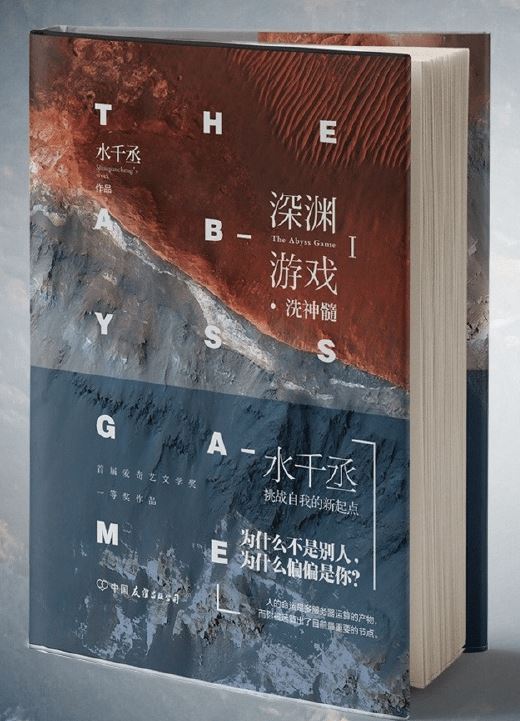
... Read More
Okay so let me just say—this chapter is doing a LOT of heavy lifting for worldbuilding through dialogue, and honestly it works really well. The fat guy explaining the Tree of Life system feels like the kind of exposition you actually want because it comes from a place of intimidation rather than some narrator pausing the story to lecture us. Thirty-two cities, four newbie villages, four free markets, four border countries—the structure the author built here is elegant. It gives you a map without giving you everything at once. But what I found most interesting from a plot perspective is the escalation. Qiao Jingting enters this fight already knowing he needs to get stronger to leave, and the moment the newbie protection expires, he gets swarmed. The pacing here is deliberate—you feel that countdown ticking. He tries to walk away, he tries to negotiate, and when that fails, he goes full combat mode. Then just when you think he might turn the tide, Brother Wei shows up. That entrance is perfectly timed. "Useless." Two words and suddenly the stakes shift from 'can he survive this beating' to 'oh god, what happens now.' The cliffhanger ending where he's told he can go free if he lands one punch on Wei? I literally gasped. And the fact that Wei is described as skinny but breathing evenly while Qiao Jingting is covered in blood? That contrast is chef's kiss. The plot is tightening its grip with every paragraph.
... Read More
This is what peak survival-fiction stakes look like. Let me be clear - when Qiao Jingting feels his severed hand rolling on the ground, that isn't fictional pain. The text explicitly says those who haven't experienced limb separation cannot understand. That's the author laying down the gauntlet: we're not playing pretend here. Every wound matters. Every point matters. Death is permanent. The conflict between Qiao Jingting and Xin Yue Hu escalates beautifully across these chapters - what started as a workplace dispute has now become a fight for literal survival in a world where enhanced humans with superhuman abilities stalk the darkness. Shu Ai's brother being murdered by the Level 6 leader adds a deeply personal vendetta on top of the systemic horror. And Qiao Jingting's decision to get stronger specifically to hunt them down? That's not bravery - that's desperation turned into purpose. The stakes keep rising with each revelation about this strange world. Every answer spawns three new, more terrifying questions.

Leave a comment

You must be logged in to leave comments. or
