The Abyss Game - Reviews

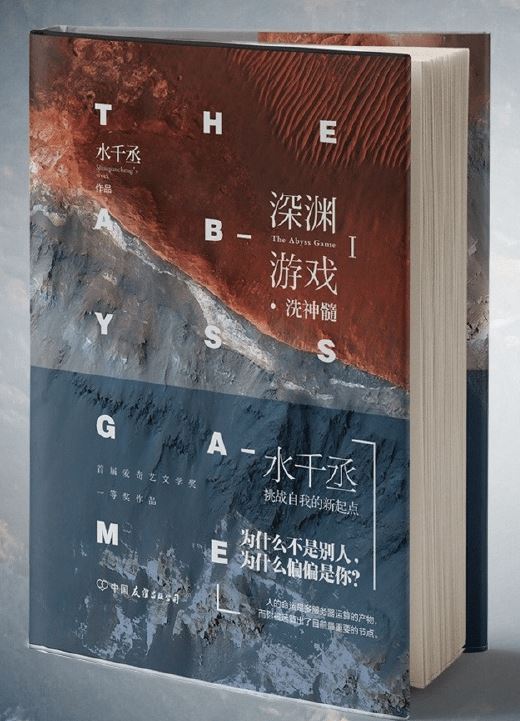
The Abyss Game
+Add to Custom List
Sort
Add review
... Read More
I need to talk about Shu Ai for a minute because this chapter broke something open in me. The opening image of her shoulders trembling, unable to control herself after carrying this burden for so long - it's devastating in its simplicity. You don't need a thousand words to describe grief when you can just show someone's body giving out. The line 'Your brother can rest in peace now' from Qiao Jingting made my chest tighten. It's such a small, human thing to say, but it carries the weight of everything that's led to this moment. She spent a year enduring humiliation, carrying hatred, pretending to be someone she wasn't - all for her brother. And now it's over. But here's what really got me: her response. 'I did it myself. I burned my face. To protect myself, but also to remember my brother's hatred.' This isn't revenge for its own sake. This is love, twisted into self-destruction. She couldn't save her brother, so she destroyed part of herself to keep his memory alive. That's the kind of emotional logic that makes characters feel real. Qiao Jingting's reaction is perfect too. He's been in this game for over ten days and he still can't process what she's done. The author uses his perspective to show us how extraordinary this act is - we're supposed to understand through his disbelief how much pain she must have endured. The ending where she walks back to the village alone, knife in hand, is so haunting. She doesn't want comfort, she doesn't want explanations. She just needs time to be alone with whatever she's feeling. The fact that Zou Yidao comments on her 'really something' quality while watching her leave tells you everything about how this moment affected everyone around her. I kept thinking about how relationships in this story seem to deepen through shared trauma rather than shared joy. Qiao Jingting feeling pity and respect, the group gathering around the Tree of Life celebrating - but Shu Ai pulling away to process alone. It's bittersweet and honest.
... Read More
Okay so I need to talk about this moment between Qiao Jingting and Shu Ai because honestly it wrecked me. All this buildup—her brother betrayed and killed by Han Bin, the face scar, the whole 'we're grinding together day and night' thing—and then Qiao Jingting just... reaches out and squeezes her shoulder. No big speech, no 'I will save you' dramatic declaration. Just that physical gesture and then the line: 'Once I kill Han Bin, you can restore your face.' My heart. Like, he hears her whole tragic backstory, sees her trembling, and his response isn't to offer empty comfort, it's to offer vengeance. That's actually really in character for him—it's practical, it's direct, it's his love language apparently. And Shu Ai's reaction? She wants to say something but doesn't, just whispers 'let's talk about it later.' You can feel she's overwhelmed but also maybe embarrassed to be vulnerable. Their dynamic is so good. They're not romantic or anything, it's something deeper. Comrades who've seen each other at their worst. He trusts her enough to recover in her house. She trusts him enough to share why she hates Han Bin. That's huge in this world where everyone could kill you for points.
... Read More
I need to address the dialogue in this chapter because wow. Qiao Jingting literally says 'You troublemaker, why didn't you hide in a rat hole?' while practically chest-to-chest with Bai Er in some dark tree hollow and I lost it. The mix of anger, concern, and total discomfort reads so naturally — you can HEAR him saying it, all flustered and trying to cover up that he actually came all this way to save someone. And Bai Er's voice is completely different. So flat, so deadpan, so genuinely confused by concepts like 'brothers' and 'looking out for each other.' His line 'He won't come' followed immediately by 'Never mind' when Qiao Jingting asks about it — that's such a realistic deflection. Someone who's used to being alone doesn't explain themselves. They just stop talking. The exchange about the teleport scroll is peak comedy gold: 'You don't have any points left, why didn't you buy a teleport scroll?' 'Not enough points.' 'What about your weapon? Did you sell it?' 'Customized weapon systems aren't reclaimed.' This is a guy who refused to sell his umbrella weapon system even though he was literally about to die, and Qiao Jingting's frustration is so palpable I could feel it through the screen. The author's voice throughout is sharp and punchy — no wasted words, every line tells you something about the characters. Their banter feels like real people who know each other well, even if one of them is emotionally stunted. I'm re-reading those exchanges over and over.
... Read More
Something shifted in this batch and I need to talk about it. Remember when Qiao Jingting was getting wrecked by Zheng Wei? Yeah, that guy is apparently dead now (Shu Ai killed him apparently, offscreen), and Qiao Jingting has come out the other side like a different person entirely. Not just stronger — morally different. The scene where he breaks the burly man's hand and skull but deliberately controls his force to keep him alive is HUGE. This is a guy who used to be reactive, who got knocked around. Now he's making calculated mercy decisions. "Since he's level 4 I wouldn't get points anyway" — cold. Calculated. Impressive. And the dynamic with Shu Ai? She saved his life by pulling out that poisoned arrow herself, no hesitation, no drama, just "endure it." That's the kind of friendship that doesn't need speeches. Meanwhile Bai Er just... vanishes into the night to take out the sniper. Three people, three different ways of handling crisis, zero ego clashes. They trust each other completely. But the real character gold is Han Bin. The guy had ten people surrounding Zou Yidao on the night of the murder — TEN. That level of paranoia against your own ally tells you everything about where this power structure is heading. He's already isolated himself. The fire exposed him. "If we could kill them, they would be dead already." Shu Ai saying this line hit me because it's so blunt. No heroics, no false modesty. Just recognizing their limitations and working within them. These characters don't pretend to be something they're not.
... Read More
Okay so the whole points system in this chapter is honestly such a clever way to establish the rules of this world without dumping info on us like some novels do. Instead of a giant exposition paragraph, we get it through Qiao Jingting and Shu Ai just talking to each other while killing monsters. "Some quests won't give him any points, while we can earn dozens or even hundreds of points. He can only get single-digit points." Boom — you instantly understand the stakes without being told explicitly. But what really got me is how the author plants the Han Bin problem and then immediately shows us Qiao Jingting's moral boundary. He literally wants to kill someone, but there's this line: "And he couldn't bring himself to harm an innocent person either. Although he wasn't a good person, he hadn't reached the level of senselessly killing the innocent." That's such a defining character moment for the plot going forward. It means every conflict he faces is going to have this moral tension built in. He's not a hero, he's not a villain, he's just a guy trying to survive who refuses to cross some invisible line. The Zou Yidao variable is also brilliant plotting. Using someone as bait isn't new, but the fact that Han Bin won't let Shu Ai get close to Zou Yidao creates a natural obstacle that forces Qiao Jingting to actually think instead of just fight. And that ending where he's looking at the Xin Yue Hu map — clearly setting up the next movement. The author knows how to dangle the next plot point without giving it away.
... Read More
"The safe distance was the key difference between passive and aggressive monsters." This line, right here, is basically the thesis statement for everything that makes this chapter terrifying. Qiao Jingting spent what felt like hours fighting a shallow-water crocodile in the void space—dodging, learning patterns, adapting—and he thought he was getting used to it. Then he stands in front of the REAL thing and his Adam's apple bobs. The author makes this distinction crystal clear: simulation fear and real fear are NOT the same thing. In the void, he knew he couldn't be physically hurt. Here, this creature is twice his size and capable of biting him in half. That shift in perspective is everything. What stakes are we really looking at? Death. Not risk of death—actual, immediate, teeth-and-tail death. And yet he's standing there alone at night with almost no points, no viable weapon, and he's still calculating whether a magazine rifle could work. The internal conflict here is brutal—he's afraid but he needs to kill this thing to survive. His external conflict is equally stacked against him: a monster with thick skin, serrated teeth, and a ten-meter attack range. The most chilling part isn't the crocodile itself though. It's when he asks the system sprite if his fine steel longsword can even kill it, and Xiao Shen says no. Then Xiao Yuan starts to say yes and the text cuts off. We're left hanging on a cliffhanger that's not about action—it's about whether he has ANY option left. That's masterful tension building.
... Read More
The dialogue here is so distinctively economical. Every line serves a purpose, and the subtext is doing heavy lifting. Take this exchange: "You should consider yourself lucky. In theory, you should struggle to kill gray rats, but fortunately, you've figured out their attack patterns." On the surface, Shu Ai is giving advice. But read between the lines and she's actually saying: "You think you're special because you're clever, but you're only surviving because you've memorized a pattern. Don't let it go to your head." And Qiao Jingting's response—his grin, his mischievous smile—tells you he heard exactly what she meant and is already planning to push past it. "What if I could also know the attack patterns of the Giant Crested Dogs, or the Bullfighters, Forest Spiders, Shallow Water Crocodiles, or even the Goblins?" This is such a perfect character moment. He lists them like a menu, almost casually, but you can hear the obsession underneath. He's not just trying to survive—he's trying to MASTER this world's rules. And the fact that Shu Ai immediately understands what he's suggesting without him spelling it out tells you everything about their dynamic. They've been operating together long enough to share a vocabulary of silence. "Maybe you were just lucky last time. What if this time…" Shu Ai doesn't finish the sentence. She doesn't need to. The doubt is hanging in the air, and Qiao Jingting's response—just grinning and raising the knife—speaks volumes about who this character actually is. The narrative voice throughout is lean and observational, never diving deep into internal monologue. We learn about Qiao Jingting's thoughts through his actions and decisions, not through exposition. It's a show-don't-tell approach that keeps the prose breathing.
... Read More
Shu Ai's voice is one of my favorite things about this book. The girl says - 'Consider me unlucky. Originally, I could earn 30 points for collecting a corpse, but you came back to life, and now I have to pay to enter...' And I just... she treats a resurrection like a minor inconvenience. The casual cruelty mixed with genuine care in her dialogue is phenomenal. She throws medicine at him from a distance like he's a stray dog, tells him to fix his other injuries himself, and then demonstrates superhuman strength just to prove a point. Meanwhile Qiao Jingting's dialogue shows his transformation from a normal guy to someone who accepts this broken world with eerie calmness. The Matrix reference conversation between them? Natural, intelligent, and perfectly captures two people trying to process the unprocessable. Shu Ai's line about enhanced people having heightened senses and Qiao Jingting not being able to sneak past her - that exchange is gold because it establishes hierarchy without any exposition dump.
... Read More
Okay so Qiao Jingting absolutely EARNED that win against the muscle-bound man. The way he read his opponent mid-fight—realizing the cleaver was actually a disadvantage because the guy wasn't skilled with it—that's the kind of tactical thinking that makes combat scenes feel intelligent rather than just flashy. He didn't just overpower him; he outthought him. Struck the wrist, disarmed him, drove the mace into the diaphragm, hit the dazhui acupoint... this man was methodical as hell. And then the universe just... laughed at him. Of COURSE some random Level 6 player would appear with a shotgun right when Qiao Jingting thought he was safe. It's almost poetic cruelty—the reader is still riding that adrenaline high from the victory and BAM, taken down again. It's the narrative equivalent of kicking someone while they're already down, which I guess is exactly what this world does to everyone constantly. But then the whole situation spirals even further out of control with the ostrich charging in, the False Masks closing in, and Zhao Monong appearing like some kind of dark king surveying his territory. Just when you think the tension can't go any higher, Bai Er drops that line about 'Go ahead, kill me' and suddenly we're in completely new emotional territory. The plot doesn't just raise the stakes—it changes the entire nature of what's at stake. It goes from physical survival to something much more complicated.
... Read More
I have to talk about the dynamic between Qiao Jingting and this kid Bai Er because it is genuinely one of the best moments in the book. It's not just a typical mentor-meets-apprentice setup; it's deeply personal. Qiao Jingting looks at Bai Er and sees his own younger self—alone, desperate, and incredibly dangerous. When he yells, 'You just earned points, buy a gun!', he isn't just giving tactical advice; he is projecting his own survival mechanism onto the kid. It's almost painful to watch. And Bai Er? He doesn't want charity. He accepts the help but keeps his emotional distance intact. That line where he says, 'I owe you my life. I will repay it'—that is not the language of someone who wants to be saved. That is the language of someone who views relationships as transactions because that is the only way they have ever survived. Then Shu Ai drops the ultimate observation: 'He's just like you back then.' And Qiao Jingting's response is just a rub of the chin and a quiet 'A bit.' He doesn't deny it. He acknowledges the ghost of his past sitting on his floor. It creates this weird, charged trio dynamic where two survivors are staring at a third one who is about to become them. It's poignant, it's terrifying, and it sets up a massive debt between them that is going to pay off later. I am fully invested in whether Qiao Jingting will end up trusting this kid or if Bai Er will eventually betray them to prove he doesn't need anyone.
... Read More
I am still processing the fact that Bai Er killed five people just to test reality. Can you believe this kid? I thought he was just a violent newcomer trying to survive, but that reveal—that he killed Fatty specifically to see if death had consequences in this 'game world'—is a massive plot twist. It completely reframes his character. He isn't just a killer; he is an experimentalist with zero empathy, someone who treats human life as data points. This changes everything about the central conflict. If he is willing to kill his own kind to understand the rules, what else is he capable of? The plot is no longer just about surviving Han Bin; it is about containing a loose cannon who might be more dangerous than the antagonists. And then there is Zou Yidao showing up right at the end. He recognizes Bai Er instantly—'You're truly from the Bai family.' This suggests that Bai Er's backstory is tied to a larger clan politics that goes beyond the newbie village. The narrative is expanding faster than I can keep up with. Is he an outsider looking in, or is he part of the old bloodlines that run this world? The mystery is deepening in the best way possible.
... Read More
The stakes in this section are about as high as they get and the author makes you feel every single one of them. It starts with survival - Qiao Jingting knows he's about to kill a person for the first time and his whole body rebels. The man's pupils are dilated. Fear and pleading. Warm breath on his hand. You want him to stop. You WANT him to stop. But then the voice from inside the house asks "What's going on?" and everything changes. The man bites his hand and Qiao Jingting snaps. Not because it's logical, but because the threat inside that house is waiting. Shu Ai is in there. And then the long-haired guy opens his mouth and says those words. 'A few of us just had some fun.' The stakes explode from personal survival to something far worse. Qiao Jingting doesn't think, doesn't plan, just roars and charges. His chrome-steel knife appears in his hand like it was summoned from somewhere inside him. He takes a sword through the ribs and doesn't stop. Doesn't even check the wound. Just keeps swinging until the guy's pinned against a wall. But the biggest stakes shift comes at the end when Zheng Wei kicks the door open. The enemy inside becomes the enemy outside. Qiao Jingting just killed two people, is probably wounded, and now faces someone who looks like he wants to peel him alive. The long-haired man's head is still rolling on the ground and Zheng Wei is charging. What does he do? How does he survive this? The chapter cuts before we know and I am losing my mind over what happens next.

Leave a comment

You must be logged in to leave comments. or
