The 1960s’ Most Adored Little Ancestor - Reviews

The 1960s’ Most Adored Little Ancestor
+Add to Custom List
Sort
Add review
... Read More
Okay so let me just say this: the scene where Old Mr. Su sneaks out with that basket disguised as firewood is genuinely one of the funniest and most tense moments in the entire arc. A stone mill, a half-bag of wheat, a chicken hidden under sweet potatoes and pine needles—this man is out here running a smuggling operation for New Year's Eve dinner. And the fact that he doesn't even flinch when Su Xiangdong asks if he stole it? Chef's kiss. The plot threading here is brilliant because it shows how this family operates: they don't have resources, so they MAKE resources. The wheat goes to the Tang family for grinding, the chicken gets slaughtered, dumplings happen. It's a whole logistical chain built on nothing but hustle and family connections. What really sold it for me was the parallel structure—the Old Su family preparing their feast while simultaneously being the most under-resourced household in the village. The author doesn't spell out how they got the wheat, which keeps the mystery alive, but the implication is clear: someone in this family is pulling strings we haven't fully seen yet. And that's the hook. Every chapter builds this quiet tension of 'how will they survive this?' and then delivers a payoff like the New Year's Eve dinner where everyone sits down to meat and dumplings. It's satisfying because the struggle was real, not manufactured.
... Read More
Let me just say this out loud: the stakes in these chapters are quietly devastating. This family has almost nothing. They eat cornbread and black flour porridge every day. When Su Xiangnan's family returns from town with a basket of 'defective' goods—two pieces of cloth, ceramic cups, rubber shoes, soap—the boys cheer like they've won the lottery. Tang Qiwu literally says he wishes he could live at Grandma's house forever because at least there's meat on New Year's Eve. Now multiply that hunger by five children plus adults who are used to going without. The wheat that Old Mr. Su brings out? That's the difference between a feast and starvation. The chicken hidden under firewood? Same thing. Every single object in this story carries the weight of survival. And then there's Su Xiangxi's leg injury—a man who is the family's labor force, now incapacitated, dependent on the wife who tried to murder his child. The stakes aren't just about food or clothing. They're about whether this family holds together or falls apart under pressure. The author never shouts about the tension. It's always there, simmering beneath the surface of every scene. When Grandma Su serves Su Xiangxi the first bowl of chicken soup and the biggest portion of dumplings, it's not just kindness—it's a reminder that he's still the sick one, the one the family must protect, even as everything else crumbles around him. I'm genuinely on the edge of my seat for what happens next.
... Read More
Let me just say this upfront: the atmosphere in this opening is *dense*. Like, you can physically feel the cold pressing against your skin just from reading the first paragraph. "Mid-winter, the twelfth lunar month. The cold wind was biting." Three sentences and I'm already reaching for a sweater. The setting of 1953 rural China during what I'm assuming is the early collectivization period is rendered with such specific, grounded detail that it stops feeling like backdrop and starts feeling like a character itself. The Su family home north of the village, the kang bed, the tobacco pipe, the oil lamp—these aren't decorative details. They're the bones of a world that feels lived-in and real. But what really impressed me was how the author uses sensory details to build immersion. The smell of urine filling the room after Su Jiu changes—yes, really, that's in the text and it's somehow perfect. It grounds this transmigration fantasy in the brutal, unglamorous reality of infant care. There's no romanticizing poverty here. The black flour paste so thin you can see your reflection in it? The wild vegetable dumplings that are "dry, hard, and stuck in your teeth"? That's not worldbuilding, that's documentary-level observation. The winter setting is doing heavy thematic work too. Snow everywhere, roofs threatening to collapse under the weight, the family shoveling together—it's a visual that mirrors the family's situation. They're buried under circumstances and barely keeping their heads above water. And yet, inside that cold house, there's this fierce warmth centered around one tiny baby. The contrast between the biting wind outside and Grandma Su blowing out the oil lamp to sleep beside her granddaughter? That image stuck with me. The Immortal Abode Space description is where the fantasy element enters, and it's handled with restraint. A patch of bare Spirit Field, a Spirit Spring, a thatched hut—minimal, primitive, sealed. It's the visual counterpart to Su Jiu's own situation: powerful potential, currently inaccessible. The grey, hazy expanse behind the barrier is almost haunting in its emptiness. One scene that genuinely gave me chills: Grandma Su braving the wind and snow in the middle of the night to warm goat milk. The detail about her specifically boiling it to remove the gamey smell because she knew the baby might not like it? That's the kind of small, specific detail that makes a world feel alive. This isn't a generic historical setting—it's a specific time, a specific place, with real people making real sacrifices.
... Read More
There's a moment in these chapters where the aroma of meat wafts from every household and the Old Su family's courtyard transforms into this bustling little world of its own. Let me paint it for you: Old Mr. Su wiping the stone mill until not a speck of dust remains, Grandma Su rummaging through the bottom of a chest for hand-me-down clothes, Su Xiangdong grinding wheat in secret, the courtyard gate shut against the world. It feels like a film scene—warm light, steam rising from dumplings, the chaos of children everywhere. And then Su Jiu appears. She's been hidden away, and when Grandma Su finally brings her out, the entire room shifts. The text describes it like a beam of light hitting the space. Tang Qiwu forgets to eat. Xiaobao toddles over with a chicken leg. Even Su Xiangdong, who's been carrying the weight of the world on his shoulders, feels his resistance melt. This is the visual payoff the author has been building toward since chapter one. The world feels incredibly lived-in—ration coupons, defective goods from the supply cooperative, cornbread and black flour porridge as the daily diet. You can taste the poverty and the warmth simultaneously. The New Year's Eve feast isn't just a meal; it's a triumph. Four dishes on the table—boiled dumplings, steamed sweet potatoes, chestnut stewed chicken, stir-fried sweet potato leaves—and yet the author makes you feel like this is the most lavish banquet in the world. That's skilled writing.
... Read More
Can we just talk about how good the dialogue is in this? Like, genuinely. I've read enough transmigration novels to know that dialogue is where a lot of them fall apart—either it's too modern, too stiff, or every character sounds the same. This one doesn't have that problem. Grandma Su's voice is absolutely distinct and I love her so much for it. Her dialogue is sharp, emotional, and completely unfiltered. The way she yells at Feng Qiulian—"Eat, eat, eat, all you know is eating. You'd even have the heart to let my granddaughter freeze to death and still eat without a care… If you want better food, there are plenty of wild boars in the mountains. Do you dare to go?"—this is not someone who minces words. She's a village grandmother in 1953 China and she sounds like it. The rural cadence, the directness, the volcanic temper that erupts the moment someone threatens her granddaughter—it all rings true. Feng Qiulian's dialogue is equally effective, and that's harder to do. Making a character genuinely hateable without making them a cartoon villain takes skill. Her line "That worthless girl is just a money-loser. It's better to let her die than waste food raising her" is delivered with such casual cruelty that it's almost more chilling than if she'd said it angrily. She's not a cackling villain—she's a product of her circumstances, twisted by poverty and patriarchy into something monstrous. And the dialogue makes that clear without any narration telling us how evil she is. The children's voices are surprisingly well-differentiated too. Seven-year-old Su Jinyan's fierce defense of his sister and five-year-old Su Jinrui's earnest offer to share his food—these are kids who sound like kids, not miniature adults. Their dialogue is simple but emotionally honest. And Su Jiu's internal monologue! This is where the dialogue between her past life and present reality really shines. The contrast between her cultivation-world perspective and her baby body's limitations creates this running comedic dialogue in her head. "She, a grand Ancestor, actually had a day where she wet her pants." The voice is consistent—proud, slightly exasperated, but fundamentally adaptive. She's not losing herself in this new body; she's negotiating with it. The narrative voice itself is also worth praising. It's close third person, mostly anchored to Su Jiu's perspective, but it dips into other characters' thoughts when it serves the scene. The tone balances warmth and harshness in a way that matches the story's emotional range.
... Read More
Okay so let me just say — the author knows how to pile on the drama without making it feel forced. First you've got the goat producing milk right when they're about to feed Guai Nan fish soup, which is either a cute little omens thing or the author just really wants us to believe Grandma Su's superstition. Then Su Xiangdong goes hunting and we're left waiting. Then Su Jiu achieves Qi Induction and her body expels ALL the impurities at once — which is basically the most visceral scene I've read in a while. The black mud covering her entire body, the smell worse than months-old manure, Grandma Su carrying her through five trips to the bathtub — it's gross but it's also kind of beautiful because we KNOW this is a transformation moment. And then RIGHT AFTER that warm family scene where everyone admires how pretty Jiu has become, BAM — Su Xiangxi is carried back on a wooden plank with a blown-up leg. The pacing of disasters is honestly impressive. One moment you're feeling warm and fuzzy about the family bonding, the next you're holding your breath. What I also appreciate is that the plot isn't just random suffering — Su Xiangxi's injury connects to the family's poverty (he was trying to earn extra work points), and it sets up a whole new dynamic where the family has to adapt. Feng Qiulian's characterization is interesting too — she's beautiful but apparently did nothing around the house for years while Su Xiangxi worked double. Now that he's crippled, the story is clearly setting up some kind of reckoning. I'm curious whether she'll step up or fall apart.
... Read More
I need to talk about Su Xiangxi because this man is a walking tragedy and I can't stop thinking about him. He's lying in bed, unable to even use the bathroom without help, and his wife is taking care of him with this meticulous, almost desperate attention. The text says it directly: she's begging for his forgiveness. For what? Trying to freeze their own daughter to death. And Su Xiangxi's reaction isn't anger or even sadness—it's this hollow, unsettled feeling. He can't forgive her. He knows he shouldn't have to, but he also knows he's trapped because he's now dependent on the woman who tried to kill his child. Meanwhile, the rest of the family is celebrating around him. The boys are cheering over cloth and rubber shoes, Grandma Su is beaming with Guai Nan, and Su Xiangxi is just... there. Useless. The contrast is brutal. What I find most interesting is how the narrative doesn't judge him for feeling this way. It just presents it. He's a man who defined himself by his usefulness—sweeping yards, chopping firewood, fetching water—and now none of that exists. His wife's betrayal and his physical incapacitation are two sides of the same coin: he's lost control of his own life. I keep wondering what he'll do when he recovers. Will he confront her? Will he stay silent? The author is clearly building toward something big with this relationship, and I'm here for it.
... Read More
I'm just going to say it straight: Grandma Su has the best voice in this entire story and I am here for it. Her dialogue is practical, sharp, and full of love that she expresses through action rather than sentiment. When she snaps at Feng Qiulian — 'What are you crying for? Your man only injured his leg — it's not like he's dead. Instead of wasting energy on tears, why don't you put that effort into taking good care of him?' — that is a woman who has zero patience for useless emotion. And then five minutes later she's gently feeding Su Jiu milk and kissing her cheek. The contrast IS the character. Su Youtian, on the other hand, is the calm counterweight. When everyone else is panicking, he says 'First, get some water to wash Jiu'er' — just instructions, no drama. The dialogue between Grandma Su and Mrs. Zhang during the bathing scene is also great because it feels like real family conversation. Mrs. Zhang noticing Jiu's skin getting fairer, Grandma Su proudly declaring 'no one will dare mistreat my Jiu'er' — it's warm without being saccharine. Feng Qiulian's dialogue is mostly wailing and 'wuwuwu' sounds, which is actually perfect because it communicates exactly who she is without the author needing to tell us. And Su Jiu — well, she mostly just blows bubbles and waves her hands, which is adorable and also kind of hilarious given that she's a reincarnated cultivator with a fully formed adult mind trapped in a baby body. The one line that got me was when Grandma Su says to Su Jiu: 'Your father's fate is unfortunate. Whether he'll be able to stand again in the future is still unknown. As for your mother… never mind, let's not talk about her.' The trailing off, the deliberate avoidance — that's such a natural way people actually speak when they're trying not to say something painful. The narrative voice itself is also worth mentioning. It's third-person limited, mostly following Su Jiu's perspective, and it has this dry humor that comes through in lines like 'Saliva and such… so dirty… But, considering how much Grandma Su doted on her, she reluctantly endured it.' That inner voice of a cultivation expert dealing with grandma kisses is comedy gold.
... Read More
I need to talk about the purification scene because honestly it's one of the most vividly described sequences I've encountered. Let me just paint it for you: it's the fifth watch of the night — so we're talking pre-dawn, deepest cold of winter — and Grandma Su wakes up because something smells absolutely horrific. The text says it's worse than months-old manure in the outhouse, and I believe it. She fumbles for the kerosene lamp, Su Youtian half-dresses, and then they see their granddaughter covered head to toe in this black mud-like substance. The sensory detail here is INSANE. I could literally smell that room. But then — and this is where it gets gorgeous — after five trips to the bathtub, Su Jiu emerges clean and her skin is described as white as a steamed bun, fair with a rosy tint, lovely as jade and snow. Mrs. Zhang's reaction of just staring in a daze, completely captivated, made me smile. The contrast between the grotesque and the beautiful is really well handled. And the winter setting keeps coming back — the cold water, the kerosene lamp, the thermos keeping goat milk warm. The rural village life feels lived-in. You can picture the kang, the courtyard, the wooden plank stretcher. The Immortal Abode Space is mentioned briefly but it's clear this is a cultivation world layered on top of a very grounded, very poor rural setting. The spiritual Qi growing denser in her space while the outside world remains scarce is a nice touch — it creates this private sanctuary that contrasts with the harshness of the village. I also loved the detail about the sweet potato vines being fed to sheep and the stems being stir-fried. These small domestic details make the world feel real.
... Read More
Let me just say this: the stakes in this story are real, and they're layered in a way that keeps getting better. On the surface, the conflict is straightforward. A baby almost died because her mother tried to freeze her to death. The grandmother is protecting her. The family is poor and running out of food. That's enough conflict to carry a story, honestly. But the author keeps raising the stakes in ways that feel earned rather than manufactured. The first major conflict—Feng Qiulian vs. the family—is handled with satisfying intensity. When Feng Qiulian says her daughter is a "money-loser" and deserves to starve, the reader's anger is immediate and total. And then Grandma Su hits her with a cotton shoe. Slap. Slap. Slap. The shoe prints mixed with the smell of sweaty feet on someone's face—this is visceral, almost slapstick violence, but it's also deeply cathartic. We've been waiting for someone to stand up to this woman, and when they do, it's with everything they've got. But then the author does something smart: they pivot the stakes from interpersonal conflict to systemic conflict. It's not just about a bad mother anymore. It's about a family of nineteen people in 1953 rural China with seven days of food left. The conflict expands from "will Grandma Su protect her granddaughter from her mother?" to "will this entire family survive the winter?" And the latter question is infinitely harder to answer. The internal conflict of Su Jiu herself is where things get really interesting. She's a cultivation ancestor who can sense spiritual energy across vast distances, and now she can barely sense anything in her own house. She has an Immortal Abode Space that's sealed behind barriers, and she's too weak to even use her Divine Sense beyond a few feet. The stakes here are existential—her very identity as a cultivator is on the line, and she has to figure out how to grow stronger in a world where spiritual qi is nearly nonexistent. What makes these conflicts work together is that they're all connected. The food crisis threatens the family, which threatens Su Jiu. Su Jiu's weakness prevents her from helping solve the food crisis, which increases the stakes for everyone. It's a chain of dependency and vulnerability that makes every scene feel urgent. And the suspense? The author doesn't rely on cliffhangers or fake-outs. The tension comes from the simple, brutal fact that these people are going to run out of food, and there's no easy solution in sight. That's the kind of stakes that keep you reading—not because you're waiting for a twist, but because you genuinely need to know if they make it.
... Read More
There's a lot happening beneath the surface of this story, and I want to talk about what I think the author is really exploring here. The central symbol, obviously, is milk. It's the most basic human sustenance, and in this story it becomes the currency of survival, the object of conflict, and the expression of love. Feng Qiulian hoarding her breast milk for her son while letting her daughter freeze—this is about more than just a cruel mother. It's about how scarcity distorts love, how patriarchy can turn a mother into an instrument of her own ideology, how the most fundamental act of nurturing becomes weaponized in a world where there isn't enough to go around. The milk Grandma Su fights to get for Su Jiu—borrowing an entire goat, paying extra, enduring the shame of trading away precious grain—this is love as action, not just feeling. It's love that moves, that sacrifices, that braves snow and wind in the middle of the night to warm a bowl of milk. The contrast between the two mothers, separated by one act of cruelty and an ocean of devotion, is the emotional spine of the story. Then there's the snow. It's everywhere in these opening chapters—biting wind, accumulated drifts, roofs groaning under the weight. The snow is both literal threat and metaphorical weight. It's the cold indifference of a world that doesn't care whether you live or die. But it's also a blanket, a isolating force that turns the family inward, toward each other. The snow forces them to shovel together, to huddle, to depend on one another. It's harsh but it's also what brings out the best in them. The Immortal Abode Space is another rich symbol. It represents potential—everything Su Jiu was, everything she could be again—but sealed behind barriers that require cultivation to remove. It's a metaphor for growth itself: the idea that your past doesn't define you, but your future work does. The space shrinking to its primitive state alongside her body is almost poetic—she's been reduced to her essentials, and now she has to rebuild from ground zero. And the food crisis—this is where the story gets its most urgent thematic weight. The shallow layer of grain in the rice jar, the rat-chewed sweet potato stub, the decision to go from two meals to one. These aren't just plot devices; they're a meditation on what it means to survive, and who gets to survive when there's not enough for everyone. The fact that a three-month-old baby is the family's first priority, not their last, is itself a kind of radical statement about value and love in the face of scarcity.
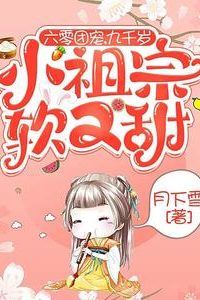
... Read More
This section of the novel is a masterclass in tension management, and I want to break down why it works so well. The chapter block opens with a relatively calm, almost comedic beat — the goat producing milk, Grandma Su's philosophical musing about fortune after disaster. It's warm and slow. Then we cut to Su Xiangdong leaving for the hunt, and suddenly there's this heavy silence over the village. Everyone is praying. The narrative explicitly tells us 'the days passed slowly as everyone endured the anxious wait.' That's the author winking at us — we're supposed to feel that waiting. And then late at night, Su Jiu's cultivation breakthrough happens. Qi Induction, first layer of Qi Refining, her divine sense expanding to five hundred meters — this is exciting for cultivation novel fans. But the author doesn't let us celebrate. The impurity expulsion ruins the triumph with pure bodily horror. We're scrubbing black mud off a baby while the whole household is in chaos. Then just as things start to settle — Grandma Su feeding Jiu milk, having this sweet moment, talking about how she'll raise her no matter what — the courtyard gate is SLAPPED. Su Xiangxi is injured. The transition from the quiet inner room to the violent commotion outside is jarring in the best way. The author basically denies us any emotional recovery time between beats. And the chapter ends on a cliffhanger — Su Xiangxi waking up, realizing he can't move his legs, asking 'what's wrong with my legs?' I was NOT ready for that ending. The structure here is essentially: comfort → anticipation → transformation → disaster → disaster. It's relentless but it never feels careless because each beat earns its emotional weight. The hunting trip subplot is also well-used — we know something might go wrong from the start, so when Su Xiangxi (not Xiangdong) gets injured, it's a twist that still feels inevitable in hindsight.

Leave a comment

You must be logged in to leave comments. or
