The 1960s’ Most Adored Little Ancestor - Reviews

The 1960s’ Most Adored Little Ancestor
+Add to Custom List
Sort
Add review
... Read More
I started reading Chapter 1 at like 11 PM and it is now 2 AM and I am not mad about it. The pacing here is honestly really well-calibrated. Chapter 1 hits you with the transmigration hook immediately—no slow burn, no "our protagonist woke up and felt strange." We get the lightning strike, the cultivation world backstory, and the baby body reveal within the first few paragraphs. That's aggressive pacing in the best possible way. The author knows exactly what genre this is and doesn't apologize for it. Then comes the comedy beat—the diaper incident. This is where the pacing does something clever: it lets you breathe. After the heavy transmigration reveal, we get a genuinely funny moment where a cultivation ancestor is mortified that she peed herself. It's a tonal shift that keeps things from becoming too serious too fast. The humor lands because it's earned—the contrast between her internal monologue ("If those old fogies back in the sect found out, they would probably laugh for a decade or two") and her external reality (a three-month-old baby who can't control her own bladder) is just perfect. Chapter 2 shifts gears into the family conflict, and the pacing here is where I want to give a tiny note of criticism. The confrontation between Grandma Su and Feng Qiulian is great—really great—but it runs a bit long. There are moments where I wanted the scene to end sooner and move to the next beat. That said, the escalation works: Feng Qiulian's casual cruelty ("That worthless girl is just a money-loser. It's better to let her die than waste food raising her") is so shockingly vile that you can't help but want Grandma Su to lose it, which is exactly what happens. Chapter 3's pacing is where the author really shows their hand. The food crisis escalates from background concern to immediate emergency in three paragraphs. The decision to go from two meals to one, the discovery that the grain supply will last seven days, Su Jiu using her Divine Sense to scavenge the house and finding... a rat-chewed sweet potato stub. The tension builds methodically, and the chapter ends on exactly the right note—not a cliffhanger per se, but a growing sense of dread that makes you immediately want to read Chapter 4. The author's use of short chapters is also working in their favor. Each chapter is a manageable size, and they end on moments that create forward momentum. This is the kind of pacing that makes you say "just one more chapter" at 2 AM.
... Read More
I'm not going to lie to you—I re-read the Grandma Su scene three times and I still get choked up. She's digging through the bottom of her chest, pulling out old clothes that are too big for Guai Nan, and she says: 'This year hasn't been good, and Grandma didn't prepare anything. Next year, Grandma will definitely make you a bright red New Year outfit.' Just... that line. She's a grandmother who has almost nothing, and her entire world is this baby girl who isn't even her biological granddaughter. She's already planning next year's clothes in her head, imagining the ponytail, the lucky doll appearance, the red dress. And then when the tattered cloth arrives—blue floral cotton with a mouse hole and five chi of red corduroy—her face 'blooms like a chrysanthemum.' She sees possibility where everyone else would see trash. Cut around the hole, she thinks, and there's still enough for a dress, and the leftovers can make two pairs of red shoes. This woman is a magician. The emotional core of these chapters isn't about cultivation or reincarnation or spiritual energy. It's about an old woman who refuses to let her granddaughter go without, even when the fabric is torn and the world is hard. Su Jiu may remember being a cultivator in a past life, but what she needs right now is this—someone who looks at a mouse-eaten piece of corduroy and sees a bright red New Year dress. That's love. That's the whole story right there.
... Read More
"She, a magnificent Ancestor of the Cultivation World, had actually transmigrated into the body of a three-month-old infant after being struck by lightning during her Ascension Tribulation." Okay. Okay. Let me just sit with this for a second. The premise alone is chef's kiss. A cultivation grandmaster gets yeeted into a 1953 Chinese village baby body? That's not just an isekai hook—that's a whole universe of comedic and dramatic potential right there. And the author doesn't waste it. The plot structure is deceptively simple on the surface: baby survives, family protects her, food crisis looms. But underneath, there's this gorgeous layering happening. We've got the external conflict (starvation, a murderous mother) and the internal conflict (a centuries-old cultivator trapped in an infant body who can't even reach her own Divine Sense from more than a few feet away). The irony is delicious. She could level mountains in her past life and now she's defeated by a diaper change. What really sold me was how the author handles the transmigration reveal. No info-dump. No "and then she remembered everything." We learn through Su Jiu's internal monologue as she's processing her new reality, which makes it feel immediate and alive. The Immortal Abode Space shrinking to its primitive state is a brilliant plot device—it gives her a goal (cultivate to unlock it) without being heavy-handed about it. The family dynamics subplot is what keeps this from being a one-note premise. Grandma Su going from sweet grandmother to absolute demon-slayer when Feng Qiulian opens her mouth? Iconic. The line "I'll teach you to talk trash! I'll teach you to curse my Jiu'er! I'll teach you to be so malicious!" while whacking someone with a cotton shoe? That's not just comedy, that's plot armor made flesh. And the food crisis thread—starting in Chapter 2 and escalating through Chapter 3—gives the story real stakes. This isn't just a cute transmigration comedy; people are going to starve if things don't change. The fact that Su Jiu discovers the rice jar has only a "shallow layer of coarse grains" and finds a rat-chewed sweet potato stub through her Divine Sense? That's worldbuilding as plot device, and it works beautifully. I'm genuinely curious where this goes. A cultivator in a starvation-era village with a shrunken spiritual space and no access to spiritual qi—how does she level up? That's the question keeping me turning pages.
... Read More
Okay, I need to unpack something that's been bothering me in the best way. Su Jiu—Guai Nan, the Fortune Doll—was picked up from the snow as a nearly dead infant, and now she's transforming day by day because of something called Qi Induction. The text drops this line: 'Back in the Cultivation World, what kind of clothes hadn't she worn? Gauze, silk, satin, brocade, and even magical robes and immortal artifacts...' She's looking at two pieces of tattered cloth— one with a mouse hole in it—and feeling the落差. This is such a rich symbolic moment. The Fortune Doll is supposed to be heaven-favored, blessed, destined for greatness. But she's also a baby in a poor rural family during what sounds like a very difficult historical period. The tattered cloth represents everything she's had to accept in this life, while her memories of the cultivation world represent what she once was. And yet—here's the thing that got me—the text immediately undercuts her disdain with Grandma Su's genuine, unconditional love. 'The quality of the fabric was secondary, but Grandma Su's affection for her was absolutely one of a kind.' So the real magic isn't the spiritual cultivation or the heavenly fortune. It's the human warmth. The theme here is clear: blessings don't come from destiny or reincarnated power. They come from the old woman who saves up every penny to make a red dress for her granddaughter, even if the fabric has a hole in it.
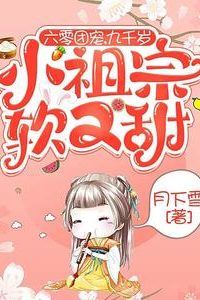

Leave a comment

You must be logged in to leave comments. or