Sweetness Is Incessantly Late [BL] - Reviews

Sweetness Is Incessantly Late [BL]
+Add to Custom List
Sort
Add review
... Read More
The stakes here are deceptively low on the surface but profoundly high underneath. On paper, it's just a couple arguing about secrets and career choices. But peel it back and it's about identity, autonomy, and the fear of being truly known. Chi Yu discovers the deleted job offer from the pharmaceutical company—a golden ticket, shares, dividends, paid leave. He could walk away from the medical pressure and take it. But he doesn't confront Fu Zhi'an with anger; he confronts him with a quiet, devastating observation: 'Why didn't you discuss this with me?' The stakes? Trust. If Fu Zhi'an keeps making unilateral decisions, Chi Yu becomes a旁观者 in his own life. Then the blood test scene raises the physical stakes: Chi Yu went out for ten hours, didn't answer calls, came back with a folder full of medical results. Fu Zhi'an's panic isn't just about worry—it's about the realization that he pushed Chi Yu away through his secrecy. The conflict isn't external; it's internal, simmering. Chi Yu's anemic, Fu Zhi'an's forced into a career he yawns through, and both are making sacrifices they don't openly acknowledge. The tension peaks when Chi Yu says, 'Go do what you love.' It's an offer, a release, but also a challenge. Will Fu Zhi'an accept and pursue medicine passionately, or will he continue half-committed? The author maintains suspense not through action sequences but through emotional landmines. Every conversation is a minefield. Every silence is a countdown. When Chi Yu pokes Fu Zhi'an's knee and says, 'I'm not an idiot,' he's drawing a line. The conflict is about visibility—can they see each other clearly, or will they keep performing roles? The stakes are their entire future together. And the brilliance is that the author makes you feel the weight of every unspoken word, every avoided gaze, every burnt piece of toast. You're not wondering if they'll break up; you're wondering if they'll ever stop performing and just be real with each other. That's where the real drama lives.
... Read More
I came for Fu Zhi'an and Chi Yu's ten-year romance and stayed because Shao Yingran is the most underrated character in this entire story. Let me paint this for you. Shao Yingran is the "perfect child" who skipped college entrance exams, got into S University through some youth program, and then spent seven days watching Fu Zhi'an make him feel inadequate in every possible way—better grades, better experiments, better at Tai Chi for god's sake. And instead of making Shao Yingran just some bitter roommate who gets written out, the author gives him this whole arc where he processes his resentment and ends up... wishing them both well? The detail that killed me: Shao Yingran sneaks a book into Fu Zhi'an's backpack. Not just any book—Reflections on Life, which Fu Zhi'an had already read five years ago. But he doesn't correct Shao Yingran. He just sends a text saying thank you. That moment tells you everything about Fu Zhi'an's character—he doesn't gloat, he doesn't reveal he's several steps ahead, he just accepts the gesture with grace. And Shao Yingran's handwritten note—"Wishing you a bright future, and wishing both of you a bright future"—that's someone who has made peace with being the second-best person in the room. Then there's the relationship between Fu Zhi'an and Chi Yu, which is honestly the kind of couple dynamic that makes you want to call your own partner. Watch the basketball scene again. Chi Yu can't focus on the game because Fu Zhi'an is holding his hand. Their palms are sweaty. Fu Zhi'an pulls away, wipes his fingers on his own pants, and then takes Chi Yu's hand again—naturally, seamlessly, like they've done this a thousand times. This is a couple that has practiced intimacy without even trying. They don't need grand gestures; they need each other's sweaty palms between them in a stadium. And Li Che—ugh, Li Che. He shows up, grabs Chi Yu's arm (which immediately sets off every alarm bell for Fu Zhi'an), calls them "one lacks brains and the other lacks emotional intelligence," but then manages to get NBA tickets that Chi Yu wanted. He's the friend who is simultaneously annoying, practical, and somehow essential to the ecosystem of their relationship. The fact that Fu Zhi'an's first impression of him soured but he's still part of their world says something about how these people accept each other's flaws. The most powerful relationship moment isn't even romantic. It's Shao Yingran at 4 AM, tossing in bed, asking "Is liking guys different from liking girls?" And Fu Zhi'an's answer—"I liked him too early, so I never compared." That's the most honest thing anyone has ever said to me in a book. You don't compare when your first and only experience is everything. It reframes the whole love story not as some epic comparison between different types of romance, but as a single, complete, undeniable thing.
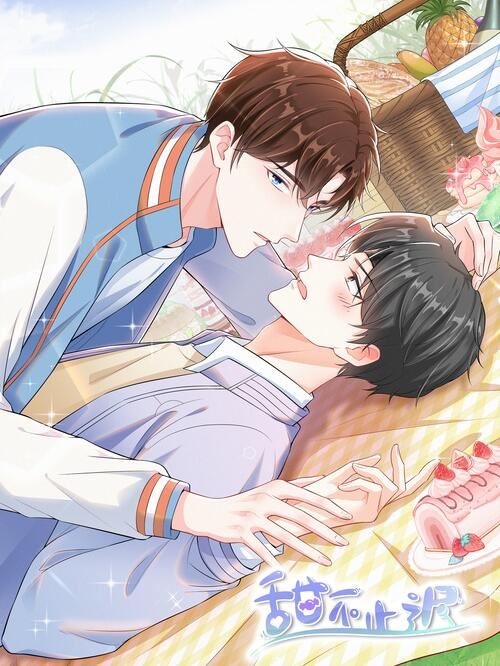
... Read More
I keep coming back to the objects in this chapter because they're doing so much heavy lifting without anyone noticing. The ring. Obviously. It's oversized, loose on Fu Zhi'an's finger, constantly threatening to fall off. And yet he wears it everywhere — to company events, to TV interviews, to bed apparently. "Strict house rules. Whatever they buy, I have to wear." This isn't just a romantic gesture. It's a public declaration disguised as compliance. He's telling the entire world, while also pretending he has no choice in the matter. That tension between agency and submission, between devotion and obligation — it's right there in a piece of metal. Then there's the tie. Chi Yu mentions he's never worn one, and Fu Zhi'an drapes it around HIS neck instead. It's such a small moment but it flips everything — instead of conforming to Chi Yu's world, Fu Zhi'an brings his own symbol of professionalism and status into that space and makes it domestic, makes it intimate. "You look better in it than I do" isn't just flirtation. It's an act of care. And the Red Bull cans — three of them, consumed by a guy who was clearly never going to stay awake — representing how much effort Chi Yu put into just witnessing Fu Zhi'an exist in the public eye. Every empty can is a silent statement: I see you. I'm watching. I care.
... Read More
I don't normally think about pacing when I'm reading, but this chapter had me absolutely locked in and I can't explain why without dissecting it. It starts with HIGH energy chaos—the rehearsal hall, kids yelling, Chen Lin trying to vote, Ji Xiaoxiao being harsh. You're right there in the noise. Then Fu Zhi'an leaves and suddenly—silence. Winter night. Damp air. A flickering streetlight. The pace drops dramatically and that contrast is intentional. The author is letting us breathe after the school scene before throwing us into something even more emotionally intense. Then Chi Yu appears with the puppy. We follow them on this long walk—no buses, no taxis, just two boys and a dirty dog marching down one road after another. This section could've dragged, but it doesn't because every detail pulls you forward. His thinning frame, his stained sweater, the way he refuses to put the dog down even though he's clearly exhausted. The animal rescue center becomes the pressure-cooker scene. Everything compresses here. Chi Yu pays the bill. They watch the dog through glass. And then—without any warning—you get the confession. The pacing shift from that quiet window-watching to 'About why you... why you like me' is JARRING in the best way. It catches you off guard the way real vulnerable conversations do. There's no build-up music, no dramatic pause in the narrative. Chi Yu just... says it. And the ending? 'Fu Zhi'an leaned his head weakly against Chi Yu's shoulder, the sc...'—CUT TO BLACK. I need the next chapter immediately.
... Read More
Okay so let me just say this—Fu Zhi'an is possibly the most dangerously patient person I have ever encountered in fiction. Think about it. He sees Chi Yu misinterpret literally everything, and instead of correcting him with any real bite, he just... plays along. Smiles. Lets Chi Yu ramble about being the 'only school heartthrob' like it's the funniest joke in the world. But the second Chi Yu's in that slump on the curb, furious and confused and genuinely hurt, Fu Zhi'an drops every single shield he's been wearing. That scene where he says 'If I say it like this, do you get it?' — my hands actually shook. He could've just told Chi Yu plainly what he felt. But he chose the most roundabout, most vulnerable way possible. He described summer evenings, cold hands slipping under shirts, turning your head to say 'look at that.' He didn't even say 'I love you.' He painted a picture and asked Chi Yu to step into it. And Chi Yu did. 'Yeah, I get it.' That's it. Two words. That's the entire weight of the chapter. And then—BAM—the next scene cuts to Fu Zhi'an barely sleeping, drowning in worksheets, not showing up for rehearsal seven times because he's staring at some kid's 'furrow by his nose' and getting lost in it. The boy who never talks to anyone becomes completely speechless over a play role. Wang Xiao notices. The reader definitely notices. And Chi Yu is gone for a week without a proper explanation. What did I do to deserve this kind of emotional whiplash?
... Read More
Okay, I need to talk about that car scene with Li Che and Chi Yu because it hit me like a truck. Like, on the surface it seems like nothing, right? They're just going to a tattoo parlor. But then Li Che says this barely audible thing—"Travis thinks it's romantic to have my name inked on his body... but I don't think so." And then quieter still: "I'm not happy." And I just... stopped breathing for a second. This guy is sitting there, driving, saying these words like they're falling out of him against his will, and Chi Yu is curled up in the back pretending not to hear. It's so raw and quiet and devastating. The whole tattoo arc is really about ownership and who gets to mark who, isn't it? And Li Che's jealousy isn't loud or dramatic—it's this cold, aching thing that sits in the backseat the whole time. And then there's Fu Zhi'an. Of course there is. The scene where Chi Yu taps on the screen with his knuckles and Fu Zhi'an looks up, eyes red from exhaustion, and they just... laugh? At nothing? Just because they're both there, alive, talking through a camera? I kept replaying that moment. "When we meet again, you might have to look up at me." Chi Yu glaring at the screen, and then Fu Zhi'an's soft chuckle. These two have such a tender, aching distance between them. He flies home for eighteen hours because he can't wait anymore. He clutches that stupid tableware box like it's a lifeline on the plane. Who does that? Who does that for anyone? It's not dramatic love. It's quieter than that. It's showing up. It's the baseball cap he put on to hide his exhaustion so Fu Zhi'an wouldn't worry. It's the fact that he didn't even tell Fu Zhi'an he was coming—just appeared, sweating under the sun, dragging his suitcase toward the exam center like he was marching into battle. The chapter ends with people streaming out of the gate and I just sat there waiting for the next line like my heart was in my throat.
... Read More
The sensory details in this batch are doing so much heavy lifting. Start with the hot pot scene: 'The hot pot on the table was bubbling away, steam rising'—immediate warmth, immediate domesticity. Then Chen Yifang scolding about cracked lips and spicy food, the mismatched chopsticks, the potato that's been cooked too soft. This is a family dinner and the author doesn't need to say 'this is a family' because the details do it. The bamboo chopsticks inching toward the broth, the glass showing a 'distorted peach' through warped glass—that's Fu Jianguo's POV working overtime. And then the night outside is 'as deep and dark as an oil painting' while inside the air is dry and heated and Chi Yu's throat is parched. The contrast between cold dark exterior and warm artificial interior is basically the whole emotional architecture of these chapters. But the scene that wrecked me: Wen Hua's death. The slippers placed neatly to the side. That's the detail. That's the image that won't leave my head. She took off her new slippers and set them down like she was going to come back, like this was temporary. And then Fu Jianguo sees the boy on the rooftop, face speckled with mud, toes teetering like a withered tree. The visual of someone literally about to fall is so specific. The newspaper description—the bold black letters, the stark contrast, the solemn layout—feels like an announcement because that's what it was. And the text message that was 'actually quite ordinary' as the final straw. The most devastating moments aren't dramatic. They'rebanal. A message. A step. A slipper left on the floor.
... Read More
Plot-wise, this chapter is deceptively simple. A birthday dinner. Fireworks. Hand-holding. On paper, nothing 'happens.' But if you look closer, this is where the entire emotional architecture of the story gets reinforced and complicated. Let me break down the key plot beats: 1. The WAITING SCENE. Fu Zhi'an stands in the cold for forty minutes. This establishes his patience, his devotion, his willingness to endure physical discomfort for Chi Yu. But it also sets up the central tension: he waits, he watches, he never intrudes. He's always on the periphery of Chi Yu's life, present but never pushing. 2. THE BIRTHDAY PARTY. This serves multiple purposes. It introduces the friend group as a unit (Wang Xiao's comic relief, Hu Yushan's sarcasm, Chi Yin's calculated cruelty). It gives us the gift-giving scene—especially Chi Yin's watch and the whispered 'brother-in-law,' which is both a joke and a threat. And it gives us Chi Yu's jealousy spiral, which is the emotional engine of the chapter. 3. THE FIREFLASH HAND-HOLD. This is the chapter's climax, and it's significant because it's a PLOT TURNING POINT. Up until now, these two have been dancing around each other—close but not touching, intimate but not defined. The hand-holding beneath the coats is the first time we see them publicly claim each other, even if only secretly. It's a small gesture with huge narrative implications. The chapter ends on this note of quiet victory. No resolution, no confession, no grand declaration. Just two boys walking home through a cold winter night, their hands still warm from each other. It's the kind of ending that makes you immediately want to read the next chapter, because you know this is only the beginning of something bigger. If anything, I wish the author had given us ONE more beat after the fireworks—maybe a callback to the hallway, a return to silence. But the ambiguity works. Sometimes the best plot moments are the ones that don't resolve at all.
... Read More
So here's what I think about the structure of these first four chapters — the author is playing 4D chess with pacing and I am HERE FOR IT. Chapter opens at maximum emotional velocity. We drop into a scene that is already loaded with tension — Chi Yu holding Fu Zhi'an's hand, the confession hanging in the air, the interruption by some girl who just wanted to talk about a play. It's chaotic, it's loud, it's real. Then we get the internet café scene which is basically comic relief — gaming banter, Fu Zhi'an dominating while Chi Yu feeds — and just when you think the chapter is gonna keep this light rhythm, it SLAMS into the sunset confession. That transition from the arcade to the sidewalk to the curb — it flows like water. One moment Chi Yu's cursing at a jungler who won't help, the next he's hurling insults at Fu Zhi'an walking behind him, then he's squatting on the curb fuming, and then the shadow touches his shoe and everything stops. The pacing there is perfect because it mirrors Chi Yu's emotional state: fast, chaotic, frustrated, then suddenly still. Then the hard cut to the classroom. Fluorescent lights. Dark circles. A week has passed. The reader is immediately on edge because we KNOW something is wrong. Wang Xiao tries to make normal conversation and fails. The play rehearsal scene at the end — seven mistakes — is the chapter's quiet climax. Seven failed attempts to stand still on stage because your heart is too loud. And it ends on 'the clouds rolled in, and the sun disappeared.' Not a cliffhanger with action, but a cliffhanger with mood. The story breathes between beats and that's what makes it unforgettable.
... Read More
Can we talk about the marriage quest for a second? Because I think this is one of the most quietly devastating symbols in the entire book and nobody is giving it enough credit. Fu Zhi'an—someone who calls gaming a waste of time, someone who genuinely doesn't care about digital entertainment—agrees to play a poorly made game with a boring storyline solely to reach level 60. Why? Because the game allows same-gender marriage. Because he wanted to do something WITH Chi Yu, even across thousands of miles. The game isn't the point. The point is the pursuit. The point is showing up in a space that Chi Yu occupies, even if it's just inside a video game. This connects to everything else in the chapter about distance and sacrifice. Fu Zhi'an turning down a combined bachelor's-master's-doctoral program at S University—a straight path to academic glory—and choosing something else entirely. "I just don't want to go." Simple. Devastating. His rebellious phase arriving late but arriving HARD. And then there's the hairdryer. The object Chi Yu can't reach. The thing Fu Zhi'an takes pleasure in controlling—not because he needs to help, but because he enjoys the power. The bathwater dripping, the kisses down the neck, the whispered question "can you listen to me?"—it's all about control and surrender, about who yields first. The banner at the school entrance congratulating him as provincial top scorer hangs there like an ironic monument. Everyone celebrates his achievement while he secretly gave it all up. The public success versus private sacrifice. What does it mean that the thing he gave up might have been everything except being near Chi Yu? This story keeps asking the same question under different disguises: what are you willing to lose to keep someone?
... Read More
I need to talk about pacing because the author absolutely engineered this emotional whiplash on purpose. We go from the highest high of the fireworks scene—kissing on a sand mound, birthday wishes, the ring—to immediately cutting to Chi Yu alone in his room at night, scrolling through his phone. The study group chat provides a brief buffer of normal teenage banter, but then boom, New Year's Eve. The annual tradition of loneliness. The sister flying to Europe, the mother taking the other child to her family, Chi Yu left with a can of soda until dawn. This is the same night, right after the celebration. The contrast is brutal. And then Fu Zhi'an shows up—not with fanfare, just a paper bag and a smile. The chapter structure mirrors real emotional experience: the crash after the high, the hollow feeling when the noise stops, and then this quiet, tender recovery. No forced drama, no manufactured tension. Just honest rhythm. I stayed up way too late reading these chapters and I have no regrets
... Read More
The dialogue in this section is devastating because it's so normal. Nobody is giving speeches. Nobody is performing. They're just... talking. And that's what makes it cut. The teachers: "Some people are like viruses, spreading their influence. No matter how good a seedling you have, they can rot it from the roots." This is the worst kind of prejudice — wrapped in educational concern, dressed in professional language. It's not angry hate, it's comfortable hate. And that makes it nearly impossible to argue with in the moment. Then the father's line: "This road is going to be difficult." That's it. That's the entire response. Not denial, not acceptance, not anger. Just... assessment. As a policeman who has seen too much, he's looking at his son's future and naming the obstacle. The bite marks on the cigarette filter — a physical tell that says more than any speech could. The mother's careful phrasing throughout the dinner is so telling. She starts with online searches, moves to measured conversations, attempts acceptance through framing it as a phase. "You and Chi grew up together, so it's normal to have a special bond." She's trying SO HARD to find a way to make this acceptable. Even her attempt at normalization reveals her own discomfort. Chi Yu's dialogue is all deflection. "Get lost." "We rich kids take cabs home." He uses humor as armor. But the armor cracks when Fu Zhi'an leaves and he's alone in that taxi, expression shifting from performed cool to something raw and unnamed. And Fu Zhi'an's most powerful line is probably the simplest: "I don't know if Chi Yu sees this as just a passing phase... But I've liked him for so many years, and it hasn't worn off." No embellishment. No performance. Just... statement. The plainness of it is what destroys me.

Leave a comment

You must be logged in to leave comments. or
