Sweetness Is Incessantly Late [BL] - Reviews

Sweetness Is Incessantly Late [BL]
+Add to Custom List
Sort
Add review
... Read More
Let me just say—Fu Jianguo's retelling of this whole thing over hot pot? BRUTAL narrative framing. You start with a guy sighing and refilling a glass and suddenly you're three chapters deep into trauma. The structure here is so clever because we get the childhood moment first—the hug, the wind, the plastic bag rustling—then we cut to the aftermath years later, then spiral back into the past again with Wang Xiao's desperate delivery of news. It's like the story itself can't decide whether to remember or forget, which is exactly how grief works. But the real twist? Chi Yu's father showing up at his own house to find Fu Zhi'an already there, wearing those same blue cufflinks. SAME CUFFLINKS. The man who abandoned his family still polishes his accessories. And then he drops the bomb: 'He'll be sent there next week.' Not 'we discussed'—just 'I've arranged.' Fu Zhi'an's response? 'You threw him away once before, and now you're doing it again.' That's not a teenager talking. That's someone who's seen the pattern and is calling it out. The story doesn't resolve anything here though. It just ends with Fu Zhi'an walking through snow, looking for someone who might already be gone. Which honestly? Perfect.
... Read More
Let me just say—the visual storytelling in these chapters is INSANE. The author doesn't need fancy descriptions or elaborate worldbuilding because the IMAGES just land. Picture this: the rehearsal hall, brightly lit, girls painting watercolor backdrops, and then Fu Zhi'an appears in the doorway with his school uniform accentuating his long legs, but THEN Chi Yu slides in behind him like a human shade tree blocking the view. The fact that Chi Yu physically positions himself between Fu Zhi'an and everyone else's line of sight says MORE than any dialogue ever could. Then there's the basketball court scene—Fu Zhi'an trapped inside a giant green tree costume with only eye and nose holes, which is somehow both hilarious and pathetic, and he's GRINNING through those holes watching Chi Yu play. The contrast is delicious. Here's this beautiful boy forced into a ridiculous costume, and the only thing keeping him entertained is watching Chi Yu reveal his abs. "The sunlight bathed Fu Zhi'an's pale arm in a soft golden glow" when he reaches toward Chi Yu's head. GOLDEN. Not silver, not white—golden. Like he's literally shining in that moment. And the contrast of his snow-white fingers against Chi Yu's dark hair when he starts petting him. The author keeps playing with light and dark, pale and deep, throughout these scenes without ever making it feel forced. The whole sequence moves from fluorescent rehearsal hall light → outdoor basketball court → golden afternoon sun. Each environment matches the emotional temperature perfectly.
... Read More
Okay so let me just say this reunion scene is absolutely MASTERFUL in how it handles plot progression. Chi Yu spotting Fu Zhi'an with that girl in a black dress—immediately we're dropped into the conflict without any exposition dump. The author just lets us feel Chi Yu's jealousy raw and immediate. "It felt like someone had lit a fuse in Chi Yu's brain, and with a bang, it exploded"—I literally felt that in my chest. Then watch how the plot threads weave: the cap throw isn't just an emotional outburst, it's the inciting incident that forces their physical reunion. Fu Zhi'an picking up the cap twice? That's not just cute, that's structural. He's showing patience, control, while Chi Yu is all impulsivity. The contrast writes itself. And the second half? The keys reveal is a PERFECT beat drop. Fu Zhi'an lying about his dad working night shift, mom visiting relatives, no house keys—all of it was a calculated setup to get Chi Yu alone. The moment Chi Yu finds those keys, the reader breathes again. "You think I'm an idiot?" and Fu Zhi'an's reply? "My bad for not hiding them better." I laughed out loud because the author somehow made a deception scene feel both tense AND hilarious. The pacing from public confrontation to private alley to Fu Zhi'an's apartment is seamless. Each location shift deepens the intimacy while raising the emotional stakes. Chi Yu walks in thinking he's in control and ends up pinned against a wall with his lip bleeding and his heart exposed. What a journey.
... Read More
Underneath all the sweetness in this chapter, there's something genuinely anxious happening, and I think that's what makes it so good. Fu Zhi'an accepted a company offer. He's shuttling between school and work. He's coming home past 2 AM. Chi Yu tries to stay up to see him but passes out after two cans of Red Bull. These are the small fractures that real relationships face — not dramatic betrayals, just the slow grind of differing schedules and growing worlds. When the host asks about the ring on TV, that's not just a cute moment. It's Chi Yu witnessing his partner in a context he wasn't part of, surrounded by people who don't know him, and having to sit with the fact that Fu Zhi'an's life is expanding in ways Chi Yu can't fully access. The ring being discussed publicly, the jokes about "strict house rules" — it's intimate but also performative, and Chi Yu has to process that alone on the floor at 1 AM. But the stakes here aren't in danger of breakups or grand gestures. They're smaller and somehow more real: will they maintain their closeness as their lives pull in different directions? Can love survive when one person is constantly disappearing into work? The chapter doesn't answer these questions — it just shows us two people choosing, repeatedly, to find each other again.
... Read More
On the surface, this chapter has no conflict. It's a birthday dinner. It's fireworks. What could possibly go wrong? Everything is wrong. Or rather—everything is about to go wrong, and that's what makes it so tense. Chi Yu's jealousy is the conflict here, and it's so carefully written because it's INTERNAL. He's not yelling at Fu Zhi'an. He's not accusing anyone of anything. He just... fumes. When Chi Yin whispers to Fu Zhi'an and Fu Zhi'an smiles—that smile Chi Yu can't see the cause of—Chi Yu's irritation 'simmer[s]' and he has nowhere to direct it. So he physically fights Wang Xiao and Hu Yushan instead. This is a boy who can't process his own emotions, who would rather break something than admit he's hurt. The stakes aren't about life or death. They're about something more fragile: the stability of a relationship that exists in shades of gray. Chi Yu doesn't know if Fu Zhi'an reciprocates his feelings. Fu Zhi'an doesn't know if Chi Yu understands what he's doing. They're walking this tightrope in public, surrounded by friends who clearly know more than they let on (Wang Xiao's gift, the group chat drama, Hu Yushan's worksheets)—and neither boy has said the thing out loud. What makes the tension so gripping is that we KNOW it'll resolve. These two boys are clearly deeply attached to each other. The question isn't WHETHER they'll end up together—it's HOW and WHEN, and whether either of them will survive the fallout of actually saying it out loud. The fireworks scene is the payoff to all that tension. Chi Yu's clenched fist— Fu Zhi'an's slow, patient uncurling of those fingers. No words needed. The conflict doesn't disappear, but for one moment, beneath those coats, it's held at bay. Is that enough? Probably not forever. But it's enough for tonight.
... Read More
Okay so this entire chapter arc is actually really satisfying from a plot standpoint. You've got Fu Zhi'an getting kicked out of rehearsal—which honestly felt kind of mean but also necessary because it pushed him toward Chi Yu—and then immediately crossing paths with him outside the school gate with that weird puppy situation. The way the author connects these two separate threads is clever. The school scene is all noise and rejection, then the next scene drops you into something way quieter, just two boys at an iron gate with a wriggling dog. But what really got me was the confession scene structure. Chi Yu doesn't just blurt it out. He builds it slowly—talks about the oranges, talks about his family, talks about why he can't figure out liking boys, and THEN lands on "I think I can like you." That's a proper narrative payoff. The author could've had Chi Yu confess in ten lines, but instead they made us WAIT for it, made us sit through his entire emotional breakdown about being everyone's second choice. And that orange moment? Where he opens his palm and there's this bright yellow-orange sitting there after all the others got crushed? That's not just cute, that's plot-level symbolism happening right in front of us. The rehearsal subplot also matters more than I initially thought. Ji Xiaoxiao saying Fu Zhi'an is "in the way" sets up this whole dynamic of him being unwanted everywhere except wherever Chi Yu happens to be. It's making the emotional stakes real.
... Read More
"Where's my New Year's gift?" and then later "Being picky isn't good." I keep coming back to these lines because they're so casually devastating. Fu Zhi'an's dialogue has this weight to it—he says the smallest things but they carry so much history between him and Chi Yu. When he says "I don't like dumplings" about the gift Chi Yu brought, it's not just a rejection of food. It's a rejection of the gesture, of the effort, of whatever moment Chi Yu was trying to create. And he says it so calmly too, with that teasing smile. Chi Yu's voice is all sharp edges and deflection. "You didn't get me anything either." "Do something else, my ass!" He's never honest, never soft, always reacting instead of initiating. Even when he's the one who pushed them onto the floor in the first place, he's acting like IT WASN'T HIM. The dialogue between them feels SO natural, like watching two people who've known each other forever navigate this impossible dance where neither will admit what they actually want. And then the interruption dialogue is just PERFECT comedy. The delivery lady says "Uh, Mr. Chi said I should come by to cook dinner" and Fu Zhi'an just goes "We don't need dinner." That's it. That's the whole response. No explanation, no embarrassment, just a flat refusal. And her parting comment "what's with kids these days, so fierce"—the author clearly had fun writing this.
... Read More
There are so many symbols packed into these chapters. Let me try to unpack them without overthinking it (which would be its own form of cowardice). EYES IN THE DARK. "The first time Fu Zhi'an realized how bright a person's eyes could be in the dark—so bright that it seemed like something was about to spill out from within them." This isn't just romantic imagery. It's about visibility. In a world that wants to make them invisible, their connection is luminous. But that brightness is also vulnerability — it's about something spilling out, losing control, being seen. THE UMBRELLA. Shared shelter. Protection. But also proximity — they stand so close that passing students notice, whisper, judge. The umbrella becomes a tiny private world in public space, and every tilt of it is a choice about who gets protected. THE JACKET ZIPPER. chi Yu keeps it zipped ALL THE WAY UP even in a heated car. Sweat forming on his forehead. He won't unzip. Why? Because the jacket is armor. The zipper is a boundary. And Fu Zhi'an undoing it — re-zipping it, adjusting it — is an act of care that simultaneously respects and penetrates that boundary. DUMPLINGS. Domestic ritual. Family tradition. The mother offering dumplings to Chi Yu is offering him a place at the table, literally and metaphorically. Even as she struggles to accept his relationship with her son, she still wants him fed, welcome, included. THE CIGARETTE FILTER WITH BITE MARKS. Fu Jianguo's tell. Physical manifestation of internal conflict. He can't speak his fears, so his teeth mark the paper instead. And the darkness/light motif that runs through it all — the teachers speaking in moral certainty while being morally blind, the boys finding brightness in darkness, the parents sitting in dimly lit rooms having conversations that could change everything.
... Read More
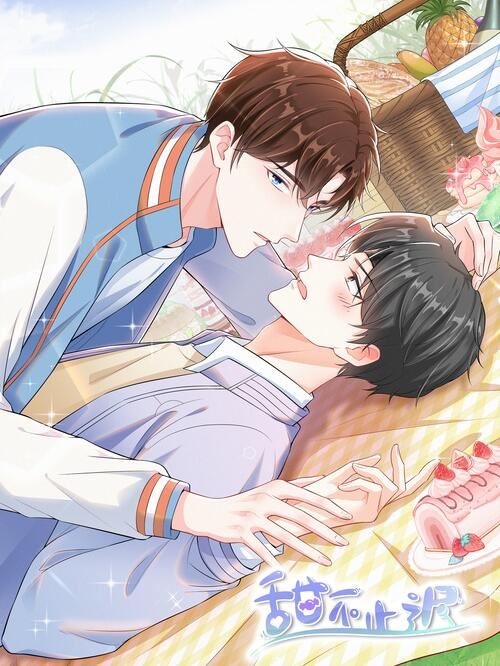
There is SO much layered meaning in these chapters and I barely knew how to process it all at once. Let's start with the most obvious symbol: the oranges. Chi Yu buys a whole bag, tastes one, finds it perfect, and his entire day orbits around the wish to share it. But then 'all the other oranges got crushed by a car' and only ONE survives. That one orange in his palm—bright yellow, smooth-skinned, the last one standing—is basically a metaphor for him. He's been through everything, most of his connections have been crushed, but there's this one perfect thing he's been protecting the whole time. And he offers it to Fu Zhi'an. The puppy is another layer. Found lying in the middle of the road, too scared to move. Stray. Dirty. Unwanted. Chi Yu picks it up despite having every reason not to. He carries it through impossible obstacles because he recognizes something in it. Is he projecting himself onto that dog? Almost certainly. And then there's the family theme that Chi Yu drops like a bomb: 'Chi Yue Di loves himself the most, and Chi Yin loves her mom the most. Even Wen Hua doesn't love me the most. You see, not even my mom loves me the most.' This isn't just backstory—this is the ROOT of his entire emotional architecture. Every relationship he's ever had has been conditional, secondary, replaceable. So when he says 'I think I can like you,' it's not just a romantic confession. It's someone who has never been chosen FIRST saying they're choosing someone else, and asking to be chosen in return. The third-to-last streetlight that's been flickering? That's Fu Zhi'an right there—still standing, still functioning, but damaged and barely holding on.
... Read More
"The dim, flickering light above them cast shifting shadows." I am obsessed with this line and honestly this entire scene is filmed like a movie in my head. The whole setting—the dusty footprints on the black suitcase, the warm bulb, the paper bag on the coffee table, the slightly parted curtains letting in filtered light—it's all SO specific and vivid. You can SEE this apartment. You can smell the shrimp. It's cluttered and lived-in, not some polished perfect space, and that makes it feel real. My favorite visual moment has to be when Fu Zhi'an steps onto the suitcase, reaches up to unscrew the bulb, and the warm light clicks off, leaving them in this moody semi-darkness. Then they tumble to the floor and the light filtering through the curtains falls over their intertwined bodies, casting shadows on Chi Yu's flushed skin. I am not a literary person but even I know that's a SYMBOLIC SHOT. The author doesn't even try to hide it and I love them for it. And then—the interruption! The door beeps open and this random woman is just there with groceries and suddenly the whole atmosphere SHATTERS. One second it's this hazy, romantic, tense moment and the next it's Fu Z Hi'an blocking the doorway with his clothes disheveled and this cold emotionless gaze. The contrast between the intimate indoor scene and that mundane delivery interruption is comedy gold but also kind of devastating? Like, can these two ever just HAVE a moment without the universe conspiring against them. The woman muttering "what's with kids these days" as she leaves was the cherry on top.
... Read More
"I used to just worry about girls. Now I have to worry about boys being interested in you too. What am I supposed to do?" This line absolutely wrecked me. Think about the entire trajectory here. Fu Zhi'an is this effortlessly perfect boy—sweet, popular, always smiling—and yet the moment someone puts a hand on Chi Yu's shoulder, his whole demeanor SHIFTS. The smile just freezes off his face. He literally yanks off the tree costume and marches over like he's going to settle a score. Not a word. Just pure, unfiltered jealousy. And then Chi Yu—who literally spent the whole chapter refusing to make eye contact, calling rehearsals boring, acting like he couldn't care less—just casually reveals his abs in front of another guy. Does he even realize what he's doing? Because Fu Zhi'an absolutely does. "Chi Yu," he murmurs, getting right up in his face, "I'm not happy. What are you going to do about it?" That's not a question. That's a challenge. That's someone who has been holding back for a long time and finally decides to stop pretending. The most amazing part is what happens after—the absolute reversal of power dynamics. Chi Yu goes from grumpy cat to... willing prey. He grabs Fu Zhi'an's sleeve. Tells him his secret. Lets himself be petted. The line where his hand stays "obediently in Fu Zhi'an's grasp, much like a large, grumpy dog" is EVERYTHING. They're both so stubborn and prideful but somehow they fit together like puzzle pieces that refuse to admit it.
... Read More
The structure of these chapters is masterful in how it mirrors the restless insomnia of long-distance love. We open with Fu Zhi'an already awake, rereading messages for the tenth time, and the pacing never lets up. Each conversation loops back on itself—"You didn't pick up yesterday" → "You didn't pick up the day before either"—creating this spiral of anxiety that feels painfully real. The chapter jumps between Fu Zhi'an's side (China time) and Chi Yu's side (America time), and I love how the author uses the time zone difference as a structural device. When Chi Yu sees the bruise on his brow and quickly shifts the camera away, that's not just character work—that's pacing on another level. The scene cuts so sharply from vulnerability to deflection that you feel the wall going up. And the ending with Travis and Li Che, hanging mid-sentence like "almost..."—that cliffhanger structure keeps you gripping your phone just like Fu Zhi'an grips his.

Leave a comment

You must be logged in to leave comments. or
