Sweet Reward (BL) - Reviews

Sweet Reward (BL)
+Add to Custom List
Sort
Add review
... Read More
I have to say the pacing in these chapters is actually doing something really clever that I didn't expect. The call from Yan Jia hits on page one and then we get... three days of nothing. Three DAYS where Yu Le just waits for Cheng Xiwu to call. The author could have rushed this, made it all happen in one explosive confrontation, but instead we sit in the discomfort. And when Cheng Xiwu finally calls, he doesn't just ask Yu Le to come—he reveals the date has moved AGAIN to tomorrow. It's like he's intentionally making Yu Le feel small, making him scramble. But then the real pacing masterstroke comes AFTER the call ends. Yu Le goes from phone panic to photographing flowers, to barely eating dinner, to Lu Yao quietly observing. The shift from external crisis to internal collapse happens in real time. And that last line—when the door knocks and Yu Le opens it to find Lu Yao standing there—is a cliffhanger that made me immediately open the next chapter. Brutal.
... Read More
I need to talk about the ginger soup. Not because it's romantic in the traditional sense—Yu Le literally scrunched up his nose drinking it because he hates ginger—but because it's the most tender thing that happens in this entire chapter. Aunt Zhang hands him a half-bowl and says, “Little Lu specifically asked me to make this for you.” Not “I made this because you got wet.” Not “Here's something warm.” *Specifically asked.* As in: I thought about you. As in: I wanted you to be okay. As in: I'm showing care through intermediaries because direct expression is apparently too hard. And Yu Le drinks it anyway. Hates it. Makes a face. Drinks it. That's the entire emotional arc right there. Now let's unpack the rain scene because oh my god. The wind picks up, the rain starts falling like the sky just gave up on being a sky, and Yu Le is watching hydrangeas get murdered by weather. He counts them. Actually counts them. Pink ones. Endless Summer. And then the storm hits and he's worried about flowers he barely knows the names of. Why? Because Lu Yao is out there in it. Because seeing Lu Yao struggle triggers something in Yu Le that bypasses all logic. He springs up. He runs. His eyes are nearly shut because the rain is that violent. He grabs the pot—ceramic, heavy, soil-soaked—and tries to move it himself instead of waiting for help. And then he slips. Twice. On moss. On flagstones. And before he can hit the ground, strong arms catch him and the pot and lift him under the eaves like he weighs nothing. This is the moment. This is the CP chemistry detonating in real time. Two guys, drenched, one holding a flower pot like it's a holy relic, the other wrapped in a towel that's probably been used on forty-seven different guests but right now is only for Yu Le. “What are you doing?” Lu Yao says, and his voice is stern and controlled, but his hands are rough on that towel, and his face is solemn, and he's standing in front of Yu Le blocking the wind like a human wall. Yu Le swallows. Can't speak. Feels like a kitten held by the scruff. And I'm sitting here like—yes. Yes, baby. Be the kitten. Let him hold you. But then the next morning, and the energy shifts again. Yu Le is watching Lu Yao leave in that tank top, muscles visible but not exaggerated, and he yawns and goes back to bed. Why? Because yesterday's vulnerability is today's private observation. Because he needs to pretend the rain didn't matter. Because if he admits it mattered, he might have to admit that Lu Yao carrying him under the eaves made his heart do something weird. “Even a guesthouse owner in a deep mountain forest had such a good physique. The world really is competitive these days.” This is Yu Le deflecting. This is him looking at abs when he should be looking at the guy who just risked pneumonia for hydrangeas. But also—he's looking. He notices. He remembers. The dream sequence is where the emotional truth comes out. Nüwa making clay dolls. “This batch is poor quality. It'll melt with rain. Maybe I should recycle them.” And Yu Le's response isn't to argue. It's to help. To keep making dolls. To avoid the trash bin. Because his subconscious has already accepted the premise: I am fragile. I might be discarded. Let me prove my worth. But wait—is that really what Lu Yao thinks? Or is that what Yu Le fears? Because the text never says Lu Yao wants to recycle him. The text says Lu Yao brings ginger soup. Checks his forehead at midnight. Wraps him in a towel. Stands in front of him like a wall. These aren't the actions of someone who sees trash. These are the actions of someone who sees something worth protecting. And the mother-child scene at the end? “You're just a stumbling block on my path to success!” “I'm also the one behind all your troubles!” This is chaotic. This is hilarious. But it's also about protection. Zhao Xiaosong runs to Lu Yao. Calls him savior. Uses him as a shield. And Lu Yao—who just spent the afternoon being responsible for a rain-logged Yu Le—becomes responsible for a kid avoiding a stick. He doesn't know how to say no to people who need him. He doesn't know how to protect without intervening. And maybe that's the thing about emotional lines—they don't always go straight from A to B. Sometimes they curve through ginger soup and ceramic pots and midnight forehead checks and dreams about recycling. I keep thinking about that pink pot. Left alone in the rain. Beaten and swaying. Looking forlornly isolated. And then Yu Le picking it up anyway. Carrying it. Slipping. Getting caught. Being brought home. Some things look broken in the storm. But they're still worth carrying.
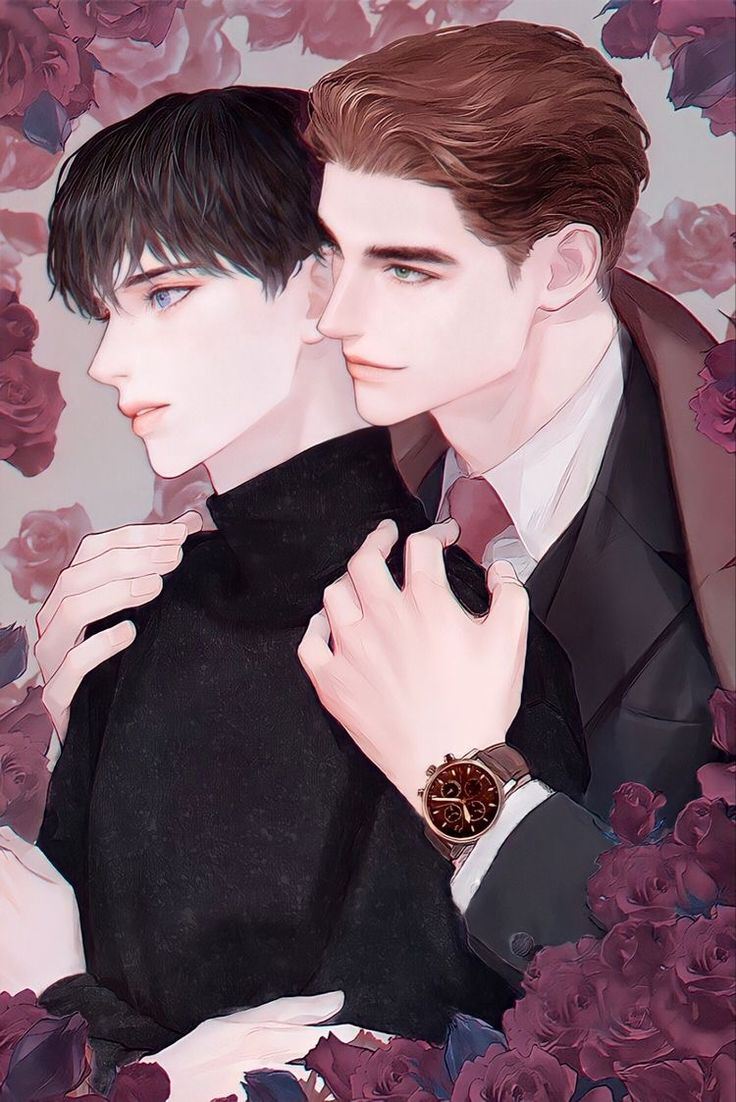
... Read More
The author does something quietly brilliant with the setting transitions in this chapter. We start in Yu Le's studio—he's sketching, pencil spinning, which immediately tells us he's comfortable in his creative space. Then we cut to Lu Yao leaning against a wall, casual and relaxed, which establishes their dynamic before they even meet in person. But the real showstopper is the Lu Yao Corporation sequence. The reception desk where the staff goes from 'do you have an appointment' to complete speechless paralysis—that's a building I can visualise perfectly. Fluorescent lights, busy phones, the particular kind of corporate anticipation where everyone pretends not to stare. And then the elevator. The 'CEO's exclusive elevator' that Yu Le 'couldn't distinguish' from any other elevator is such a specific, honest detail. Most people can't tell the difference. The technical department itself feels alive—Old Zhou's drone table becomes this unexpected stage, colleagues gathering like circus animals around something ridiculous, the noise level rising as Caca starts performing. When Lu Yao walks in and people 'naturally made way,' that single detail tells you everything about his authority without a single exposition dump. The entire floor has a rhythm, a pulse, a sense of daily life that extends beyond the two main characters. Even the fish head hot pot conversation at the beginning roots us in a specific food culture—Wuxiang Food City—which gives the whole thing geographic texture. This isn't a generic corporate backdrop; it's a place where drones flirt with admin girls and employees genuinely celebrate their boss's relationship.
... Read More
Okay so this chapter is basically just one long slow burn and I am HERE FOR IT. The whole Yu Le bringing that little dinosaur figurine to apologize scene is peak romantic tension but make it cute. He's down there by the window like some kind of forest spirit delivering a peace offering, and Lu Yao just… lifts him into the room like a child? Like casually? My heart literally stopped when Yu Le gets placed on that cabinet and they're suddenly at eye level and Yu Le's ears go red and he pretends to be calm while fiddling with his toy like that's gonna save him. The way Lu Yao catches the dinosaur when Yu Le's hand gets unsteady — that's not just catching a toy, bestie, that is NOT just catching a toy. And then Yu Le making him the Mountain God finger puppet and Lu Yao giving it a kiss on the head? Yu Le pretending not to notice while steam is basically rising off his face? The dialogue is doing SO much work here. Lu Yao asking 'Do I need to accept it?' about the apology is such a flirty bastard move and Yu Le's silent 'what nonsense are you talking about' energy through the dinosaur? Iconic. And then the training montage flex — one hundred pull-ups, hundred-kilo runs, close combat, rock climbing — Yu Le trying to play it cool and saying 'maybe later' while his ears are still red. They're just two men pretending this is casual and it's absolutely not casual and I love it.
... Read More
Okay so this section hits different because it's one of those moments where the plot quietly shifts gears. We go from the cozy mountain isolation to the abrupt need to return to the city, and honestly? That transition feels massive even though the chapter doesn't make a huge production out of it. Yu Le gets called back for work — Mr. Song is flying abroad, so he has to go to Wu City for collaboration talks — and suddenly the peace they've been living in at Daiwa Town is interrupted. What I love is how the author doesn't treat this as a dramatic plot bomb. It's just... life happens. But it creates this underlying tension because now we know the bubble can't last forever. And then there's the small detail of Lu Yao insisting on driving him to the airport instead of letting him go alone. It seems minor but it actually says a lot about where their relationship stands now. The fact that Yu Le leaves behind an almost empty house — he didn't even bring much luggage, felt like a quick supermarket run — that tells me his entire world has basically moved to the mountain with Lu Yao. His parents' home feels secondary at this point. The dinner his family is preparing for relatives without him in mind is genuinely heartbreaking when you think about it. He wakes up to the smell of cooking, hears the chatter outside his door, and immediately misses Lu Yao. That's not a side subplot, that's the main story now.
... Read More
This chapter is an absolute wreck in the best possible way. Yu Le drinking himself into a stupor over Cheng Xiwu while Lu Yao silently watches? Chef's kiss. The way Yu Le goes from calling him "Boss Lu" to just "Lu Yao" when he's drunk tells us everything about how vulnerable he's becoming. And that confession scene where he admits he never actually went on that blind date because he was too hung up on Cheng Xiwu? Oof. He's lying through his teeth and Lu Yao knows it. The special forces soldier excuse is so transparent. But here's what kills me: Lu Yao's reaction to hearing Cheng Xiwu is getting engaged. That "almost imperceptible sigh of relief" — is he relieved it's not him, or relieved Yu Le finally admitted he doesn't have a chance? Either way, the dynamic shifts hard after that. When Lu Yao grabs Yu Le's chin and delivers that entire speech about how Yu Le is "precious and deserves the best," it's equal parts genuine compliment and territorial mark. The wolf imagery isn't subtle, but does it matter when it's hitting this good? And then Yu Le turns around and says Lu Yao is more attractive than Cheng Xiwu while literally resting his face in Lu Yao's hand? I'm deceased. The power dynamic has completely flipped. Lu Yao went from caretaker to someone Yu Le is openly pursuing, even if it's through whiskey-fueled honesty. Chapter ending with Yu Le falling asleep with Lu Yao's hand pinned under his arm while he makes a phone call? My guy is already plotting something.
... Read More
Okay so this chapter is basically a masterclass in pacing control. Let me break it down because the way the author layers events here is actually kind of insane. It starts with what seems like a mundane scene — Yu Le thinks Lu Yao is just helping him carry luggage upstairs. Then bam, we learn Lu Yao is going to fix the lock on his suitcase. This small action does double duty: it establishes Lu Yao's competence AND creates this intimate one-on-one moment between them. The author uses a locked suitcase as a metaphor for Yu Le's guarded heart, which opens when Lu Yao fixes the lock and gives him a golden ticket — a literal spare part as a token. Genius. Then we cut downstairs and immediately get Wang Wenyuan's commentary about Guan Zheng and Zhou Fei fighting, which sets up the emotional tension before we get the visual of Wang Wenyuan and Chen Fa kissing against the wall. Remember that image — black and red, like love-struck young lovers. That's not just description, that's foreshadowing. The fight between Guan Zheng and Zhou Fei is the third act of this chapter's mini-trilogy. It starts quietly, escalates into physical violence, and then Lu Yao literally picks both of them up by the neck. The author toys with Yu Le's anxiety here — we think he's worried about Lu Yao getting hurt, but then it resolves in less than ten seconds because Lu Yao is just that much stronger. The subversion of expectation is perfect. What I love about this plot structure is that nothing happens in isolation. The lock fixing leads to the golden ticket promise, which leads to emotional vulnerability, which gets interrupted by the hallway scene, which gets interrupted by the fight. Each event triggers the next. The chapter ends mid-scene with Wang Wenyuan applauding Lu Yao, which is both funny and ominous.
... Read More
The relationship between Lu Yao and Yu Le has always had this undercurrent—professional respect masking something softer—but this batch pushes it into territory neither of them probably planned for. Watching Lu Yao navigate this disaster of a night reveals so much about him. He's usually the composed one, the strategist, the guy who says 'I'm just fulfilling my mission' like emotions are inefficiencies to be managed. But here? He's clearly overwhelmed, and instead of deflecting with duty, he makes a vulnerable choice: he asks Yu Le to stay. Not because he needs help with the car sickness (he could've just called someone), but because the alternative—Yu Le leaving alone in the dark—is unthinkable to him. And Yu Le! Oh, Yu Le's internal monologue throughout this is absolutely precious. His reaction to Mrs. Lu's warm greeting—arms tensing up, forcing polite smiles, silently pleading with Lu Yao for rescue—is the face of a man who wanted a casual blind date and got family evaluation instead. But the way he stays, the way he plays along even when he's desperately wanting to run, shows a depth of kindness and resilience that makes him incredibly endearing. He's not just some plot device for Lu Yao to protect; he's choosing to be here, even when it's terrifying. The dynamics with the rest of the crew are equally rich. Xiao Wu is the chaotic wingman we all need in our lives—well-meaning, slightly clueless, and accidentally setting up the most important moment of his friend's romantic life. His final blessing of 'Xiao Yu likes you too. Good luck!' before speeding off is the kind of accidentally profound friendship moment that hits different. And the Lu parents? Mrs. Lu is every overenthusiastic Asian mother ever, and Mr. Lu is the quiet guardian who reads the room and steps in when it matters. Their dynamic with Yu Le—her warmth versus his protective distance—creates this wonderful tension that says everything without needing exposition.
... Read More
Can we just take a moment to appreciate that Yan Jia and Wen Yuan's entire conversation is a masterclass in subtext? Wen Yuan: 'I don't know him. Who does?' Yan Jia: 'We went to a summer camp together in our sophomore year. We stayed in the same tent.' That's not a confession, that's a provocation. Yan Jia is literally throwing breadcrumbs and watching Wen Yuan try to ignore them. And then Wen Yuan calls him a 'peacock displaying its feathers' and Yan Jia goes—'Yeah, just for you.' I am deceased. Absolutely deceased. This man weaponized vanity as a love letter and Wen Yuan is standing there grinding his teeth like 'you CANNOT be this forward after THREE SENTENCES.' But the dialogue between Yu Le and Lu Yao is also chef's kiss. 'Feeling sorry for me and getting a bit overconfident, huh?' — that's Yu Le at his most sarcastic, trying to regain some sense of agency after being thoroughly dominated. And Lu Yao's response isn't even defensive, he just laughs into his shoulder. He knows he won. He knows Yu Le is going to keep coming back. And Wen Yuan's refusal to engage with Yan Jia's teasing—'Wen Yuan fell silent, stubbornly munching on ribs, determined not to acknowledge him'—that's such a specific, lived-in way of expressing frustration. People actually do this. I've seen it at dinner tables. It's so REAL.
... Read More
Let's talk about stakes, because this section is doing something really interesting with them. On the surface, nothing explosive is happening. No one is in danger. No villains are attacking. And yet — the tension is absolutely palpable. The central conflict here is internal, and it lives in Wang Wenyan's chest. She says she doesn't believe in love, that she found a 'shortcut' with Chen Fa, that physical security is 'shallow and easy to obtain.' But then she looks at Yu Le — who has found something real, something stable with Lu Yao — and she tells him, with what I can only describe as desperate sincerity: 'You must never break up.' Why does she care so much? Because if Yu Le and Lu Yao's version of love is possible, then everything Wang Wenyan has convinced herself about the world being fundamentally broken is wrong. Her entire philosophy — the one she built to survive her mother, to survive humiliation, to survive feeling like a parasite — cracks when she watches two people who genuinely, casually, happily love each other. The stakes for Yu Le are different but equally real. He's watching his friend leave. He's absorbing this dark history. He's being handed relationship advice from someone who claims not to believe in relationships. And through it all, he's trying to hold onto the small, warm moments with Lu Yao — the biting, the red envelopes, the fruit basin. Those moments ARE the stakes. The book is telling us: love isn't grand gestures, it's showing up with a basin of washed vases while your partner is falling apart. And the external conflict? Still simmering beneath the surface. Chen Fa and Wang Wenyan are leaving. That means the support network shrinks. The mystery plot likely intensifies. When people who know things walk away, the remaining characters have to carry more weight. Yu Le just lost an ally who saw what happened 'that night' and chose to help. What else does she know that he doesn't?
... Read More
There's this one detail I keep coming back to—the water rat in the woodshed. Just there, barely mentioned, sleeping through the chaos while the mountain collapses around it. And it hit me: this author understands atmosphere in a way most writers don't. The landslide isn't just a plot device; the whole town feels like it's perched precariously on the edge of disaster. Halfway up the mountain, built into the slope, with rain pouring down and mud giving way. You can almost feel the dampness, smell the wet earth, hear the splashing footsteps in the dark. And then there's the interior contrast—warm rooms, people sleeping soundly upstairs while below, the world is ending. The morning-after reveal where they finally learn about the landslide is masterful timing. The author doesn't show us the disaster itself; they show us the aftermath, the speculation, the fear. That's how you build a world that feels lived-in and dangerous. 'We're just guests who don't understand the situation'—Zhou Fei's line captures the isolation of this mountain town perfectly. These people are trapped with the consequences of their own poor decisions. The rain stopping at dawn, the muddy chaos outside, the quiet domesticity inside—it's all painted in strokes that make this setting breathe. I keep imagining this as a film. The visual potential here is insane.
... Read More
OK so the dialogue in this excerpt is doing SO much work and I need to break it down. First, the Guan Zheng exchange: 'Bro, why are you walking so silently?' 'Maybe it's because the soles are foam.' This is naturalistic banter at its finest. Two friends who have known each other forever, zero pretense, just accurate observation about footwear. The humor lands because it's so mundane. Then Lu Yao's voice completely shifts. 'Give me your hands.' 'The other one too.' Commands, not requests. Short, lazy, absolutely authoritative. When he says 'Spacing out?' it's playful but loaded. Every line from Lu Yao carries weight because he chooses each word like he's choosing whether to touch you or not. Yu Le's voice is all over the place - deflection ('Why does Shui Cai keep bothering Little Pink?'), embarrassment (fanning his own face at the front desk), awkwardness ('I'll go do it now and let you know when I'm done'). His dialogue reveals everything he's trying NOT to reveal. But the real masterclass is what the author DOESN'T write. The silence between Lu Yao holding Yu Le's wrists and letting go. The moment where neither pulls away. No dialogue needed - the physical pause speaks louder than any confession could. And then the final line: 'Wang Wenyan... panicked gasps, and a faint, cat-like wail.' No dialogue, just sound. The narrative voice itself shifts from intimate interiority to something sharper, more urgent. The author trusts us to feel the genre pivot without announcing it. This writing doesn't over-explain. It lets silence and sound do the work. Respect.

Leave a comment

You must be logged in to leave comments. or
