Sweet Reward (BL) - Reviews

Sweet Reward (BL)
+Add to Custom List
Sort
Add review
... Read More
Let's talk about how different these characters sound because it is genuinely impressive writing. Xiao Ya's dialogue is all energy and repetition. She keeps circling back to the same points — 'But you've never had a boyfriend,' 'I'm not young,' 'I've decided to pursue you!' — and it makes her feel exactly like an eighteen-year-old who has never been rejected before. She is not being manipulative, she is just earnest in a way that is almost painful to watch. Then Lu Yao is the complete opposite. His lines are short, almost minimal. 'No.' 'You're still young—' 'I'm gay.' He barely argues, barely explains. When Yu Le shows up he doesn't even address Xiao Ya directly at first — he just asks about the watermelon like the entire confession was background noise. And that is when it clicks. The author has built two completely different communication styles and they reveal everything about these characters. Yu Le's voice is the most distinctive though — 'Did you steal my watermelon?' followed by sniffing Lu Yao's back like a detective and then feeding him the slice. His dialogue is physical, playful, completely unselfconscious. There is a moment where he says 'Boss Lu, you handle this' about the math problem and I actually laughed out loud. The contrast between his casual humor and the heavy emotional scene that just happened is what makes the voice so distinctive. And Lu Yao's internal narration — especially that final line about the watermelon not tasting as sweet the second time — carries more emotion than any dialogue could. Sometimes silence speaks louder.
... Read More
Let me think about what JUST happened here and why it matters for the bigger picture. So Yu Le agrees to test the AR glasses on Lu Yao's behalf. That's already a significant plot move — he's stepping into Lu Yao's professional world, lending his image and presence to something corporate. And the internet? They immediately latch onto it. Within hours, the video goes viral and everyone is speculating about their relationship. But here's the thing that bothers me (in the best way): NEITHER OF THEM HAS ACTUALLY SPOKEN ABOUT WHAT THEY ARE. Or rather, what they might be becoming. Lu Yao treats Yu Le like he's always been there — which he basically has — but there's this unspoken ceiling around the bedroom door that neither crosses. The charger request at the end is the chapter's emotional climax, and it's about something SO SMALL that it's devastating. Meanwhile, the external plot is accelerating. The AR glasses are being refined (nose padding, curvature adjustments, data networking coming soon). The promotional video is live. The internet has turned Lu Yao's private life into public content. Someone in that company is going to have to address the leak. And then there's the hospital visit mentioned. Grandpa. That thread hasn't been resolved yet. We know Lu Yao goes there regularly, we know it matters, but we haven't seen what happens when Yu Le comes along for the ride. The story is building these parallel tracks — the romantic tension simmering quietly, the professional world intruding louder every day, and the family obligations hovering in the background. I just want to know what happens when they all collide.
... Read More
So here's the thing about this passage—there is almost no traditional conflict. No villain. No external threat. No miscommunication that lasts more than a paragraph. The biggest tension is Yu Le waiting for a reply to a text message and wondering if the phone died. The stakes are emotional, not survival-level. And yet. And yet I was genuinely invested. How? Because the author understands that stakes don't require catastrophe. They require meaning. What happens if Yu Le doesn't get to see the puppy? He spends three more days in Wucheng without that dopamine hit. What happens if Lu Yao hasn't prepared the apartment? Their first visit together is awkward instead of seamless. What happens if the studio relocation fails? Their professional lives get messy. These are small dominoes, but they knock each other down in ways that matter to these specific characters. The real conflict is internal: Yu Le's resistance to cohabitation ('I hadn't agreed to cohabitate') versus his immediate capitulation. That's the battle—and he loses, happily. The suspense isn't 'will they or won't they,' it's 'when and how will they admit they already have.' Even the video call has stakes: Lu Yao could've just described the puppy, but he chooses to show it, knowing it'll torment Yu Le. That's a power move wrapped in affection. The group's silence at the end is also a kind of stakes acknowledgment—they've witnessed something private become public, and they're processing the shift. The author doesn't need explosions. The explosion is a heart expanding. The danger is getting used to this much happiness. And honestly? I'm here for it. Bring on the next chapter. Let's see what happens when the puppy gets a name.
... Read More
Okay so this entire chapter is basically one giant setup for disaster and I am HERE for it. Let me paint you the picture: Yu Le is in Xuan City, presumably running from something, his mom calls to push him toward marriage with some 27-year-old stranger, he casually blocks his ex's engagement post like it's nothing, then immediately falls into a dreamless sleep before getting dragged out to dinner with old buddies who somehow still know exactly how to pressure him about his love life. Meanwhile Lu Yao is off at the hospital dealing with family stuff, the old locust tree mention hanging in the air like some kind of thematic foreshadowing that I definitely didn't pick up on until now. The plot threading here is actually insane — three separate characters, three different emotional wavelengths, all converging on the idea that Yu Le is running toward something he can't name. And then the flashback hits us with the Cheng Xiwu origin story: isolated Asian guy in a toxic design school, one person shows him kindness, and suddenly feelings develop. That's not just backstory, that's the entire emotional architecture of this thing. The question I keep coming back to is: what happens when Yu Le realizes that whatever he's running from in Xuan City is actually connected to whoever he ran toward in Cheng Xiwu? Because this plot is setting up a collision, and it's not going to be gentle.
... Read More
I need to talk about how the author handles spaces because honestly it's one of my favorite things. The hospital scene with Lu Yao and his grandmother is so understated but it's doing SO much work. Just: "Remember to look after the old locust tree in the yard." That's it. That's the entire emotional payload of that scene. A tree. An old man dying or just old, and his last concern is a tree his wife loved. It's devastating in the most quiet way possible. Then you cut to Yu Le arriving at his apartment on the 20th floor — swipe the card, walk down the hall, see the sofa, collapse. The sensory detail here is sharp: the laundry detergent smell on the sofa cover, the weight of his own exhaustion, the suitcase left behind the door like something abandoned. It's not elaborate worldbuilding, it's domestic realism, and it works. The restaurant scene with the roommates is where it gets interesting though. You don't get a lot of description of the actual space, but the atmosphere is so vivid — the clinking glasses, the turtle soup, the way old friends fall back into their patterns like nothing changed. It's like the author trusts you to fill in the blanks. And that line about Cheng Xiwu being "a ray of light breaking through the clouds" — it's almost too poetic for the rest of the chapter's tone, but it fits because it's Yu Le's memory, and memories get soft around the edges.
... Read More
Okay I need to talk about this one scene because honestly it wrecked me in the best way. When Yu Le is half-drunk and suddenly grabs Lu Yao's collar and yanks him into his room, I literally sat up in bed. Like what?? That is NOT the sleepy tipsy guy I thought I was reading about. But then it gets even better—he starts measuring Lu Yao with his hands like some kind of obsessive tailor, and Lu Yao lets him. Let him. He doesn't pull away. He just... leans into it. And then he flips the whole thing by calling Yu Le out on his drunk habits and pressing his finger against Yu Le's lips. The power dynamic in this single moment just... shifted so hard. I love that Lu Yao isn't some passive recipient of Yu Le's affections. He's aware, he's in control, and he still chooses to stay close. Also the fact that Yu Le's entire dream revolves around making something beautiful for Lu Yao—clothes with locust flower patterns on the cuffs—shows how deeply he expresses love through acts of creation rather than words. He can't even articulate it properly. Classic Yu Le.
... Read More
I've been turning over the symbolism in this section and it's actually quite rich beneath the surface. Let's start with the most obvious one - time. Du Shuang performs a magic trick where he manipulates a pocket watch that transforms into a wall clock, then turns the second hand forward one tick at a time. And right alongside this scene, Yu Le is mentally rewinding his own timeline, trying to reconstruct the young Lu Yao from archived forum posts. The magic trick is literally about controlling time, about making moments go forward on command - and Yu Le wishes he could do that for real. What a gorgeous metaphor. Then there's the heart motif. Every single confession post mentions Lu Yao's cold rejections, and yet we learn he keeps collecting items with heart patterns - water bottles, keychains, the corner of his backpack. This small persistent image speaks volumes about the gap between how people perceive him (tough, untouchable) and what's actually true (someone who carries softness privately). The ice roses in Yu Le's juice are another layer of this - beauty that exists only in frozen form, transient and melting. And the forum itself functions as a kind of memory device, preserving moments that would otherwise be lost. The narrator says it directly: "Thanks to the internet, all the legendary figures from school days have been preserved in live-recorded words narrated by others." We're watching someone watch history, and the regret of missed connection is the emotional core that ties every symbol together.
... Read More
There's something really rich about the Bottle Water Forest fire as a symbol here. Fire—destructive, born from carelessness, spreading fast when fanned by wind. And water—Old Liu's pump, the pond, the firefighters all trying to contain and extinguish. But the real fire burning underneath isn't in the forest at all. It's Lu Yao's secret. It's Yu Le's dawning suspicion. It's the way every character in this town is carrying something they haven't spoken aloud. The barbecue tourists literally left their fire unattended and it spread beyond their control—that's basically the plot right there. Carelessness breeds consequences that consume everything around them. And the water imagery keeps coming back. The pond where Lu Yao and Yu Le shared quiet moments. Old Liu's water pump. Firefighters with their hoses. Water as both life-giving and extinguishing. There's a symbolism density here that I didn't expect from what reads like a slice-of-life town story and it's making me re-read everything with fresh eyes. That final line—"Had it been discovered?"—is the smoke clearing to reveal something burning underneath.
... Read More
This chapter is doing SO MUCH narrative heavy lifting and honestly I'm shook. Let me trace through the plot mechanics here. We have Yu Le spacing out looking at flowers (establishes his quiet, contemplative side). Then the cat rescue mission becomes a metaphor for literally everything — he needs help, Lu Yao provides it physically, and suddenly they're at the same elevated vantage point. Then CUT to Wang Wenyin and Chen Fa's interaction — completely different tone, different characters, different energy. She's testing boundaries, he's setting them. She gets rejected and immediately turns her attention to Lu Yao. And the author connects these threads so seamlessly through Wang Wenyin's cigarette smoke and her gaze sliding over Lu Yao's shoulder. The real plot twist though is Yu Le's emotional journey in under 3000 words: confused → embarrassed → jealous → frustrated → shocked → relieved → confused AGAIN. The narrative arc completes itself right before our eyes and the author literally cuts off mid-sentence with "looking at him and then at Da Huang" — we NEED the next part immediately.
... Read More
I need to talk about Lu Yao because this man is doing things to me. The moment when he covers Yu Le's ears as the bell rings — he could've just explained it later, he could've let the bell ring and then said "sorry, what was your wish?" But he didn't. He chose that exact second to shield Yu Le's ears, and then when Yu Le presses him about his own wish, Lu Yao has this entire exchange where he's teasing, deflecting, saying things like "That's your problem" and "Be good and don't anger the Buddha." But here's what kills me — earlier, when Yu Le asked "What kind of person are you?" Lu Yao didn't get angry. He smiled. And remember what happened right before? When Yu Le was making his wishes and Lu Yao's "smile in his eyes gradually faded" — not because he was mad, but because he heard Yu Le say he hopes to "continue to like [Cheng Xiwu] forever." That smile fading, that darkening of his expression — he heard every word. He knows. And now he's sitting on this secret while pretending it's just a game. The dynamic between them is so loaded. Lu Yao led Yu Le to this niche specifically, taught him this weird ritual, and then when Yu Le offers to help fulfill his wish, Lu Yao says "You can" — and the narrator tells us his heart is being "bound in fine threads." This isn't just friendship. This is someone who is painfully aware of feelings he hasn't voiced yet.
... Read More
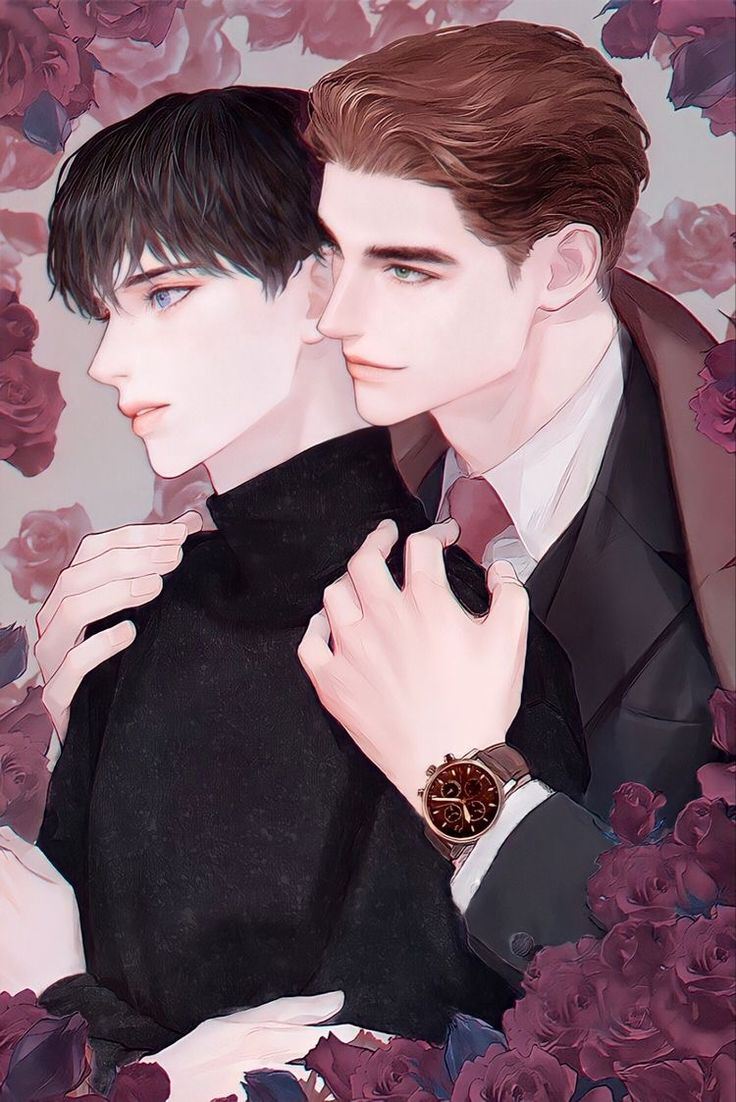
There is something so deeply atmospheric about the way this author writes the inn at night. It's not just background — it feels like a character itself. The locust tree in the courtyard, the checkers board laid out neatly, Shui Cai sleeping at their feet, the night breeze carrying the scent of locust flowers. It's cinematic without being overwrought. You can practically see the shadows shifting. And then the scene shifts to daytime and suddenly we have three ballet dancers in fluffy feather skirts under that same locust tree, violin music spreading through the courtyard, Yu Le sketching contentedly while watching them. The contrast between the humid, heavy night scene and this bright, almost dreamlike afternoon is gorgeous. The author even makes the flowers "mere decorations" compared to the dancers — that's a great detail. But my absolute favorite line about the setting is when Yu Le describes summer as "air conditioning, fans, cooling mats, ice-cold cola and watermelon, ice cream, thunderstorms, and occasionally beaches that could sunburn you." And Lu Yao just... corrects him. "That's not summer." I love how the physical world of this story — the damp humidity, the overcast days, the rainy nights — mirrors the emotional temperature. Everything feels thick and slow and heavy, like the air itself. It's immersive in a way that doesn't need grand descriptions, just the right details placed perfectly.
... Read More
So I have to talk about this one detail because it genuinely surprised me. Mr. Song — Old Song — sent Yu Le's manuscript back last time, and instead of just rejecting it or moving on, he literally told his assistant NOT to accept any new submissions for three months. Just sat there waiting. Three whole months, like some kind of patient predator, knowing Yu Le would come back with something good enough. "It's because he has greater expectations for you than anyone else," the assistant says. And honestly? That line hit different. It reframes the entire professional relationship. This isn't just a standard author-editor thing — Old Song has been *invested* in Yu Le specifically, almost obsessively. That changes how I see their dynamic going forward. Then the whole contract signing happens surprisingly smoothly, which I didn't expect. Old Song is described as "surprisingly easy to talk to" and offers full studio resources. It feels like the author is setting up a mentor figure who actually delivers on his promise of belief. Which is rare in these stories — usually the mentor is either harsh or disappears after the first conflict. The bigger plot hook though? That finale design draft. Yu Le pulls it out separately, says he'll handle it himself, and mutters something about already having "the best candidate in mind" for a model. My brain immediately went FULLY elsewhere. Who is this candidate? Is it Lu Yao? Is it someone completely unexpected? The author is deliberately dangling this thread and I am HERE for it. And then Wen Yuan shows up and drops that bomb about knowing Yan Jia from seven or eight years ago. Seven years! What did little Wen Yuan do back then that Yan Jia is still holding over him with recordings?? The subplot density in this chapter is absolutely Insane. Every conversation opens a new door.

Leave a comment

You must be logged in to leave comments. or
