Sweet Reward (BL) - Reviews

Sweet Reward (BL)
+Add to Custom List
Sort
Add review
... Read More
I need to talk about the ANIMALS scene because I just—Yu Le literally says "Animals are still adorable; they don't use phones or make calls." And then he goes downstairs and starts photographing Shui Cai and Da Huang like they're his entire emotional support system at this point. I was not prepared to cry over a cat and a dog. But what got me was Lu Yao's silent climb up the stairs with that bottle of liquor. No words, no therapy session, no 'hey you okay bro.' Just... showing up with alcohol because that's what Yu Le needs right now. And earlier when he put the thimble on Yu Le's finger and Yu Le cracked 'What's this, a proposal?' and Lu Yao said 'So, will you marry me?' and then immediately backtracked? That moment of almost-confession followed by retreat? I felt that in my chest. The love is there but it's wrapped in layers of not-saying-it-out-loud.
... Read More
Can we just take a moment to appreciate how the people at this company treat Yu Le? Like, first the receptionist who literally cannot form a coherent sentence when she realizes who he is—that's the universal experience of visiting your partner's work and realizing everyone has opinions about your relationship. But what really got me was Old Zhou calling him 'Little Yu.' Just three lines of interaction and the formal 'Mr. Yu' drops like a hot potato. That's how quickly warmth spreads when someone's dating the boss. And Caca—that ridiculous drone—ranking Lu Yao as 'handsome number one' and then having to break off its 'father-daughter relationship' with Old Zhou for three minutes to tell the truth? The whole office erupted. I laughed so hard. But here's the thing that actually hit me: when Lu Yao says 'Sorry, Miss Caca, I'm already married,' there's this faint smile on his face. He's not annoyed that his company's AI is aggressively ship-pitting him with Yu Le. He's amused. He's proud. And then Caca immediately pivots to Yu Le asking if he'd marry it too—this ridiculous robot that can't grasp the concept of monogamy—and Yu Le is over there trying not to laugh while his boyfriend watches him with fondness. The way these people orbit around Yu Le without making him uncomfortable, the way Lu Yao just appears and the room naturally makes way... this isn't just romance fluff, it's showing us what a healthy relationship looks like when it expands outward. Everyone's happy. Everyone's warm. No drama, just genuine affection radiating through an entire floor.
... Read More
I need to talk about the stakes in this chapter because on the surface it looks like just a sickness scene, right? Guy gets a fever, friend takes him to the hospital, everything's fine. But the underlying tension is doing SO much heavy lifting. The real conflict here isn't just Yu Le being ill — it's that everything that happened between him and Lu Yao earlier is still physically present on his body. The dark red marks. The allergic reaction mixed in with old ones. The fact that he couldn't move during what he thought was sleep paralysis. The text keeps circling back to this idea that something lingers, something unresolved, and his body is literally reacting to it. Wen Yuan is the voice of the audience here when he blurts out 'He was fine earlier today!' and 'What kind of cold is this?' He's asking the questions we're all thinking. This isn't normal exhaustion. This is a cascade of symptoms that shouldn't be happening all at once — fatigue, wind chill, unknown allergy, low blood sugar. The medical diagnosis is basically the author saying 'yeah, something is wrong here and we're not done with it yet.' And the stakes keep escalating subtly. It starts with a fever, then there's the itch, then Lu Yao has to drive through a storm to get to a hospital thirty minutes away, and throughout all of it Yu Le is too sick to advocate for himself. He's mumbly and delirious and scratching at his neck like his skin is betraying him. The vulnerability is almost painful to read. The cliffhanger ending — 'Yu Le lay in bed, trying to sort out his j' — I actually made a noise out loud. His thoughts are cut off mid-sentence and I need to know what he was trying to sort out. Was it the allergy? The marks? The fact that Lu Yao was there? The chapter just... stops. No dramatic declaration, no revelation. Just an incomplete thought and a boy who still doesn't fully understand what happened to him. That's a different kind of suspense, one that doesn't need explosions to work.
... Read More
Let's talk about stakes because honestly this whole section is a masterclass in layered conflict and I don't think people are giving enough credit to how many problems these guys are walking into simultaneously. First there's the external conflict that's basically a trap — Lu Yao gets drugged at a banquet by someone connected to General Feng, and the kid who brought the drink is basically a pawn in whatever scheme Feng is running. Lu Yao knows this immediately when he thinks 'General Feng likely intended to use the substance to keep the party lively throughout the night.' That's not panic, that's calculation. The man processes threat assessment in real-time while his body is literally on fire inside. What does he stand to lose? His reputation, his control, his company standing. This is a man who shows up to events, calculates his exit strategy down to the minute, and maintains composure no matter what. And now something has taken that control away from him in the most visceral way possible. Then there's Yu Le's conflict, which is more internal but no less intense. He's dealing with this 'burning sensation' and 'indescribable discomfort' in the elevator, same drug effects presumably. But here's the thing — he's not alone in it anymore. Lu Yao is RIGHT THERE. And both of them are compromised. The stakes just went from personal survival to interpersonal catastrophe because imagine the fallout if anyone finds out. Lu Yao's assistant follows him thinking everything is normal. No one knows. That dramatic irony is killing me. And the deepest conflict? Maybe the one neither of them knows yet — they're about to meet in an elevator while both are physically compromised, and the book literally cuts off before anything happens. The stakes aren't just about surviving the night, they're about what happens next between two people who clearly haven't properly interacted before now. Everything is hanging by a thread and the author just CUT THE THREAD.
... Read More
Let me just say this — Cheng Xiwu's entire collapse happening OFF-SCREEN is honestly the most satisfying narrative choice. Not a single dramatic confrontation, not a villain monologue, just... gone. Overnight. His studio collaborations terminated, his wedding called off, his career plummeting into irrelevance. And what's more, Yu Le had absolutely no idea. Zero. Nothing. He was up in the mountains living his best life while his former senior brother was being erased from the business circle. Yan Jia casually drops this bombshell in the middle of a midnight chat like, "Hey, just so you know, your ex-engaged-to-Miss-Su drama is over." And you can practically hear Yu Le's brain short-circuiting. All those layers of backstory — Daiwa Town, Su Hui's sudden goodbye, the complicated history — suddenly snap into place. The Su family being "easy-going and good-natured" apparently means they also know how to ruin someone's life efficiently. What I love about this subplot is how the author handles it: no exposition dumps, no dramatic reveals. Just a few WeChat messages that recontextualize everything that came before. It's efficient storytelling at its finest. And the lingering question about WHAT exactly Cheng Xiwu did that was so morally indefensible? That's the kind of dangling thread that keeps you turning pages. Also, the parallel between Yu Le's current happiness and Cheng Xiwu's downfall hits different when you think about it. One man learned from his mistakes, the other didn't. The story doesn't moralize about it — it just lets the contrast speak for itself. Which is honestly so much more powerful than any sermon the author could have written. Or is this foreshadowing that Yu Le will face his own reckoning later? Because something about the way the narrative treats this feels like it's setting up a moral test, not just celebrating a villain's downfall...
... Read More
What strikes me about how this section is structured is how deliberately slow everything moves. The chapter doesn't rush. We spend real time on the drive to the airport, on the awkward heat shock at the door, on the lingering hug, on the text messages being read repeatedly. There's no cliffhanger, no dramatic revelation, no sudden twist. Just a man leaving home and missing someone before he's even been gone long. And that's the genius of it — the author trusts the reader to feel the weight of ordinary moments. The transition from the mountain to Xuan City to the airport to the plane to Yu Le's bedroom to a video call feels like one continuous breath. Even the mother's offhand request for soy sauce right before the family dinner is ordered with zero awareness that their son is home — that's a small detail that lands like a punch because of how casually it's placed. The pacing here is essentially saying: this is what love feels like in real life, not in bursts of drama but in the space between departures and arrivals, in the gap between a text message sent and a reply that comes too slowly. The cliffhanger at the end with Yu Le staring at Lu Yao's bare shoulders and the screen going dark is perfect because it's not really a cliffhanger at all. It's just life continuing.
... Read More
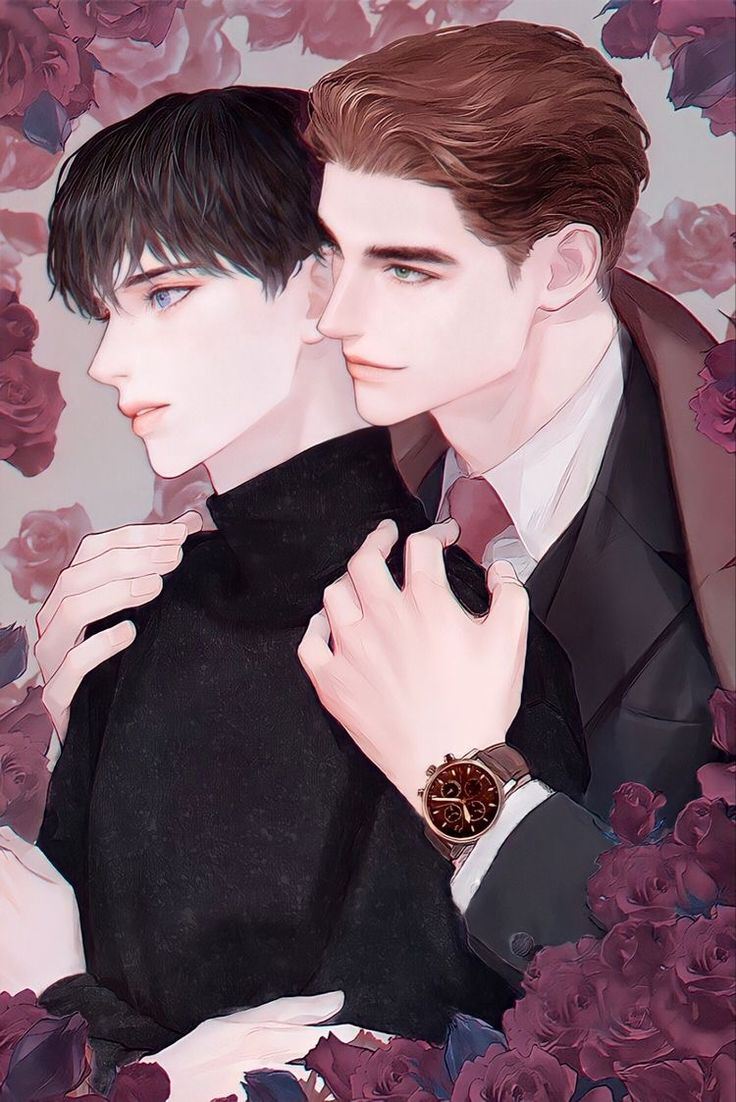
"Yu Le still couldn't get used to Lu Yao's rough kissing style, and his mind would be pulled into chaos within ten seconds, feeling dizzy." — and I need a minute because this chapter is genuinely one of the most intimate things I've read and I am NOT okay. The entire scene builds from such a deceptively casual setup. Yu Le showing up at Lu Yao's door with a soft ruler, the rain outside, the half-dried hair, the banter about whether he needs to take his clothes off. It starts playful and teasing and then Lu Yao just... flips the switch. One moment they're measuring chest inches and the next, Yu Le is being pinned against him with a hand on his lower back and the other gripping the back of his neck. What struck me most was the line: "How many times had it been? He couldn't remember. Yet Yu Le still couldn't get used to Lu Yao's rough kissing style." That tells me everything about their dynamic. This isn't new relationship energy—this is established, deep, comfortable intimacy where Yu Le still gets completely undone. He knows he's going to lose his composure every single time, and he still goes for it. That's not recklessness, that's trust. The part where he tries to bite back and only earns the reputation of being "coquettish" made me laugh out loud. Lu Yao isn't even intimidated by it. He just absorbs it and keeps going. And Yu Le—poor, flustered Yu Le—can't fight back, can't retreat, can only breathe heavily and let himself be "bullied." But the word choice here is so telling. It's not aggression, it's dominance wrapped in care. The prose makes it feel physical, almost suffocating in the best way. "The closeness almost pressed him into Lu Yao's embrace, creating an intimacy greater than any before." That's the whole relationship in one sentence.
... Read More
There's this one moment right after the Cheng Xiwu scene where the author just... shifts the entire atmosphere and it's glorious. 'In the afternoon, it rained for a while, and by evening, the sunset emerged, with a rainbow hanging high over the mountains and the golden sun casting its glow over half of Daiwa Mountain.' That's it. That's the whole paragraph. But man, it works. It's like the universe itself is exhaling after that tense lunch. Cheng Xiwu's energy—sharp, pointed, uncomfortable—gets washed away by rain, and what emerges is golden and soft and full of rainbows. And then we cut to Shui Cai rolling in mud. A water dog. Happily doing dog things while the world heals around him. Lu Yao catching him and taking him to bathe by the well. The imagery here is so tactile—I can feel the gourd ladle, the soapberry water, the muddy water dripping. This is a world that exists beyond the drama, a place where dogs get baths and ice cream gets eaten after meals and nothing terrible is happening for once. The contrast between the two scenes is intentional and brilliant. Cheng Xiwu's visit belongs to the world of ambition, competition, past grievances. The backyard scene belongs to the world of simple domesticity. Rain washing away the tension, sunset painting everything gold, a wet dog being dried off. This is the reward the story gives you after making you sit through uncomfortable social maneuvering. Also the detail about Lu Yao using a gourd ladle? Those little sensory details make the world feel lived-in. This isn't just a backdrop for romance—it's a real place with wells and muddy yards and mountain sunsets.
... Read More
I need to talk about this one moment—just one—because it destroyed me and I'm not even sure why. Yu Le is being pulled closer by Lu Yao, struggling to lift his face, pressing down on Lu Yao's shoulder "like a koi fish just breaking the surface of water for air." Then Lu Yao says, in that relaxed, laughing voice, "It is cute." That's it. That's the moment. Two people literally between a moody cat and some nail clippers, and the entire emotional architecture of their relationship is visible in that gap between them. Yu Le can barely breathe but Lu Yao's voice is the first thing he hears, and it's calm, it's amused, it's directed at the cat but somehow it wraps around Yu Le anyway. What got me wasn't the romance—it was the trust. Yu Le lets himself be pulled in. He doesn't resist. He struggles but he doesn't push away. And Lu Yao, who could easily crush him with how much presence he brings into a room, chooses to laugh instead. Later, when Guang Zheng can't finish his sentence about what Yu Le is—so, so beautiful, so talented, so—without his ears catching fire, I felt this ache because Guang Zheng's feelings are louder and clearer and still nobody sees them. Meanwhile Lu Yao's feelings are quiet as a held breath and Yu Le is finally learning how to read them. The raincoat project itself is somehow the most romantic image in the chapter. Someone making something to protect another person from cold weather that hasn't arrived yet. Finishing it now so it'll be ready later. That's not plot—that's prophecy. That's someone planning for a future where they're both still there to benefit from the care they're currently assembling piece by piece.
... Read More
I want to talk about how Lu Yao speaks versus how everyone else speaks because the contrast is genuinely brilliant. Take Zhou Fei — his dialogue is all spikes. "What's he good for?" "Is it forbidden to state the obvious?" "So what?" Every line is defensive aggression, the verbal equivalent of throwing punches in the dark. Then you have Lu Yao, and his lines are almost conversational. "So, do you think being a cultural student is something impressive?" "Then let me ask you..." "Did you hear that?" He never raises his voice. He never insults back. He just... asks questions until the other person has nowhere to stand. And Yu Le? His voice is warm, easy, the kind of guy who says "It's no trouble" and "I'm glad you like it." But then when he turns to Zhou Fei at the end, his tone shifts completely: "Do you think if your remarks today spread throughout Xuan University, you'll still be able to walk proudly on campus?" That's not Yu Le the sweet designer anymore. That's Yu Le who has connections and isn't afraid to flex them. The little swan's dialogue is also great — simple, bright, direct. "We love every shot." "We didn't choose ballet to cheat." Each character has a distinct rhythm and I can hear their voices without needing narration to tell me who's speaking.
... Read More
OK I need to process something the author planted right in front of us and I think we're supposed to. The AR glasses. They're a device that overlays a new reality onto the existing one. You put them on and suddenly bamboo forests appear, snow falls, Star Wars plays around you. But take them off and you're back in the same room, same people, same life. Isn't that kind of what this relationship is? Lu Yao and Yu Le are living in the same space, sharing meals, caring for a dog together — but there's this layer they haven't acknowledged yet. Like the glasses, their actual feelings are transparent to everyone EXCEPT the two of them. The internet sees it immediately. Lu Yao's colleagues are gossiping. The only people who can't quite name it are the people experiencing it. And then there's the dog — Cotton — who can't use the glasses because his eye spacing isn't right. He's present in every scene, watching, wanting to participate, but physically unable to share the experience. Kind of a metaphor for anyone on the outside looking in, no? The charger that doesn't work. The one sitting in a room Yu Le refuses to enter. This tiny broken object represents SO much — the things we can't access because we're afraid of what's on the other side of the door. The fact that he'd rather ask Lu Yao to fetch it than go himself speaks volumes about where their relationship currently sits. "Can you get it for me?" is arguably the most vulnerable sentence either of them has uttered all chapter.
... Read More
I need to talk about this one exchange because it genuinely made me scream internally. Lu Yao says: 'You agreed to pay on credit.' And then: 'Payback for conversation fees.' What. A. MAN. He literally cornered Yu Le, consumed him entirely, and then when Yu Le tried to fight back with 'do you need my help?' Lu Yao's response was to kiss his face hard and send him to eat while he handled himself upstairs. The confidence. The audacity. The absolute peak of male energy in fiction. But here's what actually broke me—after all that intensity, Lu Yao 'pressed down the tumult of emotions in his eyes' and kissed Yu Le's eye corner gently, wiping away tears. That contrast between the wolf and the gentleness is what makes this relationship work. He's not just hungry, he's reverent. He treats Yu Le 'like a rare treasure.' And Yu Le! After being absolutely decimated emotionally and physically, his first coherent thought is 'Do you need my help?' Not 'are you okay?' Not 'what just happened?' Just straight to offering himself again. That's not cluelessness, that's devotion written into his bones. The dog scene after though—Yu Le picking out the four largest ribs for Shui Cai and saving one for Da Huang? He fed the dogs before he even sat down at the table. Of course he does. That's just who he is. Soft everywhere except when he's being deliberately cheeky.

Leave a comment

You must be logged in to leave comments. or
