Supporting Role’s Aura - Reviews

Supporting Role’s Aura
+Add to Custom List
Sort
Add review
... Read More
Let's talk stakes because this is where the tension is actually at its peak in this arc. Du Yao is unconscious with 'every inch of his body' injured. The guard literally says 'the trauma is not serious' but that's military medical speak for 'he'll survive the immediate damage but we don't know about the long-term.' Ye You knows this. That's why he's making those promises at the bedside — he's preparing himself for every possible outcome, from full recovery to permanent disability to never waking up. But the secondary conflict is just as important. Ye Chen represents a threat that's different from the battlefield. On the Southern Territory, Ye You faces enemies he can fight openly. Ye Chen is the kind of enemy you can't fight with force — he's family, he's connected to the Du family, he plays the victim. And Ye You just escalated things by physically taking him out. Now Ye Chen has every incentive to make Ye You's life miserable through proper channels instead of direct confrontation. The Deputy Leader scene is where this conflict truly crystallizes. Ye Chen expected to win by reporting Ye You. Instead, he walked into a trap because he didn't go to the medical team first. The military justice system rewards preparation and punishes impulsiveness — and Ye Chen showed both his impulsiveness and his lack of preparation in one scene. What's making me nervous though is Liu Hui's involvement. Ye Chen went to Liu Hui before the medical team. Liu Hui filed the complaint with them. This means there's an organizational network working against Ye You, and the Deputy Leader's skepticism might not hold forever. Every time Ye Chen gets denied, he'll find another angle. That's the kind of conflict that builds slowly and then hits all at once. And underneath it all: Du Yao can't protect himself right now. That's the ultimate stake. Ye You is the only one who can fight these battles, and he's doing it while carrying the weight of 'as long as he's alive, I'll wait.'
... Read More
This chapter keeps coming back to food and I think that's not accidental. Qin Yuwei keeping snacks hidden because 'otherwise I always don't have enough to eat'—that single line is a character thesis statement right there. Someone who has experienced scarcity, who doesn't trust there will be enough, so she hoards resources preemptively. And then the fish soup! Lu Jinlan specifically requested it, called a month in advance, wanting to drink it 'as soon as she walked in.' This isn't just a meal preference—that's someone saying I remembered what you make and I traveled all this way to taste it. Food as love language, food as memory, food as belonging. The family gathering itself is almost a ritual of consumption and togetherness. Even the contrast between Sun Ting's restrained unhappiness at the table versus the easy intimacy between Qin Yuwei and Lu Jinlan over shared food says something about who gets nourished emotionally and who doesn't. And Ye You's body—his back pain, his resistance to going out in winter cold, his need to 'recuperate'—these physical details feel connected to a deeper theme about what this relationship costs him and what it gives him.
... Read More
Okay so let me just say: Sun Ting is the most quietly devastating character in this whole passage. Like, on the surface she's the one making excuses, staying behind with the Old Madam, playing the dutiful sister-in-law who's “busy.” But then you hit this line: “She very much wanted to go shopping with them because of those nice dresses, lipsticks and perfumes that were hard to buy, she also likes it and wants to have it.” And you just realize—she's not opting out, she's BEING opted out. She deliberately didn't bring them to the Ye family shops because her elder sister-in-law was mobilizing people to boycott them. So Sun Ting was caught between loyalty and self-preservation, and the cost of that position is that everyone else drifts into Qin Yuwei's orbit without even noticing. The author writes it so casually—“Sun Ting obviously felt that slowly she was unable to blend in with them anymore, because they were all circle around Qin Yuwei.” That word “circle” though. It's not just social drift. It's a wall being built, brick by brick, and Sun Ting is standing outside it holding a grocery list she can't afford to buy. Meanwhile Qin Yuwei is over here gifting perfumes to sixteen-year-olds and letting her sister-in-laws spend their own money but still feeling like the queen of the household. Who's actually gaining power here? And who's just performing generosity to maintain it?
... Read More
I need to talk about this parallel structure between the two couples because it's honestly devastating. On one side, you've got Ye You and Du Yao—warm, affectionate, the kind of couple that shares food and whispers in each other's ears at family gatherings. And then there's Ye Chen and Du Hao, where one partner has been psychologically gaslit into believing he's inferior, and the other keeps saying 'I won't regret it' while his own heart clearly hesitates. The most chilling moment isn't a dramatic confrontation—it's that line: 'I didn't actually love Du Hao that much. It was the original owner who loved Du Hao.' That's not a plot twist, it's a slow poison spreading through the narrative. The transmigrator didn't just inherit a body; he inherited a love that wasn't his, and now he has to navigate a marriage built on someone else's emotional investment. How do you even confess that? The Chinese New Year setting amplifies everything. Family reunions are supposed to be happy, but here they're a pressure cooker. Du Hao's mother openly comparing Ye Chen to Ye You in front of everyone—that's not just cruelty, that's a structural weapon. The author is setting up a collision course. I have a feeling Ye Chen's breaking point is coming, and when it does, the fallout will reshape everything. Also, why am I still thinking about Du Yao eating the last bite of Ye You's glutinous rice ball? That tiny moment of domestic intimacy is what makes Ye Chen's situation so unbearable to watch. It's not even that Du Hao is a bad husband—he says he won't regret marrying Ye Chen. But it's the hesitation, the performance of love, the fact that everyone else seems to have figured out how to be happy except the person who inherited happiness by accident.
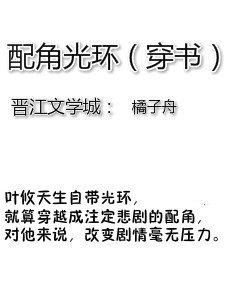
... Read More
Okay so here is the thing that had me sitting up straight: Ye Chen did NOT act like the character in the original book. That was the first domino to fall and I knew right away this wasn't going to be a rerun. In the source material Ye Chen was supposed to have a grand romantic arc with Du Hao that somehow worked out despite both families hating each other, and Ye You was supposed to be the jealous spare tire who ruined everything and then married some poor soul he didn't love before dying alone. Tragic ending, standard template. But what actually happened? Ye Chen hid his relationship by using Ye You as a cover. He literally sent Du Hao to get questioned while he ducked out the back door and told Du Hao to say it was Ye You who set up the meeting. And then Ye You — our transmigration POV character — just went along with it because Du Hao would be grateful later. Which he was, apparently, by denying any romantic interest in Ye You in front of the investigators. "I am pursuing him, but he has already refused" — read that again. Du Hao lied to protect Ye Chen and accidentally made himself look like a desperate simp. The plot twist isn't some big reveal; it's that the butterfly effect of one person crossing over completely derails a story that was supposed to follow a script. Ye Chen's parents apparently already knew about the affair and were covering for them, which the original book never mentioned. Something is different here and Ye You notices it immediately, which tells me the world has agency beyond the text.
... Read More
There's something deeply symbolic about Ye You climbing onto a drum head to perform the Po Zhen Dance. A drum is something you strike — it only makes sound when you hit it, when you apply pressure, when you exert force against it. And he's doing it ALONE, without any accompaniment. No other drums, no music, just him and the surface beneath his feet. It's almost like a metaphor for his entire situation in this story. He's been struck by circumstances beyond his control, and yet that's exactly when he produces the most beautiful thing. The fact that he's mimicking movements he only ever WATCHED before — that's also thematically resonant. He learns by observing pain, by watching others endure, and then he makes it his own. And the Po Zhen Dance itself? It's meant to send soldiers to war. To prepare them. To give them courage. Ye You isn't a soldier but he's been fighting his own battles this whole time — against Ye Chen, against Liu Hui, against whatever forced him into this world in the first place. The dance becomes his armor. Meanwhile, Du Yao is in a hospital bed — literally stripped of his ability to stand — and Ye You is the one coming to him, the one who will carry this emotional weight. Two kinds of brokenness, two kinds of strength. The book is asking: what does it mean to be able to stand? Is it physical? Or is it the choice to show up anyway?
... Read More
The pacing in these chapters is absolutely ruthless and I mean that as a compliment. You go from Du Yao telling Ye You he might never walk again to them planning a mountain villa with children and grandparents all under one roof, and somehow it doesn't feel rushed at all. Here's why it works: the author gives you the devastation first and lets it sit. Du Yao's speech about being unable to lead troops, about the doctor's prognosis — that's given space. It's heavy. And THEN Ye You responds, and theHope floods in so fast it's almost dizzying. The engagement proposal right there in the hospital bed? Genius pacing. No time to grieve the old life because the new one is being built in real time. Then BAM, the mother walks in and suddenly we're in family drama territory. The structure moves from intimate (two people in a room) to expansive (engaged, wedding plans, family meetings) in a way that mirrors how grief and joy can coexist. It never drags. Never feels padded.
... Read More
I need to talk about Ye You and Du Yao because something shifted between them and it was NOT subtle. Ye You went to the Military Law Department, dealt with his business, came back, walked into the bathroom, and just... froze. Because Du Yao showed up out of nowhere and somehow Ye You ended up complaining to him in a coquettish tone. A COQUETISH TONE. This man—who literally just stated his life philosophy is 'if you touch me I'll destroy you ten times over'—lost his composure completely in front of Du Yao. And what's fascinating is how Ye You handled it afterward. He didn't panic. He didn't chase Du Yao down. He just... decided not to think about it. That's not ignoring something, that's deliberate suppression. He's acknowledging the feelings exist but refusing to deal with them because they're inconvenient. Which of course makes them infinitely more interesting. Then there's Ye Chen, who is watching all of this unfold like a spider sensing vibrations on a web. He knows Su Ping didn't lie about being framed, but more importantly he's realized Ye You has a pattern—he schemes, he sets people up, and Ye Chen believes that's a handle he can grab onto. Their relationship has zero warmth between them. It's pure predator assessing potential prey. Meanwhile Ye Jiande and Xu Yun are still fuming about Su Ping's audacity, completely unified in their disgust even though Ye You was the one who was wronged. Family dynamics in this story are so messy and real.
... Read More
I need to talk about the setting details because this author does NOT skip on worldbuilding. The Cultural Regiment after three consecutive rainy days — people coming out to bask in the sun during noon break. Already I'm there. I can feel that relief of weather clearing after days of gray. But the scene that absolutely hooked me was when Ye You and Du Yao go to the housing area: "The family area was on the periphery of the Brigade, and there were special guards at the gate. Without a pass, people in the family area cannot enter the Brigade." Just two sentences, but they established an entire system — a segregated living space within a military structure, with actual security protocols. This isn't a generic military backdrop. This is a place with rules, boundaries, and hierarchy. And then the suite itself — one bedroom, one living room, one kitchen, one bathroom. The narrator explicitly compares it to their family house and says it's incomparable, but then pivots to "as long as two people can be together, even if there was only a bed in an empty house, they also will feels it was very sweet." The contrast between the sparse physical environment and the emotional fullness inside it — that's when the setting stopped being decoration and became meaning. The author builds this world where material conditions matter but don't define happiness, and the environment always serves the emotional truth of the scene.
... Read More
I keep coming back to the gift scene and I cannot stop thinking about it. Ye You gave Zhao Yuan a perfume and she genuinely loved it. Not acted love. Real, heart-level joy. The text literally says: "They saw that Zhao Yuan really liked the gifts Ye You gave, and it was not a deliberate acting to be excited. It was a joy from the heart." And then it cuts to Liu Hui fuming because she didn't get one. But what I want to talk about is the relationship between Ye You and Zhao Yuan. After the gift exchange, they go to a private tea room and immediately drop the smiles. Zhao Yuan closes the door and her relaxed expression disappears. This is trust. This is partnership. She worries about his chances. She pushes back. She says he might lose. And he just smiles and says don't worry, leave it to me. She eventually agrees but not before voicing her doubts. That is a real friendship right there — someone who cares enough to tell you the truth even when it is uncomfortable. Meanwhile the Ye Chen and Liu Hui dynamic is this toxic codependency where she manipulates him into being her puppet and he pretends it is his own achievement. Ye You and Zhao Yuan are doing the opposite. She sees his potential and warns him anyway. That is the kind of bond this story needs more of.
... Read More
I need to talk about the dialogue in this section because the author absolutely cooked with the supporting characters. Like, the main players are doing their thing—Du Yao being dignified, Ye Chen being quietly observant—but the REAL comedy gold is in the background chorus of military guys losing their minds over luxury cars. “Captain, can this car lend to me to drive once? Just once!”—Lin Dong's whisper is perfect. It's shameless but also somehow endearing. He knows it's inappropriate, he knows the answer, but he asked anyway because he HAD to ask. And then “I was absolutely embarrassed to open my mouth and asked Ye You”—that self-awareness is so human. Then the group dialogue about the cars spirals into this beautiful cascade of increasingly unhinged statements: “I heard that this car is also fast. It is by far the fastest and the best performing car in the world” “Do you think he is willing to sell this car? I am willing to pay three times the price.” “If I can drive it once, I will have no regrets in my life.” This isn't just exposition—it's CHARACTER. These men aren't discussing economics; they're having emotional conversations with a piece of metal. The dialogue makes them feel like real people who have never seen anything like this before, and honestly? Same. Same. The narrative voice itself has this dry, almost amused distance—like the narrator knows these guys are being ridiculous but isn't going to stop them. It's the kind of humor that doesn't announce itself as funny. It just lets the situations speak.
... Read More
Okay so I have to talk about Liu Hui because this woman is genuinely fascinating and kind of terrifying. She's the Deputy Leader of the dance team, right? And when Ye You and Zhao Yuan are handling the Po Zhen dance audition, she literally has NO right to participate or even interfere. The text says she's pretending to be indifferent on the surface but her heart is already boiling with anger. I love this kind of character because she's not cartoonishly evil - she's just... ambitious and sidelined, which I find way more realistic. It reminds me of those workplace situations where someone loses influence and has to watch from the sidelines while other people get credit. And then there are the few people who fawn over her, like Ye Chen standing beside her, feeling like Zhao Yuan and Ye You wouldn't pick them anyway so they'd rather not participate at all. That's some pretty dark group dynamics right there - self-sabotage out of loyalty to someone who can't even save herself. The whole Liu Hui situation makes me wonder if she's going to become an antagonist or if there's some redemption arc for her. Either way, she's the most interesting character in this entire chapter and I need more of her story.

Leave a comment

You must be logged in to leave comments. or
