Survive, My Lord! - Reviews

Survive, My Lord!
+Add to Custom List
Sort
Add review
... Read More
Okay so first off, the opening scene with Mount Lien and the red dragon just hits differently. The author paints this entire world before we even meet our protagonist—villages being plagued daily, the dragon flying south to burn grain belts, the central government finally snapping and sending knights. It's not just 'there was a dragon, fight happened.' The world feels lived-in, like the dragon had been doing this for years and the economy of this kingdom has been slowly crumbling under its demands. That detail about the southern residents ignoring the dragon's existence until their grain fields were on fire? That's the kind of grounded worldbuilding that makes you believe this place could actually exist. And then Reynald arrives at his fiefdom and it's just... wasteland. Monster-infested wasteland. The description is almost poetic in how bleak it is—no green fields, no peaceful countryside retirement spot, just mountains of monsters swarming everywhere. I literally felt that sense of betrayal when I read it. The king promised him a quiet rural fief and what he got was basically a death sentence. The contrast between what Reynald expected and what he got is chef's kiss. The castle itself got a brief mention—built in the middle of this wasteland, sturdy exterior, obviously built for survival rather than aesthetics. That tells you everything about who lived here before and what kind of world this is. This isn't a fairy tale kingdom with picturesque villages. This is a world where you build your castle strong because everything outside it wants to eat you.
... Read More
This is going to sound weird but hear me out—the mandrake's scream is doing so much thematic heavy lifting here and the book barely acknowledges it. The screaming root is a newborn baby-shaped plant that literally dies when you silence it. Every time they harvest one, they're committing violence against something that sounds like an infant in terror. And Reynald's response is just "Damn, you're noisy" and then *whack*. He doesn't flinch. He doesn't hesitate. He treats it like pest control. This is the entire premise of his world compressed into one image: survival requires cruelty, and the crueler you become to the natural world, the better you survive in it. Then there's the chase scene itself—which might be the most symbolically dense sequence yet. Monsters who have no real grievance against these humans, who are just... bored, chasing them for sport. The lycanthropes and ratmen who were about to fight each other stop everything to participate. It's like the entire world outside the castle walls has decided these people are entertainment. Meanwhile Reynald is watching all of this and thinking about how livable this domain might actually be. The predator becomes background noise to a man who's survived worse. And the cave—a hidden passage connecting the wild to the domestic. The boundary between danger and safety isn't a wall, it's a tunnel you didn't know existed. That's basically the thesis of the whole novel wrapped into one spatial detail.
... Read More
There's something deeply symbolic about Reynald's situation that goes beyond the surface-level 'knight gets betrayed by king' plot. The fiefdom itself—the wasteland, the monsters, the ruined castle—represents exactly what betrayal does to a person's life. Everything Reynald built, every sacrifice he made, every battle he fought, was supposed to earn him peace. Instead, he gets handed a living hell that he can't leave because the king controls the narrative. The red dragon he killed is almost ironic here. He spent his life fighting monsters, serving a kingdom that didn't care about him, and the real monster was the smiling king sitting on the throne the whole time. The dragon was honest in its greed—it took tribute and burned villages openly. The king pretended to be a friend while quietly destroying Reynald's life. Which is the more dangerous creature? The story seems to be asking that question without ever stating it outright. Then there's the motif of retirement that never comes. Reynald is forty-seven, tired, injured, and all he wanted was to disappear into the countryside. But the kingdom won't let him go. The fiefdom is a gilded cage—a title and land that come with impossible obligations. He's not free; he's just imprisoned somewhere else with a different view. And the young patrolmen represent something interesting too. These kids grew up in this nightmare. They adapted. They learned to survive. Reynald is an outsider trying to impose order on chaos, and I wonder if the story is going to explore whether that's even possible. Can someone who spent their whole life serving a system learn to survive without it? Or is he doomed to keep fighting battles that were never his to begin with? The title 'Survive, My Lord!' hits different when you realize it's not just about monsters—it's about surviving a world that wants you broken.
... Read More
Okay so here's the thing that immediately grabbed me about this section—Reynald actually decides to stay. Like, he came in planning to bounce after a few days, right? But the moment he sees how broken this place is, how these people have been surviving on nothing, something clicks. The chapter structure is smart about it too. It doesn't just say 'he'll stay now.' It builds the reason organically: first the villagers celebrating the wyvern meat saving them from starvation, then Heide reporting injuries, then the realization that winter is still a month away and these guys have NO defense infrastructure. That's when the pivot happens. And you know what's really clever? The author ties it back to his political situation. If he leaves too fast, the king wins—that's the real chess move beneath the emotional one. So now he's stuck here longer, and that sets up everything: the herb-gathering mission, meeting Alex, learning about the domain. The subplot of the herb shortage is introduced almost casually through Volant but it's clearly going to matter. And the injured watchman—Alex—feels like a deliberate setup for future conflict or maybe even an alliance. The pacing in this batch is genuinely solid. No fillers, every scene pushes something forward.
... Read More
Let me just say this straight: the part where Reynald reflects on his life and realizes he's never married, never had a family, never done anything for himself — that wrecked me. He's fifty years old. FIFTY. And his biggest dream is to rest. Not glory. Not treasure. Just... to stop. "A knight who had served loyally all his life surely deserved at least that much." The line that absolutely destroyed me was: "Honestly, even the knights from old legends hadn't been pushed as hard as Reynald. In his youth, he had taken down countless famous monsters, and just a few weeks ago, he had even slain a dragon. If that didn't entitle him to a peaceful life in his twilight years, even if not surrounded by gold and treasure, then what would?" What WOULD? What DOES entitle someone to peace? I'm sitting here genuinely confused because this world seems to operate on the logic that if you're useful, you never get to stop being useful. Reynald killed a DRAGON and still isn't done. Still expected to ride to this remote territory, deal with monster swarms, hold walls — all while the king happily enjoys the fruits of his labor from the comfort of the capital. And yet Reynald's emotional journey here is so quietly heartbreaking because he doesn't even frame it as bitterness. He frames it as gratitude mixed with exhaustion. "I was lucky. If I hadn't met His Majesty..." He still loves this man who used him. He still feels indebted. And the fact that he's only now, at the end of his rope, allowing himself to want something for himself — that's not rebellion, that's survival. The wyvern attack scene actually made me feel better, in a way. Watching him lead, organizing the defense, the way he immediately dropped his own thoughts to protect these people — that's who Reynald IS. He doesn't know how to NOT be useful. Even in his own bedroom, awake from nightmares, his first instinct when he hears the attack is to grab his sword and run outside. I want someone to just sit this man down and tell him he's allowed to rest. I want that for him so bad right now.
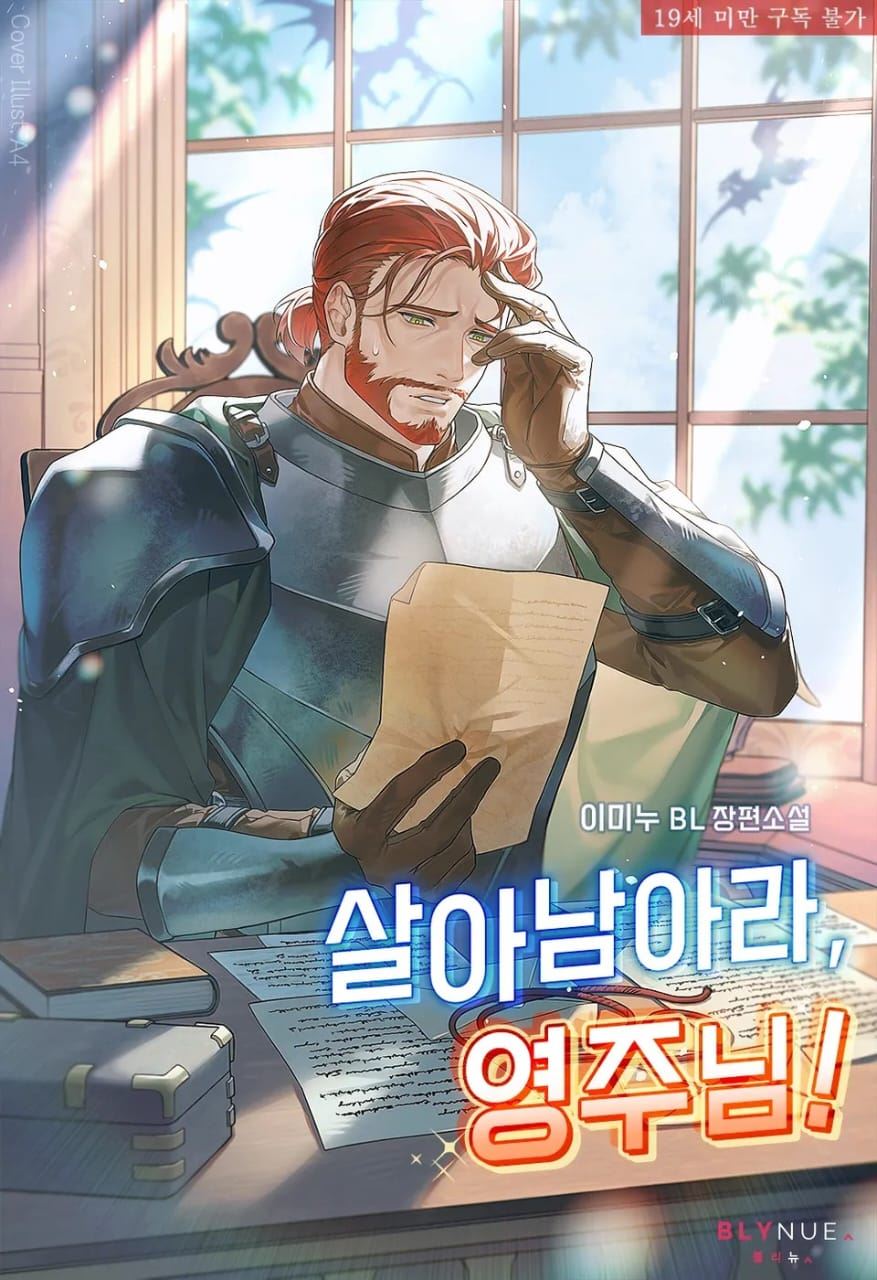
... Read More
I keep coming back to that one exchange between Reynald and Alex. On the surface it's simple—boy insults lord, lord forgives him, boy is confused. But the emotional depth underneath is staggering. Alex has clearly been hurt before by people in power. His default mode is deflection and aggression because he's learned that's how you survive. When Reynald responds with genuine warmth instead of punishment, it doesn't just surprise Alex—it destabilizes his entire framework for understanding the world. Watch what happens: Alex expects a trap. He expects the forgiveness to come with strings, with hidden humiliation, with eventual payback. His expression darkens because he interprets Reynald's gentleness as sarcasm. The man is so accustomed to cruelty that kindness registers as a threat. And Reynald? He just smiles and says there's no rush. No pressure. No conditions. That scene sits with me. It's not romantic—it's something quieter and more profound. It's about what it means to encounter someone who genuinely doesn't know how to be cruel, and how disorienting that must be for someone who's only ever known violence as the language of authority. Alex spends these chapters watching Reynald, recalibrating, slowly letting down his guard just enough to walk alongside the lord during the raid with a bitter smile. Meanwhile Reynald himself is having his own emotional reckoning. He started these chapters thinking maybe retirement in a monster-infested wasteland isn't so bad. By the end, he's facing the reality that 200 humans versus 4000+ monsters with a fragile ecological balance holding everything together, and humans are the freeloaders. The emotional arc here isn't about romance or friendship—it's about two people from completely different worlds slowly, awkwardly, learning to exist in the same space without immediately trying to destroy each other. And honestly? That's more moving than any love confession.

Leave a comment

You must be logged in to leave comments. or
