Summary

... Read More

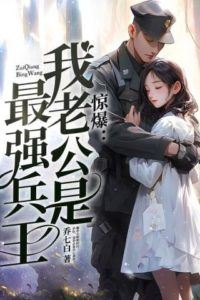
Mu Qiao serves as the deputy regimental commander and leader of the Snow Wolf Special Assassination Team within the military forces of Country Z. Known as the "female warrior" and the "Almighty King" of her unit, she is renowned for her exceptional combat skills and unwavering dedication to her country. Three years prior to the current timeline, Mu Qiao was captured while leading a peacekeeping mission abroad. She was imprisoned in a laboratory run by Weiss, a notorious biological terrorist responsible for creating the deadly CC virus. During her captivity, Mu Qiao endured severe torture and experimental injections of the virus, yet she refused to reveal the identity of the undercover agent planted within Weiss's organization. Her resilience and silence frustrated her captors, who increased the dosage of the virus in a desperate attempt to break her. Despite the excruciating pain that caused her to faint repeatedly, Mu Qiao maintained her composure, driven by her duty to defend her nation even in death.

On the night of her capture, a mysterious man in black orchestrated a diversion by setting a fire outside the laboratory. He infiltrated the dungeon, provided Mu Qiao with medication to control the virus in her body, and guided her to escape through a dark tunnel. He instructed her to flee to a waiting black SUV in the woods, sacrificing his own safety to ensure her survival. Mu Qiao successfully escaped into the primeval forest, evading sniper fire and merging with the shadows. The man, who remained hidden in the darkness, watched her depart, ensuring she disappeared before the guards could recapture her. This act of rescue left Mu Qiao with a profound sense of gratitude and a lingering mystery regarding her savior's identity, as she was only able to perceive his hoarse voice and sharp, nighthawk-like eyes.

Three years later, Mu Qiao returns to her duties at the Snow Wolf base, only to face a sudden and controversial personnel change. The military chief appoints Qiao Lubai, an airborne soldier and descendant of a military family, as the new deputy captain of the Snow Wolf unit. Mu Qiao is transferred from her leadership position in the special killing team to an instructor role in the Fourth Battalion, a move that sparks resentment among her subordinates. Qiao Lubai, known by the nickname "Thousand-Faced Fox," immediately establishes his authority by challenging the special killing team's deputy leader, Yin Yu, to a twelve-event all-around competition. Qiao Lubai wins decisively, demonstrating superior physical prowess and tactical intelligence. He then challenges Mu Qiao to a shooting competition, which he also wins with remarkable precision, further solidifying his reputation and unsettling the unit's existing hierarchy.

Qiao Lubai initiates a series of reforms, including the disbandment of the special killing team and its reorganization into seven action teams. He assigns Mu Qiao a critical mission: to attend a charity ball at the Huatian Hotel in Yishui City alongside him. The objective is to capture remnants of Weiss's organization, specifically a male and female duo known as Baihua and Bai Lian, who possess a cache of the CC virus. Mu Qiao, who has never learned to dance, is forced to undergo intensive ballroom dancing training under Qiao Lubai's supervision. During this process, the two develop a complex dynamic, marked by initial friction and growing mutual respect. Mu Qiao also learns through intelligence channels that her savior from three years ago may have died during the operation, leading to a period of grief and reflection.

At the charity ball, Mu Qiao and Qiao Lubai execute a coordinated infiltration strategy. Mu Qiao, disguised in an evening gown, lures Baihua into a hotel room while Qiao Lubai engages Bai Lian. Mu Qiao discovers a message indicating a meeting with a figure codenamed "Y" in the building's fire control room. She infiltrates the control room disguised as Bai Lian, using code words to blend in with the conspirators. Meanwhile, Qiao Lubai gathers intelligence from Bai Lian's phone, revealing a second emergency plan to release the virus through the hotel's central air conditioning system. The Snow Wolf team moves to intercept the conspirators, but Baihua escapes to the rooftop, where he is confronted by a masked figure identified as "Brother Y." The operation escalates into a tense standoff, with Qiao Lubai emerging as a central figure in the unfolding conflict, while Mu Qiao remains embedded within the enemy's inner circle, poised to strike.

Latest Release
DateGroupRelease
2026-08-11shanghai fantasy c12
2026-08-11shanghai fantasy c11
2026-08-11shanghai fantasy c10
2026-08-11shanghai fantasy c9
2026-08-11shanghai fantasy c8
2026-08-11shanghai fantasy c7
2026-08-11shanghai fantasy c6
2026-08-11shanghai fantasy c5
2026-08-11shanghai fantasy c4
2026-08-11shanghai fantasy c3
2026-08-11shanghai fantasy c2
2026-08-11shanghai fantasy c1

Community Reviews

Rating(3.5 / 5.0, 32votes)
5 stars
7(22%)
4 stars
9(28%)
3 stars
9(28%)
2 stars
7(22%)
1 stars
0(0%)

Popular reviews

... Read More
The stakes in this chapter are absolutely brutal. Ruth has been captured, Weiss is in prison, but there's a bomb waiting to go off in Country Z. And Mu Qiao is the only one who knows about it because she's the one who caught Ruth. But she can't act on it because the military chief won't promote her due to her capture history. So she's stuck between saving her country and being punished for surviving. Then there's the personal stake. Mu Qing is selling wine at Lotte, and Wen Shaoyang has found her. Is he helping? Or is this another trap? Mu Qiao hands over her phone number, but she's not naive. She knows the game. And Qiao Lubai? He can't let Mu Qiao interrogate Weiss because if Weiss sees her, he'll expose Qiao Lubai's undercover identity from three years ago. So he's protecting her by keeping her away, which makes her feel unqualified and frustrated. Everyone is protecting everyone by keeping secrets, and the secrets are piling up like landmines. The interrogation with Weiss is the ticking clock. If it happens and Weiss dies without talking, the bomb goes off. If it doesn't happen, the bomb goes off anyway. Mu Qiao is running out of time and options, and she knows it.
... Read More
Let's talk about how these characters actually speak, because the dialogue here is doing a lot of heavy lifting. First, Mu Qiao. Her voice is immediate and distinct — she's direct, she's defensive, and she has zero patience for nonsense. When Li Song tries to gossip with her, she doesn't play along. She gives him the cold shoulder, walks away, and only stops when he mentions something that actually matters to her. That's consistent characterization through speech patterns. She doesn't waste words. Then there's Li Song, and oh my god, he's the perfect foil. He's chatty, he's persistent, he's the kind of guy who will follow you into a gun room just to finish a sentence. His dialogue is all setup and escalation — he starts with gossip, moves to career advice, then to provocation, and only backs down when Mu Qiao actually engages with him. He's comic relief, but he's also functional. Through him, we get information about Qiao Lubai that Mu Qiao would never receive through official channels. Qiao Lubai's first lines are minimal but loaded. "Do you feel comfortable stepping on my feet?" That whisper, that controlled anger — it tells you everything about who he is. He's not the type to explode; he's the type to simmer. And then "You're so sharp-tongued!" when she fires back? That's not just a line; that's a character reveal. He's amused, not intimidated. The exchange between Mu Qiao and Qiao Lubai at the camp entrance is the highlight. It's fast, it's sharp, it's almost comedic in its rhythm: "How can a deputy regimental-level officer walk so hastily?" "A full-ranking officer walks briskly and without any regard for his image. Is this considered decent?" Two people using military hierarchy as weapons, and it's hilarious. The author clearly enjoys writing dialogue where rank and status become ammunition. Captain Lu Feng's voice is different — he's authoritative but also playful. "Oh, our female man, Ms. Mu, also has such a feminine side?" That's a commander who knows his people well enough to tease them. It adds warmth to what could otherwise be a purely stern character. What I appreciate most is that no two characters sound the same. Li Song is loose and verbal. Mu Qiao is clipped and precise. Qiao Lubai is controlled and minimal. Lu Feng is warm but firm. Even in a short excerpt, the author has given each character a distinct vocal fingerprint. The narrative voice itself is interesting too — it's third-person limited, mostly following Mu Qiao's perspective, but it slips into omniscient moments when describing Qiao Lubai's internal thoughts or the atmosphere of scenes. It's a flexible narrative voice that serves the story without drawing attention to itself. One small critique: some of the dialogue tags and action beats feel a bit overworked. "The man whispered in her ear, gritted his teeth and asked" — we get it, he's angry. But this is a minor quibble. Overall, the dialogue is sharp, functional, and full of personality. "You're rebelling!" Lu Feng's explosion in Chapter 3 is perfectly timed. After the quieter, more controlled exchanges earlier, this outburst lands because the dialogue has been building toward it. The pacing of the conversation itself mirrors the escalation of the conflict. I'm also curious about how the dialogue will evolve once Mu Qiao finds out the truth. Right now, their banter is all surface — rank, appearance, attitude. What happens when the subtext becomes text? That's going to be a fascinating shift.
... Read More
Okay so this chapter starts with Mu Qiao literally breaking into a bathroom to find a red medicine bottle hidden behind a squatting board door. Like, who even thinks to hide evidence in a toilet? But she finds it, and right when she's about to grab it, Ruth comes running in. The tension here is chef's kiss. Mu Qiao hides, Ruth checks both stalls, and then Mu Qiao literally jumps onto the wooden door of the stall to avoid being seen. That's not just tactical, that's acrobatic. Then she pulls Ruth off the door and ties her up like a dumpling. The image of a military officer wrapping someone up so efficiently while calling them finished is just iconic. But then Ruth drops this bomb about Weiss leaving a gift that will explode in Country Z soon. And Mu Qiao's face when she stuffs a rag in Ruth's mouth to stop her from biting poison? That's not just prevention, that's survival instinct. The pacing here is relentless. One moment she's captured Ruth, the next she's worried about a ticking bomb. And the worst part? The military chief still won't promote her because of her capture history three years ago. Li Song is losing his mind about it, but Mu Qiao is already thinking about Weiss and what he might have left behind. The story moves from action to political frustration to looming threat in like three paragraphs. I was gasping.
... Read More
The chapter structure here is doing some serious heavy lifting, and I need to talk about that three-year jump. Chapter 1 ends with Mu Qiao crawling away through the woods, alive but wounded, with the CC virus still in her system. Chapter 2 opens with "Three years later, Snow Wolf of A Military Region." That's it. One line. No transition scene, no time-skip montage, just... three years have passed. And you know what? It works. Because the story doesn't need to show us those three years. We already know the essentials: she survived, she got back to the military, she's still in Snow Wolf, and she's still dealing with the aftermath of that virus. The author trusts the reader to fill in the gaps. But then the pacing gets really interesting inside Chapter 2. It starts slow — Li Song catching up with gossip, Mu Qiao shooting targets, the mundane rhythm of military life. Then Qiao Lubai arrives, and suddenly everything speeds up. The collision, the nosebleed, the exchange of barbs, Captain Lu's arrival, the mention of the deputy captain position. By the time Chapter 3 starts, Mu Qiao is already confronting Lu Feng about Qiao Lubai's qualifications, and Lu Feng is already furious. The tension builds in waves. Chapter 1 is pure survival tension — will she live? Chapter 2 shifts to social tension — who is this guy and why does he threaten her position? Chapter 3 escalates to institutional tension — she's challenging her commander and getting shut down. The cliffhanger at the end of Chapter 3 is perfect. Lu Feng announces a personnel transfer order that the leaders had already decided on. What does that mean for Mu Qiao? What does it mean for Qiao Lubai? The chapter cuts before we find out, and I am immediately clicking to the next one. One thing I will say — the Li Song subplot about the backdoor candidate feels slightly dragged out. We get three full pages of him trying to get a reaction out of Mu Qiao before she finally asks the direct question. It's not bad pacing, but it's the slowest part of the chapter. That said, it does serve a purpose: it establishes Mu Qiao's character (she doesn't care about gossip or politics) before the real conflict hits. The author knows when to accelerate and when to let scenes breathe. The gun room scene is a perfect example — quiet, focused, almost meditative, right before the chaos of the camp entrance collision. That contrast is deliberate and effective.
... Read More
Okay, let me just say this upfront — the opening chapter is an absolute masterclass in tension. You have Mu Qiao handcuffed, tortured, refusing to talk, and somewhere in the darkness, this mysterious guy is watching her suffer for an entire hour before making the call to save her. That decision — risking his cover to pull her out — is the kind of plot beat that makes you sit up and pay attention. It's not just a rescue; it's a statement that this character has a code, even if we don't know who he is yet. And then three years later, BAM — she crashes into him. The undercover agent who saved her is now her new deputy captain, Qiao Lubai, and she has no idea it's him. That dramatic irony is delicious. She's standing there with a bloody nose, snapping at this full-ranking officer, while the reader is like... oh my god, you don't even know who you're talking to. The plot threads are already intertwining nicely — the CC virus in her body, the unresolved Weiss situation, the mysterious identity of Qiao Lubai, and the question of whether their first meeting was really just a coincidence or something more calculated. What I love is that the author doesn't explain everything. We get fragments: the red pills that control the virus, the fire as a diversion, the SUV with supplies. It's enough to keep you hooked without info-dumping. But here's what's bugging me — why did the author wait three years to bring them together? Was the underground mission a complete failure? Did Qiao Lubai stay embedded? The gaps are intentional, I think, but I kinda want answers now. "These pills can control the CC virus in your body." Three words from a man she can't even see, and suddenly her entire medical situation has a loose end. What happens when she finds out those pills came from the man she just called out for being disrespectful?
... Read More
This book has a visual language that's honestly cinematic. Let me start with the opening scene — the third laboratory, Mu Qiao handcuffed to a chair, the woman in the white coat with a syringe as thick as a child's wrist. The imagery is brutal and specific. You can feel the coldness of that room, the way the darkness swallows everything except the immediate violence of the injection. And then Weiss's voice from the darkness, that voice changer adding this layer of dehumanization. It's not just a villain; it's a presence that's felt more than seen. Then there's the fire. "Fire, fire..." — those two words cutting through the night, mercenaries running with extinguishers, and in the chaos, this black shadow moving faster than anyone can track. The fire isn't just a plot device; it's atmosphere. It's chaos and light and smoke, and it's the perfect cover for someone who knows exactly what they're doing. The woods outside the base — that's where things get interesting. The black SUV parked under a towering tree, completely submerged in night. The man leaning against it, cigarette flame illuminating his face in bursts. This is a character introduction through environment, and it works. You don't need to see his eyes clearly; the cigarette light does the work for you. And then three years later, the military camp. The cafeteria entrance, the green belt, the gun room with its quiet intensity. Mu Qiao assembling a Type 54 pistol in minutes — this is her sanctuary, her place of control. The contrast between the chaotic dungeon and the ordered gun room tells you everything about who she is. "Ten shots were fired in succession, all moving targets lit up red, and the hit rate was 100%." That's not just action; that's character definition through environment. She belongs in that gun room. The camp entrance collision — sudden, physical, messy. Blood on a clean uniform. It's the one moment in this tightly controlled military world where everything goes wrong at once, and it's gloriously human. I also love how the author uses rank and uniform as visual storytelling. Mu Qiao's two-cent insignia versus Qiao Lubai's full-ranking officer status. The camouflage vs. the immaculate uniform. These details build the world without a single exposition paragraph. The world feels lived-in. Not just military bases and underground labs, but the spaces between — the tunnels, the woods, the cafeteria, the gun room. Every location has texture.
See all reviews

Characters

See all characters

Custom lists

See all custom Lists