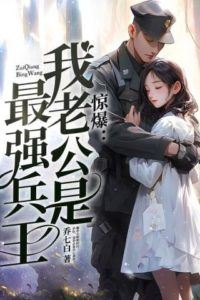
There's a theme running through these chapters that I can't quite shake — the idea of hidden identities and the cost of wearing masks.
Mu Qiao spends Chapter 1 literally bound and unable to move, her body on display while her mind remains her own. The torture is physical, but the real battle is about information — who knows what, who reveals what, who stays silent. Her refusal to speak isn't just bravery; it's an act of preserving her identity against someone who wants to strip it away. "I don't know!" three times — that's not ignorance, that's defiance.
Then there's Qiao Lubai, who operates in the opposite direction. He's invisible in the dungeon — a black shadow, a hoarse voice, someone Mu Qiao can't even see clearly. But he's also hyper-visible in Chapter 2 as a full-ranking officer, the new deputy captain, the son of a legendary commander. He's spent four years underground, literally and figuratively, and now he's emerging into the light. The man who saved her in darkness is now standing in front of her in full uniform, and she has no idea.
The name Qiao Lubai itself carries weight. His father was Commander Qiao, and Lu Feng says "Commander Qiao is relieved in his grave." This is a son carrying his father's legacy, living up to an expectation that's both an honor and a burden. "This was his expectation, and I did it." That line hits different when you understand what it costs him.
And then there's the CC virus — this literal poison inside Mu Qiao's body, something invisible that could kill her. The red pills are the counterweight, the invisible protection. It's almost symbolic: she was saved by something hidden, just like she was saved by a person hidden in darkness. The virus and the rescue share the same quality of being unseen forces that shape her fate.
The snow wolf imagery is also worth noting. This is her unit — Snow Wolf. Wolves are solitary hunters, but they're also pack animals. Mu Qiao operates as an individual (she doesn't care about gossip, she doesn't seek promotion), but she's part of something larger. The tension between individual identity and group belonging runs through everything.
Rank and insignia as symbols of identity is another layer. Mu Qiao's two-cent deputy regimental insignia versus Qiao Lubai's full-ranking status. These aren't just military details; they're statements about where each character stands in the hierarchy, and how they're perceived by others. When Mu Qiao challenges Lu Feng about Qiao Lubai's qualifications, she's not just questioning a promotion — she's questioning the system that decides who belongs and who doesn't.
"Weiss, you son of a bitch, if you have the guts, shoot me." That line from Chapter 1 is pure theme. It's about dignity, about control, about refusing to give your captor the satisfaction of breaking you. It's the thesis statement for the entire novel, I think — the fight to remain yourself when everything around you is trying to strip that away.
I'm also struck by the father-son dynamic. Qiao Lubai's father died expecting him to achieve something, and he has. But at what cost? Four years undercover, nearly dying in a dungeon, carrying a virus that could kill him — this is the price of duty. The story seems to be asking: what do we owe our countries, our families, our comrades? And where does the personal self end and the duty begin?
The ending of Chapter 3 with Lu Feng's personnel transfer order feels like the author is setting up a collision between these themes — identity, duty, family legacy, and belonging are all about to collide, and Mu Qiao is right in the center of it all.