Second-Place Complex - Reviews

Second-Place Complex
+Add to Custom List
Sort
Add review
... Read More
'Through it all, only the books she had clutched tightly remained clean.' This sentence hit me like a truck. Let me sit with that for a moment. Vivian Raine—a woman who spent her entire previous life defined by her academic brilliance, who let studies be the only thing that separated her from everyone else at this Academy—is covered head to toe in mud, humiliated in public, unable to defend herself against a coordinated bullying campaign. And the ONLY thing that remains pristine are her books. Her refuge. Her armor. The things she's been told make her harsh and unworthy. The mud itself is such a loaded symbol. It's everywhere, from melted spring snow, transforming the once-frozen campus into something slippery and unstable. You can't walk without getting dirty. It clings. It's unavoidable. And for Vivian, who tried so carefully to navigate without stepping in anything, it represents how the social world of this Academy operates—no matter how carefully you try to avoid trouble, it finds you and stains you anyway. But here's what really gets me: Vivian is twenty-seven years old mentally. She's lived this life before. She knows how these games work. She understands that Luciel's popularity creates the conditions for her isolation. She could, theoretically, fight back smarter. But the bullying isn't something she can out-argue or out-study. It's physical, public, and designed to break her dignity. The mud doesn't care about her intelligence. It doesn't care about her reputation. It just splashes. And yet—she clenches her molars, shakes out her skirt, and keeps walking. That's not resignation. That's restraint. That's someone who knows exactly what game she's playing and refuses to give them the satisfaction of watching her crack.
... Read More
The stakes in this section are layered in a way that keeps me on edge the entire time. On the surface, it's a bullying story—rich kids targeting an outcast. But underneath, the author is stacking pressures on Vivian until the whole thing feels like it could collapse. First layer: academic. Vivian deliberately avoided studying over winter break because she was terrified of becoming her old obsessive self again. Now exams are here, and she expects to fail spectacularly. Remember, she was LUCIEL EVANHART'S only real competition for first place. If her grades crater, she loses the one thing that gave her legitimacy at this Academy. Who will take an ostracized girl seriously if she's also academically irrelevant? Second layer: social. The bullying has escalated from whispers to physical violence. Alkert Venom—a boy from a powerful family—just tried to run her over with a horse on campus. In a normal setting, this would be grounds for family-level conflict. The fact that these kids feel confident enough to do this openly tells you exactly how deep the rot goes. Third layer: the Luciel problem. Every time someone tries to help Vivian, they frame it as Luciel's doing. Cain literally reminds her that LAST time, Luciel saved her and he just "helped a little." The narrative keeps reinforcing that Luciel is her protector, even though he's the one who created her social nightmare. That's a trap, and Vivian knows it. But the MOST dangerous stake here is what Cain represents. He's the Crown Prince's closest confidant. He saw through Adelaide's excuse instantly. He punished Alkert decisively. And his aide noted—out loud—that the students "dared to splash mud on the prince's sacred body." Cain's protection is real, but it's also complicated. He called Vivian a "talent I'm interested in." Interest from someone like him isn't free. The debt exchange is already happening: he protects her, she owes him, and somewhere in the future, that debt comes due.
... Read More
Okay so can we just talk about how much Luciel has changed? Because in Vivian's memory, he was never this openly venomous, right? And the fact that he remembers every single stupid thing she said during their rival phase is... actually kind of terrifying. It's like he's been keeping a mental spreadsheet of her embarrassments. But here's what really got me—when she snaps at him and says 'You are nothing to me!' and then bolts? She's lying, obviously. And she knows it. The whole grand fête setup where they're forced to sit together while the rest of the court ignores them? That's not coincidence, that's punishment. Or devotion. Honestly I can't tell with Luciel anymore. And then the worst part—the part that made me actually gasp out loud—she gets lost in that garden. Cold. Dress torn. Two hours wandering. After everything. The author just... drops her into this vast, beautiful, merciless space while her body gives out. That's when I knew this wasn't going to end well for her. There's something so isolating about getting lost in a place that's supposed to be safe. A palace garden should be full of paths and guards and people, but it felt like the world itself was closing in on her. Like the narrative was saying: you've run out of room to hide. I need to know who finds her before I can sleep again.
... Read More
This whole Grand Fête sequence is SO vividly rendered. I can literally see the chandeliers, hear the imperial orchestra, feel the weight of hundreds of judging gazes. But what struck me most is this one detail—Vivian deliberately chose a 'relatively modest and inconspicuous dress' in light cocoa color so she could 'quietly observe the atmosphere of the hall' while everyone else was showing off in 'a feast of all kinds of splendid dresses.' The contrast between her camouflage strategy and the surrounding opulence is such a perfect visual metaphor for who she is in this world. She's physically present but emotionally hiding. And the worldbuilding details are seamless—the tax-free festival decree, commoners dancing in the streets, the family banners on carriages, the whole procession forming at the palace gates. It makes the world feel genuinely alive, not just a backdrop. The author also does this great thing of contrasting the festive external atmosphere with Vivian's internal dread. 'While everyone was in high spirits, only Vivian... fidgeted with her tense hands.' One sentence and suddenly the whole celebration feels different through her eyes. The warmth of the chandeliers becomes oppressive, the music feels like pressure, and those 'piercing' gazes from other noble daughters make the room shrink. It's a masterclass in using environment to reflect psychological state without ever saying 'she was nervous.'
... Read More
Okay so let me just say—this whole exam arc is genuinely brilliant plot engineering. On the surface it's just school tests, but Vivian's internal monologue about not writing future events in her answers? That's a ticking bomb waiting to go off. The author is playing with dramatic irony like a madwoman here. We know she's a transmigrator with future knowledge, and now she has to *withhold* that knowledge during tests. The tension of knowing the right answer but possibly being penalized for being too accurate—that is such a clever constraint to impose on a character whose superpower is literally knowing what happens next.
... Read More
Can we just talk about Luciel's face when Vivian casually drops that she's looking for a husband? The text says his 'characteristic irritatingly relaxed smile completely disappeared.' Then his 'red eyes had taken on a strangely angry light.' He asks if there's someone she likes, he forces out 'I'll try to look, but they say men and women have different perspectives, so I'll have to be somewhat careful' which is the most passive-aggressive polite refusal I have ever encountered in my entire life and I need a minute. Meanwhile Vivian is sitting there thinking he's just being his usual annoying self and has no idea that she just set off an earthquake inside his chest. The dramatic irony here is SO thick you could cut it with a knife. And get this—he was the one who initiated the conversation! He came OVER to talk to her! After literally scanning the room and locking eyes with her the moment he walked in. All that composed aristocrat energy and then she says three sentences about wanting a husband and suddenly he's a flustered mess. The power dynamic just flipped so hard. Also side note: everyone around them is watching like 'oh this is INTERESTING' and Vivian is over there thinking it's just awkward and she's already planning her escape route. The contrast between their internal experiences is everything.
... Read More
The stakes here are quietly apocalyptic for Vivian, and that's what makes them so gripping. On the surface, it's a revenge or redemption fantasy—go back, beat Luciel, fix your mistakes. But dig deeper and every conflict is layered. Internally, Vivian battles the ghost of her twenty-seven-year-old self: the exhaustion, the resentment, the visceral memory of watching everything burn. She's not just fighting Luciel; she's fighting her own conditioned helplessness. Externally, the timeline itself is a minefield. October 28th, 452—three months before the Academy exams, three months before her father's financial collapse, three months before her mother's death from epidemic. Each day is a ticking clock toward disasters she knows are coming. The author never spells out 'you must prevent X,' but the dread is everywhere. When she insists on rescuing Jasper, it's not just kindness—it's a test of whether she can actually alter events. Will the knights arrive in time? Will Jasper live? Will the Raine household survive long enough for her to change anything? And what about Luciel? He's calm, composed, offering 'solutions' that feel like control. The external conflict with him is palpable, but the deeper terror is internal: if she changes too much, does she erase the memories that make her who she is? If she saves her parents, does she still have the fury that drives her? The suspense isn't 'will she win?' It's 'can she win without losing herself?' Every choice is a tightrope walk over a decade of grief.
... Read More
That balcony isn't just a setting—it's the entire thesis of this novel in miniature. At the start, it's where Vivian chooses death, standing at the edge between a life of perpetual second-place agony and nothingness. Luciel stands behind her, untouched by the wind, untouched by desperation. He represents everything she hates: effortless grace, inherited virtue, the illusion that he 'understands' because he can afford to be gentle. But then the story flips, and that same balcony becomes the threshold of rebirth. When she wakes up seventeen, the house is identical, the air smells the same, but she's no longer facing outward toward the ground—she's turning inward, reconstructing herself. The recurring motif of 'second place' isn't just about ranking; it's about ontology. Vivian exists in relation to Luciel—defined by his light, measured by his absence, broken by his default goodness. Her leap was an attempt to shatter that relational cage, even if it meant shattering herself. Now, returning to this moment, she's armed with future knowledge. The author keeps circling back to objects of exchange and inheritance: Luciel gets everything by birthright; Vivian gets debts and ruined reputations. But when she proactively sends knights to save Jasper, she's not just preventing a minor plot point—she's reclaiming agency over the narrative itself. Every small act of foresight is a symbolic rebellion against the fate that once owned her. The theme isn't 'can she win?' It's 'can she exist on her own terms again?'
... Read More
This section is a masterclass in pacing escalation. Let me break down why it works so well. It starts almost domestic—Vivian struggling to get out of bed, complaining about three days of banquets exhausting her. We get comfortable. The pacing is almost lazy. Then the Emperor summons them, and suddenly everything sharpens. The audience chamber scene is tight, formal, each line of dialogue carrying political weight. Vivian's speech about female employment isn't just a plot point—it's a pivot that changes how everyone in that room sees her. Even the prose itself seems to tighten up, shorter sentences, more precision. But then—boom—Luciel goes for the jugular. The emotional whiplash from 'you look beautiful today' to 'you're ordinary, you're nothing special' hits like a slap. And the author doesn't let her recover. She storms out. She wanders. Two hours pass. The garden swallows her. The chapter doesn't wrap up with a neat bow; it leaves her exposed in cold darkness with no clear exit. What I love about this structure is how it mirrors Vivian's internal state. She starts exhausted, becomes defiant, gets cornered verbally, and finally ends up physically lost. Each beat escalates her vulnerability until there's nowhere left to retreat to. The pacing isn't just controlling reader attention—it's enacting the story's emotional thesis. We feel her unraveling because the narrative structure itself is unraveling around her.
... Read More
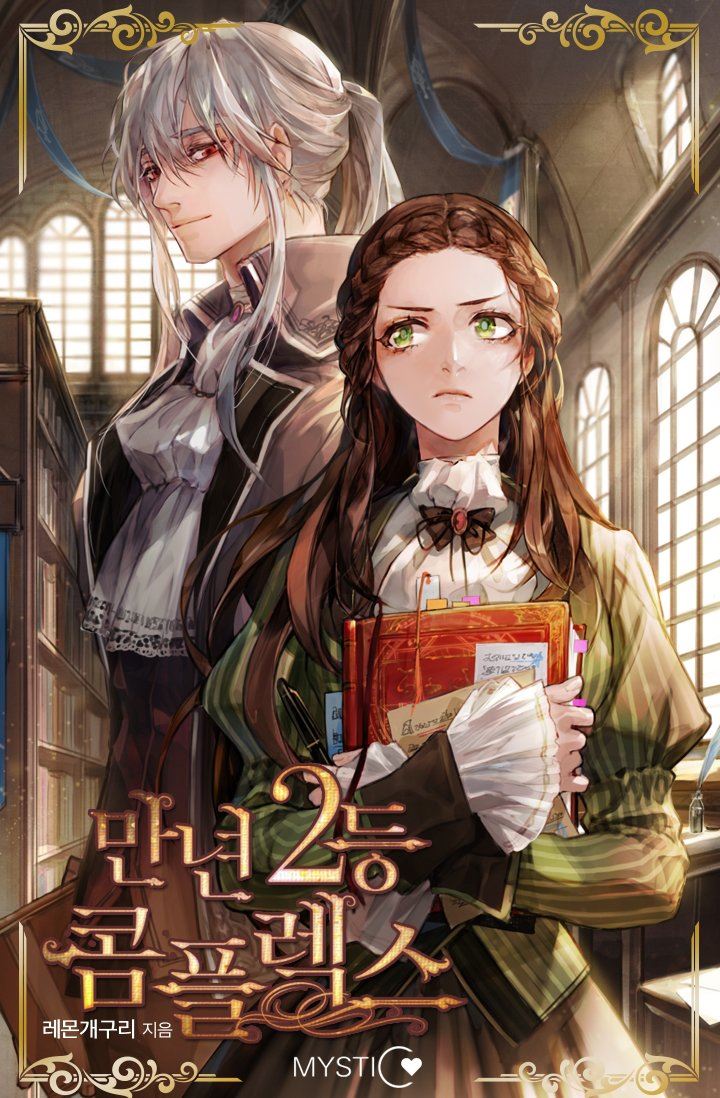
There's something hauntingly beautiful about how this story reconstructs Vivian's past. It's not just a generic 'back to the past' setting—the author builds the world through Vivian's sensory memory, and it feels achingly real. Think about the opening image: silver hair cascading down, a balcony railing cold beneath her fingers, the distant ground three stories below. It's cinematic, yes, but what makes it land is the emotional geography attached to each place. When she wakes up and hears the 'metallic sound of knights' swords clashing in the training yard,' that's not just background noise. It's the sound of a world where she was always secondary, where strength and grace were performed by others while she studied herself to exhaustion. And her home—the faded navy cotton dress on her mother, the stiff pomade in her father's hair, the books spread across her desk during winter break. These details aren't decorative; they're evidence. Vivian is reconstructing her entire life from memory, and the author uses physical objects as anchors: the prescription pad, the date Mia recites (October 28th, 452), the new carriage waiting on November 1st. Every item is a checkpoint proving she's actually back, not in some dream or afterlife. The Quiren Forest path she worries about isn't just a location—it's a timeline trigger. When she sends knights to rescue Jasper, the scene shifts from interior dread to outward action, and suddenly the world feels actionable, malleable. This isn't a static backstory; it's a living, breathing stage where every remembered detail is both comfort and weapon.
... Read More
I keep thinking about the garden itself—this place called the "Forbidden Forest" that's basically a maze. It's not just a setting; it's a physical manifestation of Vivian's entire situation in this story. She's wandering, lost, surrounded by walls of green that trap her at every turn, getting colder and more desperate with each dead end. And the irony is that she ran there in the first place because of Luciel—to escape him, to get away from his words—but the garden ends up being the place where she almost dies. Every path she takes leads nowhere. Is that not literally her life? No matter how hard she works, no matter how much she pushes herself, she always ends up back at the same place: second to Luciel. There's also something deeply symbolic about her hallucinating snowflakes while actually freezing. The boundary between her fantasy and reality blurs—she wonders if all of this has been a dream, if dying means finally reaching Naren. The snow becomes both literal cold and emotional isolation. She's been alone since her family was ruined, since her father died, and even in this "fantasy" where she's living a different life, she's still fundamentally alone. The image of snowflakes dancing before her fading eyes while she thinks about Naren is devastating. And Luciel's internal monologue after finding her—that line about wanting her to live so she can "continually hate him"—is the theme of the whole series compressed into one sentence. Their entire relationship is built on rivalry and resentment, but underneath it, he can't imagine a world where she's gone. His cruelty has been a way of keeping her close, and now that she's actually threatened with disappearance, he realizes the game was never fair. He never wanted to win by breaking her. He just never knew how to do anything else.
... Read More
The opening image of this whole sequence is so vivid I can't stop thinking about it. Spring has arrived at the Academy, the winter snow has melted, and now the entire campus is covered in mud puddles. Vivian is carefully picking her way across campus, trying not to step in anything, clutching her books like a shield—and then a horse comes charging through the water and every single molecule of dignity she has is splashed onto her ash-gray dress. The book describes mud dripping from her hair, the cold sticky sensation expected but never coming, and then—silence. That's when you know something's about to shift. The laughter stops. The world goes quiet. And a voice above her says "Are you alright?" I love how the author uses the physical setting to mirror Vivian's social position. She's literally walking through muck, dodging obstacles, trying to stay clean while everyone around her treats her like she doesn't matter. The mud puddles aren't just seasonal detail—they're the Academy's social hierarchy made visible. Everyone else can ride horses through campus at full gallop. Vivian has to navigate by foot, carefully, knowing she's not welcome anywhere. And then there's the courtyard scene itself—students emerging from buildings, giggling and frowning, all part of some orchestrated spectacle. Someone whistles, the horseman comes back for a second pass, and Vivian braces for impact. The camera would Pan Around Her in slow motion right there. This is exactly the kind of scene that translates to screen because every detail is sensory: the sound of hooves, the visual of mud spraying, the strange silence before Cain appears. The contrast between the warm spring setting and the cold cruelty of these students is also worth noting. Nature is renewing itself, but the social environment here is stuck in something far more brutal than winter.

Leave a comment

You must be logged in to leave comments. or
