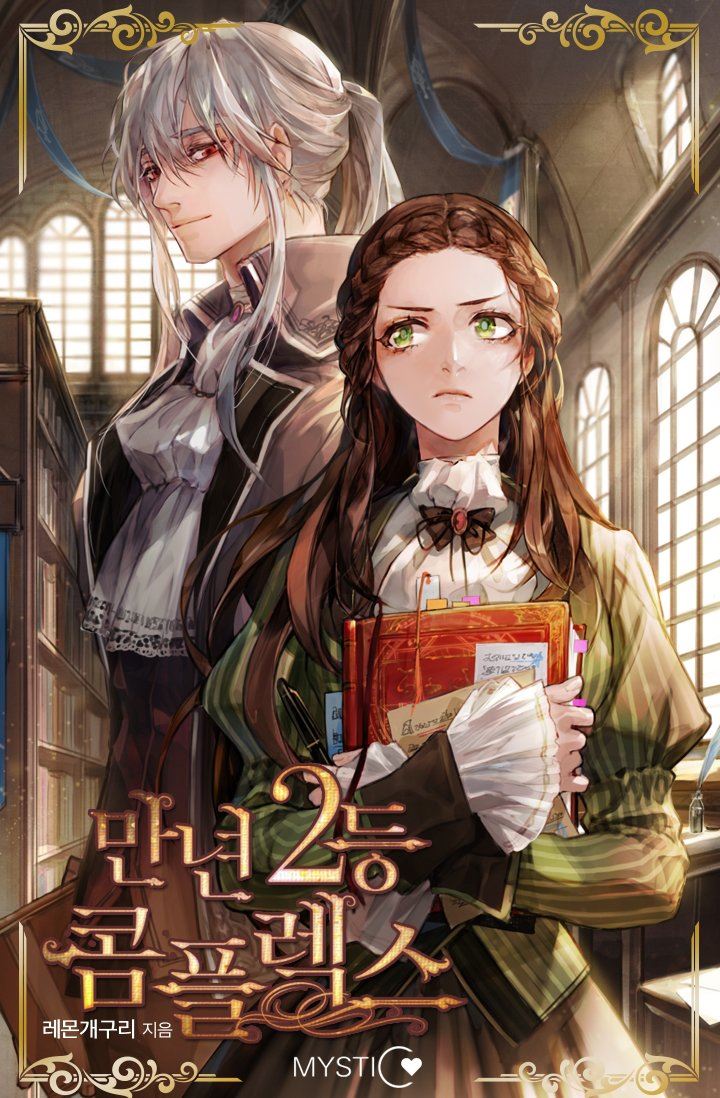
Let me tell you about stakes because this whole arc raised them SO much. On the surface, it's a girl getting lost in a garden and nearly freezing to death. Simple, right? Wrong. Because the real stakes here are about what happens between people when the consequences become real. Vivian's entire identity is built on being first, on proving herself in a system designed to make her lose. She entered the Pre-Academy at thirteen despite rules against it. She hired private tutors because the institution refused her on the basis of gender. Everything she is exists in opposition to the world telling her she doesn't belong. And then on the night of the Grand Fête, all that effort could have been erased by a moment of anger. She runs out, wanders into a frozen maze, and literally almost dies—not because of a villain or a battle, but because she couldn't control her emotions for five seconds.
Luciel's stakes are different but equally tense. He's the golden boy, the most beautiful person at the Academy, loved by everyone because of some divine charisma he can't control. But with Vivian, none of that works. She hates him. She always has. And in a world where his power depends on people being drawn to him, her hatred is the one thing he can't manipulate. That's why their conflict matters so much—it's the only real conflict he's ever had. When she nearly dies, it's not just fear for her life; it's terror that the one person who saw him as something other than a perfect monument will be gone forever.
The scene where Luciel carries her back on his horse, arms full of her dead weight while the prince watches in silence, is the highest-tension moment in this entire section. No dialogue, no drama—just a boy riding through the dark with someone he claims to despise. That's where the real story lives.