Scum Gong’s White Moonlight Doesn’t Play Cards According to Routine - Reviews

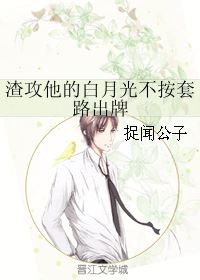
Scum Gong’s White Moonlight Doesn’t Play Cards According to Routine
+Add to Custom List
Sort
Add review
... Read More
Okay so this 'cocoon' imagery just DESTROYED me. Picture it — Little Pitiful Shou completely wrapped in his quilt like some kind of anxious caterpillar, shaking with anticipation, both hands trapped inside the fabric like he's literally imprisoned by his own fear. And then White Moonlight just... picks up the whole cocoon. Shakes it. And says 'it's time for you to beg me.' The power dynamic in that single moment is EVERYTHING. He's wrapped up, vulnerable, but also protected. It's like his emotional armor and his emotional prison at the same time. Then the forehead kiss. That's not just romantic — that's this moment where White Moonlight decides to be GENUINE for once, right? After all that teasing and dodging, he actually says something real and kisses him properly. Not an accident kiss, the narrator specifically calls it out as 'a serious kiss, not an accident.' That distinction matters SO much. He's claiming it. Owning it. And the 'do you plan on rolling the sheets' line from earlier? That was basically foreshadowing that the tension couldn't hold anymore. Two single gay guys being dangerously close — the author sets it up as a ticking clock, and then watches it explode in the most tender way possible. The whole thing is about how intimacy creeps up on you when you least expect it, and by the time you realize you're in love, you're already wrapped up too tight to get out.
... Read More
Okay I need to talk about this moment in chapter 6 because it literally made me freeze mid-scroll. So White Moonlight and Little Pitiful Shou end up in the same bed, right? And BOTH of them are pretending to be asleep. White Moonlight wakes up first, sees LPS in his arms, feels awkward, and just... pretends to sleep too. Then LPS tries to inch away, gets pressed back, hears 'Don't make trouble,' and just stays frozen. When WM finally moves his hand off LPS's waist, BOTH of them sigh like absolute idiots. This is the most painfully adorable character dance I've read all year. The way they're both so careful not to hurt each other but also so clearly affected by the proximity — White Moonlight's internal monologue about 'he took others in his arms when he woke up' versus his outward composure? And LPS thinking about how the scum gong could literally kill him if he found out? Their dynamic is this delicate thing where neither person wants to be the one who ruins the moment by acknowledging it. It's like watching two cats who want to cuddle but will die before admitting it. The power dynamic shift from last night — when LPS was the one trying to hit WM — to now, where WM has him completely under his control without even trying — is chef's kiss. Who is this 'scum gong' anyway, why do I already hate him. This book is doing something with character relationships that most authors would kill for.
... Read More
I kept waiting for something dramatic to happen between these two and instead the author gave me the most devastatingly sweet moment: White Moonlight ordering takeout for someone he's basically just taken in. Think about it. Little Pitiful Shou didn't even have his number saved properly — he typed 'Ning Nan,' deleted it, settled on 'Brother Nan.' That hesitation tells you everything about how fragile this relationship is. And White Moonlight, who presumably couldn't be bothered to leave his own contact info, still figured out which apartment building he lives in and ordered him dinner. 'I didn't give you the key, and I can't come back now. I've ordered takeaway for dinner.' That's not an apology — it's care disguised as logistics. Later when they're sitting on the sofa and Little Pitiful Shou says thank you for the watermelon juice and White Moonlight snaps 'It's annoying when you say thank you,' you can feel the underlying current. He doesn't want politeness. He wants closeness. And Little Pitiful Shou, after a beat of silence, just... gives in. 'Forget it, it's up to you.' That surrender is where the real romance lives. Not in grand declarations but in who remembers to order food.
... Read More
'Do you like Brother Nan?' 'Brother Nan likes you very much.' That opening line is genius because it immediately establishes this triangle of naming and belonging before we even get to the actual ending. then the rest of the dialogue is so deceptively simple: 'Yes, do you want to change it?' 'What's the change?' 'It's up to you.' three lines that carry SO much weight. the author's voice here is restrained in the best way - no flowery prose, no overwrought declarations. just two people saying small things that mean everything. and White Moonlight's final response is practically the perfect ending line for any romance: 'I'm here now, and I'll be here again. all the time.' it echoes so much of traditional romance dialogue but it works because the story earned it. the shorthand naming throughout ('Little Pitiful shou', 'White Moonlight') gives the whole narrative a folklore quality, like we're hearing a fairy tale being whispered rather than watching a scene unfold.
... Read More
I need to talk about the living room scene because I genuinely cannot recover from it. Three people. One couch. One coffee table. One pot of dog blood hanging over everyone's heads like a literal ceiling. The narrator says it directly—'whoever talks first will be covered in dog blood.' This is not even an exaggeration. The silence between these three is so thick you could cut it with a knife and it would bleed. White Moonlight is the most interesting character in this scene because he does absolutely nothing. He sits there. He watches Little Pitiful Shou kneel on the floor tying his shoes. He feels the urge to reach out and touch his head again—which the narrator explicitly tells us—but he doesn't. His restraint is loud. Every silent moment is a choice, and those choices are the most honest thing about him. Scum Gong is... wow. He's the kind of person who can look at his cheating ex-boyfriend and his current boyfriend's ex sitting in his living room and say 'come in, let's talk about this.' Not because he's brave. Because he's completely immune to social awareness. White Moonlight calls him out on it directly: 'You can't let go of me, you just can't let go of your self-esteem!' And honestly? That line should be framed. It's the entire thesis of Scum Gong's character in one sentence. Little Pitiful Shou kneeling to tie his shoes—alone, while his world is collapsing—is the most devastating image. He's performing normalcy. He's giving himself a task so he doesn't have to look at Scum Gong. And White Moonlight notices every detail.
... Read More
can we talk about how the author turned a living room sofa into the most emotionally charged set piece? 'Little Pitiful shou pushed down White Moonlight on the sofa, and then buried his head in White Moonlight's chest' - that's it. that's the whole scene. no grand ballroom, no dramatic rainstorm, just two people on a couch and somehow the intimacy hits harder than any epic setting could. the author knows exactly what details matter: the physical touch, the hand clasping the waist, the ear tips turning red, the misty eyes. 'misty eyes' is such a specific detail too - it's not just crying, it's eyes filled with emotion but holding back. and then the gentle stroking of the back like comforting a child but also like you genuinely don't want this moment to end. the entire world of this story seemed to shrink down to this one sofa and it worked perfectly. sometimes the most powerful settings are just a room where two people finally tell each other how they feel.
... Read More
Okay can we just talk about the towel scene for a second because HOLY. The sheer chaos of Little Pitiful Shou grabbing White Moonlight's bath towel by accident and then immediately flipping on the phone flashlight like—bro what?! And White Moonlight's reaction wasn't anger, it was just pure mortification. He ran away embarrassed. That's such a telling character moment. This guy who seems so composed and in control at work completely loses it over something silly like that. And then instead of staying mad, he comes out joking: "You can count to three. Tonight you are going to die if you're still in the living room." That threat-to-flirt pipeline is so smooth. Then when Little Pitiful Shou actually charges at him and they end up on the bed together—White Moonlight pins him, pinches his chin, says "Laozi will teach how to be a man"—and then immediately breaks the tension by saying softly "Good night." The whiplash! One second he's being all dominant and flirty, the next he's tender. I think this is the moment their whole dynamic shifts from playful teasing to something heavier and more real. Before this it was just cute office banter. After this, there's weight behind everything.
... Read More
I need to talk about White Moonlight because this character is a whole vibe and I'm not over it. On the surface he's composed, helpful, even generous — offers the internship, splits his wardrobe, orders dinner when he can't make it back. But then you hit THIS scene in the car and everything shifts: 'Do you know that I am gay? Two single gays are dangerous like this, do you plan on rolling the sheets?' The original text has this elongated trailing sound that the translator even flagged, and it completely changes the energy. This isn't just flirtation — it's a deliberate provocation, a test, a way of saying 'I see what you're doing and I'm not afraid to name it.' And then the immediate pullback? Getting out of the car like nothing happened? That's the most telling character moment in this entire batch. He creates tension and then dissolves it on his own terms. Meanwhile Little Pitiful Shou is over here blushing, heart racing, calling him 'Brother Nan' like that title somehow makes the feelings less dangerous. But we ALL know it doesn't. The dynamic between them is electric and the author understands that the power lives in what's unsaid.
... Read More
Every time I reread this section I notice a pattern of pretense that runs like a thread through it, and I think that's by design. The chapter literally opens with the line 'It seemed that the person who pretended to be sleeping was not him' — and that sentence alone contains so much. White Moonlight pretended to be asleep. Shize pretended to be asleep. Both of them were awake, both of them were aware, and both of them chose not to acknowledge it. That's the thesis statement for this entire passage: we perform normalcy even when everything inside us is falling apart. Then you have the breakfast scene where they're both going through the motions — eating, thanking each other, making polite conversation — while underneath it all, Shize is still processing a two-year relationship ending in real time. The phone call to Song Yuan is another layer of performance. Shize composes himself, says the words, hangs up, turns off the phone. He's trying to be brave. He's trying to do it efficiently, like ripping off a bandage. But then the tears come anyway, and the pretense cracks. And here's what I find most interesting symbolically: the college clothes. White Moonlight gives Shize clothes he used to wear when he was thinner. There's something almost symbolic about Shize literally wearing the remnants of White Moonlight's past — a physical manifestation of him taking on new identity, new space, new life. And then there's the recurring image of Shize clinging, holding on, wrapping his arms around White Moonlight like a lifeline. The word 'hooligan' gets used repeatedly in this section, and I can't help but think it's doing double duty — White Moonlight is calling Shize a hooligan for getting too close, but really he's defending against the terrifying vulnerability of actually letting someone in. The whole passage is about what happens when the performances stop working and you have to just BE — broken, teary, desperate, or honest.
... Read More
Okay so this section is honestly one of those moments where the author absolutely nails a pivot point. Everything leading up to it feels like a slow burn — you've got Shize waking up in White Moonlight's apartment, disoriented and still reeling from whatever happened the night before, and then the phone rings. And it's Song Yuan. Of course it's Song Yuan. The way the scene unfolds is deceptively simple: breakfast, normal morning stuff, and then boom — past two years of baggage comes pouring through that phone line. What I love about how this is structured is that the breakup itself happens OFFSCREEN in a way that still hits hard. Shize just says the words, hangs up, turns the phone off, and then the emotional dam breaks. It's not dramatic yelling or anything — it's quiet, which somehow makes it worse. The pacing here is really smart too. There's this whole sequence of mundane domesticity — the omelettes, the sandwiches, White Moonlight washing dishes — that grounds the scene before the emotional gut-punch lands. You're almost lulled into a false sense of calm before everything falls apart. And then after the breakup, instead of resolving there, the plot keeps moving. Shize doesn't just cry and then be fine. He ends up tangled up on White Moonlight's couch, and the subplot about his belongings still being at Song Yuan's place sets up the next conflict beautifully. The author really knows how to layer these beats — every emotional resolution immediately opens a new question.
... Read More
The conflict setup in these chapters is TOP TIER. On the surface, it's a love triangle—but that would be too simple. The REAL conflict is internal. The Shou is fighting with himself: does he stay and suffer, or does he leave and face the unknown? Every chapter raises the stakes of that decision. By the end of chapter 2, he's literally sitting with the object of his pain, and the only thing stopping him from running back to his abuser is the fact that he's too drunk to make coherent decisions. What I love is how the author layers the conflicts. There's the obvious external conflict—Scum Gong vs. Shou, with White Moonlight as the catalyst. But there's also the conflict between memory and reality. The Shou has spent two years building this version of his boyfriend in his head, and every chapter chips away at it a little more. The ring proves it. The birthday performance proves it. The fact that he's alone while the Gong is out proves it. Then there's the physical conflict that almost happens. The Shou sees the White Moonlight, gets courageous from alcohol, rushes up to push him—and then immediately regrets it because he's a computer desk worker and the WM is basically a linebacker. The text literally says his courage "shrank rapidly, even a little smaller than before." The humor here is great, but underneath it is real fear. This kid is so hurt he's willing to confront the source of his pain, but he's also so small and tired that he can't even follow through. The stakes keep climbing. If the Scum Gong finds out the Shou met the White Moonlight, what happens? If the Shou goes back home, does he confront the Gong? Does he break up? Does he stay and suffer another year? The author leaves all of this hanging, and it's MADDENING in the best way. Also, the White Moonlight knowing the Shou is the Scum Gong's boyfriend adds another layer. He's not just a stranger—he's the ghost who broke everyone's heart, and he's choosing to be KIND to the person his first love hurt. That moral tension is electric. What happens when the Scum Gong finds out? What happens when the Shou realizes the WM is nothing like the monster he imagined? The stakes aren't just romantic—they're about truth versus illusion, and someone is about to get hurt either way.
... Read More
I have read the scene where they share a bed five times and I cannot stop thinking about it. Let me set the context first because it matters. Little Pitiful shou has been living with White Moonlight for a while now, and every night has been this excruciating exercise in awkwardness—for BOTH of them. Little Pitiful shou is terrified of overstepping, of being too much, of disrupting White Moonlight's space. And White Moonlight... well, White Moonlight has been equally uncomfortable but hiding it behind forced politeness and occasional gruffness. Then this night happens. Shower first—because apparently they're both trying to be civilized about this. Then White Moonlight notices the wet hair and just... takes over. Pulls him up, dries it, says 'go sleep.' No fanfare, no declaration, just this incredibly gentle domestic gesture that carries MORE emotional weight than any grand romantic speech ever could. And then the bed scene. White Moonlight says 'I really wronged you. We had to sleep together.' THIS LINE. He's apologizing for something that wasn't even unfair—he's genuinely worried that sharing a bed is burdensome for Little Pitiful shou. And Little Pitiful shou's response is to offer to sleep on the sofa. Of course he does. Even now, even after all this time, his instinct is to remove himself from White Moonlight's space rather than take up room in it. But White Moonlight refuses. 'There's no air conditioning in the living room, you can't sleep there.' Practical reason, sure. But also—let me be honest here—White Moonlight doesn't WANT him on the sofa. He's giving a logical excuse for something he actually desires. Then White Moonlight pulls him into a hug and says 'Don't be afraid, I can't do anything.' THIS IS THE MOST TENDER THING. He's acknowledging that Little Pitiful shou is nervous, that this situation is intimidating, and he's trying to reassure him. And the fact that Little Pitiful shou responds with "Brother Nan, I did not think so"—so dry, so deadpan—while being pressed against his chest? I'm dead. I am actually deceased. The next morning, the alarm clock incident. Little Pitiful shou wakes up first, reaches for White Moonlight's phone, and gets caught in an intimate embrace. His first instinct is embarrassment—not joy, not comfort, but 'oh no, what have I done.' White Moonlight just pulls him closer and buries his face in his neck. The power dynamic is so clearly shifted now, and yet Little Pitiful shou still frames himself as the lesser one. I need them to just communicate like normal humans who are allowed to want each other.
Leave a comment

You must be logged in to leave comments. or
