Rosetta - Reviews

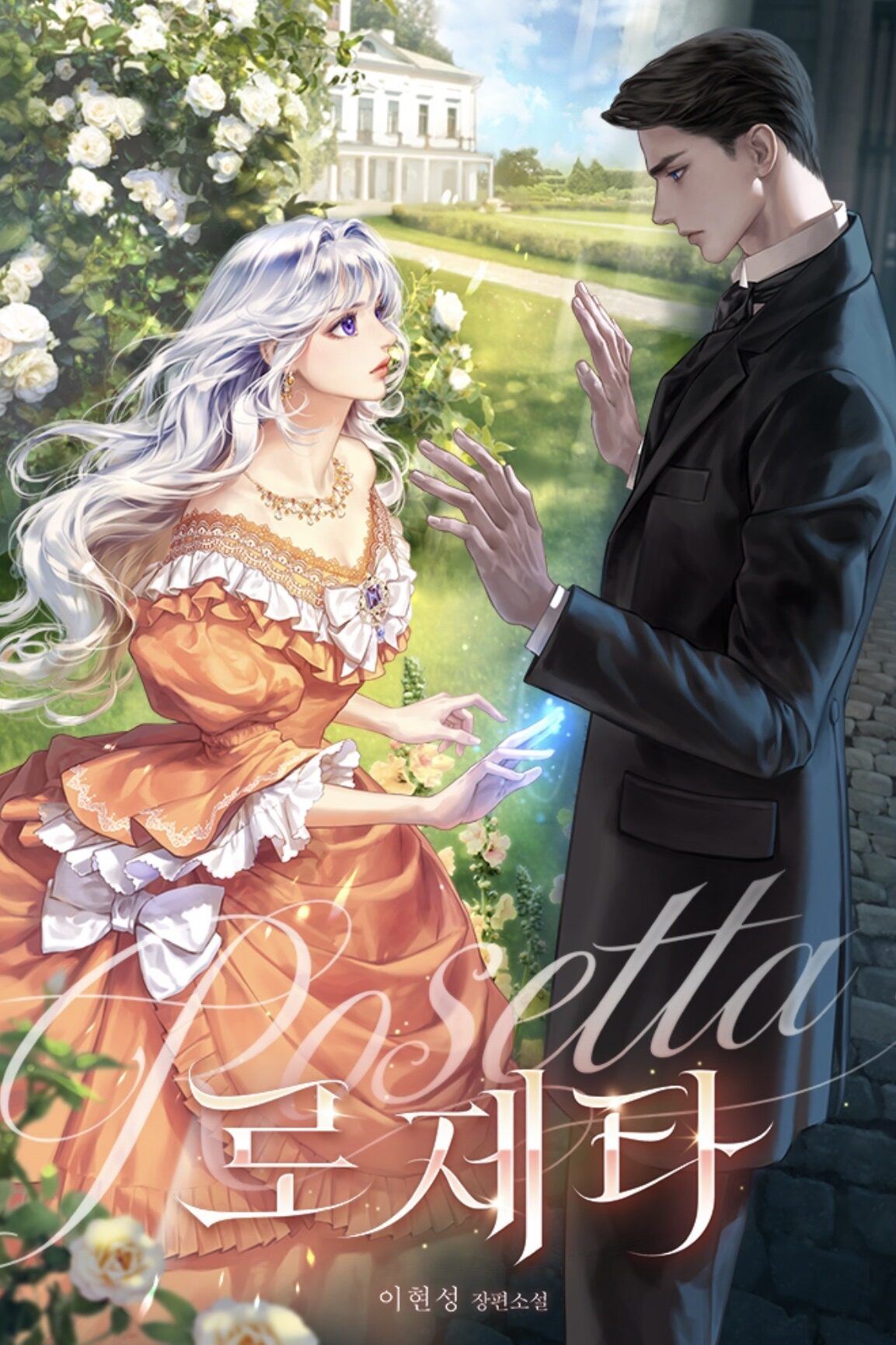
Rosetta
+Add to Custom List
Sort
Add review
... Read More
Okay let me just say — this opening acts as a one-two punch that absolutely wrecked me. You start with a wedding that feels like a death sentence, right? Rosetta is being shipped off to the Land of Monsters, and the whole Montero family is dressed up in concern while really just gawking at the Celea ring like vultures. Vivianne literally pretends to be Rosetta for a hot second when Louis shows up. That moment had me yelling at my screen. But then — BAM — the backstory drops. The child swap. The murdered real parents. The fact that Rosetta's entire existence was built on a lie, and she didn't even get the courtesy of a sorry from the people who stole her life. 'I gave them enough chances.' That line sits in my head like a loaded gun. And the pacing? Genius. The author doesn't info-dump the whole truth at once. You get fragments first — the cold 'Travel safely' from the Marquis, the dismissive silence from the Marchioness — and only later do you connect the dots about what they actually did. By the time the backstory fully lands, you're already too invested to look away. Then the monster attack hits mid-journey and I was genuinely startled. The carriage that looked like it belonged on a battlefield turns out to be armored — that detail pays off immediately. And Louis, covered in blood but calm as ever, says 'It's not my blood' like it's nothing. Who IS this man?? Also the worldbuilding is woven so smoothly into the plot. The wall that's crumbling, the declining magic, the Day of Moonlit Protection — none of it feels forced. It all connects to why the East is the way it is and why Rosetta's marriage matters beyond just being a political move.
... Read More
Okay I need to talk about the scene where Kaelion gives Rosetta his robe. Like. Seriously. "You'll catch a cold. Just keep it." That's it. That's the entire line. And yet it hit me like a freight train. This man who sleeps outside because he feels guilty about his mother being trapped in ice, who maintains such calculated distance from everyone—including his own wife—removes his robe and drapes it over her shoulders without even thinking about it. And Rosetta! She was about to protest, got flustered, tried to give it back, and he literally pressed his finger against the back of her hand to stop her. Not her palm. The back of her hand. So specific. So intimate without being overtly romantic. "Those simple words felt unbearably warm." She pressed her lips together and held the tears back. I am NOT okay. What makes this even more devastating is knowing WHY he sleeps outside. His mother is still alive somewhere in the Imperial Palace, frozen in ice that will never melt. He couldn't save her. He was forced to kneel to his brother. And now every comfortable night he spends in a proper bed feels like a betrayal. So he sleeps under trees. And yet here he is, making sure Rosetta isn't cold. He told her not to come looking for him too often. He pushed her away at every turn. But when she sat beside him, he shifted slightly to make room. He let her lean against the tree. He didn't move away when her arm brushed his. These people are so bad at expressing anything normal lmaooo
... Read More
"A woman who wept openly in front of him. A woman who no longer concealed her feelings behind carefully constructed walls. For some reason, this sight brought him a quiet sense of relief." I need to sit with this for a second because THIS is the emotional core of the entire relationship and the author just served it to us in one paragraph. Kaelion's entire motivation isn't revenge. It isn't political strategy. It isn't even love in the traditional romantic sense — not yet anyway. It's that he wanted SOMEONE to be able to live freely in this harsh land, and the person he chose was the girl who couldn't cry when she needed to. The fact that she CAN cry now, in front of him, means she feels safe. That's it. That's the whole damn romance. And the way their dynamic has evolved is so satisfying. Remember how distant and formal he was in earlier chapters? "Your Grace" this, "Your Highness" that. But watch how he says "my wife" casually when Belkar is having a meltdown about the healing ointment. Three words. No fanfare. Just stated as fact. He's already claimed her in his head long before anyone else figured out what she is. Meanwhile Rosetta — she went from the Marquis's neglected adopted daughter to someone standing at her workbench casually creating miracles while the court mage kneels at her door. The power dynamic hasn't just shifted, it's been completely inverted. And she's not gloating about it. That's what makes her compelling. She doesn't need to gloat. The evidence is right there in front of everyone.
... Read More
OK I need to talk about the crying scene because my heart is ACTUALLY hurting right now. Rosetta has been through such trauma—beaten, pricked with needles, burned with hot skewers—and the Marchioness would then HUG her and call it love. THAT IS ABUSE, people. So when Kaelion just says 'Do not hurt yourself. Ever.' with that voice going quiet and serious, Rosetta just loses it. She literally can't stop the tears because NO ONE has ever looked at her wounds and told her she didn't have to suffer. Not once. And Kaelion doesn't try to touch her or fix it, he just says 'Take your time. The night is long, and I have nothing to do tomorrow.' That line DESTROYED me. He's giving her permission to fall apart with zero conditions. No 'be a good girl,' no 'you deserved it for misbehaving.' Just... you can cry. And then later when he tests the poison himself and she rushes to heal him, and she's wearing this stupidly proud puppy face? That's the moment where I realized they're genuinely falling for each other and I was screaming internally. The way he remembers her as a child—the girl who fell and didn't cry, the girl who swallowed her tears alone—and now she's crying BECAUSE someone finally saw her.chef kiss. This CP is so good it hurts.
... Read More
The symbolism in this chapter is layered and I'm obsessed with it. First: the rose. Rosetta literally names her brand 'Rosa' and says 'To some people, a rose is a beautiful flower. But to others, it becomes a thorn that draws blood before they even realize they've been pricked.' This is HER manifesto. She's not just making medicine—she's building a weapon. The Montero family thought they could discard her, hurt her, treat her as less than human. Now she's going to become something they can't control, something beautiful AND dangerous. A rose with thorns. Perfect. Second: flowers in darkness. Kaelion's mother told him 'Flowers bloom even in darkness' and he's been haunted by it—'No flowers ever seem to bloom in my darkness. Am I simply unable to see them?' This mirrors Rosetta's entire existence. She's been in darkness her whole life—abuse, isolation, poverty—and yet she creates healing. She creates beauty. She blooms in conditions where nothing should survive. And Kaelion, who thinks he can't see flowers, is the one who finally recognizes hers. Third: self-harm and healing. The cycle of Rosetta wanting to test on herself (because that's what abused children do—we learn to inflict pain on ourselves), Veloa stopping her, Kaelion telling her NEVER to hurt herself, and then the ointment that heals instantly. The physical healing mirrors the emotional one. She's learning that her body deserves protection, not punishment. That wound can close without her having to earn it.
... Read More
"Grandpa, you're going to die at this rate." Said while Rosetta is performing magic that Belkar calls a miracle. Said with zero filter, zero warmth, zero concern for anyone's feelings. This is Veloa at her finest. And then later: "You'll probably want to see my face again, but don't come looking for me too often." Kaelion says this like it's a threat. Like he's pushing Rosetta away. But the narration immediately undercuts it: "Unlike the cold boundary he had drawn with those words, he was always surprisingly generous." He makes room for her. He gives her his robe. He lets her lean against him. Every word he says is distance; every action he takes is closeness. I love how differently these two characters communicate. Veloa speaks her thoughts directly, rudely, without any social calibration. Kaelion speaks in carefully measured statements that mean the opposite of what he's saying. One is honest to the point of cruelty. The other is cruel in the name of protection. And Rosetta! Her dialogue is so disarmingly plain: "It just... happened." "There aren't really anything I can teach you." "I suppose it's difficult since it's my first time trying it." She has five mana circles and cannot cast a single incantation-free spell without straining, and her response is basically "sorry I can't help you, hahaha my bad." The way she apologizes for being extraordinarily gifted is both hilarious and genuinely characteristic of someone who spent most of her life alone and never learned how to claim her own worth. Even the knights' dialogue is great—pure comic relief: "It must've been a dream." "But aren't we already asleep?" They literally cannot accept reality and choose humor as an escape mechanism. Classic.
... Read More
The atmosphere in this section is really something special. Let me start with the distillation apparatus scene—bottles connected to glassware, monster blood being mixed with plants, the whole vibe of a mage working late at night creating things that could save lives or end them. It felt so grounded despite the fantasy setting. You could practically smell the chemicals. Then there's the transition to Kaelion's bedchamber. He's standing by the window looking out at the dark garden, remembering his mother's words about flowers blooming in darkness. That image just lingers with you. A man surrounded by power and wealth, looking into darkness, wondering if he's incapable of seeing beauty. It sets this melancholic, almost gothic tone that contrasts beautifully with Rosetta's arrival. The sitting room with the sofa, the light footsteps outside the door, the knock-knock—these small sensory details make the world feel lived-in. And Rosetta's description when she enters: silver hair tied neatly, pale flawless skin, faint blush on her cheeks. She looks like a young noblewoman, not a Grand Duchess of a harsh land. That visual shift matters. It shows how she transforms when she's safe, when she's not performing or surviving. The poison demonstration scene is also striking—just a single drop falling onto his palm, the flesh dissolving rapidly, then the ointment closing the wound instantly. It's clinical yet intimate. Two people sharing something dangerous and miraculous at the same time.
... Read More
The image of the child who "couldn't cry when she needed to" haunts me. It's introduced almost casually in Kaelion's memory but it carries the weight of Rosetta's entire character arc. Crying — especially crying when you need to, when you're hurt or scared or overwhelmed — is a fundamental human response. A child who cannot cry has learned, through experience, that vulnerability will not be met with comfort. It is the body's way of closing a door that has been slammed too many times. And Rosetta carried that silence with her all the way to the Grand Duchy. So when she finally weeps openly in front of Kaelion, it's not just an emotional release. It's proof that somewhere along the way, the walls came down. The land of monsters, which should be the most dangerous place imaginable, became the safest place for her precisely BECAUSE Kaelion wanted it to be. His wish for her freedom became self-fulfilling. The flower imagery threads through everything. "Flowers bloom even in darkness." The radiant flower she becomes in Kaelion's eyes. The medicinal herbs in her laboratory — plants that grow despite poor soil, that heal despite being crushed. Even the name "Panacea" — an ointment that heals all wounds, named by someone who spent her life wounded and never received care. Montero, meanwhile, represents everything that tries to prevent flowers from blooming. Greed. Control. The belief that people are resources to be managed rather than lives to be lived. His signing of the severance documents isn't just a plot point — it's the moment he accidentally sets free the one thing he was too blind to value.
... Read More
I keep coming back to one specific moment and I can't stop thinking about it. Veloa watching Rosetta turn stone to ice and her entire worldview cracking open. This woman has seen childhood friends get torn apart by monsters. She's hardened herself to survive. And then her newly married friend just… rewrites the laws of magic in front of her like it's nothing. The scene where Veloa keeps telling herself it's a dream? That's not comedy — that's genuine emotional whiplash. She's not jealous, she's not afraid for Rosetta. She's having her entire understanding of what's possible in this world shattered, and the only coping mechanism her brain has is 'this can't be real.' And Rosetta — she's so casually extraordinary about it. She doesn't gloat. She doesn't explain. She just… does the thing. She asks Veloa to help move stones and Veloa helps. That's the friendship right there. But the emotional core of this whole chapter is quieter than any of that. It's Rosetta putting on that navy dress — the one the Marchioness bought for her wedding, the one she's been avoiding because it represents a life she never chose — and finally wearing it. Not because she has to impress anyone, but because she's ready to stand beside Kaelion as an equal. The dress wasn't the point. The point was that she chose to wear it. And then Kaelion seeing her in it and immediately noticing she looks exhausted, worrying about Mrs. Iscu bullying her… the way he cares without making it a big production. He notices the dark circles. He offers a gift that's wildly practical and slightly horrifying. He checks on her welfare like it's the most natural thing in the world. The romance here doesn't need grand gestures. It needs monster corpses and shared purposes. And somehow that's more romantic than any ballroom dance scene ever could be.
... Read More
Okay so let's talk about how this whole chapter is basically Rosetta pivoting from victim mode to villain-adjacent builder mode, and honestly I love it. The setup is simple but effective: she's been spending her days learning to be a proper Grand Duchess, getting drilled on finances and household management by Adel. But then the subjugation force returns — and Kaelion shows up with the absolute wildest gift. Carrying around carts full of rotting monster corpses like, 'Here you go, wife, hope you like dead beasts!' My absolute favorite type of husband energy. But then it hits me — this isn't just quirky worldbuilding. This is Rosetta's plot lever. She doesn't just accept the corpses and file them away. She IMMEDIATELY starts thinking about what she can DO with them. The chapter moves from 'learning decorum' to 'oh wait, I can literally transform stone into ice and now I'm building a refrigeration system' in a way that feels earned, not rushed. What's really clever is the pacing. The author gives us small reveals like breadcrumbs: first we learn she's an alchemist (vague title, mysterious), then she touches monster blood and magical formulas just naturally appear in her head, then she demonstrates she doesn't even need incantations, then she builds an entire ice house. Each revelation raises the question 'what else can she do?' without ever spelling it out. And the medicine AND poison line at the end? That's the hook. She's not just making healing elixirs — she's preparing for war. On her own terms. The plot is absolutely spiraling in the best direction. I'm weirdly invested in whether the Emperor or whoever sent her to the Marquis estate originally will see what's happening now. This girl is building an empire from the ground up, and nobody seems to fully grasp what she's capable of yet. Which means when they figure it out… Oof.
... Read More
Okay so let me just say this one moment absolutely flipped something in my brain. Rosetta, this girl who just arrived in a land everyone calls the "Land of Monsters," who has never seen a real monster in her life, casually requests a corpse so she can study it. Like she's ordering groceries. And the narrator keeps hinting that knowledge is blooming in her mind — magic she never studied is appearing inside her head like flowers opening one by one. What is she planning? What does she want to learn from a dead monster? I genuinely do not know but I am OBSESSED with where this is going. And then there's the subplot of Vivianne sitting in her room plotting, watching Rosetta get the magnificent Celea gemstone, thinking to herself: "live happily among the monsters and quietly fade away." This woman is so hilariously petty I can't even. She genuinely believes Rosetta's doomed because beauty means nothing in that land. Which is... funny, because Rosetta seems perfectly fine? Maybe even happier than she's ever been? I have a feeling Vivianne's assumptions are about to get blown wide open. Also — Kaelion gave Rosetta a Celea gemstone. A SINGLE ONE. The narration tells us this stone was worth enough to feed an entire city for days. And the Grand Duchy is supposedly broke. He spent half his treasury on one rock just to give it to his bride? And Louis noticed it and thought it was excessive at first but then saw Rosetta and his feelings changed completely. The man clearly has a soft spot. He remembers Kaelion telling him: "She's going to become my precious wife. Treat her with respect." That line alone tells you everything about how Kaelion sees her. I'm just waiting for the moment when all these threads converge. Rosetta studying monsters, her growing magic, the political situation with the Grand Duchy being poor, Vivianne fuming in the background... something big is coming.
... Read More
The structural boldness of this section is what keeps me coming back. We have four distinct narrative threads running through these chapters: (1) Rosetta and Kaelion's relationship cementing itself, (2) Montero's political maneuvering and the severance documents, (3) Isir's injury and recovery serving as the proof-of-concept for Rosetta's abilities, and (4) Belkar's dramatic entrance as the scholar discovering something that changes his entire understanding of magic. Any lesser author would have split this into four separate chapters and padded each one to hit word count. Instead, the transitions are surgical. One moment we're with Kaelion watching Rosetta cry, the next we're with Montero signing papers, then Isir groaning in pain, then Rosetta at her workbench. The chapter never lingers too long on any single thread — it rotates between them like a camera panning across a scene, picking up different details each time. The pacing also plays with contrast brilliantly. Rosetta's quiet laboratory scenes — measured, precise, almost meditative — are immediately followed by Belkar's near-hysterical kneeling at her door. The emotional temperature spikes and drops so naturally you don't notice the switches until you're already invested. And that ending! "Then, with nothing more than..." — the fragment itself mirrors what's happening. Rosetta is mid-action, mid-creation, and the reader is left hanging exactly where she is. Not a manufactured cliffhanger, just a natural pause in the flow. Masterful.

Leave a comment

You must be logged in to leave comments. or