Revenge on Those Who Abandoned Me - Reviews

Revenge on Those Who Abandoned Me
+Add to Custom List
Sort
Add review
... Read More
This whole arc is a masterclass in layered stakes, and I'm not even sure where to start because literally every scene has something on the line. On the surface, it's about protecting a fugitive princess—but then you peel it back and it's about imperial succession, political alliances, and whether one woman can become the most powerful person in two empires without losing herself. The moment Carlisle decides to make Roelia Empress hit me like a physical blow because suddenly the tension went through the roof. It's not just dangerous anymore—it's legally, politically, diplomatically dangerous. The Empress Dowager is already a viper in the nest, and now Carlisle is basically handing her the perfect excuse to strike. But here's what got me—Carlisle himself seems almost giddy about it. He calls himself a "fugitive Empress" and laughs. That's not fear, that's strategy so audacious it borders on recklessness. And then there's the hunting scene where Roelia actually uses her magic to save his life. That's when the stakes stopped being abstract and became personal. She drained herself almost to collapse for him, and he noticed. He noticed everything. The question now isn't whether they'll survive the political game—it's whether either of them will survive what they're becoming to each other.
... Read More
Let's talk about Carlisle's voice, because this man does not do subtlety and I am HERE for it. When the Duke hesitates about bringing Roelia into the palace, Carlisle doesn't argue or negotiate. He says: 'Dame Maili.' And that's it. That's his entire response. Three words, and the Duke immediately complies. The man has been Emperor long enough to know that sometimes you don't explain yourself—you just give an order and watch people scramble to understand why. But then there's the founding myth moment. He tells Roelia her name is 'lovely,' touches her hand, and then—loud enough for everyone to hear—'Silver hair like the guardian deity in the founding myth of the Astrux Empire.' And when the Duke sputters, Carlisle follows up with: 'It means that even her saving me like this is not coincidence but fate.' That's not romance. That's STATECRAFT. He just spent thirty seconds turning a mysterious mage with no background into a figure of divine destiny, and in doing so, made it politically impossible for anyone to oppose keeping her. Every noble in that crowd went from 'who is this woman' to 'we must accept her' in real time. The man is a chess player. Roelia's voice is different—quieter, more measured, almost clinical when she's explaining her magical condition. But you can hear the restraint underneath. 'I had no choice but to seal my own magical energy to stop the runaway.' Flat. Factual. And that's what makes it devastating. The Empress Dowager's dialogue is pure performance. 'Keep talking, my little bird.' 'Hmm.' 'My.' She speaks in affectations because she doesn't need to say anything real—everyone around her is already bent to her will. Even her gestures (snapping fans, stroking faces) feel like dialogue extensions.
... Read More
There's so much going on beneath the surface in these chapters that I can't stop thinking about it. The central symbol is pretty obviously the divine beasts themselves — or rather, the breaking and remaking of bonds with them. The Astrux divine beast has gone dormant, causing side effects for Carlisle. The Wintergrass divine beast is being corrupted and seized by Silena. And Roelia, stripped of her power, tries to summon it and hears it scream 'It's filthy.' What does that mean? Is the divine beast judging *her*? Or is something *in* her now that makes the beast recoil? Given the fire magic imagery surrounding her — red energy rippling through her body as she weeps — I can't help but think the story is exploring the idea that power and corruption might be inseparable. Then there's the contrast between Carlisle's ice and Roelia's fire. Their touch sends conflicting sensations through both of them — cold transferring to warmth, warmth meeting cold. It's not just romantic tension (though let's be real, it's also that). It feels symbolic of two fundamentally opposed forces trying to coexist. He represents order, calculation, empire. She represents something wilder, more volatile. And yet neither can function without the other right now. The executions are another heavy symbol. Heads on display, bodies left unburied — it's about the erasure of identity and legacy. These people served the deposed Crown Prince, and now their deaths are meant to be a message. But Roelia's fire magic, reaching across the city to burn the platform to ash, is a kind of defiance. She can't protect them alive, but she can deny the regime the satisfaction of their permanent humiliation. Her tears aren't just grief — they're fuel. And Silena? Her joy while touching something 'filthy' and 'viscous' speaks to a deeper theme about power corrupting absolutely. She believes heaven rewarded her virtue while punishing her sister, but the narrative seems to be asking: how do you know the difference between divine favor and damnation when the result looks the same?
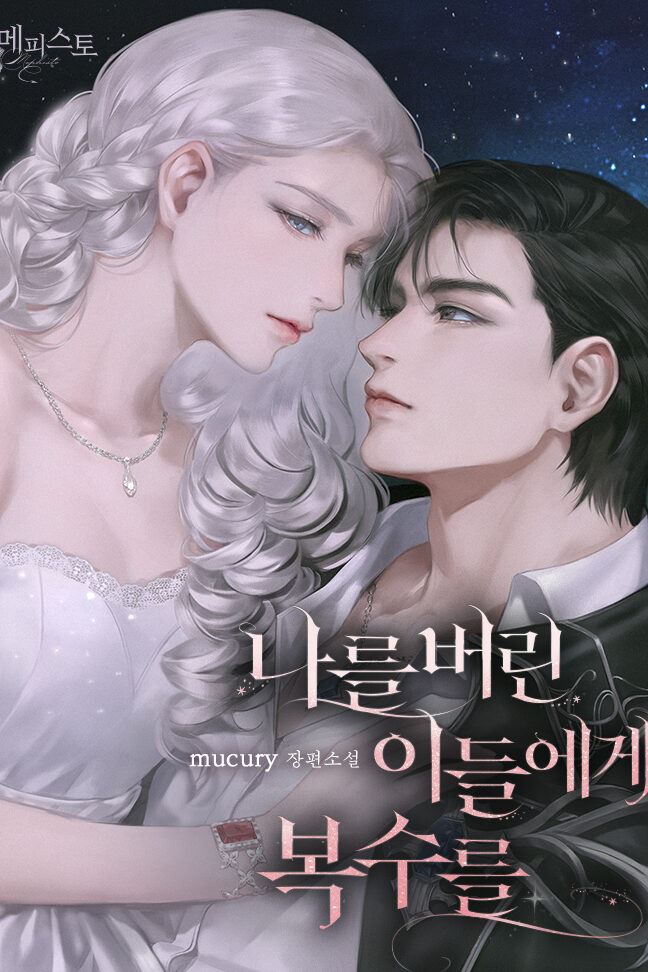
... Read More
I need to talk about the imperial library because the atmosphere writing here is *exceptional*. Carlisle walking into that massive door, twice his height, with two knights standing guard — and then the description just hits you: 'He always felt good when he came here. Something seemed to wrap warmly around his entire body.' In the middle of all this political maneuvering, we get a moment of genuine tenderness between a man and his library. That is worldbuilding through emotion, not exposition dumps. And then finding the treatise. The way the narrative describes the historical context — mages vanishing, the founding of Wintergrass Empire, emperors despising magic — all of it comes through Carlisle's own reactions rather than an info-dump. 'Unbelievable.' 'To think they were conducting this kind of research.' His surprise does the heavy lifting. The council chamber scene is equally vivid. The announcement 'His Imperial Glory Enters!' silencing the chattering nobles, the servant striking the bell to make them sit, the air literally turning cold from Carlisle's divine beast pressure — you can feel the weight of that room. Every sensory detail places you there. This author does not write empty scenes.
... Read More
I need to talk about how the author controls the tempo in these chapters because it's honestly masterful. The opening reads almost like a chess match — slow, deliberate, conversational. Carlisle and Roelia exchanging barbs, testing each other, revealing information in small doses. This is the 'set the board' phase. We're given just enough context about the divine beasts, the empire's troubles, Roelia's fall from grace, but nothing feels rushed or info-dumpy. The author trusts the reader to connect things. Then we cut to Silena and Russell. This shift is jarring in the best way possible — suddenly the tone darkens, the energy becomes predatory, and we realize there's a completely different game being played while the protagonists are having their tense conversation. It's a classic dual-tension structure, and it works because each scene raises different stakes. But the real pacing crescendo happens when Roelia wakes up. Three days have passed — the author gives us that time jump cleanly — and suddenly we're in panic mode. Executions. Her subordinates dying. She throws open the window and the prose itself seems to accelerate. Short sentences. Fragmented thoughts. 'A, an attack! An enemy!' The scene that started as a quiet negotiation in a chamber explodes into fire and chaos. And the fire magic itself — reaching across the city to burn the execution platform to ash — is the release valve after all that built-up tension. The transition from Roelia's collapse back to the immediate aftermath of her attack is also well-handled. Kuz casting a sensory-clouding spell while the flames keep burning suggests the author is already setting up the next complication. The pacing never lets you catch your breath, and I love that about it. Every chapter ends with either a revelation or an action that forces the story forward. No filler. No coasting.
... Read More
Okay, so Carlisle brings out the marriage contract and I literally just sat there like—WHAT. The man pulls up to Wintergrass, rescues Roelia from what is clearly a political death sentence, and his play is GETTING MARRIED? I respect the audacity but also, Roelia, don't you dare actually fall for this cold emperor who basically just handed you a piece of paper like you're property. "A marriage contract." That line hit me like a truck. She just stares at it, completely blindsided, and then Carlisle casually introduces himself again like he wasn't already the one pulling strings this whole time. The power dynamic here is SO unhealthy and I'm here for it. But here's what actually got to me—the part where Roelia signs as "Eli Wintergrass." She cuts off part of her real name, gives him a fake identity, and thinks she's playing the long game. She wants to use this marriage to get into Astrux and investigate her own throne. Meanwhile Carlisle is watching her like a lion watching prey. He KNOWS she's hiding something and he lets her think she's the clever one. That moment where she thinks he might not realize she's the former Crown Prince? He probably figures it out in a second and just enjoys watching her squirm. And then the kicker—Carlisle's line about the divine beast being cursed, and how "Wintergrass's imperial palace is connected to what happened to the Astrux divine beast." Roelia clenches her fist. THE tension between these two is insane. They're both using each other, both hiding identities, both playing political games, and they somehow ended up绑定 together through a marriage contract. I need to know what happens when they figure out each other's real identities. Do they destroy each other or does something actually develop here?
... Read More
Let me just say—Carlisle drawing his sword against Russell at the harbor is one of the most cinematic moments I've read in a while. The whole sequence plays out like a movie trailer. Picture this: the ship's ropes burning, Russell screaming too late, the Sword Master's blade cleaving through aura without even touching the vessel. Then he sheathes the sword again and just... stands there. Watching Russell lose his composure completely. The image of crates flying through the air, knights scrambling like headless chickens, Russell trying to maintain authority while his own men are running for cover—it's chaotic and brilliant. And Carlisle doesn't even break a sweat. He watches Russell become a laughingstock from the deck of the departing ship. The way the author writes: "The black eyes beneath the hood gleamed, and Russell's shoulders flinched. Unable to admit that he was pushed back by the force of that presence, he forced his eyes wide open." THIS is the kind of描写 that makes you want to pause and re-read. Then there's the quiet contrast later—Roelia leaning against the railing, feeling the breeze, looking at the horizon. The ship's rocking motion described as "quite pleasant." After all that chaos, this moment of stillness feels almost sacred. Two different scenes, same chapter, and they bounce off each其他 perfectly. One is pure action spectacle, the other is introspective calm. That's worldbuilding through contrast, not just description. Also: the cabin office scene with Carlisle and Kuz. The door closing, the documents, the locked drawer where the marriage contract disappears. These small spatial details make the world feel real. You can feel the weight of empire in those rooms.
... Read More
Okay so can we just talk about how absolutely meticulously this author constructed the downfall? Everything feels like it was deliberately orchestrated. Roelia goes off to defend the border, does her damn job, comes back, and somehow she's already been painted as a villain before she even gets home. And the timing is everything—she's running herself ragged trying to fix public opinion, which means she's distracted, which means someone walks up behind her with a knife and suddenly she's holding her dead father's body. That's not bad luck, that's bad planning. And Silena's role in all of this is just... I can't even. Remember she was the gentle little sister who never had much to recommend her? Then suddenly she's sharp-tongued, politically savvy, and one step ahead of everyone? The text literally says 'Why had she taken them so lightly?' when Roelia remembers those poisonous little comments about whether Roelia actually fought the barbarians or just sat around giving orders. That wasn't jealousy—that was reconnaissance. She was setting the narrative before Roelia even got back. The public execution as political theater is the kind of move that made me actually pause and reread the scene. They aren't just killing her quietly—they're making her walk barefoot on stones, they're making her kneel, they're making her kiss Silena's foot. This is about power, not justice. And the fact that the divine beast is still asleep? That's the real question hanging over everything. Who killed the emperor? Who cursed the beast? And why does no one seem to care about either of those questions while they're busy performing this spectacle? 'The truth is everyone wanted it. They all wanted to see Sister fall.' Silena literally says this in prison and Roelia still didn't catch it. I swear to god.
... Read More
The opening image of this whole thing is something I can't stop thinking about. Cold air, fine hairs standing on end, fingertips trembling—but Roelia presses her weight into the balls of her feet and stands as though none of it touched her. You can feel that cold. You can feel those stones cutting into bare soles. The text doesn't even need to say her feet are bleeding until later, when we finally see 'dark red footprints dotting the ground,' and by then the image is already embedded in my brain. Bare feet. Red marks. A crowd that doesn't look down. The visual contrast throughout is insane. Silver hair soaked in blood. White uniform. White stone path stained red. Silena in some kind of soft, warm light while Roelia bleeds on the ground. The color palette alone tells the story. And then there's the divine beast—a walnut-sized gemstone with a mysterious red aura, hanging from a necklace, being held up like some kind of religious artifact while a woman's skull cracks against cobblestones below it. The juxtaposition is almost obscene. Holy objects. Bloody ceremony. A kingdom performing piety while it murders its heir. But the worldbuilding goes deeper than aesthetics. The divine beast isn't just a cool creature—it's the source of all magical power in this empire. Without it, the emperor has no divine legitimacy. The fact that it's fallen asleep and won't wake up for the new ruler means the entire political foundation is cracking, and everyone knows it but refuses to address it. Instead they punish Roelia. The text from Carlisle makes this explicit: 'someone deliberately made the deposed crown prince their plaything in order to conceal the absence of both the divine beast and the emperor.' This isn't justice. It's a smokescreen dressed up as tradition. The tavern scene with Carlisle, Kuz, and Maili observing from above is such a brilliant framing device. You get the ground-level brutality through Roelia's POV and then cut to the balcony where foreign agents are watching with amusement and calculation. It makes the world feel enormous—there are people in this story who have their own agendas, their own empires, their own reasons for being here. Wintergrass isn't just a backdrop. It's a board, and everyone's moving pieces.
... Read More
The structure of this chapter is genuinely clever and I need to talk about it. We start with the escape—high tension, Russell screaming, fire magic, swords flashing. Then suddenly we're inside the cabin with Roelia collapsing, and then there's a whole conversation about her magical energy problem. Things are moving fast, information is dropping, and you're trying to keep up. Then—boom—we cut to "Three hours before Carlisle summoned Roelia to the cabin." And suddenly we're getting the backstory on WHY the curse matters, WHY Carlisle came to Wintergrass, and what Kuz discovered about the imperial palace spreading rumors. This flashback isn't just exposition; it's the key that unlocks everything that just happened. Without it, the marriage contract would feel random. With it, every decision Carlisle makes clicks into place. The pacing inside the cabin scene is also perfect. Carlisle doesn't rush it. He lets Roelia read the contract. He watches her hesitate. He says "Sign this and I'll tell you" like he's got all the time in the world, even though the entire chapter started with them escaping under fire. That contrast between the opening chaos and the calm, measured negotiation in the cabin tells you everything about Carlisle's character—he never panics. The chapter ends on "He knew Kuz's" and just trails off mid-thought. I literally gasped. Who is he worried about? Cecil? The Empress Dowager? The traitor? The fact that the author stops mid-sentence here instead of wrapping things up neatly is exactly the kind of pacing choice that keeps you flipping pages at 2 AM.
... Read More
Okay so this whole sequence with Carlisle and Roelia is honestly one of the tightest plot moves I've seen in a while. Let me break it down because it's actually really smart how the author layers things. First off — Roelia basically deduces Carlisle's entire reason for bringing her to Astrux just from fragments of conversation. She connects the dots between the Astrux divine beast weakening, Wintergrass being the only other empire with one, and Carlisle needing a solution. That's some serious intellectual maneuvering for someone who's half-dead on the floor. The line where she says 'You are not his enemy' and then drops the logic bomb 'because if you were, you would not have come to this empire' is just chef's kiss. She's reading him like a book even while incapacitated. And then the subplot with Silena taking over the divine beast is absolutely delicious tension. Remember how the text mentions her touching that ring with 'dark and strange' energy surrounding it? Meanwhile Russell is playing along, calling her Majesty, stroking her hand like she's some kind of prize. But here's the thing — the divine beast literally screams 'It's filthy' when Roelia tries to summon it. That's not a normal rejection. Something has contaminated the bond, and Silena might be the one doing it. The fact that Russell is already planning to kill off Roelia's subordinates one by one to force her out of hiding makes me think the political landscape is about to get extremely messy. Carlisle's decision to take Roelia back to Astrux instead of trying to rescue the deposed Crown Prince directly is also a strategic masterstroke — or at least he thinks it is. But Roelia witnessing those executions and then unleashing fire magic from across the distance? That's not a person you can just keep as a tool. She clearly still has leverage, even weakened. The whole setup with Duke Carpes betraying her, the false charges, the connection to Astrux — it's all converging. I'm genuinely curious whether Carlisle realizes what he's gotten himself into by bringing her along.
... Read More
I need to talk about how the author handles time here because it's genuinely masterful. The execution ceremony itself—this single scene where Roelia walks, kneels, bows her head until it bleeds—that's happening in real time, moment by moment, and the pacing is almost suffocating. Short sentences. Repetition. 'Thud. Thud. Thud.' You'd think repetition would drag, but it does the opposite. Each impact hits harder than the last because we're trapped in Roelia's head with her, feeling every single one. Then the author just... pulls the camera back. We cut from Roelia's bleeding forehead to Carlisle watching from a tavern terrace like a director changing lenses. And suddenly we're not just in the execution square anymore—we're in the wider world. Foreign spies. Political intrigue. Ancient prophecies about a 'Red Flower of Longing.' The pacing shift is so smooth you don't even notice it happening until you're three paragraphs into a completely different storyline. And the flashback structure is what really sells it. The author doesn't info-dump the backstory. We get it in fragments, the way memory actually works. First a line about barbarians raiding the border. Then a snippet of court gossip. Then Silena's voice from prison. Then the image of blood on her father's body. Each piece lands like a punch and forces you to recontextualize everything you just read. By the time you realize Roelia was set up, you've already read six different moments that hint at it. The ending of this section is where the real hook drops. Carlisle orders Kuz to find the deposed crown prince. Not Silena. Roelia. And the line 'That one will be different'—that's the promise. The author just told you, in the space of a few words, that the woman everyone is stepping on is about to become the most dangerous person in the room. And I have so many questions.

Leave a comment

You must be logged in to leave comments. or
