Revenge on Those Who Abandoned Me - Reviews

Revenge on Those Who Abandoned Me
+Add to Custom List
Sort
Add review
... Read More
This batch moves. I mean it moves. We go from the hunting ground drama → the ride back with the Duke and Percaine having a whole generational trauma conversation → arrival at the palace → the hand-holding magic revelation → a quick cut to the Empress Dowager plotting → and then back to Roelia and Carlisle where things get genuinely intimate and tense. All in roughly 20,000 characters and I didn't once reach for the skip button. What works is the scene transitions. The author doesn't linger. After the Duke's revenge monologue on horseback ('Since that man is gone, his son will have to pay the price')—bam—we're at the palace gates. No bridge scene, no 'meanwhile back at the estate.' It's jarring in a good way, like the story itself is breathless. Carlisle is breathless. Roelia is breathless. Everyone in this book is operating on fumes and urgency. The Empress Dowager interlude is perfect pacing too. We just had an intense, emotional conversation between the two leads, and then—cut toAnnaway, fanning herself, manipulating spies, thinking about power. It's a tonal shift that refreshes the brain. She's the antagonist, sure, but she's interesting enough that I want to see her. Her brief scene does more to establish the looming threat than three chapters of army marches would. If I'm being picky, the transition back to Roelia's POV at the end felt slightly rushed. She's physically affected by touching Carlisle ('her body flush and her breath come short') and then the text cuts off. That's a cliffhanger, obviously, but it left me wanting more of THAT specific tension rather than just… moving on to the next plot point.
... Read More
I cannot get over the Roelia-Carlisle dynamic in these chapters. Let me just say this: when she wakes up and deliberately takes her time looking at him — 'Black hair like a cut piece of night sky, and dark eyes shadowed with depth' — and then leans IN when he asks if she's done looking? That is not accidental. That is calculated tension. And Carlisle! He catches on immediately. 'Did you not want a closer look?' He moves closer still when she tries to pull back. He knows exactly what game they're playing. Both of them are fully aware and neither backs down until the head chamberlain walks in like fate itself is an interrupt button. But here's what really got me — 'It seems holding hands was quite helpful.' That internal thought from Roelia. She's acknowledging that their physical contact has a real, measurable effect on her condition, and she's watching him while thinking it. The power dynamic here is insane. She saved his life, he needs her body to survive, and somehow they're both pretending this is just practical necessity when it clearly isn't. Also Carlisle telling the nobles 'Or are you saying I should seat a woman of your choosing at my side?' while radiating divine beast pressure? That man does not negotiate. He states and everyone obeys.
... Read More
The pacing in these chapters is absolutely controlled. We start with Roelia waking up — quiet, dim light, Carlisle reading documents, the sound of water being poured. It's intimate and slow. Then she notices him looking, the teasing begins, and just as the tension peaks — KNOCK KNOCK. Perfect comedic timing that also serves the narrative (she needs to eat, rest, assess her magical energy). Then Carlisle drops the bomb: 'I will announce that I intend to take you as Empress.' One line and the entire chapter shifts gears. Next thing we know we're in the council chamber with nobles already gossiping about last night's rumors. The transition from personal to political is seamless. What I love most is how the author uses Carlisle's internal realization as the turning point. He feels the divine beast power weakening 'suddenly' while Roelia sleeps, and that private moment of panic immediately drives him to public action the next day. No deliberation, no second-guessing — just decisive movement. And the chapter ends not with resolution but with Duke Valintar's cold smile and nobles discussing how to kill a future empress through childbirth complications. THAT is a cliffhanger that makes you immediately open the next chapter.
... Read More
The atmosphere in these chapters is just *rich*. Like, the author doesn't just describe a setting — they make you feel the weight of it pressing down on every character. Let's talk about that scene where Roelia staggers to the window. The execution platform in the distance, the heads mounted on wooden boards swaying beside it, and her — bleeding, soiled, silver hair still vivid against all the filth — able to see it all with magical eyesight she's barely holding onto. The imagery of her subordinates' bodies left unpreserved, heads on display for passersby to jeer at, is devastating. It paints a picture of a regime so cruel that even death doesn't grant dignity. And the way she watches it all while red energy begins rippling through her body... the color palette here is everything. Blood red, silver hair, ice cold energy, dark black-purple magic surrounding Silena's ring. The visual contrast between cold and fire isn't just aesthetic — it's thematic. Then there's Silena's scene, which feels like a different universe entirely. That 'deep, dark reddish-black' object wrapped in ominous light, the 'sticky, viscous energy that seemed ready to pour out like black water.' The author's really leaning into body horror vibes here. Silena's flushed, almost euphoric — she's holding something abominable and feeling nothing but joy. Russell beside her, playing the devoted servant while his eyes carry that 'sinister light,' creates this incredibly unsettling domestic intimacy. They're leaning on each other like a couple, but everything about them is wrong. The Astrux imperial chambers contrast sharply — formal, cold, with Kuz and Maili prostrating themselves before Carlisle. There's a sense of ordered power there, but it's brittle. And Wintergrass's capital, where executions are happening in broad daylight and the imperial palace is showing its 'true colors'... it all feels like two empires rotting from the inside, just in different flavors. One through cold political calculation, the other through something far more corrupt and personal.
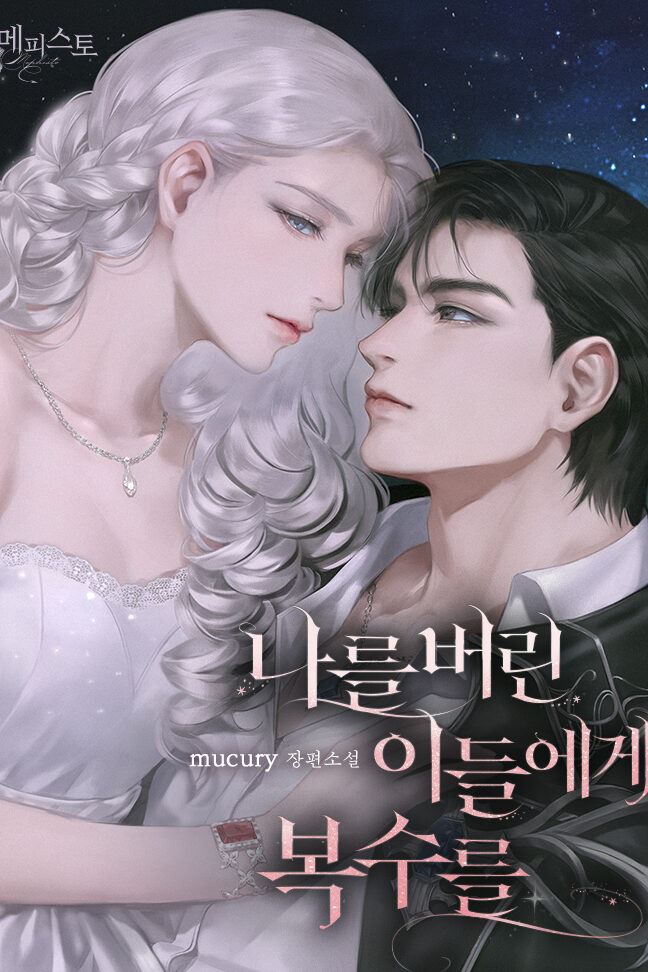
... Read More
I need to talk about the sensory layers in these chapters because the author is doing something remarkable with atmosphere. We open in Carlisle's temporary office—that already tells you something about his position. He's not fully secure even as emperor. The air growing cold when he's displeased? That's not just dramatic flair, that's worldbuilding through body language. The private harbor detail is perfect—Carlisle bought it himself, it's built to his ships' scale, staffed only by his people. This is a man who cannot trust the institutions meant to serve him, so he built his own. Then we shift to the carriage ride with Cecil, and suddenly there's this claustrophobic intimacy—Roelia pretending not to hear her mistress's worried sighs, the weight of silence between them. But the real showstopper is the hunting grounds. The clamor of the crowd, the cries of animals, the horses thundering through undergrowth. It's chaotic and alive in a way the palace never is. And Roelia in her fancy dress pushing through bushes, feeling completely out of place—that contrast is everything. The Astrux hunting competition as a meritocratic event where commoners can rise to palace service? That's not just set dressing, that's a glimpse into a whole culture that views power differently from Wintergrass. Wintergrass prefers exams and hierarchy; Astrux rewards skill and courage. You can feel the cultural collision in Roelia's head as she takes it all in. And the final scene—sunlight, open space, the Duke's sly smile, Carlisle's arm around Roelia's waist, her pretending to be startled—all of it painted like a Renaissance painting. The mask is beautiful and the mask is fragile.
... Read More
Okay so let me unpack what just happened because this plot thickened faster than I could blink. Carlisle decides Roelia becomes Empress—boom, that's a geopolitical earthquake. A fugitive princess from a conquered empire sitting on the Astrux throne means Wintergrass is essentially absorbed into Astrux through marriage, not war. The Empress Dowager loses her chance to plant her own people, Carlisle gains a spouse who exists outside her faction, and Roelia gets protection she couldn't achieve any other way. It's elegant. It's ruthless. It's brilliant. But here's what keeps me up at night—the Duke of Carpes. He was at the harbor. He pursued Roelia. And now she's officially off-limits because she's married to the emperor. What does that do to his plans? What does it do to Roelia's original mission of returning to Wintergrass and reclaiming her throne? The timing of the hunting competition is suspicious too—why now, why this cover story for her entrance? And Percaine Valintar! I barely caught his introduction but the Duke's involvement and that grandson of his feels like the beginning of another subplot I can't quite see yet. The most terrifying question though: how long can Roelia maintain this double life? She's playing the dutiful imperial consort by day while secretly planning to use her position to hunt down the Wintergrass spies who betrayed her. If the Empress Dowager discovers Roelia isn't who she claims to be, or if Wintergrass learns their heir is wearing an Astrux crown, both empires could go to war. And Carlisle—bless his calculated heart—seems to be betting everything on Roelia staying loyal to him rather than to the empire she's supposedly betraying.
... Read More
I am completely obsessed with the dynamics between Roelia and Carlisle. This isn't a simple protector/protected trope. It's a collision of two deeply proud, strategic individuals who recognize each other's nature instantly. Watch how Roelia performs. When she's ordered to sit, she doesn't move, forcing his subordinate to pull out the chair for her—a tiny, defiant maintenance of royal decorum. Her internal monologue is a chaotic storm of worry for her followers, assessment of her weakness (her magic is fire, not movement, so escape is impossible), and rapid-fire political calculation. Yet, her exterior remains perfectly composed. She offers a polite smile when insulted and states her condition—that nothing she does can harm the Wintergrass people—with genuine conviction. It's a line in the sand that clearly surprises and earns a shred of respect from Carlisle. He is no less fascinating. His assessment of her is purely analytical, tracking her posture, her composure under stress, the 'cold sweat running down her forehead' she tries to hide. He lies about being a mere merchant from the first sentence, yet he is utterly disarmed by her directness. The moment she mentions the Astrux Emperor by name, you can feel his composure crack. 'So caught off guard by the sudden word that he forgot he was posing.' Their relationship is built on a foundation of mutual utilitarianism, but there's a current of intense, almost electric recognition beneath it. They are two players on the same dangerous board, and this chapter is the opening move where they acknowledge each other as worthy opponents.
... Read More
Okay so I need to talk about this plot move because honestly it is brilliant. Carlisle finds the treatise — Reflections on the Management of Magical Energy — and what does he do? He doesn't immediately tell Roelia. No, he hides it first. Like 'I need to show her this at the latest possible moment.' Dude is strategically withholding information AND blushing at the same time, which is somehow both ruthless and endearing?? Then the council scene hits like a freight train. He just walks in, drops 'The Empress crown has found its owner,' and watches every noble try to find an excuse not to support their own daughter. 'Since she would not be an Empress chosen by my own will, it would be best if the family can survive long enough without my involvement.' I literally gasped. That is not a threat, that is a policy statement delivered with a smile. But then Duke Valintar steps up with that chilling 'if he wishes it, let that woman be seated' and the nobles start speculating about childbirth deaths. WHAT. The way the plot just pivots from political triumph to underlying menace in one paragraph? Chef's kiss.
... Read More
There is something deeply symbolic about the empty Empress's crown throughout this passage. Carlisle says it directly: 'The Empress's crown that has stood empty has found its owner.' But the emptiness means more than just a vacant seat — it represents decades of political paralysis. No Empress means no one controls the inner court. No one checks the Empress Dowager's power. The crown was empty not by accident but by design, because every noble family kept their daughters away from what Duke Valintar and others clearly see as a death sentence. The treatise itself is another symbol worth examining. A document from the empire's founding era that reveals physical intimacy as the key to magical balance — it represents everything the empire tried to bury. The emperors who 'despised mages' didn't just ban magic, they buried knowledge that could save lives. And now Carlisle is using that very buried knowledge to legitimize his marriage, turning suppressed truth into political weapon. And Roelia — a fallen noble who grew up not knowing her heritage, crossing into an empire that has no record of her — becoming the Empress is almost poetic. She is the unknown variable that breaks the entire system. The crown finds its owner not because she is the most suitable candidate by tradition, but because she is the one person outside the noble power structure who can actually hold it.
... Read More
I keep coming back to this one image. Roelia walking beside Carlisle, sunlight hitting her silver hair at that exact moment, and it says: 'The sunlight that fell at just that moment made Roelia's silver hair shine brilliantly, and gold was layered over the silver rippling near her waist.' Just… what. The author paints this entire scene—the empire's founding myth about a silver-haired guardian deity, the way the nobles are staring, Percaine locked in a daze, the knights clearing everyone out—and then drops this single line of golden light on silver hair like it's the most natural thing in the world. But it's NOT natural. It's Mythic Capital™. This woman literally matches the legend that holds an empire together, and nobody in that crowd is dumb enough not to notice. The setting details are doing so much heavy lifting here. The imperial palace itself feels ancient and loaded with invisible politics—servants disappearing when Carlisle glances at them, the head chamberlain mentioning death as casually as ordering lunch, the Empress Dowager's fans snapping shut like gunshots. And the contrast between the Astrux Empire (where mages are nearly extinct) and Wintergrass (where only the royal family wields magic) just… clicks into place through Roelia's exposition. She doesn't info-dump; she reveals worldbuilding through personal trauma, which is so much more effective. I also love how the Duke's estate feels versus the palace. One is all horses and rough forest paths and suppressed rage; the other is corridors full of watchful servants and political landmines. Two different kinds of danger, two different kinds of power. And Roelia is caught in the crossfire of both, barely recovering from whatever Wintergrass did to her, walking into yet another cage.
... Read More
There's a symbol running through these chapters that I can't stop thinking about: the seal. Roelia has a seal on her magical energy that Carlisle's cold power actively destabilizes. It's such a perfect metaphor for what their relationship is becoming—two forces that shouldn't coexist, two kingdoms that shouldn't merge, two people who shouldn't trust each other, yet here they are, touching, close, inseparable. The marriage contract itself is another seal—a binding that transforms a fugitive into an empress, a prisoner into a queen. But symbols of confinement and symbols of protection are the same thing. Roelia gains safety but loses freedom. She gains a crown but loses her name—she becomes Eli now, a false identity so flawless even the Empress Dowager can't pierce it. And the Wintergrass divine beast—that's the ultimate symbol, the thing everyone wants, the source of her legitimacy and her danger. It makes her heir to a throne but also a target. Every person in this story is chasing something that will save them or destroy them. Cecil's devotion, Carlisle's ambition, Roelia's revenge, the Empress Dowager's hunger for control—they're all different flavors of the same obsession. The hunting competition is symbolic too: wild horses, arrows flying, survival of the skilled. It's a microcosm of the political arena they're all trapped in. And Roelia using magic to save Carlisle—her power, which should be hidden, becomes the very thing that binds them closer. You can't un-save someone like that. The debt changes everything.
... Read More
There's a moment—maybe five paragraphs in, maybe ten, I can't even pinpoint it exactly—where Roelia is walking toward her punishment and the text says her eyes held no one in them. No one. Not the jeering crowd, not the guard shoving her from behind, not even the sister who destroyed her life sitting on a throne smiling like a saint. That blankness is the most heartbreaking thing I've read in months because it's not numbness. It's calculation. She's surviving by refusing to feel any of it out loud. And then there's the sister dynamic. I need to process this. Silena is supposed to be the gentle one, the warm one, the one people love. But underneath that soft exterior is someone who watched her older sister risk everything for this country and then systematically erased her from history. The line where Silena tells Roelia in prison that everything—'the throne, the empire, and myself'—is now hers, delivered with a smile like she's offering a gift? That's the kind of villainy that gets under your skin. It's not dramatic monologuing. It's quiet. It's domestic. It's a little sister who learned exactly how to hurt you because she studied you for years. Then Russell. Oh god, Russell. The man who used to whisper love to her, who was supposed to be her person, is now standing beside her betrayer calling the new emperor 'lovely as a flower' and calling Roelia 'stiff.' The text frames their romance like some tragic love story—'the most beautiful of lovers, who had struggled side by side against a depraved Crown Prince and fallen in love along the way.' DEPRAVED. Crown Prince. Roelia is the depraved one and they get to write the story together. I am shaking. But the moment that genuinely wrecked me? When Silena whispers: 'If you don't do as you're told, I will burn the late Emperor's body and scatter it in the wasteland.' That's not a threat about pain. That's a threat about sacredness. About grief. About the one thing Roelia has left. And Roelia presses her forehead to the ground anyway. 'She would sooner die than break.' That blue-eyed intensity at the end—'The gleam of pleasure that had crossed Silena's eyes was not something she would ever forget'—that's the look of someone who has just decided that surviving this isn't enough. She's going to make them pay.

Leave a comment

You must be logged in to leave comments. or
