Returning at Full Level: I’ve Got that Sickly Young Master Covered - Reviews

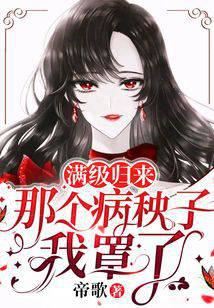
Returning at Full Level: I’ve Got that Sickly Young Master Covered
+Add to Custom List
Sort
Add review
... Read More
There are two scenes in this chapter that just stick in my brain. The first is that hospital room itself — a bunch of doctors and nurses crowding in like they're observing some alien species because a vegetative patient just WAKES UP after three years. The text describes it almost clinically: the nurse rubs her eyes, confirms it's real, and then LOUDLY announces it to the entire floor. There's something almost comedic about how dramatically wrong timing can be — right when Xu Xingguang needs a quiet moment, she gets a mob of medical professionals treating her like a zoo exhibit. But the second scene is the one that really haunted me. You Jingqiu and Xu Zeqing slipping out into the corridor, both drenched in cold sweat, whispering about the Huo family like criminals. You can practically SEE the tension in their body language — Xu Zeqing suddenly darkening when she mentions the sickly young master, warning her that if word gets out, his uncle loses his position on Shenyin Island. That single detail — Shenyin Island — drops us into a world where wealthy families have private islands, where secrets about illnesses are tightly guarded, and where someone clearly has leverage over multiple people. The Yujiang River detail also paints this world vividly. It's not just a generic body of water — it's where her mother died, pouring rain, car falling in. That's a scene the reader can't stop imagining. And the wedding ring on Xu Zeqing's finger, that small metallic object that becomes this massive symbol of betrayal in one quiet moment. Honestly the hospital setting works perfectly here because it's a liminal space — people are supposed to be healing, but everyone in this chapter is either dying, dead, or scheming.
... Read More
I need to talk about Xu Xingguang for a minute because THIS character transformation is everything. In public, she was supposed to be this refined young writer with an idol image — respectful, composed, never causing scenes. But the soul inside her head has been through TEN LIFETIMES of suffering and she's come back completely different. The text literally says You Jingqiu felt fear toward her, which is hilarious because Xu Xingguang looks like a delicate girl in a hospital bed. Her confrontation with You Jingqiu is a masterpiece of character work. Step one: let the woman lecture her about manners while keeping total composure. Step two: push a cactus pot at her. Step three: drop the line "I admire strength, and I don't adhere to traditional hierarchy" — that single line tells us everything about who this character has become. She doesn't respect you because you're older. She respects you because you've EARNED it. And You Jingqiu hasn't earned jack. Then there's the moment with the wedding ring. She sees it, sneers, calls her father heartless — and he SURREPTITIOUSLY covers it with his hand. Classic guilty move. But what's really heartbreaking is how she immediately masks it with a serene smile and thanks them for "taking care of me." That's not forgiveness, that's cold calculation. She's playing a long game and nobody in that room can see it. The relationship between Xu Xingguang and her dead mother Mo Yinshu also hit me hard. Her mother was described as proud, talented, introverted — the kind of person who would NEVER humble herself to beg businessmen for money. Yet she ended up drinking at some event and falling into a river. Xu Xingguang's grief here isn't just sad — it's furious. She already knows her father is lying to her or hiding something, and she's starting the slow work of tearing apart the people who hurt her family.
... Read More
The pacing here is relentless and it works. Chapter one opens with atmospheric description. Cold winter wind, swaying hair, the sound of footsteps like death itself. Then within the first few paragraphs every assumption I held about this story gets dismantled. Xu Xingguang is not simply a victim. She has lived ten lifetimes. She knows danger when she senses it. She chooses to feign sleep. This means she is not helpless, and that changes everything about how we read the scenes that follow. The information drops are perfectly timed. First the father reveals his plan. Then the Jiang Heng backstory unfolds. Then the Huo family marriage scheme. Each revelation compounds the last, deepening our understanding of how thoroughly she has been exploited. What impressed me most is the structural precision. The author could have spent pages describing the hospital, the wards, the doctors. Instead every sentence pushes the plot forward or deepens character motivation. The transition from emotional shock to cold calculation mirrors Xu Xingguang's own psychological shift. She goes from wanting to surprise her father to analyzing his words like a strategist. And that cliffhanger about the non-existent siblings. Brilliant narrative device. It forces the reader to question everything they thought they knew. Is her memory unreliable after ten reincarnations? Or is her father lying about more than just money?
... Read More
I keep coming back to the idea of blood in this text and it's not just literal — though the blood donation plotline is horrifying enough on its own. Blood as connection, blood as life force, blood as something stolen. Xu Xingguang's blood has been sustaining Bai Xuan without her knowledge or consent for three years, and this is essentially a vampire story dressed up as a romance drama. That's such a rich symbol for everything this genre does — the exploitation of women's bodies, the way powerful men treat women as resources, the invisibility of that violence when the victim is unconscious. Then there's the naming thing with the twins. You Jingqiu deliberately chose names that position her children as superior to Xu Xingguang's daughter. Names as weapons. Names as claims to legitimacy and status. And Xu Zeqing's reaction to this — he warns her that prestigious families are untouchable, essentially crushing her hopes while simultaneously refusing to acknowledge the children he fathered outside his arranged marriage. He's trapped in his own system of class obsession. The shrimp and crocodile metaphor Jiang Heng uses is another layer of this — he sees himself as naturally dominant and everyone else as beneath his notice. But the irony is delicious because the whole story is about the shrimp fighting back. Xu Xingguang waking up from a supposed permanent coma IS the shrimp challenging the crocodile. The title of the trending topic "Genius Mystery Writer Xu Xingguang Awakens" is practically a manifesto — she's a writer, she creates stories, and now she's about to write a new ending for herself.
... Read More
That falling mirror is such a loaded symbol. Three years ago it knocked Xu Xingguang into a vegetative state, but mirrors have always represented fractured identity and false reflection in literature. She spent three years trapped between worlds, literally reincarnating through ten lives, unable to return to her own body. The mirror broke her physical form, but the real damage came from people who looked at her and saw only utility. Blood type P. Virgin status. Renowned beauty. Teenage author. Each trait became a commodity someone else could trade. The hospital ward itself functions as symbolic space. A place between life and death, where her body persists but her agency is suspended. The ventilator becomes a metaphor for how her family sustains her existence only to profit from her demise. And that cold winter wind entering through the open window. It represents the exposure of truth. What was hidden behind closed doors now circulates through the ward like fresh air. The author seems interested in examining how patriarchal systems consume women's bodies. The grandmother wanted a son. The grandfather barred her from rituals. The boyfriend wanted her blood. The father wants her corpse to marry into power. Xu Xingguang survives ten reincarnations only to face the same old hierarchy in her own home. Her rebellion must begin not with escape, but with return.
... Read More
I need to talk about Hong Ruhai because this man is WILD. On paper he's just the gardener. A GARDENER. But he's actually the one pulling strings from the shadows, running the operation that nearly sacrificed an entire woman's life to save his own skin. The fact that he was raised by Xu Zeqing's grandparents and they grew up like brothers — that complicated history makes every interaction between them infinitely more interesting. He's five years younger but somehow holds all the power. That's a dynamic I find fascinating. He's the 'uncle' by title but the actual boss. And when he gets on that phone call with Xu Zeqing, his voice is described as 'deep and commanding' — he doesn't even flinch when he hears Xingguang woke up. Just a cold 'she's quite resilient' and hangs up. That man has no emotions, only calculations. Then there's You Jingqiu. I genuinely can't decide if she's the most fascinating or most terrifying woman in this story. She's Xu Zeqing's secret mistress, mother of his illegitimate twins, and somehow still trying to leverage her daughter into a marriage that would make anyone's blood run cold. 'Mingyue isn't from a prestigious family but she's a TALENTED PIANIST' — bro, you are selling your daughter into a literal death marriage and your selling point is her musical career? The audacity is honestly impressive. Xu Zeqing himself is caught between all of them — terrified of Hong Ruhai, dismissive of You Jingqiu's schemes, and apparently responsible for Xingguang's suffering in some way I haven't fully pieced together yet. This web of betrayal is delicious.
... Read More
The imagery in these chapters is SO deliberate and I love how the author uses visual contrast to communicate power dynamics without ever saying it outright. Let's talk about the hospital scene first. Xu Xingguang in "a loose striped hospital gown, enduring pain while doing walking exercises. Her skin was a bit pale, but her face was extremely beautiful and captivating." There's something almost violating about watching this description — we're seeing her in her most vulnerable state, recovering from three years of being used, and the prose makes her seem almost luminous despite the circumstances. The line about her eyes "outshining the stars" is borderline over-the-top but it actually works because it's telling us something essential: she is still here, she is still radiating, she is not defeated. Now cut to the complete opposite image — Bai Xuan in a "white Chanel-style suit and carrying a black leather bag" barging into Jiang Heng's office. Everything about her entrance screams wealth and entitlement. White Chanel, designer bag, showing up unannounced in someone's workspace because she got distracted by her phone. And she's sitting on Jiang Heng's lap watching the video together like they're a normal couple. The contrast between these two women — one fragile and fighting in a hospital bed, the other draped in luxury while consuming someone else's suffering as entertainment — is the entire thematic picture of this story right there. No exposition needed.
... Read More
Let me just say this — the pacing in these chapters is absolutely vicious and I am here for it. We start mid-conflict with Xu Zeqing unable to meet anyone's gaze, You Jingqiu already on the attack, and Xu Xingguang awakening from three years of coma. Within a few paragraphs we've already established the mother's death, the remarriage, the company downfall, and the revenge threat. That is WILD density for what should be an exposition-heavy chapter. The author knows exactly when to slow down and when to strike. Look at the You Jingqiu confrontation — it starts with a lecture, builds through the cactus pot incident, peaks with the "wild sister-in-law" line (which is genuinely hilarious by the way), and then settles into this eerie calm where Xu Xingguang just stares her down until You Jingqiu's composure breaks. Each beat lands at the perfect moment. Then the author does this clever switch — right after the emotional climax of Xu Xingguang's quiet moment about her mother, BOOM, the nurse comes in and destroys all the privacy. The sudden shift from internal grief to chaotic exterior noise is jarring in the best way. It mirrors how the characters' plans are being interrupted by forces they can't control. And that ending! They think they've escaped to the corridor to talk shop, but the reader is left with this ticking clock — the Huo family secret, the sickly young master, the uncle's position all hanging in the balance. The chapter doesn't end with resolution, it ends with people realizing they've missed their window of opportunity. That's a cliffhanger that doesn't feel cheap because it's earned through actual plot mechanics.
... Read More
Okay so this chapter hits like a freight train. The whole setup — Xu Xingguang waking up from a three-year vegetative state after what we now know is ten lifetimes of reincarnation — that's some serious narrative weight. The author basically dropped a bomb on every other character in that hospital room, and You Jingqiu and Xu Zeqing are scrambling to pick up the pieces of their little scheme. What I love is how the plot quietly threads together so many wires. Her mother didn't just die — she was forced into a social event to save a company that Jiang Heng deliberately brought down. That's not coincidence, that's murder-by-proxy, and it means someone actively destroyed this family. And the father? Married his wife less than three years later while wearing that wedding ring like nothing happened. The biggest twist here is Xu Xingguang herself. She's not the same girl. The text makes it clear — she's gained some kind of wisdom or darkness from those ten lifetimes that nobody expected. When she pushes over that cactus pot and stares You Jingqiu down with those "wise and calm eyes... beyond her years," the entire power dynamic flips. The stepmother who came in lecturing about manners gets absolutely dismantled in about thirty seconds. And then there's the Huo family angle — that sickly young master, the secret news, the uncle working on Shenyin Island. The author is building this web of connections that's going to pay off big. Xu Xingguang said she'd "repay in double" and honestly? I'm terrified for the people she's talking about. This plot is tightening around everyone except our MC, which is exactly how it should be.
... Read More
Okay so this whole chapter is basically one massive 'oops moment' disguised as a medical miracle. Let me unpack it because wow. The Huo family had this incredibly elaborate scheme going: send a vegetative Xu Xingguang to Shenyin Island, marry her off to the dying Huo Wen'an in this insane Yin-Yang marriage arrangement (you better believe I looked up what that means, and it is genuinely horrifying — she'd literally be buried alive after he dies), and everyone walks away richer and safer. Meticulously planned, waited two months for the right moment... and then Xingguang opens her eyes. The narrative structure here is brutal in its simplicity. Everything hinges on one character not being dead anymore. The irony is almost comedic if it weren't so dark. What really stands out to me is how the author layers the reveals — first we learn about the Huo family's power, then the nature of their sickly heir, then the barbaric marriage tradition, then the conspiracy to use an unconscious girl as a pawn. Each piece of information makes the situation worse. The moment Hong Ruhai says "the plan has changed" on the phone — that's the axis the whole story turns on. Up until then, everything seemed controlled. After that, it's pure damage control mode. And You Jingqiu immediately pivoting to "what about our Mingyue?" while her co-conspirator is still sweating about exposure? That's the kind of chaotic energy that keeps a plot moving forward even when plans fall apart. The tension doesn't drop — it just changes shape.
... Read More
The Huo family is everything I've ever wanted in a fictional aristocratic clan. Three hundred years of history, reclusive on an island, and powerful enough that the entire upper echelon of Xia Country depends on their favor. Just the name 'Shenyin Island' gives me chills — it sounds like somewhere where secrets go to be kept forever. What strikes me most is the contrast between the old-world brutality of their customs and the modern setting. We're told explicitly that even in the old society this Yin-Yang marriage would have been criticized, and here we are in a 'modern and highly civilized society' where apparently someone could still be expected to volunteer for it. The fact that prominent families were literally SUBMITTING THEIR DAUGHTERS' PROFILES — like job applications for guaranteed widowhood — is the kind of worldbuilding detail that makes you question everything about this society. The hospital scene itself is surprisingly grounded though. Dr. Zhang congratulating everyone like this is a normal Tuesday, the casual exchange of pleasantries while hidden agendas swirl underneath... it creates this eerie atmosphere where nothing feels quite real. The island feels distant and insulated, which makes sense for a family that can operate outside normal moral frameworks. I keep imagining what Shenyin Island actually looks like — ancient estate, modern hospital facilities, gardens tended by men like Hong Ruhai who are really spies in disguise. It's very atmospheric without the author having to try hard.
... Read More
There's something really clever about how this batch is structured and honestly it kept me turning pages in a way I didn't expect. Chapter 5 ends with You Jingqiu dropping all of this information — the twins, the contract bookings, the deliberate naming — and then Chapter 6 immediately pivots to a completely different storyline with Xu Xingguang's awakening. It's almost jarring, and I think that's intentional. The author doesn't give us time to process the emotional weight of the twin reveal before slamming us with the even bigger revelation that the protagonist is awake. You're sitting there like "wait, she has TWINS" and then five paragraphs later it's "also she's been a blood donor against her will and just woke up from a coma" and your brain is just short-circuiting in the best way. The vlog device is what really sells the pacing though. Instead of a flashback or an omniscient narration explaining three years of events, we get this self-contained video clip that does double duty — it shows Xu Xingguang's physical condition, it gives us emotional context through what we can observe, and it creates this voyeuristic feeling that makes us complicit in watching her vulnerability. And then Jiang Heng's reaction to that same video? The shift from lounging casually to getting annoyed to making death threats happens in real time within the scene. The chapter ends on his most terrifying line and there's no soft landing — just pure dread. That's not good pacing, that's MASTERFUL pacing.

Leave a comment

You must be logged in to leave comments. or
