Placid Chang’an - Reviews

Placid Chang’an
+Add to Custom List
Sort
Add review
... Read More
The pacing in this chapter is absolutely surgical. You've got this massive political confrontation building up — Li Shi is dismantling Liu Cheng line by line, the Emperor is teetering on the edge of tears, Xiao Yuancheng is being humiliated, and tension is at its absolute peak. The reader is bracing for bloodshed. Someone is going to die, or be exiled, or this is going to escalate into a full-scale faction war. And then Su Cen opens his mouth and says 'I recommend the Registrar of Huzhou.' Dead silence. Complete tonal whiplash. The officials literally just stare at him like 'bro what' and the Minister of Personnel actually laughs out loud. This is the narrative equivalent of someone mid-scream and then suddenly somebody plays a kazoo. But it WORKS because the author had already set up that Su Cen is from the Dali Temple and deals with dead bodies — Zheng Yang's line at the end literally confirms it. The transition from the highest-stakes political moment to 'huh, okay, random career recommendation' to 'actually that's kind of brilliant' to the Emperor seizing the escape hatch and everyone breathing again? That's three emotional arcs packed into what should be a ten-second scene. And then Zheng Yang's casual appearance at the end? Perfect button. The chapter ends on a whisper instead of a bang, which is such a confident choice from the author.
... Read More
I need to talk about how each character's voice is so distinct it's almost unfair. Jia Wangchun comes in all smug and entitled: "I just want to know when I can get my shop and salt back." Classic entitled nobleman energy, completely missing the danger he's in. Then He Xiao snaps back with "Don't push your luck" and slams his teacup. The power dynamic shifts so visibly through dialogue alone. But Su Cen is where it gets delicious. His lines are short, dry, and cutting. "Let's discuss business first" — said while watching his subordinate get all lovey-dovey. Later: "Go on, get out of here. Spare me the public display." The man has zero patience but maximum observational skills. And the internal monologue! "I relied on my true abilities" after hearing the rumor about bribed examiners. That self-awareness, that tiny defensive thought — it makes him feel so real. Qu Ling'er's voice is completely different — light, playful, almost childlike in its simplicity, which makes the moments when he drops serious information about poison formatting hit even harder. "Unlike others that can take effect in one dose, this needs to be administered daily for two to three months to be fatal." Said the same way someone might comment on the weather. The author never lets dialogue become exposition dumps. Even the background investigation scenes feel like natural conversation.
... Read More
Okay can we just talk about this absolutely unhinged power move? Li Shi takes MEDICAL LEAVE from being regent. Like, the person holding all the actual power decides to step away so the child emperor can choke on paperwork. Su Cen's reaction — just '…' — says everything. This man isn't even surprised anymore, he's just tired. But here's what really got me: the entire political landscape shifts in these five chapters and the author never once makes it feel messy. The rebellion in Liangzhou, the salt merchants in Yangzhou, the southwest fields, Wang Yan's endless impeachment reports — it all threads together into this big web, and Li Shi is sitting at the center just... plucking threads. He's not just clearing obstacles, he's reweaving the whole tapestry. Xiu Qizheng retired. Wang Yan got shipped to Guizhou. Zhang Jun finally became Chief Judge. Su Cen got his position back with a palace access pass. Every single move has a reason, and none of them feel random. The Xiao Yan execution thread is the one that haunts me though. Su Cen asking about it halfway through a meal, Li Shi shutting him down cold — 'This is something you don't need to worry about.' And then Su Cen just... goes back to eating. Like, these people discuss child murder and treason between bites of shrimp and no one flinches. That's not bad writing, that's terrifying worldbuilding. The stakes have become so normalized that even grief happens on an empty stomach.
... Read More
Okay so Qu Ling'er shows up at the Dali Temple in the rain with an umbrella and honestly? The way he frames it—pretending he was just 'getting familiar with the place' so he can escape if Su Cen ever sends him there—is classic deflecting. Like, bro, you literally waited in a downpour for someone. Don't pretend it's about practicing getaway routes. And then the whole alley scene—when Qu Ling'er shoves the umbrella into Su Cen's hands and yells 'Run!' right before getting stabbed? That's not even romantic tension, that's raw devotion. He's already injured from before, wound reopened, and his first instinct is still to throw himself between Su Cen and that blade. The dialogue after though—where Qu Ling'er is like 'I only have two skills: hidden weapons and light-footed martial arts. I kill and then run. You took my hidden weapons. If I ran, what would happen to you?'—that hit me weirdly hard. It's basically him saying I'm not running because leaving you here isn't an option. And Su Cen picking up a brick to protect QU LING'ER? Like the roles reversed and the guy who usually gets rescued is now the one standing in front with a half-brick. Best moment in this whole chapter honestly. But then Prince Ning showing up like it's nothing, dry as a bone in the pouring rain... I need to know what that man's deal is. Who IS he really?
... Read More
I need to talk about Qi Lin because honestly he is the quietest character in this whole scene but also the one carrying the most emotional weight, and I cannot stop thinking about the last paragraph. You watch this guy go from standing rigid outside the Xingqing Palace door, blocking Su Cen gently with his hand, delivering heavy political news about the Northern Liang Queen being sent away, all while maintaining this stoic expression that basically says I am fine I am completely fine. But then he leaves Su Cen residence and slowly opens his palm revealing two bright red berries nestled there and I just—what does that mean? Are those from Qu Ling er throwing them? Did he pick them up off the ground? Is he keeping them as some kind of token? The author never explains it and that is exactly why it haunts me. What I also found really interesting is the entire dynamic between Qi Lin and Su Cen throughout this chapter. Qi Lin comes to fetch Su Cen but seems almost reluctant, like he knows something bad is about to happen inside that palace. Su Cen on the other hand is completely reading Li Shi like a book—he grinds ink without being asked, massages his shoulders, tells him jokes, essentially performing the role of trusted confidant while knowing full well that Li Shi must be feeling this departure deeply even if he shows nothing. And then there is Qu Ling er who is basically the comic relief but also genuinely caring, teasing Qi Lin about the sour berries while clearly worried he might fall. The layered relationships here are insane. Every interaction reveals something new about how these people see each other.
... Read More
This is the part where the stakes stop being abstract and become horrifyingly real. Xiao Yuancheng whipped a mother and child because they wronged him, and now they're dead. Not directly by his hand, but by his cruelty and neglect. The legal stakes are clear—he'll face punishment. But the moral stakes? That's where it gets messy. Su Cen knows it. The reader knows it. And yet the evidence is damning. I loved how the investigation shifted from a hunt for a murderer to a reckoning with privilege and power. Every whip mark, every drop of mud on the horseshoe—it all leads to this moment where the law meets justice and they don't always align. The tension isn't just about solving the case; it's about what happens when the system has to judge someone who thinks he's above it.
... Read More
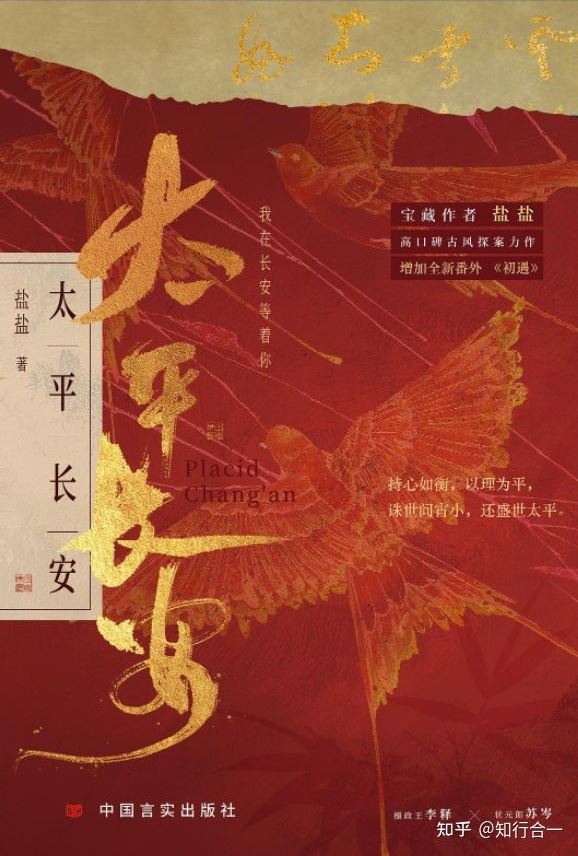
On the surface, this is a revenge thriller about exposing a murderer. But read more carefully, and it becomes something far more unsettling: an examination of how systems corrupt individuals, and how truth functions as both weapon and burden. The ledger is the central symbol here, and it's doing extraordinary work. Jia Wangchun produces it with trembling hands, calling it "the only thing I'm good at." But it's not really about accounting skills—it's about the compulsion to document, to create evidence of existence even in the midst of moral decay. The ledger represents the impossibility of escaping consequence. You can burn your houses, your reputations, your relationships—but if you kept records, the truth survives. He Xiao himself functions as a kind of walking paradox: a man who rose from nothing through sheer cunning, yet whose very success required the destruction of everyone who ever trusted him. The courtesan sold her family home for his dreams. Su Lan gave him his start. The Wang family offered him status. And he repaid each of them with betrayal. He's not just a villain—he's the logical endpoint of a system that values ambition above all else. The "Thousand-Day Drunkeness" poison operates on multiple symbolic levels. It renders victims perpetually intoxicated—unable to function clearly, unable to protect themselves. But it's also undetectable, which speaks to how systemic corruption operates: you feel its effects, you suffer its consequences, but you can't prove who's responsible. The poison is metaphor made literal. Perhaps the most striking thematic moment comes when Su Cen reveals he doesn't want He Xiao imprisoned—he wants the Salt Monopoly Decree abolished. This reframes everything. Individual justice is insufficient. One corrupted man can be replaced by another. The system itself must change, and that requires the willing destruction of one's own legacy. Jia Wangchun must confess not just to crimes but to the entire enterprise that built his family's wealth. The recurring image of drowning—tears, spilled tea, the suffocating weight of secrets—ties into this. The Jia family is literally drowning in their complicity, and the only escape is to stop fighting the current and let the truth wash everything away. It's a devastating metaphor for how moral corruption consumes entire lineages, not just individuals.
... Read More
I need everyone to slow down because the subtext between Su Cen and Li Shi in this passage is NOT subtle and I am HERE for it. "If not for Li Shi blocking him with the umbrella handle, he might have ended up falling into the man's arms." — I literally gasped. This man is standing literally inches away, sharing an umbrella in the rain, and Su Cen is hyper-aware of every physical detail: the Xiang bamboo handle, the sandalwood scent, the near-collision. Meanwhile Li Shi is doing that thing where he acts like it was nothing but then gives him the umbrella and sends him away. THE AUDACITY. And then the kicker: Su Cen realizes too late that handing him the umbrella wasn't an act of kindness, it was just... practical. Or was it? I swear the author is playing 4D chess with these romantic beats. Also, Qi Lin carrying Qu Ling'er on his shoulders while the latter teasingly asks about his master's 'nightly revelries' — I AM SCREAMING. Qi Lin's indignation is the funniest character moment in this entire batch.
... Read More
Okay so let's talk about this scene because honestly it's one of those moments where everything looks casual on the surface but the plot threads are pulling in so many directions at once. Su Cen walks into this pleasure house pretending to be some rich merchant's nephew, right? And he's being SO transparent about his cover story — the whole Jia family thing, the convoluted family tree he made up on the spot. You'd think someone like Qingchen would see through it immediately, and she basically does, but instead of calling him out, she plays along. That's when I knew this wasn't just a simple reconnaissance mission. The real plot twist here isn't that Qingchen recognizes him — wait, actually it IS, but not in the way you'd expect. She doesn't expose him. She drugs him. 'He's just asleep.' Three words that completely reframe everything that came before. All that banter, all that pretending, and she was running a counter-operation the entire time. And then the layering continues. Qu Ling'er shows up right after, calling her Xiao Hong, and suddenly we get this explosion of backstory about the Secret Door, the Death Gate being nearly wiped out, operatives exposed in the Turkic army. This single scene is doing DOUBLE duty — it's advancing the current plot while simultaneously dropping world-building info that's going to matter later. The author is playing 4D chess here. What really got me was the Butterfly Song exchange. On the surface it's just romantic music context, but Qingchen explicitly tells Su Cen the tragic ending — 'the scholar passed the imperial examinations... but in the end, their lives were tragically misplaced.' She's basically warning him that being clever isn't the same as being smart, and that this game they're playing doesn't have a happy ending. Did he catch that? Probably not. That dramatic irony ischef'd. Also — who is Li Shi? Su Cen is clearly terrified of disappointing this person. 'If Li Shi found out, he might as well be castrated.' Someone please tell me Li Shi is going to show up and cause chaos. I need to know. That ending cliffhanger though... Qu Ling'er mid-sentence, Qingchen's eyes nearly blind from crying, Han Shu drunk by a cliffside. We are SO deep into the middle of multiple ongoing crises and the author just THROWS us into the deep end. Love it.
... Read More
I need to talk about the jade pendant scene because honestly, it completely flipped my understanding of everything. Up until that moment, I had been picturing some shadowy assassin type following Su Cen around, someone with killing intent and a clear agenda. But then Zhang Jun produces this Ice Flower Lotus Jade pendant found in the ashes, and suddenly the whole narrative pivot happens. Su Cen's deduction is so clean I had to reread it: no one commits murder and arson while carrying a piece of jewelry typically worn by women. The person who set that fire was from the Zhang inner quarters. Someone knew he was going to borrow books from the study, but they didn't know WHICH book he wanted—otherwise they wouldn't have left the Chen's Criminal Laws half intact. They just burned everything hoping to disrupt him. This changes everything about how I see Su Cen's situation. He's not being targeted by some faceless enemy. Someone close to the Zhang family is actively trying to stop his investigation. And the fact that the Empress Dowager's faction and Prince Ning's faction are fighting over Huzhou appointments right now? This isn't coincidental. There's someone inside the Zhang residence feeding information or blocking paths. I also can't stop thinking about how Su Cen handled Qu Ling'er during the ghost servant explanation. The man had to summon all his patience not to kick him out. But there's something tender underneath it all—Qu Ling'er quietly cleaning up the bowls and whispering about dawn, concerned about his rest. These two have this dynamic where one pretends annoyance and the other just... stays. It's giving me serious "I will annoy you forever and you will never actually kick me out" energy.
... Read More
There's this one detail that hit me harder than I expected. Su Cen wakes up and the room is filled with sandalwood — and he notes that every time he smells it, it's like he's been drugged, only waking when the fragrance burns out completely. I keep coming back to this image. The incense makes him vulnerable, makes him sleep deeply, makes him wake in someone else's space not knowing quite how he got there. It's such a perfect metaphor for what's happening between them — he's被 seduced not just by words or touch but by the entire atmosphere Li Shi creates. And then there's the bed scene. "So this is what it means to regret one misstep for eternity." Su Cen's internal monologue during the physical encounter is devastatingly funny and also kind of heartbreaking. He didn't choose to walk into this. He's a small beast in a tiger's den, and every time he thinks he's figured out Li Shi's game, he realizes he never understood it at all. The most tender moment is probably the beginning — Su Cen helping adjust Li Shi's collar and sleeves, saying 'It looks good,' and Li Shi laughing and pinching his chin. Two people who clearly want something real with each other, dancing around it so carefully. The romance here isn't in grand declarations, it's in the spaces between words.
... Read More
What strikes me most about the dialogue here is how much is unsaid. 'The prince has already gone to bed.' Three times. Qi Lin repeats it like a broken record, and Su Cen understands immediately—it's not about sleep, it's about proximity, about intimacy, about the fact that entering Xingqing Palace now is a suicide mission. And then Li Shi's lines: 'What have you done this time?' said with affection, 'Go early, return early,' said with finality, 'If you didn't do it, no one will dare to frame you.' Each line carries layers. Xiao Yuancheng's whining, his panic, his desperate 'I'm not going'—it's all so vividly voiced. The author gives each character a distinct rhythm, a distinct way of speaking that reveals their nature without ever stating it outright.

Leave a comment

You must be logged in to leave comments. or
