Placid Chang’an - Reviews

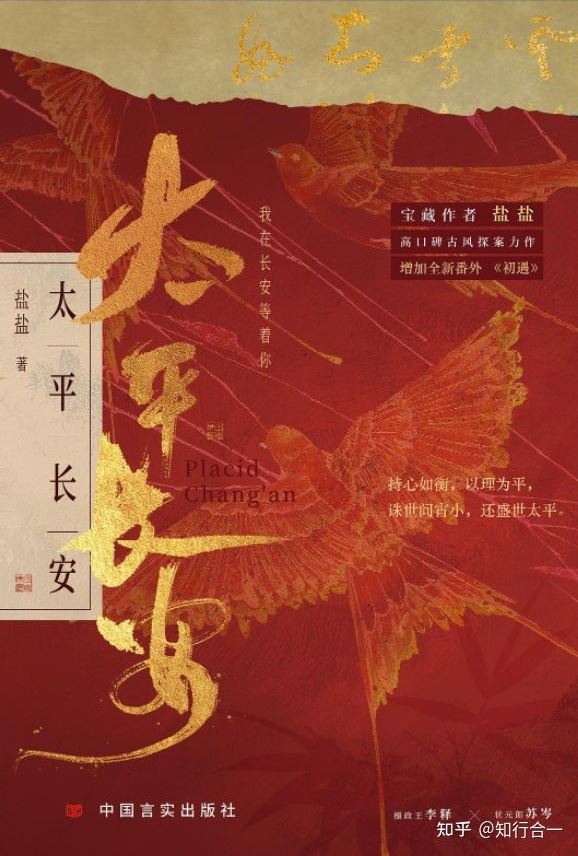
Placid Chang’an
+Add to Custom List
Sort
Add review
... Read More
Can we talk about how distinct every character's voice is in this chapter? Su Cen's dialogue carries this weight of someone who's seen too much but hasn't given up yet. When he says "He isn't the direct cause of their deaths, but he is inextricably linked to it" to Qi Lin — that's not just information. That's a man wrestling with moral complexity, acknowledging gray areas instead of wanting simple black-and-white answers. And then his story about traveling and his father? It's rambling, personal, almost.stream-of-consciousness. Very different from his usual measured tone. You can hear the trust building in real time. Qi Lin is interesting because he delivers hard political information with this casual ease. "Xiao Yuancheng cannot die." Period. No explanation needed. He's the messenger who clearly knows more than he lets on, and there's this underlying layer of him actually caring — "The Lord didn't say anything; he's just afraid it would put you in a difficult position." Whether that's true or manipulation, Qi Lin's voice always feels like someone who's been around the block enough to know the difference. Li Shi's dialogue is deceptively simple. "Keeping your distance, are you afraid I would eat you?" Such a casual, almost playful line, but it's layered with power dynamics. He's never truly threatening — he's always offering an invitation, whether it's danger or closeness. And his laugh, mentioned multiple times, gives his character this warmth that contradicts everything you know about his position. The narrative voice itself is worth mentioning too. It's close third-person, mostly anchored in Su Cen's perspective, but it has this literary quality — descriptive without being purple, emotional without being overwrought. The rooster crowing and morning light falling on white clothes, the image of Su Cen's reflection in the bronze mirror. It's the kind of writing that doesn't announce itself but stays with you.
... Read More
I need to talk about the drinking scene with Su Cen and Qu Ling'er because WOW. After everything that just happened—after forcing a young master to pay, after the crowd pressing in, after the whole Dali Temple spectacle—Su Cen goes home and buys TWO jars of Monkey Wine. Not one. Two. And orders peanuts and braised beef like this is some kind of celebration dinner. They just sit there. Gazing at each other with tearful eyes. Saying nothing. But understanding everything. I'm not even kidding when I say this hit me in the chest. This is the kind of scene that makes you put the book down and just stare at the ceiling. No grand confessions, no dramatic declarations—just two people who have been through something together sitting in silence, drinking cheap wine, and somehow communicating more in that silence than most books manage in entire chapters. And then Su Cen feigns drunkenness to ask why Qu Ling'er escaped through the Secret Door. And Qu Ling'er just grins and says 'Can't say... I can't tell you.' And collapses. And Su Cen clinks his cup against Qu Ling'er's forehead and downs it. What does that mean?! WHAT DOES IT ALL MEAN???
... Read More
Can we just talk about the dynamic between Su Cen and Qu Ling'er for a second? It's so good. You have this super competent, slightly terrifying older-brother figure who is clearly worried about him but shows it through interrogation and threats. And Qu Ling'er? He's all bravado and lightness skills and pride, but you can see right through it when Su Cen gets that cold stare. He immediately shrinks. 'I was wrong, I was wrong.' The power imbalance is hilarious and kind of sweet in a twisted way. And then Ah Fu getting dragged into it, complaining about his allowance, betraying his friend's drinking habits—all this found-family chaos. I love how Su Cen's threat to make them eat plain porridge forever is both menacing and completely domestic. It tells me everything I need to know about their household. Meanwhile, Song Jiancheng getting humiliated by Su Cen in front of everyone? Chef's kiss. Rivalry vibes are strong.
... Read More
Okay so this scene had me absolutely *stunned* for a second. Li Shi just casually drops "The case of the newly appointed scholar?" and Su Cen is visibly rattled. Like, this was supposed to be a low-profile investigation, right? And the Regent Prince — the man who basically runs the empire — is tracking Su Cen's amateur detective work from across the palace? That's either terrifying or deeply flattering. I can't decide which. But the real plot brilliance here is the layered reveal about the assassin. Su Cen pieces it together in real time: if the murderer had these skills, why the clumsy ambush? Why fail to strangle the victims properly? It points to someone connected but not THE killer. Either the guide who brought Lü Liang into the Eastern Market or an assassin sent by Wu Deshui's mysterious backer. The fact that two separate threads of mystery are converging in one fight scene is just *chef's kiss*.
... Read More
I need to talk about Qu Ling'er because this character is absolutely magnetic and I have so many questions. On the surface, he's this flirty, playful figure who was apparently making moves on people in the tea house. But the second Su Cen calls him out, the mask drops and you see someone sharp, dangerous, and completely in control. The fact that he still thanked Su Cen despite being exposed? That's either genuine gratitude or a predator acknowledging another predator. I can't tell which makes it worse—or better. And Su Cen himself—he's interesting because his motivation isn't noble. When asked why he defended Ah Fu, he literally says "I just couldn't stand that person upstairs." Not compassion for the accused, not belief in justice, but pure personal irritation at some guy in a fancy robe looking down on everyone. There's something refreshingly honest about that. Most protagonists would dress it up in moral language. Su Cen owns his pettiness. The dynamic between them is electric. Qu Ling'er leaves him with a whispered secret and vanishes into the night. Su Cen touches his ear like the words physically burned him. And then he gets LOST on the way home, walking around in early spring chill until he stumbles upon an old sweetwater stall. Someone who usually knows what he's doing ending up completely disoriented after a single encounter tells you everything about how much this man affected him.
... Read More
I'm genuinely impressed by how distinct the voices are here. Let me break it down because most novels I read have characters who all sound like the author in different wigs. Xiao Yan — when he speaks, it's raw. 'I trusted you! You deceived me and harmed my Chen'er! I'll kill you!' No filter, no rhetorical devices, just pure emotion firing straight from the gut. Even his later laughter sounds different from everyone else's. It's not a composed laugh, it's the laugh of a man whose mind is breaking and mending at the same time. Su Cen — measured but not stiff. Watch how he shifts register. He bows formally to Li Shi using proper etiquette, then turns and methodically dismantles a criminal's alibi with the precision of someone who's done this before. But then he smiles at Li Shi. The dialogue does SO MUCH work just by having him pause and smile instead of speaking. His line 'I'll make sure you lose with no room for doubt' has this quiet confidence that fits him perfectly. Li Shi — speaks the least but carries the most weight. 'You did well.' Two words to a commander, two words to his person, completely different meanings. 'That's called strategic planning' in response to being called devious — that's Li Shi shutting down false modesty with a deadpan correction. 'You'll be rewarded when we return' — casual on the surface, loaded underneath. His dialogue is economical to the point where every word feels intentional. Qi Lin — barely any dialogue but when he speaks it's informative without being exposition-dumpy. The whole Mohe/Mojie backstory about the Turkic power struggle comes through in two clean paragraphs from him, and it doesn't feel like the author just dropped worldbuilding info. It feels like a subordinate filling in gaps for someone who needs context. The narrative voice itself is also doing a lot — that moment when Su Cen reflects on how Li Shi has always treated him the same way, and the narration frames it as a delayed realization. The prose slows down exactly when it needs to. Not overwritten, not sparse. Just right.
... Read More
'What is meant to be will be, and what is not meant to be cannot be forced.' Gao Miao's last coherent thought before breaking down completely. This line echoes through everything. The kneeling scene is loaded with meaning—Su Cen kneels physically, but he's also submitting to a system that could crush him. Yet he does it anyway. There's something almost religious about his devotion to finding the truth, even when it costs him dignity and comfort. The palace itself is a symbol—those crimson doors, the glittering golden characters on Chongming Gate, the opulent Xingqing Palace compared to Li Shi's simple study. Power wears different masks. Li Shi's study being plain despite all the rumors of luxury? That's the author telling us something about true power—it doesn't need to announce itself. And Gao Miao's death, contemplated while covered in blood and bruises, asking why he didn't just run a butcher shop? That's the central tragedy, isn't it? The ordinary life that was stolen from him. The novel keeps asking: what are we willing to kneel for, and what price does justice extract from those who seek it?
... Read More
I need to talk about how the author handles the pacing between these chapters because honestly it's one of the best things about the book. You start with Su Lan explaining his backstory, this slow reveal about Lan Fu saving him three years ago during a drought, bandits, the whole thing — and it feels like a quiet political exposition scene, right? Could've been boring. But then you pivot to the birthday banquet, the grandeur, the court intrigue happening in the background, and suddenly everything speeds up. Yue Wanqing's shuttlecock scheme, the fake identity reveal with He Xiao, and then — BAM — a man storming in yelling about his mistress. The author knows exactly when to breathe and when to rush. There's no dead air. Every scene pushes either plot or character forward. And that ending? Absolute cliffhanger energy. You just stop and you're already reaching for the next chapter. No mercy.
... Read More
I just finished these four chapters and I am literally gripping my phone because the stakes have escalated so fast and so completely. Let me count what everyone stands to lose: He Xiao has already killed the Jia family's eldest son with a poison that mimics illness. He is a cornered man with nothing left to lose and everything to gain. Su Cen just realized his political maneuvering — separating the Jia and Wang families to make them destroy each other — has produced the opposite effect. Instead of a controlled conflict, he has created a desperate enemy. The text literally says He Xiao "would kill" when backed into a corner. Then there is Qu Ling'er, who is actively being poisoned right now just from being near Xiao Hong's perfume. His own expertise — his knowledge of toxins — is what makes him vulnerable because he stayed in the room too long. Qi Lin caught him, yes, but how far gone is the poisoning already? And Su Cen himself — he needs to link He Xiao to the salt monopoly decree before He Xiao makes his move. Every hour counts. The witness is secured, the poison evidence is gathered, but the strategic link is missing. If he moves too fast, He Xiao escapes. If he moves too slow, someone dies. The tension in this chapter is not from action scenes or dramatic reveals. It is from the quiet, suffocating realization that everyone is running out of time and the board has shifted beneath their feet. And I cannot stop turning pages.
... Read More
I laughed so hard at Qu Ling'er pushing Su Cen forward like "show him, young master!" after completely ignoring him earlier. The role reversal is everything. She's out here treating a top scholar like her personal weapon and Su Cen is just internally suffering while outwardly being polite. But honestly, there's something really sweet about their dynamic — she clearly has zero doubt about him, which means when she says "we still have someone here," she's not just being brash, she genuinely believes in her brother. That confidence is contagious. Meanwhile Su Cen's internal monologue is just pure exhaustion. "What kind of maid treats her master like this?" bro you literally called her a maid earlier and now you're complaining about being pushed around. The contrast between his outer calm and inner screaming is my favorite thing. Also, the ending where he glances back at the cottage before leaving — there's something almost wistful there, like he knows this encounter will come back to haunt him. Which it absolutely will.
... Read More
Let me just say — the way this chapter opens with Su Cen leaning against that red lacquered pillar, quietly observing the political theatre around him, is such a perfect narrative choice. It immediately tells us where he stands in this world: part of it, but separate from it, watching everyone else dance while he refuses to join. And then BAM — he feels a gaze, looks up, catches the person who clearly matters to him, and the whole atmosphere shifts in a single sentence. That's not just good plotting, that's precise orchestration. The structure here is also doing something really interesting. We start in the public sphere (the court, the politics, the performance), then Su Cen retreats to his private space (the bonsai, the book, the frustration), and then the external world literally crashes through his wall — Qu Ling'er appearing like a chaotic force of nature. The boundary between his insulated life and the dangerous world outside is so thin, and the author keeps reminding us of that. And the confrontation at the end — Su Cen standing between Qu Ling'er and Xiao Yuancheng, using legal language as a weapon — that's the kind of moment that makes you sit up straight. He's not a warrior, he's not a guard, but he knows exactly how to fight. The plot keeps revealing new dimensions of this character. What does Xiao Yuancheng's arrival mean for the larger story? Why is Li Shi's interest in him lingering on his neck like a brand? And where does Qi Lin's loyalty actually lie? The threads are all pulling tight right now.
... Read More
The Grand Canal isn't just a setting; it's a massive symbol of the story's underlying tensions. Built by Emperor Daye for revenue extraction and resource control, it's a monument to centralized power that also facilitates the very流通 (circulation) it sought to regulate. This directly mirrors the political landscape Su Cen is entering. Salt—a basic necessity—cannot travel by water, only by land through controlled posthouses. It's a perfect metaphor for how power operates: controlling the flow of essential goods, creating artificial scarcity, and building networks of surveillance. The canal connects north and south, past and present, but it also divides and controls. Similarly, Su Cen's journey is about navigating these invisible channels of power. He's using the water route precisely because it bypasses the land-based posthouse network controlled by Governor Xue Zhi. He's trying to move freely in a system designed to restrict movement. The theme here is about hidden connectivity—how things that seem separate (salt/land, water/transport, personal/political) are actually part of a single, rigged system. Su Cen is trying to find the cracks in that system, just as he's trying to find the cracks in the people around him.

Leave a comment

You must be logged in to leave comments. or
