Placid Chang’an - Reviews

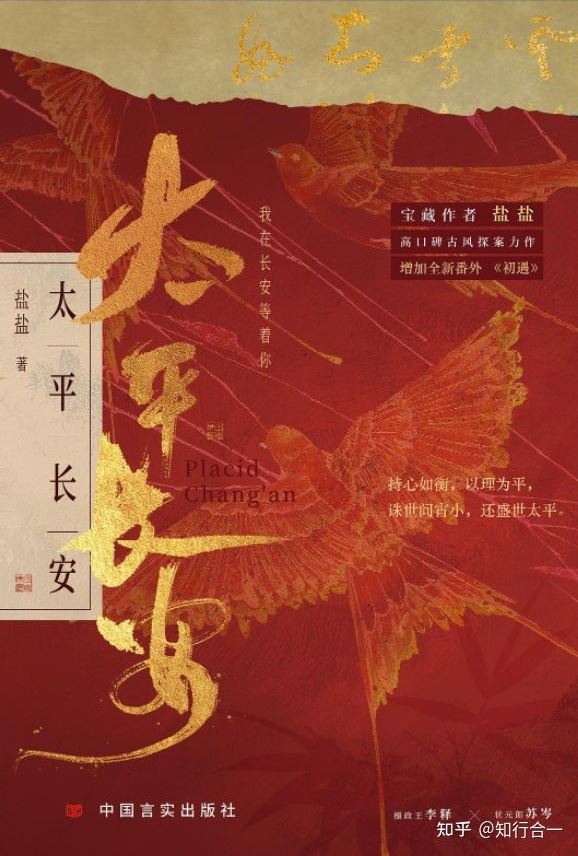
Placid Chang’an
+Add to Custom List
Sort
Add review
... Read More
I need to talk about Xiao Yuancheng because this guy just appeared and the author gave him more backstory in one paragraph than most novels give entire main characters. Let me get this straight: his family helped found the empire. His ancestors fought across the land. His family inherited the title of King of Northern Liang for generations. And what does he get? Sent to the capital as a HOSTAGE. Because some censor accused his dad of conspiring with the Turks. He's surviving sandstorms and palace intrigue in Liangzhou, barely made it to adulthood, and the moment he becomes heir — boom, you're a prisoner in Chang'an with no power, no connections, every sneeze reported. And then Liu Cheng publicly humiliates him and Li Shi just... watches. Doesn't intervene. I swear I got genuinely angry reading that part. The image of him clenching his teeth in silent anger while standing there completely alone in a sea of hostile officials, and then glancing at Li Shi hoping for support and getting nothing? That's the kind of moment that makes you want to shake the book. He needed an ally desperately — which is why aligning with Li Shi made total strategic sense for him — but having your protector just let you get shredded verbally says a lot about where he actually stands in that relationship.
... Read More
Let me just say this: the structural pivot at the end of this batch is masterful. We spend 90% of the text in the present timeline—high tension, confrontation, revelation, emotional breakdown, a carriage ride full of uncomfortable truths. And then, just when you think you're catching your breath, the author SLAMS you into a completely different time, place, and perspective. No warning. No 'meanwhile, fifteen years ago...' Just: 'So, this is what it looks like from up high.' From up high. Of a watchtower. In a desert. Hanging from a rope. This is how you control pacing—not by rushing or slowing down, but by changing the entire frame of reference. The reader goes from 'oh thank god the threat passed' to 'what the hell is happening' in a single paragraph. That disorientation IS the point. The story is about layers of misunderstanding, and the structure mirrors that. The present-day sequence moves in waves: threat → confrontation → release → new information → unease. Qi Lin's revelations come like peeling onions. First: the lord wasn't there. Then: the attacker was a death warrior. Then: Qu Ling'er might be the same type. Then: the lord has been protecting us all along. Each revelation raises the stakes while simultaneously destabilizing everything we thought we knew. And then the flashback cuts in. It's not a gentle 'let me tell you about the past.' It's a face-first dive into suffering that reframes the entire relationship between these characters. By the time the text ends mid-sentence during that flashback, you're not thinking about pacing anymore—you're desperate for the next chapter. This is how you cliffhanger. Not with a death threat. With a story still being told.
... Read More
Let me walk through what just happened here because this is a lot. Su Cen gets pulled into Li Shi's orbit, sleeps with him, wakes up promoted TWO RANKS in less than six months. No one else did anything wrong but suddenly Song Jiancheng is demoted to some remote post. And then Zhang Jun drops the bomb that the Tian Pingzhi case has ZERO records from the Yonglong era. Not even a mention. So Li Shi told Su Cen “don't touch that case anymore” while having sex with him, and Su Cen agreed automatically while half-conscious. Then a promotion lands in his lap. Coincidence? I don't think so. This is textbook containment—reward the investigator who's getting too close, distract him with status, and make him complicit so he can't easily turn. But here's the thing that got me: Su Cen's reaction. He doesn't push back. He plays along with Zhang Jun, pretends he didn't report Song, says he'll “apologize in person.” He's learned the game. And then the scene shifts to him alone in the empty office, organizing moldy files, and that one missed character—writing “Yonglong” instead of “Tianshou”—suggests his subconscious is already circling back to the very thing he promised not to touch. The plot is moving like a slow train and I am NOT ready for the crash.
... Read More
Okay, can we just talk about the ink jade thumb ring for a second? This little object carries so much weight. Earlier in the story, Li Shi took it from Su Cen—or at least, it was taken away—and now it's back on Su Cen's hand when he wakes up. That's not just a plot convenience; that's a very deliberate character beat. Li Shi returns the ring, which signals trust, or at least a recalibration of their power dynamic. He's saying: you're my ally again, or maybe you're mine in a way that doesn't require keeping things taken. And then there's the room assignment—Wen Shu's former bedroom. Whether Li Shi chose it deliberately or accidentally, it's dripping with meaning. Wen Shu died young, she was kind, and now Su Cen is sleeping in her space. It's like Li Shi is wrapping Su Cen in someone else's memory, someone he lost. That's intimate in a way that feels almost possessive. Su Cen's panic about it is perfect—this guy who can face down murderers and political intrigue but gets absolutely flustered by the idea of sleeping in a dead woman's room next to the man who might have nearly killed him. Their dynamic is this beautiful push-pull of danger and care, and I'm here for it.
... Read More
I need to talk about how this passage controls its pace like a pro. It starts with Su Cen arriving at a crime scene — which could easily have been a boring procedural beat — but within three paragraphs he's already dismantling the official coroner's assumptions and reconstructing the entire murder sequence. The pacing never lets you settle. Just when you think we're done with the body examination, BOOM, new victim revealed to be an exam candidate. Just when the investigation seems to be wrapping up, someone screams about evil spirits and chaos erupts. But what really impresses me is how the author uses Su Cen's internal monologue as a breathing valve without actually slowing anything down. While he's giving instructions to Song Jiancheng, we get this little mental detour about Qu Linger's comment on the martial artist who took Lü Liang to the Eastern Market. Is the killer skilled or weak? The text poses the question and leaves it dangling, which means I'm immediately hooked for the next chapter. That's not bad pacing — that's expert-level breadcrumb placement. The chapter ends on what might be the best cliffhanger I've read in a while. Su Cen finding dry ash in a place it shouldn't exist, connecting it to the crooked-necked tree, and then the thought that "when the person was burning paper here, could it be that Yuan Shaochun was already hanging on that tree?" CHILL. Absolute chill. The narrative structure here moves from discovery → deduction → complication → new mystery, and it does it in the span of a few pages. I had to immediately open the next chapter.
... Read More
The fat man Gao Miao is an absolute gift of a character, and it's all in how he talks. The moment he switches from his right hand to his left after gulping down the sweetwater—then casually explains his arm aches when it's about to rain, while the sky is perfectly clear—that's dialogue doing triple duty. It reveals character, drops a suspicious detail, and maintains this folksy, self-important tone all at once. The man is so committed to his superstitious narrative that he can't help but accidentally confess something else entirely. Then there's the sweetwater seller. His lines are sparse but loaded: "He bought sweetwater from me before going in and gave me extra silver. I waited for him to come back out and return the change, but he never did." That's it. No drama, no embellishment. Just a matter-of-fact recollection that somehow carries more weight than any exaggerated ghost story could. The monkey-like guard Hou Ping's voice is equally distinct—flirty, dismissive, then suddenly terrified. Watch how his dialogue transforms: first he's asking Su Cen where he's from like they're at a social gathering, then after that one cold threat he's babbling information rapidly. "Sir, this Wu Deshui, well... he's not very capable, but he's got luck on his side." The hesitation, the filler words, the way he deflects before delivering the real information—it's natural speech pattern writing at its best. And Su Cen's own dialogue is wonderfully minimal. "It's you?" "Your arm is hurt?" "...That unlucky guy you were just talking about." He lets others hang themselves with their own words while he barely raises his voice. The contrast between his sparse speech and everyone else's verbosity is such a satisfying dynamic.
... Read More
I just… can we appreciate Ah Fu for two seconds? Because this kid is everything. He goes out early to check results, doesn't even have breakfast ready, and Su Cen is sitting there with these awful brown sugar pastries crumbing everywhere, musing about congee like it's some profound desire. And Ah Fu's reaction? Pure panic. ‘I'll go make breakfast right now.' No drama, no ‘I'm sorry, Second Young Master,' just immediate action. That's loyalty. That's someone who knows Su Cen doesn't need grand gestures—he needs his dumb servant boy to notice he's hungry and fix it. And Su Cen's smile when he watches Ah Fu dash out? That's not just relief about food. That's the smile of someone who stayed up all night unable to sleep, terrified his essay would get him killed, and still has someone running around making sure he's fed. I don't think the author realizes how much emotional work that tiny moment does. It's domestic. It's small. It's also the most honest relationship in this chapter. There's this other layer too, though—Su Cen remembering Old Man Lin's warning. ‘The tree that stands out gets blown down.' He heard it, he understood it, and he literally thought back: if the tree falls, it's because it's brittle. If the water wears the stone, it's because the stone is weak. He believes in becoming strong through trials. Unafraid of wind, fire, thunder, lightning. That's not just ambition. That's a philosophy forged in something deeper than career goals. It sounds like survival. Like he's been through enough to know that staying soft gets you destroyed, and sharpness—real, unapologetic sharpness—is the only thing that keeps you alive. And then right after that, cut to him being watched by this elegant stranger who smiles at him like he's already a rival or a friend or something in between. I don't know what's coming between them, but the emotional current is already there. Su Cen felt uncomfortable under that gaze. Not afraid—uncomfortable. Like he recognized something in the attention, even if he doesn't know what. I'm invested. Not just in whether he passes, but in who he becomes while trying. And honestly, the fact that he still has Ah Fu running after him with breakfast? That's grounding. That's the heart of the story, right there.
... Read More
There are symbols layered throughout this passage that I think deserve real attention, and the more I sit with them, the more I appreciate how densely the author packed this scene. First, the nine-clawed dragon embroidery on Prince Ning's dark robes. In Chinese imperial symbolism, the five-clawed dragon is reserved exclusively for the emperor. A nine-clawed dragon—well, that's... problematic. Ambiguous. Powerful enough to embroider but not quite claiming the throne outright. It's the perfect visual representation of Prince Ning's position in this world: sitting just below the dragon throne, holding real power, commanding feudal lords, yet technically remaining a subject. He exists in that liminal space between ruler and minister, and the author chooses to show us that through fabric alone. No exposition needed. Just dark robes, crimson trimmings, and gold thread that whispers danger. Then there's Su Cen's 'Healing the Nation' theory. The metaphor of governance as medicine is ancient—one of the oldest political frameworks in Chinese thought—but the author deploys it freshly here. Su Cen proposes four diagnostic methods: observation, listening, inquiry, examination. These aren't just policy suggestions; they're framed as a physician examining a patient. And the question Prince Ning immediately fires back—'what is the chronic illness?'—turns the metaphor inward. Su Cen has been diagnosing the nation, but can HE be diagnosed? Is he the patient or the disease? The parallel is uncomfortable and intentional, I'm sure of it. The late Apricot List is another symbol worth unpacking. Historically, the Apricot List (the published examination results) represents meritocratic purity—the idea that talent rises regardless of birth. But this list is HALF AN HOUR LATE. Why? Because politics interferes. Because the Ministry of Rites and Hanlin Academy nearly came to blows. Because someone powerful decided the timeline should serve THEIR interests. The delay itself is a statement: meritocracy is a beautiful ideal, but the system that produces it is thoroughly corrupted by those who hold power. And Zheng Yang—this royal scholar who 'was no match' for Su Cen despite his lineage. He lost 'wholeheartedly.' A man who could have bought his way into any position instead stood in the same crowd as common candidates and submitted to the same test. His humility before Su Cen's talent is genuine, and it contrasts sharply with Prince Ning's calculated presence. One royal acknowledges defeat gracefully; the other orchestrates it from the shadows. Two sides of the same coin, perhaps. The teahouse memory also functions symbolically. Su Cen saw Prince Ning there first—descending stairs, radiating authority that 'kept ordinary people at a distance.' Now they meet in the formal examination hall, and the power dynamic has shifted entirely. The man who was distant and untouchable is now sitting close enough to watch Su Cen kneel, to hear his voice, to feel the weight of his gaze. The teahouse was a chance encounter; the hall is deliberate. Both moments mark turning points, but only one was chosen.
... Read More
Okay so I have to talk about this central plot device because it genuinely impressed me. Su Cen handing in his exam early isn't just a cool character moment—it's a massive narrative gamble. The essay itself criticizes factional disputes in court, and you realize immediately that this isn't some naive young scholar writing a safe paper. This is someone deliberately choosing between "astonish the world" or "leave me without a burial place." No third option. That line he tells Ah Fu later hits completely different when you re-read the exam scenes. The plot structure here is also clever because it creates two parallel tension lines. On one hand, we have the examination process itself—the locked cells, the Hanlin Scholar's reaction, the five-day wait. On the other, there's the political undercurrent, the dispute over the top scorer between the Hanlin Academy and the Ministry of Rites. The author doesn't dump this info on you at once; it comes in fragments. First the vendor mentions Liu Cheng casually, then the rumors about the dispute, then we get Su Cen's full ranking revealed at the end. By the time Ah Fu sprints back to tell him, you're already theorizing and the emotional payoff is huge. The nonchalance scene where Su Cen is lying on the couch eating pastries while waiting for results? Masterclass in dramatic irony. We know what he wrote, we know what it risks, and watching him act completely unfazed while Ah Fu loses his mind creates this delicious tension. The plot doesn't need explosions or chase scenes when the stakes are this personal and political.
... Read More
Let me just say—this pacing is INSANE and I don't know how to process it. Chapter starts with Su Cen retreating into thought over Zhang Jun's reaction to Lu Family Village. We get ONE sentence of mystery and then suddenly we're in the rear hall with bureaucratic paperwork. It's jarring in the best way. The author just... slides from personal intrigue to institutional mundane without missing a beat. And then the Feng Yiming reveal hits like a freight train. Su Cen casually files a memo, forgets about it, and two paragraphs later the Imperial Censor is impeaching him in court. That transition? Perfection. The story trusts us to connect the dots. But what really wrecked me was the court scene itself. The impeachment comes in waves—first the censor's detailed assault, then the vice minister's "measured yet equally damning assessment," then the economic argument about Yangzhou. Each speaker builds on the last, and by the time Su Cen realizes this might be connected to Li Shi's anti-Salt Monopoly agenda, you're already deep in conspiracy theory territory. And then Li Shi drops his counter-memorial. The chapter ends mid-document. MID DOCUMENT. I actually had to put the phone down for a second. The cliffhanger isn't what happens—it's WHAT HE'S ACCUSING FENG YIMING OF. We're reading the opening line of a memorial and the chapter cuts off. That is ruthless.
... Read More
Ugh, can we talk about how depressing this family dynamic is? Su Cen's father is a merchant who “determined to see his son enter the court and bring honor to the family,” which is code for “we spent a fortune on a house in Chang'an and you better pass or else.” Last time he skipped the exam, they tied him to a tree and gave him a good beating. The marks are still visible! That's not discipline, that's abuse dressed up as filial piety. And Su Cen just… smiles like a spring breeze and tells his servant Ah Fu to go study if he's bored. The servant feels a chill, obviously, because he knows what happens when the young master relaxes. There's this whole unspoken tension between them—Ah Fu is loyal but exhausted, watching his master treat the most important day of his life like a day trip. Meanwhile, Su Cen overhears a story about a woman who gets tricked out of her savings and beaten half to death by a scholar, and everyone in the tea house laughs it off. “Indifference was the common attitude toward such matters.” That line hit me like a truck. It's not just about that poor woman; it's about how everyone in this world is emotionally isolated. Su Cen's father doesn't truly see him, Ah Fu is too scared to challenge him, the public doesn't care about the exploited woman, and the court factions are too busy plotting to notice the human cost. I keep wondering if Su Cen's emotional journey is going to be about breaking out of that indifference, or learning to navigate it. The father-son relationship is clearly fractured, but there's also this weird undercurrent of investment—his dad bought him a house, after all. Does he love him? Does he see him as an investment? The story hasn't answered that yet, and I'm here for it. Also, the servant's dialogue is so subtly anxious—“If we hurry, we can still review the Four Books and Five Classics one more time.” That's not just plot convenience, that's a character who cares, even if he's powerless to stop his master's self-sabotage. I hope we get more of their dynamic. It's the emotional backbone hiding in plain sight, and it's already making me ache for this guy.
... Read More
The stakes in this chapter aren't announced with explosions or death threats. They're whispered in carriage rides and courtyard exercises. But they're enormous. On the surface, Su Cen is investigating a case—a butcher killed a man, the body vanished, the village blamed the Mountain Goddess. Low stakes? No. Because Li Shi is listening. Because Li Shi's response—Delay court by half an hour—is a protective measure. Someone is watching Su Cen dig, and Li Shi is deliberately slowing the machinery of state to give him more time. That means the case isn't just about one dead man. It's about power, access, and who gets to control the narrative. Zhang Jun's conflict is deeper. He's an older generation, physically declining but mentally sharp, holding onto cases and memories that might destroy the younger generation if fully understood. You're just like him. We're all stuck where we are. The stakes here aren't life and death—they're legacy and survival. If Su Cen follows the same path as Chen Guanglu, does he inherit the same fate? The chapter doesn't say. That silence is the highest stake of all. And Li Shi's internal conflict—whether to protect Su Cen or let him face whatever comes—is never stated outright. But Qi Lin's question Should we throw some obstacles in his way? and Li Shi's non-answer say everything. He's choosing delay over opposition. Protection over confrontation. But for how long? The physical danger is minimal. The emotional danger is catastrophic. Because the moment Su Cen understands who Him is, the moment he sees the full shape of the case he's inherited, he won't be able to unsee it. And the people who moved the body won't want him to see it at all.

Leave a comment

You must be logged in to leave comments. or
