My Restaurant is Famous All Over the World - Reviews

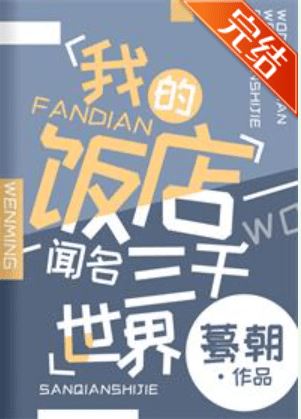
My Restaurant is Famous All Over the World
+Add to Custom List
Sort
Add review
... Read More
I've noticed something and I want to unpack it—cooking in this story isn't just cooking. Every time Bai Xianzhi prepares food, it's an act of care, of control, of trying to hold onto normalcy in a world that keeps threatening to pull him apart. The menu he plans for Liu Qingshan's dinner is elaborate, thoughtful, deeply personal. He's not just feeding people, he's creating moments of warmth in between all the chaos. Even the Three Thousand Food House itself functions symbolically—it's a place where different worlds intersect, where food from somewhere else can nourish people here. The small room that keeps food fresh, the one Bai Xianzhi has been obsessively inspecting, feels like it represents the boundary between the mundane and the magical. What keeps things fresh? What preserves what matters? And then there's the Tongtong Machine as a symbol of connection across impossible distances, the way technology becomes magic when you need it to. This story is really about what we preserve and what we share, wrapped in the warm packaging of a restaurant kitchen.
... Read More
"The bright red and spicy hotpot broth bubbled in the pot, and the spicy and dominant aroma of hotpot gradually filled the entire kitchen and wafted outwards." I need to address this. I was reading this at an ungodly hour and now I'm standing in my kitchen wondering why I don't have hotpot base. The description goes from atmospheric to dangerously appetizing and I am not okay. But beyond the food porn (which is genuinely impressive writing), what strikes me about the worldbuilding here is how casually magical the setting operates. People are escaping through cracks in space. Dragon clans exist and have royal status. There are communication devices unlocked by iris recognition. And yet Bai Xianzhi runs a restaurant called Three Thousand Food House like it's no big deal. The mundane and the extraordinary coexist so naturally it never feels jarring. The spatial rift detail is interesting too — customers are stuck in one, unable to see his social media post saying everything's fine. So the protagonist is basically isolated in real-time from his own customer base, which adds this weird layer of dramatic irony. He's posting updates into a void while personally handling the crisis. It makes the world feel lived-in and complicated rather than just a backdrop for the MC's flexes.
... Read More
I need to talk about Langyue for a second because her energy in this chapter is absolutely infectious. The author spends the entire opening paragraph establishing her as this super dedicated Time Moon Hotel fan who literally can't sleep the night before the competition because the Orc branch chef is showing up. Can you relate? That feeling when you're so hyped about something you just need to refresh your phone constantly? Yeah, Langyue is living that. And honestly, it made me feel something—even though I don't even know if I'm supposed to be rooting for her side or against it by this point. There's this genuine warmth to how she and the other fans are waiting together in the group chat, shouting and anxious until ten o'clock. It's not romantic love or family bonds, but it's this found-family energy of people who share a passion, and it's surprisingly touching. Then later when the tide starts turning and the viewers in the chat room begin doubting the Time Moon chef, I felt this tiny pang of... what? Betrayal? No, that's ridiculous, I barely know these people. But there's something about watching collective enthusiasm crack that hits different. The chapter doesn't give us much interiority from Bai Xianzhi himself in terms of emotion—he's just focused, competent, doing his thing—but the emotional weight of the scene comes from everyone else's reactions: the judges getting hungry and restless, the blue-haired man's smug certainty, the chat room spiraling from hype to doubt. It's a clever way to build emotional stakes without relying on the protagonist having a meltdown or a monologue. The tension isn't in what Bai Xianzhi feels; it's in what everyone around him is feeling, and how those feelings are shifting in real time.
... Read More
The pacing here is razor-sharp. You've got cooking details—stir-frying, reducing sauce, waiting for simmering—all woven with cutting between the kitchen, the judges, and the live chat. It never drags. Just when you think it's building toward a calm reveal, Lin's phone rings and suddenly we're reminded he's late for his physical exam as a four-century-old elder. Tiny detour, but it adds weight to his presence. Then the vote tally comes down in a rapid-fire list: 8-2, 9-1, 6-4, 10-0. Each number drops like a hammer. After that, the silence and the manager's panic slow the pace just enough to make the awkwardness palpable. It's a masterful rhythm of speed, pause, shock, and deflection. The author knows exactly when to accelerate and when to let tension hang.
... Read More
The pacing in these chapters is absolutely slick. You go from a tense armed confrontation in the restaurant to online virality to a line-out-the-door crowd in what feels like the blink of an eye, and somehow it never feels rushed. The author handles the time jump well—Bai Xianzhi goes upstairs to calm down, then suddenly the video is everywhere. That quick cut mirrors how fast things actually spread online today. I appreciate that the author didn't dwell too long on the attack itself or the police investigation. Those scenes were important but the focus stays on the aftermath and its ripple effects. The transition from tension to humor (the fan comments, Yu Xin's panic at the queue) is seamless. And ending on the note of the restaurant being suddenly overwhelmed with business? Perfect chapter closer. It raises questions about how Bai Xianzhi manages three people running a suddenly popular place. I'm already curious about what happens next—does the attention bring new problems? New characters? The pacing keeps me turning pages without ever feeling like it's dragging.
... Read More
I know everything about you! That's it. That's the review. Okay fine, let me elaborate because this line alone carries so much weight. The boyfriend's dialogue throughout this chapter is absolutely perfect. Every line tells you who he is without any exposition needed. 'Was that person your boss?' 'I know everything about you!' 'I'm exercising my normal rights as your boyfriend!' This guy is confident, possessive, slightly chaotic, and completely unapologetic. His voice is distinct and memorable after literally two paragraphs of dialogue. Meanwhile, Li Yi's voice is all sighs and complaints. 'Do you have a skin thirst or something?' He never once says something nice directly, but his interactions make it clear he's used to this behavior and tolerates it because... well, he's clearly into it. The dynamic between them is established entirely through banter. Bai Xianzhi's dialogue is different — more measured, more tactical. When the knifeman confronts him, their exchange is stark: 'Who are you?!' 'I'm the owner here. If you need something, you can tell me.' Simple. Calm. Controlled. It shows Bai Xianzhi under pressure versus how he behaves normally. And that whispered 'I have a plan' to Li Yi and his boyfriend? Chef's kiss. No explanation, just trust. The narrative voice itself is also doing a lot of work here. The omniscient narrator dips into Bai Xianzhi's head for his awkward thoughts about romance, then pulls back to cinematic descriptions of the knifeman swaying on the street. The shift in narrative distance mirrors the shift in tone — from intimate to panoramic. The author's voice adapts to the scene instead of forcing every scene into the same register. That's craft.
... Read More
Let's talk about Feng Ye for a second. This man is described as 'intimidating and awe-inspiring,' 'mature,' 'aloof.' He's the head of the Feng family, a divine race figure everyone fears or admires from a distance. And then—bam—he smiles. Not a polite smile, not a 'I-see-you-have-arrived' smile, but a 'joyful, relaxed, even indulgent' smile. And it's directed at Bai Xianzhi. The text says, 'I never saw the Demon Lord smile even on the day he became the family head.' That detail kills me. His own ascension didn't crack that mask, but a conversation with his friend did? Meanwhile, we have this女 (Meng Ting?) who has watched him for ten years. She's the silent observer, the one who 'never dared to confess.' Her relationship with him is purely aspirational, built on distance. But the video collapses that distance. She can't unsee it. And then there's Bai Xianzhi, who is completely oblivious. He's just trying to enjoy the fancy tablecloth at the banquet, minding his own business, when a child accuses him of being a 'bad person' for 'enticing' Feng Ye. His reaction is sincere confusion: 'We're just friends... Our genders are the same.' He doesn't get the social currency of the moment. He doesn't realize that in this world, a smile from the Demon Lord is a transaction. The relationship dynamics here are shifting so fast. Feng Ye and Bai Xianzhi are solid, laughing together, oblivious to the chaos they're causing. Meng Ting is heartbroken. The fans are shipping them. And the young lady is just... confused, wavering between believing Bai Xianzhi and protecting her sister's feelings. It's a mess. A delicious, messy web.
... Read More
Okay, so this whole arc is absolutely brilliant when you think about it. Bai Xianzhi literally KICKED Zhu Gang out of his restaurant, and that single physical act of defiance—"with a single kick"—rippled through the entire plot like a stone dropped in water. The Tund Race member didn't just get annoyed; he was so traumatized by being kicked out of Three Thousand Food House that he went on this whole quest for revenge, only to get sentenced to three years in prison. I love how this establishes Bai Xianzhi's character through action rather than exposition. He doesn't give long speeches about his principles; he just acts. The author also did something really interesting with the Tund Race members themselves—there's this community of them who clearly harass other shop owners too, and one commenter even says, "I had dinner at Three Thousand Food House before, and suddenly a Tund Race appeared. He threatened the owner, demanding dumplings by transforming into his original form." This tells us so much about the world without infodumping. And Bai Xianzhi's reaction to all this drama is just… sigh of relief. He's not a villain or a hero, he's just a guy who wants to run his restaurant in peace. The fact that the Text Moon Hotel got caught in the crossfire because Zhu Gang was too scared to confront Bai Xianzhi directly is both funny and kind of tragic for the hotel.
... Read More
The pacing in these chapters is honestly masterful. It starts as a comedic disaster — Bai Xianzhi getting ambushed by two crying kids at 3am, confused as hell, trying to serve dumplings to strangers. You're laughing at his internal screaming. Then within like three paragraphs it pivots into full-on emotional devastation and I was NOT ready. The structure basically goes: confusion → warmth → comfort → destruction. And it does it FAST. The dumpling scene is this perfect little breather — these kids are hungry, he cooks for them, they eat everything in five minutes. It's wholesome and funny and you're relaxing, thinking OK this is a cozy interlude. Then BAM — phone call at dawn, the exposition dump about dead parents, dead guardians, space pirates. In the same conversation where he's about to break the news gently, the kids themselves start breaking his heart by being so incredibly mature about it. The chapter ends on this cliffhanger though — Xiao Long about to say something important, the sentence cuts off mid-word. Classic. I immediately had to keep reading. The way the author controls the emotional whiplash is impressive. One minute you're smiling at kids being kids, the next you're sitting there with a heavy chest. My only critique: the exposition from the Bureau guy felt a bit info-dumpy compared to the organic flow of the rest. But honestly, it worked because we were already emotionally invested in the kids. Would've felt different if they weren't so endearing.
... Read More
Here's what I love about how these chapters handle stakes: nothing explodes, and yet I'm completely hooked. Bai Xianzhi knows that if he converts all that money into yuan, if he flaunts his success, someone will come knocking. "It might even attract the attention of relevant authorities, and then he guessed that his small shop's uniqueness wouldn't be hidden anymore." That's a threat hanging over the whole thing. He's sitting on a secret that could unravel everything, and he's choosing to stay quiet about it. The class reunion is basically a minefield disguised as a casual dinner. Twenty former classmates who don't know what he's really doing, people asking where he's been, someone literally about to call Sun Lanyou to set him up on a date, and Bai Xianzhi has to navigate all of this while pretending to be the same guy they graduated with. One wrong word and the whole carefully constructed life could crack. But the real tension isn't external. It's the internal war between the guy who was counting pennums for rent and the guy who's now worth over a hundred million. When he pinches his leg to make it feel real—that's the conflict. His own body doesn't believe his life yet. He's still waiting for the other shoe to drop, and I caught myself waiting too. The pacing here is masterful. The author could've given us a dramatic confrontation or a scene where someone discovers Bai Xianzhi's secret. Instead, we get a guy eating sausages alone on New Year's Eve and a reunion where nobody notices what's actually happening. The stakes are enormous and they're communicated entirely through silence. That's why I couldn't put the book down.
... Read More
"I'm a person who loves peace and dislikes violence and fighting. However, that doesn't mean I'm easy to bully." Said while literally freezing people in place. This man is the most chaotic neutral character and I love him for it. The dialogue in this passage is doing so much heavy lifting. Bai Xianzhi's voice is this perfect blend of gentle menace — he talks about cooking dragons like a chef brainstorming menu options, completely deadpan, which makes it infinitely funnier than if he were being overtly threatening. The contrast between his calm, almost polite tone and the absurdity of what he's saying is comedy gold. "Dragon Tendon Noodles? I wonder how dragon meat tastes—steamed or stir-fried?" He's genuinely considering preparation methods while these guys are terrified for their lives. The casualness is the joke. And the dragon brothers' internal monologue of "Want some! Want some!! Want some!!!" expressed entirely through eye-rolling because they physically can't speak? That's such a clever way to handle dialogue when characters are rendered mute. You still hear them. Meanwhile, Ao Xinlan's voice comes through briefly in narration and she sounds NOTHING like Bai Xianzhi. Where he's controlled and dry, she's all heat and exasperation. 'twisting their thick-' cuts off but you can already hear her raising her voice three rooms away. Distinct voices = good writing.
... Read More
The stakes here are massive, and not just for the competition. Three Thousand Food House's reputation is on the line, but Time Moon Hotel's pride is the bigger casualty. Watch how the manager reacts: instead of accepting defeat, he tries to cut the broadcast, delay judgment, and hide behind bureaucracy. That's not just poor sportsmanship—it's institutional fear. Meanwhile, Bai Xianzhi has everything to lose if the verdict goes against him, yet he faces down a corporation with nothing but quiet certainty. The conflict isn't just one chef versus another; it's transparency versus reputation management, individual excellence versus corporate denial. Every silent pause after the vote tally screams tension. Who will fold first? The text refuses to let us forget that losing this gracefully could define a legacy.

Leave a comment

You must be logged in to leave comments. or
