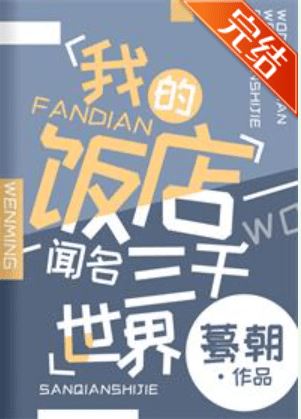
My Restaurant is Famous All Over the World - Reviews

My Restaurant is Famous All Over the World
+Add to Custom List
Sort
Add review
... Read More
The dialogue in this passage is doing SO much heavy lifting and I need to applaud it. Let me start with Feng Ye because his entire personality is contained in roughly twenty words. "I am not a divine but a retainer of the divine, serving in the Time-Space Group." That's it. Formal, precise, slightly dismissive of the misconception. No apology, no elaboration. When he says "Zhuo Long, come with me" — three words that carry the weight of someone who doesn't waste syllables. An ke's internal panic translates perfectly through her dialogue too. She goes from practiced performance mode ("Your Excellency, the divine, An ke is ready") to complete system failure ("????") in about two sentences. The shift from rehearsed propriety to genuine bewilderment is hilarious and believable. The live stream comments are basically a character in themselves. Each one has a distinct voice — the overly dramatic fan, the confused everyman, the theorist connecting dots. Phrases like "I haven't even bathed and prepared for this" and "My eyes were so blind, I regret it" feel authentically internet. This is how people actually talk online. Bai Xianzhi's introduction iswarm and unhurried compared to everyone else: "Welcome to Three Thousand Food House! My name is Bai Xianzhi... Welcome to our place!" The repetition of "welcome" and the casual self-introduction makes him feel like the anchor of this whole operation — the person who makes everything feel like it belongs somewhere. And Zhuo Long barely speaks at all, which somehow makes his voice the most powerful in the room. Silence as characterization is one of the author's strongest tools here.
... Read More
There's a lovely unintentional comedy in the fact that three grown men picked out clothes for these kids and went with the most stereotypical choices imaginable—pink for the girl, black for the boy—but the text treats this with complete sincerity. 'Girls should wear pink, and boys should wear black!' They genuinely believe they did a great job. It's funny, yes, but it's also a symbol of how these adults are trying to normalise everything. They're not trying to be thoughtful or progressive; they're just being fathers in the only way they know how, which is through practical acts of care. The cabbage soup itself is a symbol I can't get out of my head. It's barebones, almost pathetic—just leaves boiled in water. But it's also the kids' way of contributing, of proving they're useful, of earning their place at the table. Every bowl of that terrible soup is a small offering: look, I can do something, I can help, please don't send me away. And then there's the gas stove. The thing that could literally kill them all, treated with the same casual reverence as a magical artifact by Xiao Long ('It's amazing!'). For kids who've survived hardship, an ordinary kitchen appliance is wondrous. A functioning stove means warmth, cooked food, safety. The fact that Bai Xianzhi's first thought isn't gratitude for the soup but panic about whether they'll survive the cooking process—that gap between the kids' wonder and the adult's fear is where the whole emotional weight of this passage lives.
... Read More
This chapter is perfectly paced for a food-focused story. It starts slow with Bai Xianzhi waiting at the empty restaurant, building that uncomfortable tension of wondering if anyone will show up. Then Liu Qingshan arrives and we get this delightful exchange about portions and pricing that grounds us in the reality of running a business. The pacing picks up when the food is being prepared – that moment when Liu Qingshan's teammates are frantically messaging him while he's hypnotized by the aroma? I laughed out loud. The author knows exactly when to speed up and when to let scenes breathe. The mother-son conflict at home adds variety before the chapter ends on such a perfect comedic cliffhanger with the father's entrance. I went from worried about the restaurant's survival to completely invested in whether Liu Qingshan would ever get to taste those noodles again. That's skilled storytelling right there.
... Read More
The pacing in this passage is deceptively smooth. It starts slow—Bai preparing ingredients, the live stream setup, the recipe details. You could skim the cooking steps, but they're there for texture. Then the aroma hits, and suddenly everything accelerates: the three characters react, the chat explodes, panic builds. The author uses short, punchy dialogue and repetitive comments ('Satisfied, leave quickly +1…') to create a sense of urgency. But just when you think it's all chaos, it cuts to Qing Shu tasting the chicken. Time seems to slow down: 'She picked up her chopsticks… slowly chewing it.' Then the relief floods in. The fried rice sequence follows, languid and satisfying, until the final line pulls us forward again. It's a classic tension-release pattern, but executed with such control that it never feels mechanical. Even the recipe insert—a bit of an info-dump—doesn't drag because it's sandwiched between active moments. The structure mirrors the experience: anticipation, ordeal, reward, lingering desire. And that's why I didn't skip a word.
... Read More
The dialogue in this chapter is surprisingly sparse but punches way above its weight. Look at Ji Lan's explanation: "The divine give birth to live offspring, while the dragon clan lays eggs." One sentence establishes an entire biology, mythology, and cultural divide. No exposition dump, no lecture—just a matter-of-fact statement that tells us everything about why this family dynamic is broken. And Xiao Long's lines? Minimal. "Why did you... abandon me?" The ellipsis does so much work there. It's not a confident question—it's the voice of someone who's rehearsed this moment a thousand times in their head and can't quite form it when it finally matters. Then "I hate you!" four words that contain a lifetime of confusion. The author's narrative voice also deserves credit. Describing Ji Lan as looking like a "sturdy boulder" at first glance was such a sharp visual—that immediately tells us she's intimidating, perhaps dangerous-looking, and that her femininity isn't immediately legible to people. It's a tiny detail that does enormous worldbuilding. And then the transition to Bai Xianzhi sitting on the floor with the kids—no dialogue, just action. Sometimes silence says more than any words ever could. I do wonder if Xiao Long's sudden explosion felt slightly rushed, like the author needed the dramatic peak before moving on. But then again, kids don't always process emotions gradually. Maybe the bluntness was the point.
... Read More
There's something deeply symbolic about this entire sequence that I can't shake. A smile from Feng Ye isn't just an emotional expression—it's an act of vulnerability in a world where the divine race, particularly its leaders, are expected to be cold, calculated, and untouchable. The fact that this smile was captured on video and spread through a group chat is almost like a metaphor for how secrets and hidden truths have a way of surfacing in tightly controlled societies. Feng Ye built an entire identity around being inhuman, around being theDemon Kingwho cannot be approached, cannot be understood, cannot be affected by worldly things like beauty or confession. And then in one unguarded moment, someone proves that he is capable of warmth. The vegetation that fills the first thirty seconds of the video is interesting too—it represents the mundane, the overlooked, the everyday world that exists beneath the grand narratives of divine clans and political intrigue. Feng Lin was hiding in those bushes, an insignificant person whose perspective we'd never normally get to share, and he's the one who captures the moment that will shatter everyone's assumptions. The story seems to be suggesting that truth doesn't come from the powerful or the prestigious—it comes from the edges, from the people hiding in the bushes, from the accidental recordings that no one meant to make public.
... Read More
The central question of these chapters isn't really about DNA or legal documents—it's about what makes a father. The author sets up this beautiful tension between biological connection and chosen love, and the answer keeps becoming clearer through Little Dragon's reactions. Consider the contrast between Ye Yan and Bai Xianzhi. Ye Yan arrives with a blood test and a claim, but the kid immediately rejects him—not just on emotional grounds but almost on aesthetic ones. "You're so ugly." There's something almost philosophical about a child dismissing a biological parent on the basis of appearance. It suggests that fatherhood is, in some fundamental way, about presence and recognition, not genetics. Bai Xianzhi, on the other hand, spent months building a relationship with this child. He asked the Black Dragon Clan if they had lost children before adopting him—he showed responsibility and care. When the crisis hits, his first instinct isn't to assert ownership but to follow legal protocol and protect the child's wellbeing. The adoption certificate becomes a powerful symbol here—not as lesser than biology, but as equally valid, maybe even more so. The Temporal Management Bureau's decision reinforces this: the child's consent matters most. "Little one, do you know how you came from Three Thousand Food House to this place?" The very first question the bureau asks isn't about who the parents are, but about the child's own experience. The story is quietly arguing that family is made, not born.
... Read More
I need to talk about the sensory world-building here because it's genuinely cinematic. The text doesn't just describe a kitchen—it builds an entire atmosphere. You've got the pale green cabbage leaves glistening with steam, the dark bottles of unfamiliar seasoning (which immediately signals 'this world has more than one dimension'), the sizzle of garlic hitting hot oil, the way water meets oil and instantly boils. But what struck me most was how the environment itself seems to have memory. Three Thousand Food House carries this collective reputation like a stain—every netizen who types in the comments is carrying trauma from previous meals. The restaurant isn't just a location, it's a living thing with a past, and Bai Xianzhi is literally rewriting its story one dish at a time. The fact that the world has 'small dimensions' and a 'Tongtong Network' gives it this effortlessly lived-in quality. I wasn't told the rules of this world—I absorbed them by watching someone cook dinner.
... Read More
Can we appreciate how well the online dialogues in this book read? Like, the comment section at the beginning feels SO real. 'The bootlickers are out in full force' — that's not something you'd expect in a fantasy/transmigration setting and yet it fits perfectly. It grounds the whole weird multiverse restaurant premise in something deeply human. And Bai Xianzhi's challenge post is fantastic: 'empty words mean nothing. Show us evidence to support your claims!' That's not a dramatic novel line, that's something a real restaurant owner would type at 2am when they're tired of being bullied. His PS about learning the dishes from a small realm while subtly questioning when Time Moon Hotel invented theirs? That's passive-aggressive genius. Then contrast that with the kids' dialogue — 'Brother Zhi Zhi is in trouble, and we want to help him!' vs Baoer immediately shutting him down. The voice distinction between adult internet warriors and actual children is really well done. Even Feng Ye's casual 'how will you repay me?' feels like a tired but fond uncle energy. Every character sounds like their age and role. No one sounds like the author forcing philosophy into their mouth.
... Read More
This is the part where I'm gonna sound deep but hear me out — the braised meat in this chapter is literally the most important symbolic object in the entire book. Think about it. You've got a Space-Time Battlefield, enemies from the Stone Clan, Divine Clan warriors, casualties, life-and-death stakes. And what brings these people together? Homestyle cooking from someone's little brother. The food represents everything they're fighting for — normalcy, family, warmth, a home they can't currently be in. When those soldiers say 'protect my brother and I'll fight forever,' that's not really about the food. That's about protecting the memory of being cared for. The fact that the cafeteria food is described as 'passable' but their brother's simple braised dish makes them lose their minds says everything about what this world values. And Ye Meng's hesitation — wanting to keep the food private for his siblings — versus the communal sharing that happens anyway? That tension between family loyalty and found family is the whole theme of this story wrapped into one braised meat moment.
... Read More
There's a recurring motif here of visibility versus invisibility. Feng Ye is usually 'aloof,' unseen in his vulnerability. He is the Demon Lord, a figure of power, but also of isolation. The smile is a symbol of his humanity, but in this society, it becomes a commodity. Once seen, it cannot be unseen. The video is a literal recording, but symbolically it's a breach of privacy, a theft of a private moment for public consumption. The fans say, 'I strangely sympathize with the guy in the video. He's the other half of the Demon Lord... I wonder if he also has dozens of rules.' This suggests a theme of shared burden, of companionship as the only relief from the 'rules' of power. But for Meng Ting, the smile is a shackle. It binds her to her unrequited love, making it painful because she now has proof of what she'll never have. She 'watched him for over a decade,' but the video reduces ten years of devotion to a single, devastating image. There's also the symbolism of the 'communication device.' It's pink and tender in the young lady's hand, yet it holds the power to destroy reputations and hearts. Technology is the vector for truth and lies alike. The theme here seems to be about the cost of intimacy in a hyper-connected world. To be close to someone like Feng Ye is dangerous. His joy infects others, but it also exposes them to pain. The 'chill down the spine' the fans feel—'Could the Demon Lord know about the things in our group?'—suggests a theme of surveillance, of power watching back. The smile is not just an emotion; it's a political act.
... Read More
Okay so this whole subplot about Little Dragon's parentage has been building and finally it all came to a head in these chapters. I love how the author plays with the idea that Ye Yan—this supposedly cool Black Dragon patriarch figure—turns out to be a deadbeat dad who didn't even know his own kid existed until now. The scene where Little Dragon calls him ugly and refuses to believe him? "I don't believe you! You're so ugly; you can't be my dad!" I literally laughed out loud. This kid has zero filter and I respect it. But the real plot complexity comes from having THREE parties all claiming rights to this kid at once—the Black Dragon Clan, the Ji family, and Bai Xianzhi with his adoption papers. That's like a custody drama but with gods and temporal bureaucracy. The introduction of the Temporal Management Bureau was a brilliant move by the author because it immediately elevated the stakes. It's not just a family dispute anymore, it's a legal one with authority involved. And then Ye Lin admitting he kidnapped the kid with an invisibility robe—"This is the dragon robe my grandma gave me on my birthday!" I need the author to stop making things so adorable at crucial moments. The resolution feels satisfying but the author is clearly setting up more conflict. Bai Xianzhi gets custody, yes, but the biological parents (and there are apparently TWO sets now—Ye Yan and the Ji family?) get visitation rights. So the door is wide open for future drama. That cliffhanger with the Feng family arriving right as things seemed resolved? Classic author move. I'm hooked.

Leave a comment

You must be logged in to leave comments. or
