My Man's First Love Has Returned - Reviews

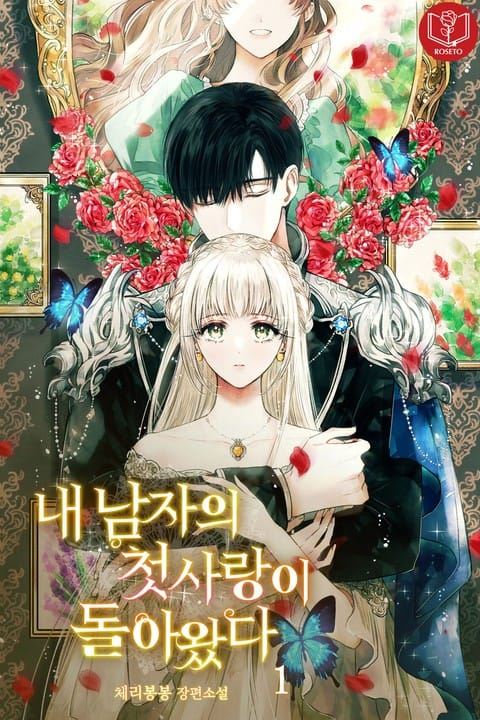
My Man's First Love Has Returned
+Add to Custom List
Sort
Add review
... Read More
Let's talk about how this chapter moves. It starts SO soft. Ian buying Elcia candy. Her internal monologue about wanting to preserve this moment, about keeping the lollipop in a glass jar so ants can't get to it. I'm sitting here melting. This is the most wholesome interaction they've had in chapters and the author lets it breathe. And then—THUD. Nersian appears. One line breaks everything: 'Suddenly, Elcia's wrist was grabbed by someone with no strength to resist.' No warning. No setup. Just violence inserted into domesticity. That's intentional pacing. The author wants you to feel Elcia's whiplash. But here's what I found even more impressive: the chapter doesn't stay dark. After Ian rescues her, after they flee, after the immediate tension breaks, we get the Kypris family scene. A reunion. Tears. A brother who never stopped believing. It's emotional but it's not heavy—it's warm. The chapter gives Elcia (and the reader) relief before pivoting to her quiet discomfort in their home. The final beat—Elcia sending a silent wish to Ian, 'I want to keep your secrets forever'—lands perfectly because we've earned it. We went from sugar-sweet candy moments to life-threatening confrontation to family warmth to this lonely, aching devotion. The pacing isn't random. Every tonal shift serves the emotional journey. If anything, I wish the Nersian encounter had more aftermath. Ian massaging her bruised wrist, her trembling hands, the physical evidence of what just happened—it's handled beautifully but briefly. I want to sit in that discomfort a little longer next time.
... Read More
I need to talk about how the pacing here is absolutely masterful because it doesn't feel like a pivot—it feels like a gradual slide into something you can't quite name until it's already happened. Chapter 13 opens with the drunk scene, which is the emotional climax, but then immediately deflates it. No dramatic resolution. Just two people passed out on the floor and a ruined wreath the next morning. The next chapter is quieter, almost mundane—Elcia going through the motions, pretending nothing happened. That's where the real damage lands. The pacing between the shouting scene and the apology scene is deliberate silence. Ian says "I'm sorry," and Elcia… she almost melts. The author doesn't rush this. They let us sit in the discomfort of that thaw. And then—"I haven't decided how I'll live once my hand is healed." That's the new direction, the cliffhanger that reorients everything. The structure here isn't about action beats, it's about emotional beats, and the space between them is where the story actually lives.
... Read More
Every time I think about what happens to that wreath I get physically distressed. Let me trace this symbol for you because it's SO rich. The wreath is established as a symbol of 'happiness and luck for the year' — Elcia believes this tradition. She hangs it on her door. Ian makes it with his INJURED hand, which makes it doubly significant because that hand represents his current physical suffering, and he still chose to MAKE SOMETHING BEAUTIFUL with it for her. Then Elcia preserves it with diluted solution, blowing on it until her head aches, wanting to 'preserve it forever so she wouldn't forget today's happiness.' Meanwhile, Ian sits alone at 3am reliving Kayla's death. 'Why am I still alive?' That's not just sadness — that's survival guilt of the deepest kind. He was dragged to safety by his companions while Kayla died. He couldn't even retrieve her body, not a strand of hair. And now here he is, breathing, living, accepting gifts from a woman who reminds him of what he lost. The guilt isn't rational — he KNOWS it's not Elcia's fault — but the text makes clear that guilt doesn't care about rationality. When he snaps and the wreath falls from the door — that's not an accident. It's the physical manifestation of everything Elcia was trying to preserve shattering. She wanted to freeze that perfect evening in time. He can't. His trauma is too old, too deep, and it's waiting for the smallest trigger (her offhand comment about being glad he's healthy) to explode. The bluebird symbolism matters too. Elcia thinks of Ian as 'a bluebird — a symbol of happiness.' But bluebirds also migrate. They leave. The text is telling us something about impermanence that Elcia, in her hopeful dream state, hasn't fully processed yet.
... Read More
There's this scene—Elcia leaning against a streetlamp waiting for Ian, holding onto this tiny pocket of happiness—and the whole world just narrows down to this one moment. The carriage ride was supposed to be restful, the capital streets are bustling around them, and yet she's standing there worrying about whether a lollipop is worth getting excited over. It's domestic and soft and absolutely precious. But then Nersian appears and the atmosphere shifts so violently it's almost physical. One second she's thinking about candy, the next her wrist is being grabbed and she's completely drained, unable to even summon Udis. The author doesn't need a hundred words to describe the fear—just 'a buzzing sound rang in her ears, her head grew heavier.' That's it. That's all you need to know. I also need to talk about Ceylon House. The way the Marchioness bursts into tears upon seeing Ian, still sniffling and unable to produce a handkerchief—that's such a vivid, human detail. Meanwhile the Marquis is over here clinically examining his son's healed hand like a retired knight appraising a weapon. 'Anyone would believe this hand was never injured. You could go to the battlefield tomorrow.' The emotional whiplash between mother and father in one sentence is masterful. The drawing room at the end is perfect too—Elcia 'stirring the suddenly chilly air' with her hand. That single gesture says everything about how out of place she feels in this warm, intact family. She's standing outside something she's never really had.
... Read More
The contrast between these scenes is killing me. First you've got this GORGEOUS winter atmosphere — endless snow falling outside the window, the warmth of the parlor because Ian literally loaded it with firewood before she arrived (of course he thought of that), the candlelight, the silver candlestick that Elcia noticed. Two people making wreaths together, the domesticity of it — Elcia holding branches while Ian cuts them with his injured left hand, both of them proud of what they made. It felt like a movie frame. I could SEE it. And then — cut to Ian alone in his bedroom at 3am. 'His eyes flickering in the lonely lamplight on his desk, full of sorrow.' That word 'lonely' attached to lamplight. Chef's kiss. The image of him pressing his hands against his ears, screaming 'STOP STOP STOP' while seeing Kayla's bloody face. This is not a man who is 'okay' despite looking healthy. White Bunny literally confirms it — 'His body is perfectly fine, but there's been a big change in his feelings.' Then Elcia getting woken up by the rabbit doll, checking her pocket watch at 3:10am, searching the 'long-abandoned banquet hall' and the 'pitch dark' basement. The sensory detail when White Bunny says 'there's a suspicious smell — the scent of a man who's kept himself pure for years.' What?? That line came out of nowhere and I lost it. And Elcia going down into darkness with just a lantern. The castle feels SO alive — every corridor, every room has history and weight. Usley Castle isn't just a setting, it's basically its own character by now.
... Read More
Oh my god, Nersian is actually the worst. Like, I knew church politics were shady in this world but this? This guy wants to literally install a fake Saint to siphon worshippers from Vanir Church. And he had the audacity to present it as some clever strategy! "If you send Miss Elcia, I promise to treat her well" — treat her well?? He said it like she's a prize horse he's acquiring, not a person. The stakes here are so much bigger than just Elcia though. This is about two churches essentially playing power games while regular people's faith gets exploited. And Conrad's reaction — I loved him so much when he stood up and basically told Nersian to go pound sand. "I was the one who discovered her!" That line hit so hard. He's not just being protective out of some abstract sense of justice; he genuinely feels responsible for Elcia because he brought her into this mess. Also the bit about how the previous Saint Kayla used to give Conrad weird looks? That felt like foreshadowing. Like something happened between them that we don't fully know yet and it's making Conrad especially sensitive about another woman being used as a religious prop. Anyone else else getting paranoid about Nersian? Because I am.
... Read More
Okay can we just talk about this ONE line where Elcia realizes her reason before Ian is like sugar in water? She literally forgives him but then blames herself for not being selfish enough, and a little devil in her head is whispering she could keep him forever? I SCREAMED. Like we all know she loves him. We've been watching her wrestle with guilt and duty and her own heart, and here she is, fully aware she's being ridiculous but somehow more honest than ever. And then Ian—sweet, observant Ian who notices EVERYTHING—goes off to buy her stupid candy because he remembers she likes it. The way he teases her about being the 'greedy one' instead of White Bunny??? I died. He sees right through her. But then there's that quiet worry she has afterward: if he's this kind to her, will he be this kind to other women? That insecurity is so painfully real. But the moment that absolutely wrecked me was Ian kneeling before his parents. After everything—the betrayal, the exile, the shame—he still has the dignity to beg permission to serve the empire. Not for glory, not for redemption in some grand way, just to be useful. And Alteon coming out of nowhere, already in full armor, saying 'I always believed in you' while looking at his brother with those watery eyes? I had to pause the chapter. This book does family and romance both so well. They're never separate. Elcia's feelings for Ian aren't just romantic—they're tangled up with gratitude, guilt, and this deep protective instinct. And Ian? He's carrying so much weight and still finds room to worry about whether she's comfortable, whether she needs space.
... Read More
Okay so let me just—wow. The opening chapter hits you like a truck doesn't it? We start with Elcia standing in front of this door adorned with golden bells, and within seconds the author has already packed so much into her internal monologue. The poinsettia wreath with a single silver bell... she kept it all this time? And Ian made it for her? This is devastating on so many levels because the reader immediately understands what she's losing before she even crosses that threshold. Then she walks in and delivers the confession—"Ian, I've loved you for a long time. I was never just a friend—not from the very beginning."—and almost immediately after, Kayla stirs. Of course she does. Of COURSE. The timing is cruel in the best way, right? Ian's attention immediately snaps back to the Saint, but not before we see something flicker across his face—a furrowed brow, a moment of genuine confusion. He couldn't just walk away from what he heard. And then the flashback to how they met? Perfect structural choice. Because now we're getting context—Elcia was sent by the Crown Prince to heal Ian, he was broken, self-harming, refusing treatment, and she just... walked in anyway. No hesitation. That brave "Alright, Elcia. Let's begin" moment where she kicks the door open and almost gets grabbed by a madman's hand—that scene completely reframes everything. It makes their year together feel earned rather than given. The plot is doing really smart work here, laying emotional groundwork without info-dumping.
... Read More
Okay so this section hits like a truck. I thought the story was building toward Elcia getting her happy ending or at least some closure with Ian, but instead we get this absolutely devastating scene where Ian comes home hammered and completely unravels on her. The way he grabs her and starts crying about Kayla… it's brutal because he's not just drunk, he's projecting years of grief onto the one person who actually stayed. And then the reveal about what happened during the Grand Expedition—Kayla didn't just die heroically, she died "covered in blood" at the gates of Jotunheim, and Ian carries that guilt like a physical weight. The plot twist here isn't some clever narrative surprise, it's more like an emotional landmine. Everything up to this point—the tender moments, the healing sessions, the wreath—now reads differently. It wasn't romance building, it was Elcia walking into a house that was already haunted. The author really commits to the tragedy too because even when Ian apologizes later, it doesn't undo anything. His hand gets healed but his heart stays broken, and Elcia realizes her entire journey here was just decoration around someone else's love story.
... Read More
There is so much going on beneath the surface here and I have thoughts. Let's start with the most obvious symbol: Elcia is a puppeteer. Puppets. Strings. Control. Or the illusion of control. She uses her puppets to heal Ian's hand—literally making his body obey what it should be able to do on its own. And isn't that exactly what her feelings have been? Strings she can't cut, a body that moves toward someone even when her mind is screaming at her to run? The wreath motif is heartbreaking in retrospect. A poinsettia wreath, handcrafted by Ian, decorated with a single silver bell—not a banknote, a bell. Something that makes sound, something that calls attention to itself. And Elcia treasured it so much she didn't hang it on the front door where anyone could see it. She kept it hidden, private, sacred. Just like her love. Something she preserved in secret because it was too precious—and too dangerous—to display. Then there's the Saint herself as a symbol. Kayla represents everything Elcia can never have: the first love, the sacrificial hero, the woman worth dying for, the one Ian's devotion was always meant for. But here's what's really interesting—Kayla is barely conscious. She's weak, dependent, sleeping through days at a time. She's become a relic of her own legend. Meanwhile Elcia is the one actively keeping her alive, using her puppets to stabilize her. The woman who loves the man who loves the woman who can't even stay awake. The inversion of power and agency in that triangle is... layered. The story seems to be asking: what does it mean to be needed versus what it means to be chosen?
... Read More
Okay so I need to talk about this ending scene because WOW. We've been through all this heavy political drama with Nersian's scheming and Conrad's throne-room rage, and then the chapter just... pivots? To snow? Like out of nowhere Ian knocks on Elcia's door and it's the first snow of the year and suddenly the whole mood shifts. The way the author describes it — "white snow was falling endlessly from the sky" — it's simple but it works because we've been cooped up in Usley Castle feeling the cold for so many chapters. Elcia hadn't even gone near the window because Ian warned her so much about the cold that she basically avoided it entirely. That detail alone tells us so much about their relationship dynamic without spelling it out. And then the parlor scene? Poinsettias, sparkling ornaments, bells that don't ring because they've been stored too long — these little imperfections make the castle feel REAL. It's not some glittering palace, it's an old place trying to celebrate winter with whatever it has. I can literally see this adapted to screen. The contrast between the dark church politics upstairs and this quiet, soft snow moment downstairs was Chef's kiss.
... Read More
The pacing in these two chapters is genuinely masterful and I want to dissect it because it's doing a lot of heavy lifting. Chapter 6 opens with a time jump montage — two days, three, four, five — and Elcia still showing up. This is the author's way of compressing time efficiently. We don't need to read five separate visits; we get the rhythm of repetition in one paragraph. But here's the trick: the author doesn't just summarize it. They give us THREE specific examples of what Elcia chatted about (fig cookies, potpourri, hummingbirds). Each one feels like a tiny window into her world, and collectively they build this image of a woman whose ordinary life is slowly orbiting around this one locked door. Then the Haden revelation hits — Ian isn't even home — and the emotional floor drops out. But Elcia just... continues. She starts talking about grapes instead. This is where the pacing is genius because it mirrors real human behavior. When someone tells you your effort is meaningless, you don't always stop. Sometimes you just redirect. The actual meeting between Ian and Elcia — that's where the pacing slows down considerably. Every line of dialogue is loaded. The walnut rattling, the pause, the invitation to tea, the pie scene. The author lets these moments breathe instead of rushing through them. Then Chapter 7 starts immediately with Elcia's internal crisis, which is the perfect counterweight to the warmth of Chapter 6. The transition from the shared dessert to the solitary breakdown is abrupt by design — it mirrors how emotional reality works. One moment you're laughing, the next you're alone with your thoughts and everything feels different. The intercutting between Elcia and Ian's separate nighttime insomnia scenes is also worth noting. Two characters, two rooms, both unable to sleep, both haunted — but for completely different reasons. This parallel structure deepens the emotional weight without a single word of exposition. The chapter ends on an almost comedic note with White Bunny whispering "there's a suspicious smell here" right as Elcia is trying to steel herself for treatment. Perfect tonal shift to ease us into Chapter 8.

Leave a comment

You must be logged in to leave comments. or