Summary

... Read More

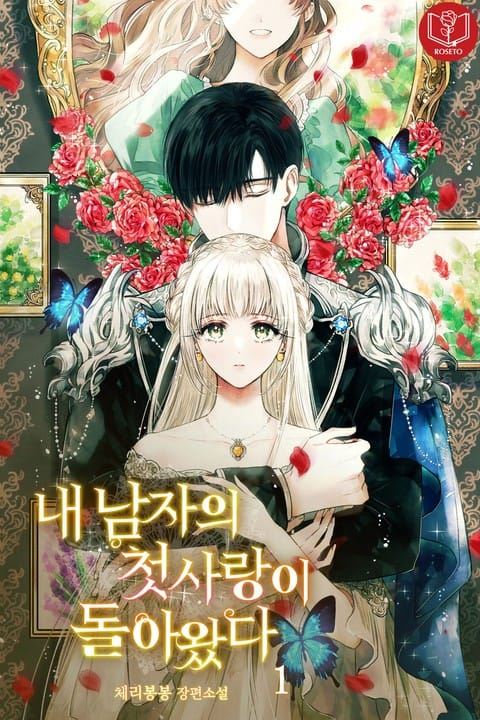
Elcia Bennett is a gentle and timid puppet master from the countryside, known for her innate talent in doll magic. She is personally recruited by Crown Prince Conrad to heal Ian Kypris, the former commander of the Holy Knight Order of the Tyr Church. Ian, once a celebrated hero of the Grand Expedition, has been confined to Usley Castle for three years, living as a broken drunkard after the death of Saint Kayla. His right hand was crushed in battle, rendering him unable to wield a sword, and he has rejected all previous healers, including druids and priests.

Upon arriving at Usley Castle, Elcia encounters Ian in a squalid, wine-soaked bedroom. Despite his violent rejection and attempts to drive her away, she persists in cleaning his living space and offering care. During this process, she discovers a hidden portrait of a beautiful woman, which Ian protects with desperate intensity. When Elcia accidentally moves the frame, Ian storms out into a violent storm, revealing through his drunken murmurs that he is in forbidden love with the deceased Saint Kayla. The two had promised to leave the world together after the expedition, but her sacrifice shattered his will to live.

Elcia falls ill from the storm but recovers to continue her efforts. She begins a daily routine of speaking to Ian through his closed bedroom door for five minutes, sharing trivial stories about the seasons and castle life. Her persistence eventually breaks through his isolation. Ian emerges, initially cold and sarcastic, but gradually engages with her. He allows Elcia to begin treatment for his hand, with the procedure scheduled to last until November or possibly spring.

As treatment progresses, Ian’s attitude shifts from hostility to reluctant trust. He allows Elcia to call him by his first name, Ian, as a sign of their changing relationship. During their interactions, Elcia realizes she is developing deep romantic feelings for him. However, she is acutely aware that her love is hopeless, as Ian’s heart belongs entirely to Saint Kayla. She struggles with her emotions, trying to view him only as a patient while fearing her growing attachment.

The narrative also introduces political tensions within the Empire. Nersian, the new Commander of the Holy Knight Order, seeks an audience with Crown Prince Conrad, indicating rising strife between the Tyr Church and the Vanir Church. Meanwhile, Saint Kayla unexpectedly awakens from her long slumber in the capital, guarded steadfastly by Ian. Elcia, whose healing puppets are no longer needed for Ian’s recovery, prepares to leave. She confronts Ian in Kayla’s bedroom, finally confessing her year-long unrequited love before fleeing. Ian, distracted by Kayla’s awakening, is left unsettled by her words and decisions to pursue her himself, marking a significant turn in his priorities.

Latest Release
DateGroupRelease
2026-10-03dusk blossoms c30
2026-10-03dusk blossoms c29
2026-10-03dusk blossoms c28
2026-10-03dusk blossoms c27
2026-10-03dusk blossoms c26
2026-10-03dusk blossoms c25
2026-10-03dusk blossoms c24
2026-10-03dusk blossoms c23
2026-10-03dusk blossoms c22
2026-10-03dusk blossoms c21
2026-10-03dusk blossoms c20
2026-10-03dusk blossoms c19

Community Reviews

Rating(0 / 5.0, 40votes)
5 stars
0(0%)
4 stars
0(0%)
3 stars
0(0%)
2 stars
0(0%)
1 stars
0(0%)

Popular reviews

... Read More
This chapter is literally about dolls on every level and I couldn't stop thinking about it afterward. Elcia is a doll magician — she creates things that look alive but are controlled by her will. Nersian wants to turn HER into a doll, a puppet to be displayed at Tyr Church to attract worshippers. Conrad refuses to let that happen. The parallel is so on the nose it's almost scary. And then there's the religious angle — Vanir Church lost their real Saint and now Nersian wants to replace that空缺 with a manufactured miracle. Is faith itself just another kind of doll in this world? Something crafted and controlled by whoever holds the strings? The winter setting feels symbolic too — everything's frozen, paused, waiting. Ian's hand won't heal in cold weather, Elcia's feelings are trapped, the political situation is in a holding pattern. Spring is coming eventually but right now everything is suspended in ice. And Elcia calling herself a "cursed statue"? A statue is basically the opposite of a doll — it can't move, can't speak, can only be looked at. That's exactly how she feels in these spaces where higher-status people dictate her movements. The self-awareness of that metaphor wrecked me a little.
... Read More
So here's the thing about this opening—I genuinely did not expect to be this invested within the first two chapters. The pacing is doing some incredibly subtle work. Chapter 1 drops us right into the emotional climax before we even understand what's happening. Elcia is saying goodbye. She's confessing. She's leaving. And we're reading it like, wait, what? Who is this Saint? Why does she care? Why does HE look like he might actually turn around? The author refuses to explain anything upfront, and that restraint is what makes me want to keep reading. Then the hard cut to Chapter 2—"About a year ago, at Usley Castle"—and suddenly we're watching the origin story unfold in real time. Elcia knocking on that door, Ian's hand grabbing her ankle, the rain, the darkness—it's all happening in present tense urgency, and yet we already know where this leads. That dramatic irony is *chef's kiss*. Every bright moment in the flashback is tainted by the knowledge of Chapter 1. When she thinks "It might work this time!" about healing Ian, my heart breaks a little because I know how this ends. The transitions are also interesting—the way the narrative pulls back from Elcia's panicked flight after her confession to reveal that Kayla has stirred, then immediately pivots to Ian's internal turmoil. No chapter break, no breathing room. The author is basically dragging us by the collar through this emotional rollercoaster and I am here for it. One small note: I absolutely need to know what happens when Ian catches up to Elcia, and the fact that the current text cuts off mid-flashback is both cruel and brilliant.
... Read More
The stakes in these chapters are layered in a way that keeps me genuinely on edge, and not just about whether Ian and Elcia will get together (though obviously that's the surface tension). On the external level, we have Ian's hand — a physical injury that determines whether he can return to his duties, whether he can reclaim his honor as a knight, whether he can face the Crown Prince whose trust he betrayed. The treatment Elcia offers isn't just medical; it's the key to Ian's entire future. If it fails, he stays broken in this abandoned castle forever. If it succeeds, he has to return to a world he fled. Internally, Ian's conflict is even sharper. He's caught between two irreconcilable desires: the wish to die alongside Kayla ("I want to sleep peacefully by your side") and the duty that keeps him breathing. His decision to accept Elcia's treatment is described as knowing "how much pain it would bring him" — which means he understands that healing will force him to confront everything he's been running from. Elcia's stakes are different but no less intense. She stands to lose her position at the castle, her purpose, and possibly her heart. Ian warns her explicitly: if treatment isn't done by autumn, go back to the capital. Winter is coming. The clock is ticking. And every day she stays is another day she falls deeper. The most tense moment for me personally was when Ian says "I still don't like you" but then smiles into his sleeve when she's not looking. What does that mean? Is he protecting himself from caring? Is he afraid that if he lets himself like her, he'll lose control of his grief? The ambiguity here is what makes the conflict so gripping — we don't know if Ian is fighting his feelings or fighting the possibility of new feelings altogether. And the ultimate dramatic irony? Both characters are preparing to get closer while believing the other one is emotionally unavailable. Elcia thinks Ian loves the Saint. Ian thinks he can't love anyone. Neither of them is looking at the person standing right in front of them. This is going to be devastating and I cannot wait.
... Read More
Okay, so I have to talk about the whole sequence with the portrait. When Elcia finds that little leather frame hidden under the dresser—"to my sweetheart, who holds all my joy and love"—it hits different. Because up until that moment, Ian feels like this broken, isolated figure, right? A cautionary tale locked away. But that portrait? It suddenly makes him human. It suggests he had someone he loved, someone he kept close even in his self-imposed exile. And then he storms out at night, grabs a bottle, disappears into the storm… leaving the portrait behind. That's a massive plot pivot. It raises the stakes immediately. Who was she? Why did he hide it? Is she dead? Did he lose her the same way he lost the saint? Every unanswered question multiplies. The narrative doesn't just move forward; it digs deeper into mystery while simultaneously forcing Elcia to act—chasing him into the rain, having to physically find him. That's good structural work. The plot isn't just about healing a hand; it's about unearthing a past so painful that even a cleaned room triggers a meltdown. And the fact that Ian immediately tries to send her away, yet can't quite shake her off completely, keeps the central relationship dynamic taut. Every scene pushes either the external mystery or the internal conflict forward. No filler.
... Read More
I need to talk about White Bunny because THIS DOLL has more personality than half the human characters in romance novels and I am HERE FOR IT. From the very first chapter it's established that Udis is quiet and emotionless while White Bunny is this chaotic ancient spirit trapped in a rabbit form and honestly? The dynamic between them is comedy gold. Listen to this exchange: 'I've been meaning to ask — please be careful what you say in front of the Count. He's a patient, you know.' 'Ugh, you're hopeless. Who's the patient here? You're the one with a hopeless lovesickness!' I SCREAMED. He called HER out for being lovesick while simultaneously diagnosing the COUNT's emotional state. The man is a walking contradiction and I love him for it. And then later, waking Elcia up at 3am: 'Foolish Elcia, wake up! It's time to get up!' and when she threatens punishment: 'Oh, you fool! That Count you like so much! The Count isn't in his room! It's been a long while already!' The urgency shifts so fast. One moment he's complaining about being treated poorly, the next he's giving crucial plot information. And that line about the suspicious smell — 'the scent of a man who's kept himself pure for years' — White Bunny would NOT shut up about it. Even Elcia was like '...' just accepting that her talking rabbit doll is commentating on Ian's romantic history. The author's voice through White Bunny is just SO distinct from everyone else. When Elcia speaks it's soft, hesitant, full of internal monologue about her feelings. When Ian speaks it's either polite distance or raw agony. But White Bunny? White Bunny is SNARKY, dramatic, occasionally prophetically helpful, and completely unfiltered. The three voices never blur together. That's rare and I appreciate it.
... Read More
I literally screamed into my pillow when Elcia thought "I should slap my own cheeks when I'm alone" after staring at his lips during surgery. The man is bandaged and in pain and STILL making her short-circuit. This girl is in so deep it's honestly painful to watch. But here's the thing that got me — Ian giving her permission to call him "Ian" instead of Count. Think about the context. He just said she could use his name as payment, casually, like it's nothing. And then right after? His gaze following her with that emptiness. That's not indifference, that's someone who's given up on being loved but is still weirdly tender toward people who bother to stay. And don't even get me started on White Bunny being the only one who sees Elcia's delusion clearly. "Silly Elcia, you really do like that man." Best friend energy right there. The bunny called her out while Elcia was busy building castles in her head. Meanwhile Elcia's internal war is everything. She literally tells herself she's "not a noble enough woman to replace the Saint" and then immediately feels guilty for having feelings. The self-sabotage is unreal. Like girl, you just healed a Count's broken hand with a magical rabbit and you're worried about your social standing??
See all reviews

Custom lists

See all custom Lists