My Ex-Husband Came Back as the Emperor - Reviews

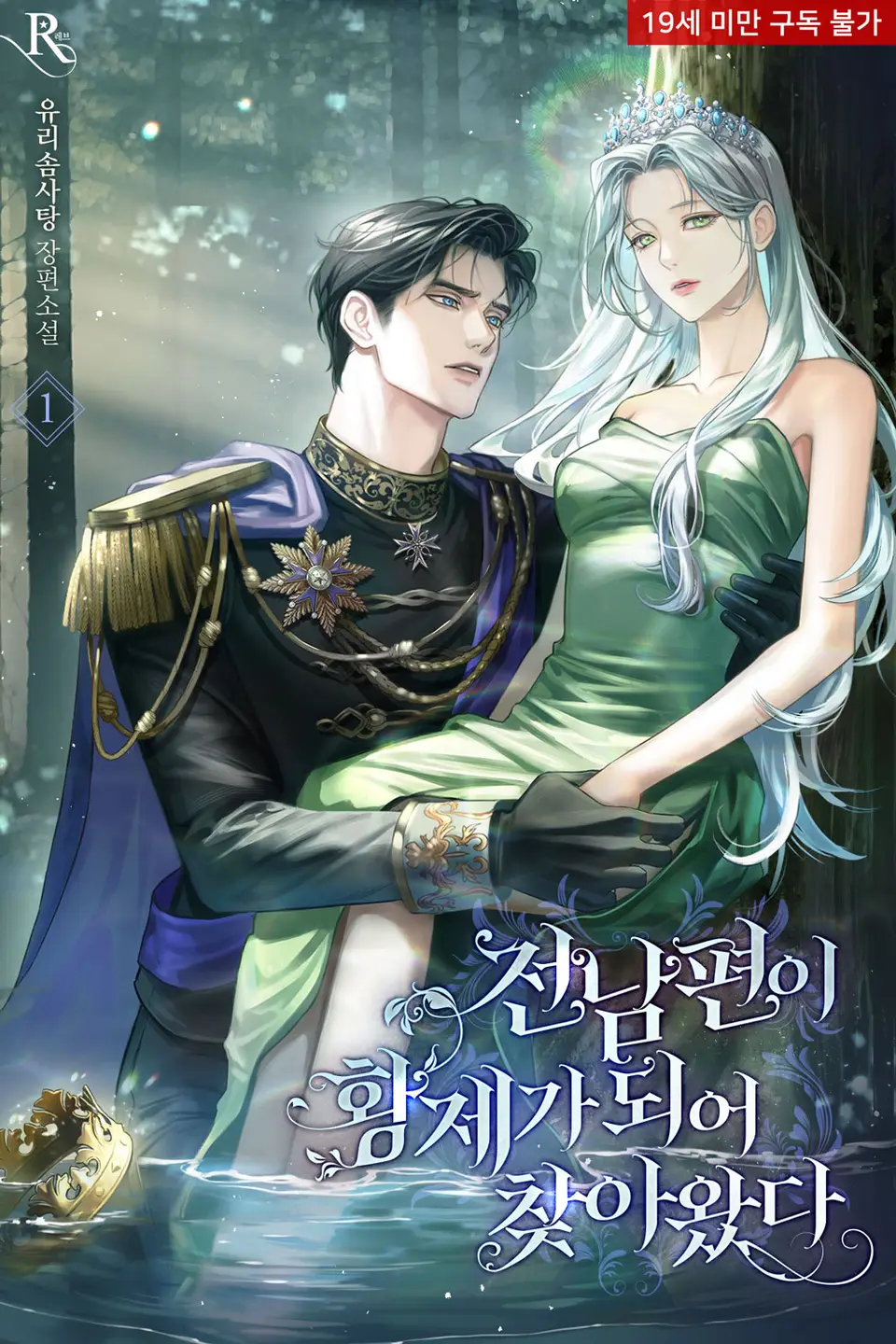
My Ex-Husband Came Back as the Emperor
+Add to Custom List
Sort
Add review
... Read More
The dialogue in these chapters is doing SO much heavy lifting. Everyone is saying one thing but meaning another, and the subtext is where the real story lives. Take Terian's exchange with the baron. The man screams about his daughter being unlawfully confined, and Terian's response is beautifully cold: "She may have once been the daughter of a baron, but that is no longer the case." On the surface: a legal statement. Privately: a threat. He's reminding everyone that Larie belongs to HIM now, and her birth family has no claim. The baron's theatrical outrage is matched by Terian's icy indifference. Perfect contrast. But then there's the steward whispering: "The maids knocked on My Lady's door, but… there was no response." That trailing off says everything. He's reporting that Larie ignored her family, but he can't say whether she's alive or dead. And Terian's reaction—his eyes narrowing, his composure cracking—tells us he's already imagining the worst. Later, when the Marquis asks to see Larie, Terian's voice carries "a strange weight." The narration specifically calls this out. It's not just jealousy—it's something more complicated. Possessiveness? Guilt? Or the realization that someone else might know something about Larie that he doesn't? The Marquis's dialogue is interesting too. He's polite, grateful, almost oblivious to the tension in the room. "I thought I owed her thanks" versus Terian's clipped "This is not a good time." Two men, same room, completely different wavelengths. And Larie—she barely speaks at all in these chapters. We hear her thoughts, but her voice is internal. That's deliberate. She's become invisible. Hiding in a cave. Holding her breath while soldiers walk past. The silence IS her dialogue here. One line that stood out: Terian telling his guards, "Find her. Bring her back. No matter what." Three sentences. Each one escalating. The period after "Find her"—calm, controlled. The dash after "Bring her back"—emotional crack. "No matter what"—desperation masked as command. The author's voice throughout is tight, restrained, almost clinical. But that's what makes the emotional beats hit harder. When Terian thinks about Larie sitting beneath that tree, looking like she might vanish—the prose slows down. We get fragments. ellipses. The narration breathes differently. "Was being here really that unbearable for her?" Simple question. Devastating answer we never get out loud.
... Read More
Okay so when the emperor walks in with a random kid and drops that bomb—Tromperie just got thrust into the succession war—I literally had to pause. Like, what. "I have appointed Baron and Baroness Tromperie as the child's guardians." That's it. That's the line. The guy just walked into a ballroom full of nobles and accidentally declared war on basically everyone with a claim to the throne, including Terian himself. The fact that he introduces him as "a distant cousin" makes it even more insufferable—like, bro, you can't just casually drop a heir into someone else's family and act like it's nothing. And Larie figuring it out in real-time? The moment where she puts together the overheard conversations with the golden mine, the parents' behavior, everything—her internal monologue about her father being a greedy bastard was *chef's kiss*. The narrative pacing here is brutal. We go from intimate morning tension, to social cruelty at the ball, to a geopolitical earthquake, all in one chapter. No rest. The author just keeps cranking the pressure up. Also the way Terian drags her to the balcony afterward instead of addressing it publicly? That's not tenderness, that's control. But also—understandable control, because if he explodes now, Larie becomes collateral damage in front of everyone. There's this constant push-pull between what he wants to do and what he can do, and honestly it's making me very nervous for both of them.
... Read More
Let's talk about the recurring imagery in this batch because it's NOT subtle and I respect that. The new moon appears twice — once as the backdrop to Terian's insomnia, once as the catalyst for Larie's suffering. It's not just a plot device for her pain cycle; it's a symbol of absence, of darkness that cycles back, of things that are hidden and then revealed against your will. The world is "swallowed in darkness" and neither character can sleep through it. Then there's the medicine — or what passes for it. Larie's mother offers her a jet-black pill, and the physician warned it could be poison. The ambiguity is the point. Is it healing or harming? Is her family caring for her or consuming her? The pill sits in her palm like a loaded gun, and when she finally swallows it, she vomits it up anyway. Nothing her family gives her stays inside her — not love, not care, not even the medicine they claim to provide. She rejects it. She rejects what they offer. And yet she has no alternative. The heaviest symbol though is the weight. Larie feels it in her chest when the Marquis of Fridas condemns her family. She feels it in her feet as she climbs the stairs — "like something sticky and vile." She carries the shame of her bloodline, the shame of her family's treason, the shame of being a Tromperie in a world that reveres heroes like the Ventus couple who died holding Espoir Castle. The author writes: "She feared she might truly be hollow — just an empty shell." That's not just depression, that's the erosion of self under the weight of inherited shame. And Terian? He's carrying his own weight — the crown, the empire, the suspicion that everyone around him is plotting. But his weight has something hers doesn't: he gets to sit in silence and stare out windows. She doesn't get that luxury. Her darkness has a face, and it wears her mother's smile.
... Read More
The moon is EVERYWHERE in this text and it's doing SO much heavy lifting. Larie is introduced at her debutante ball with long silver hair cascading to her waist, and Terian thinks she looks like a nymph returned to the world. Nymphs are supernatural beings associated with nature and wildness—completely at odds with the suffocating politicks of the imperial court she's forced to navigate. Then there's the recurring darkness. Moonless nights. Dark rooms. The chapter title itself: "Consummation on the Night of the New Moon." The new moon is the darkest phase of the lunar cycle—complete darkness, the absence of light. And this is when their encounters happen. When Larie's pain subsides and she seeks him out. The darkness is both literal and metaphorical: it's where truth can hide, where shame lives, where they can pretend this is about duty rather than something far more complicated. But here's the twist—Larie GLOWS in that darkness. "On a moonless night, she glowed like the moonlight itself." She IS the moon, even when there is no moon. Even in complete darkness, she provides light. Terian can't look away from it. He berates himself for it. But he can't stop. The silver hair connects to all of this too—silver like moonlight, silver like something ancient and untouchable. And the flowers too: the tulips in full bloom at the palace garden, flaunting their vibrant petals, while Larie stands in the shadows and hears her life dismantled. There's also the poison motif running throughout—the "strange teas," the medicines her mother gives her, the contraceptive she hopes she's been given, the way her family's "dirty money" has tainted everything about her existence. She's being poisoned from every direction: by her family's schemes, by her husband's hatred, by her own body's betrayal. And still she comes to him. Still she glows. That's the real theme here, I think—not love conquering all, but love persisting even when it has every reason to stop.
... Read More
The structure of these chapters is doing something really clever and I need to unpack it. It starts intimately—claustrophobically intimate, really. We're inside Larie's head as she notices grass stains on her dress, panics about Terian finding out, and then the poison hits her. The sentences get shorter, more fragmented. Her thoughts spiral. You can feel the panic rising in the prose itself. Then—she wakes up. The Grand Duchess's bedroom. The physician examining her. A long, tense conversation where every line drips with misread intentions. And just when you think it's going to stay this tight and personal, WHAM—we cut to Terian at a state council meeting. The entire scope explodes outward. We go from one woman's私生活 crisis to imperial politics, railway sabotage, wartime betrayal, succession crises. The Emperor visiting different concubines every night. The coal briquette monopoly. It's dizzying in the best way. The author refuses to let you breathe. One chapter you're mourning Larie's isolation, the next you're trying to map out who owes whom betrayal in a empire-wide web. It's exhausting and addictive and I cannot look away.
... Read More
I have to talk about how Terian speaks, because the dialogue choices here are so intentional. His first line to Larie in this section: "What are you doing out here?" Short. Accusatory. Not 'are you okay?' Not 'why are you alone at night?' Just an interrogation. Then: "Don't come to places like this in the dark. Unless, of course, your family is up to something strange again." He frames his concern as suspicion. The 'unless' is doing so much work here—he's giving her an out that's actually another accusation. But the line that stuck with me is from the flashback: "That's as far as your insolence goes." He says this to the servants who were harassing Susan, but his eyes are on Larie. He's protecting her, technically. But the delivery makes it clear: he's not protecting *her*, he's protecting the dignity of his house. She is the Grand Duchess, and insults to her are insults to him. The pity she feels in that moment—'a faint glimmer of hope flickered'—is immediately crushed because his gaze toward her is 'colder than the perpetual snow atop the highest mountains.' Larie's dialogue, by contrast, is all fragments and ellipses. "...Yes." "That... that's not it..." She can barely form complete sentences around him. She 'chose to shut her mouth' because she knows 'no matter what she said, it would always sound like an excuse.' The silence between them is louder than any dialogue. And that's where the real story lives—in what they can't say to each other, in the dirt on Larie's hands, in the empty space where a personal maid should be.
... Read More
This ballroom scene is basically a masterclass in atmospheric dread. "A soft cascade of light fell from the chandelier above. The ceiling was adorned with a painting of the Blessing Lake, symbol of the Laxtreen royal family. Surrounded by forest, the lake's depiction was so vivid it looked as if water might spill from it at any moment." I Keep coming back to this image. Water threatening to spill. Pressure building beneath beauty. That IS the entire novel in one sentence. And then: "Surrounded by fluttering fans, each more elegant than the last, Larie stood quietly the whole time." The fans. The smiles. The crescent-moon eyes peering over them. This isn't a ballroom—it's an arena. And Larie is the animal in the center, expected to perform grace while being dissected. The sensory detail of "the more those venomous stares pierced her, the harder it became to breathe"—that's not metaphor, that's physiological. The author grounds the cruelty in the body. The chandelier light, the painted lake that might overflow, the fans that are actually shields and weapons—all of it creates this suffocating opulence. Everything is beautiful and everything is designed to hurt her. And Terian? He's moving through this world effortlessly, his gaze piercing, his strides long and purposeful. He belongs here. She doesn't. That contrast is so sharp it aches. When the emperor appears and his voice is described as "grating like scraped iron"—even the ruler sounds wounded. The whole setting is decaying from the top down. Everyone is performing nobility while rotting inside. I also love how the author uses silence as atmosphere. The "stifling silence lingered between them as the carriage rolled toward the Imperial Palace"—five words and I feel the weight of everything unsaid pressing against my chest.
... Read More
Can we talk about how well-written the dialogue is in this? Every character has a completely distinct voice and it's terrifying how effective it is. Take the Grand Duchess: "You may go. And not a word of this." That's it. Three sentences, zero hedging, and you feel the weight of her authority like a physical thing. She doesn't ask the physician to leave—she orders it. And when she confronts Larie, her words are precise surgical instruments: "If your only worth is bearing an heir, do you think you'll survive if they find out you're taking that kind of medicine?" Cold. Pragmatic. Almost sympathetic in its own distorted way. But the Baron Tromperie—oh my god. "I wonder if my daughter is doing well." Said with a crooked smile at a state council meeting, three days after visiting his daughter at the Grand Duke's estate. The fake paternal concern is so thick you could spread it on bread. And then Terian's response, barely restrained fury wrapped in diplomatic silk: "I heard you visited just a few days ago. Your interest seems… excessive." The ellipsis does SO much work there. And Larie's voice—all silence, all hesitation. "……" "……What?" "……I'm sorry." Her dialogue is defined by what she can't bring herself to say. Which, honestly, is the most honest dialogue in the entire book.
... Read More
So the author starts this whole arc with what appears to be an intimate scene—dark room, tension, unspoken feelings bubbling over—and then SLAMS you with a flashback to the Tulip Palace garden. Let me just... process this structural choice for a second. Up until that garden reveal, the narrative follows a pretty traditional romance arc: enemies to... well, still enemies but physically close. The tension is there, the forbidden attraction is crackling, and readers are probably swooning along with Larie's internal monologues. And then—BAM. The garden scene. The overheard conversation. The branch snapping. What's brilliant about this is how it retroactively colors EVERYTHING. Every touch, every whispered "Your Grace," every night he doesn't push her away—suddenly it all means something completely different. The author doesn't just move forward; they loop back and make you re-read every prior interaction with completely new eyes. The pacing then shifts into this quiet, almost clinical aftermath. Larie bathing, rationalizing, convincing herself the medicine was just a contraceptive and not poison. The transition from the feverish intensity of the night scene to the cold, lonely bath is masterful. It's like the author is forcing you to sit in the silence after the explosion. And then—just as you think you've settled into Larie's resigned pain—they immediately pivot to the emperor's birthday celebration with her father's suspicious insistence that she attend. The tension doesn't release; it morphs. The domestic drama becomes political. The personal betrayal becomes part of something larger. I stayed up way too late reading this because the author knows exactly when to pull the rug out. Five chapters in and my stomach has been in knots the entire time.
... Read More
I need to talk about Terian because holy shit, this chapter rewrote everything I thought I knew about him. On the surface he's just cold, right? He tells Larie to "fix that habit of vanishing at will" and his eyes are always described as cold. But then you get this entire section from HIS perspective and he's internally losing his absolute mind over her. He's sitting in a state council meeting—duty calling—and all he can think about is her collapsing. He considers leaving the palace multiple times. When he hears she swallowed poison, the text says it was "a feeling too filthy for words" and he wants to look her in the eye and fiercely question why. Why poison of all things? And then the thought that actually cracks him open: "he felt like he was losing his mind at the thought of that small body losing consciousness, even if just briefly." He's angry. He's furious. But it's not the anger of a man who despises his wife—it's the terror of a man who doesn't know how to be anything other than angry about the person he cares about. And then Baron Tromperie shows up with his fake paternal concern and Terian has to play the composed duke while literally wanting to ask if the baron fed his own daughter poison. The restraint is brutal.
... Read More
The atmosphere in these chapters is UNREAL. Like, the author just DROPS us into this relentless rain and never lets up. Start with the scene at the estate entrance—the baron and baroness surrounded by guards, servants holding umbrellas over their thrashing parents. Rain drumming on the roof. Terian arriving with his umbrella. It's already tense before anyone speaks, and then it just GETS WORSE. But the real masterpiece is the forest scene. Larie running blindly into the woods, falling multiple times, and finding this hollow beneath a tree that just—appeared for her? The text literally says: "It was as if the place she'd found had been waiting for her." Then her shivering stops. Her clothes dry. The trees move their branches to shield her from view when soldiers come searching. Is this supernatural? A blessing? Or is she so delirious from exhaustion that her mind is making things up? The contrast between Terian's world and Larie's world is striking. He's in his study, pressing a hand to his temple, dealing with political nonsense and the Marquis of Fridas. She's in a damp cave, hearts pounding as soldiers pass right by her hiding place. One man can summon armies; the other is just trying not to be found. There's this one line that gave me chills: "Darker, even, than any new moon." Describing how long the previous night felt. The emotional weight of absence made the darkness tangible. And the estate itself—it's described as having private quarters, an annex, a forest behind it that connects to the western mountains. It's spacious enough that someone could vanish in it, but enclosed enough that Terian can command every corner. The architecture mirrors the power dynamic: she's trapped in a gilded cage he built, and now she's testing the bars. The forest scene especially feels cinematic. Rain pouring hard enough to blur the world. Voices carrying through the downpour. A soldier with a sword approaching the edge of her hiding place. Their eyes meet. She pulls back into darkness. He looks away. The tension is so thick you could cut it with a knife. What's fascinating is how the setting seems almost ALIVE. The tree roots pressing against her back. The branches moving unnaturally. The rain washing away her tracks. Nature itself seems to be protecting her—or hiding her. From what? From Terian? Or from something else? The author doesn't tell us much about the political world directly, but we get glimpses—the noble council, the Emperor's limited authority over the Grand Duke, the train blueprints that nobles are fighting over. It's all woven into the background like the forest is woven around Larie's hiding place.
... Read More
'I am merely fulfilling my duty.' That line hit me like a freight train. Because what Terian is really saying is I don't want this, I don't want you, but I'll do what's expected. The worst kind of honesty. And Larie—god, Larie. She's been conditioned to believe she's worthless, that she's 'weak and a bother,' and yet she keeps trying. She keeps hoping. After eight months of this push-pull where the only physical intimacy comes when her pain becomes unbearable and she has to swallow her pride to seek him out, you'd think she'd just shut down. But she doesn't. She still lets herself hope, still feels that 'sweet hope, just for a moment, that perhaps this marriage might hold a sliver of promise.' That's not naivety—that's someone who is fighting to stay human in an environment designed to strip her of humanity. And then there's the Grand Duchess. Oh my god, the Grand Duchess. This woman offers to teach Larie the duties of the house, and Larie's immediate reaction is fear—not because she doesn't want to learn, but because 'her vision darkened with dread.' Her mother barks orders, her father beats her, her brother tortures her for information, and yet the Grand Duchess's kindness feels more threatening than any of that because at least abuse is predictable. The dynamic here is so painfully real. The most haunting detail for me was how Terian's touch was 'extremely gentle' on their wedding night, and how even now, years later, 'when she was in his arms, the pain vanished, as if she were embraced by the forest.' He's the source of her pain and her only relief. That contradiction is the entire relationship in a nutshell.

Leave a comment

You must be logged in to leave comments. or