Mermaid Apocalypse Survival Guide - Reviews

Mermaid Apocalypse Survival Guide
+Add to Custom List
Sort
Add review
... Read More
There's this recurring motif of electricity in these chapters and I think it's doing SO much symbolic heavy lifting. Mo An generates electricity — it's described as "faint electric sparks flickered at his fingertips" and later "blue current around his fingers became more visible." This power is tied to his identity as someone "not human." Electricity is his nature, his gift, and his vulnerability all at once. When Xia Yu "snuffs it out," he's not just preventing exposure — he's controlling something fundamental about who Mo An is. The parasites themselves are fascinating symbolism. They start as "fourth-class citizens" — marginalized, feared, hunted. But then they EVOLVE. They gain intelligence. They learn. They share knowledge. "Once one leech learned to jump, they all did. Their intelligence was shared." This feels like a commentary on collective consciousness, on how oppressed beings learn from each other and become dangerous to the system that oppressed them. And blood — so much blood. The self-detonating woman. Blood splattered on Mo An. "Dark red blood mixed with black clots hung sparsely from the ends of his hair." Blood is everywhere but Xia Yu stays clean. Is that protection? Or isolation? He's physically untouched but emotionally soaked through. The middle levels being 'safe' while parasites evolve underneath — that's the whole world in miniature. Safety is an illusion. Evolution doesn't care about your zoning laws.
... Read More
Let's talk about how this chapter flips your expectations three times before breakfast is served. We start with what reads like a nightmare sequence — Mo An's dream of Xia Yu dissolving into bubbles while whispering about saving the world. Classic emotional manipulation, right? Make us think this is just a dream so we're blindsided when Mo An wakes up and realizes it wasn't entirely fake. But here's where it gets interesting. Mo An pinches his own leg to confirm he's awake. Only after feeling pain does he laugh with relief. The author writes: "Yeah, it's just a nightmare. I can actually dream! I'm becoming more like a human being!" Wait — what? The ability to dream is presented as a milestone in his humanity. That's a brilliant narrative choice. It means his transformation isn't just physical; it's neurological, psychological. He's gaining the one thing that separates conscious humans from other creatures. Then Talos comes in with breakfast and immediately recontextualizes everything. The "them" waiting for Mo An downstairs aren't just mentors or trainers — they're the black sirens, the very beings from his nightmare. And Mo An doesn't hesitate. He launches himself out the window in a long black skirt, splashing into the sea like he's coming home. The plot threads are weaving together: the nightmare, the transformation, the siren society, the political situation with the ship and "Electronic Corruption." All converging on this single moment of choice. Meanwhile, Xia Yu is left above, understanding too late that "once Mo An merged with the siren, he wouldn't return." That line alone is a plot bomb.
... Read More
Let me just say: the sirens' dialogue had me laughing and crying simultaneously. The way they argue about whether to call themselves "auntie" or "sister" — "I only transformed last year!" — this is just perfect character voice. Each one has personality. The whole chorus of them fussing over Mo An, talking about skirts and color changes and puberty, feels like a messy family gathering. Real and warm and slightly ridiculous. But Xia Yu? God, Xia Yu. The dialogue here is devastating because it's so full of things he's NOT saying. "I'm so tired of taking care of Mo An. I can't keep him alive. It's better this way." Said while crying. That gap between what he claims and what he means — the reader knows he's lying, Mi Dou knows he's lying, but Mo An doesn't know any of that. He just sees his friend crying and brings him a crab. And Jingwei's message afterward: "You're crying. What happened?" This cold, casual text message interruption right after such an emotional peak is almost too much. The author really understands how modern communication can feel both mundane and jarring in moments of grief. Xia Yu trying to explain to Jingwei while his voice is breaking — "He won't be coming back. He..." — that unfinished sentence says everything.
... Read More
The pacing in these chapters is absolutely FERAL and I am here for it. Let me walk through how the author does this: First, you've got this almost casual scene. Hot fish fillet. Talking about xla (whatever that means, I need to look that up). Lao Gui being grumpy. It feels like a breather chapter. You're settling in, thinking 'oh nice, slice of life before the next arc.' Then a woman explodes. Not a metaphor. Not 'explosive arguments.' A HUMAN BEING physically detonates ten meters away and splatters blood everywhere. The transition from 'eating lunch' to 'survival horror' is so abrupt it made me actually gasp. And the author doesn't let you catch your breath after. It goes: explosion → panic → guards arrive → Nuwa speaks → flamethrowers fail → leeches learn → electricity revealed → clean-up. Each beat is shorter than the last. The sentences get tighter. The action accelerates. By the time Mi Lian switches to electric weapons, you're not even thinking anymore, you're just REACTING. What I love most is how the scene ENDS. After all that chaos, Lao Gui says "this should be fine now" and they just... leave. Like, the apocalypse gets swept up by machines and everyone goes back to the elevator. It's almost insultingly casual. This is how the author trains you — the calm isn't real, the calm is just the pause before the NEXT explosion.
... Read More
The atmosphere in these chapters is insane and I keep coming back to the visual details. Let me start with the lighthouse scene—they stay there again, and the text says 'only a few days had passed, Xia Yu felt as if years had gone by.' That single sentence does so much work. It tells us time has warped around trauma and survival, that this place exists outside normal chronology. The lighthouse isn't just a setting, it's a threshold between the sea world and the human world, between who they were and who they're becoming. And then there's the rain. 'Outside, a light rain began to fall, unnoticed.' Unnoticed by whom? Everyone inside is so absorbed in their own crises that the weather just... happens. It's a quiet moment that somehow feels heavier than any action scene. Rain on a window while people make life-or-death promises. Classic but it works because the author doesn't over-explain it. The corroded cargo ship drifting in the distance is another image that won't leave me. It's anchored, waiting for a repair crew, haunted by whatever happened there. It mirrors the whole situation—broken things trying to hold together, people stranded between worlds, none of them quite belonging anywhere. And then the next day brings continuous drizzle and Mo An dives into the sea to feast. The contrast between the stormy emotional atmosphere inside and the cold gray rain outside is chef's kiss. The detail about mermaids returning to the ocean when they die and their bodies becoming nutrients is worldbuilding that feels almost biological, almost scientific. It's not just poetic—it's ecological. These creatures are part of a system, not floating above it. That grounds the fantasy in something visceral.
... Read More
The sensory journey in this passage is absolutely masterful. Let me walk through it because the author is doing something really clever here. We start in the X-Series Observation Room—clean, clinical, presumably well-lit. Mo An hatches. There is blood, yes, but also this strange innocence in the description: 'He smiled innocently at Xia Yu.' The contrast between his sharp teeth and that innocent smile immediately establishes that this world operates on different rules than ours. Then the escape. The light becomes an enemy. 'The light instantly stung his eyes.' Mo An wilts. Buried his face in Xia Yu's hair. This detail alone tells me so much about merfolk biology and their relationship with their environment. They are creatures of darkness, of depth, and the surface world is hostile to them. The descent into the sewer is where the atmosphere really shifts. Acidic water, dust, dimness. And for Mo An, this is paradise. 'The dimmer the light, the clearer his vision. Even in complete darkness, his vision remained undimmed.' Every step down is a step toward home for him, even though home is supposed to be somewhere else entirely. Power Plant No. 3, the basement, the flickering nightlight. This underground sanctuary becomes a liminal space—neither the sterile lab nor the open ocean, but somewhere in between where these unlikely bonds can form. The world feels lived-in and dangerous and beautiful all at once.
... Read More
"Born from the sea, they also return to its embrace. The foam becomes part of the sea's nutrients, nourishing the remaining eggs." I read this paragraph three times. It's the most beautiful and most horrifying passage in the entire book. This mermaid mythology—the brutal birth where fish compete for nutrients inside eggs before they've even opened their eyes, the transformation into foam after death, the recycling of the dead to feed the living—this is the story's philosophical spine. It's about how nature is merciless and beautiful at the same time, how survival demands cruelty, how death feeds life. And then Mo An, who was stolen from this cycle, who will never experience the trials that shape a mermaid's true identity, is dying not from ocean brutality but from human predation. The humans who captured him as a child are the ones starving him now. The foam metaphor extends to Xia Yu himself—he's giving pieces of his body (his transparency, potentially his leg) to keep this creature alive, becoming a kind of nutrient for someone else's survival. The whole narrative seems to be asking: what does it mean to be prey in a world that's already preyed upon you? And what does it mean to become a predator in order to protect what you love?
... Read More
"Shortly after entering the water, it turned red. It was Xia Yu's blood." I keep coming back to this single sentence. One line and the entire emotional temperature of the chapter shifts. We've been floating in this warm, almost domestic bubble — feeding the fish egg, joking about whether babies remember being babies, the cutest little found-family vibes — and then suddenly the water goes red and everything becomes real. Mi Dou watching from the shore, crouched and nervous, not even realizing the egg has rolled toward the water... that's the kind of detail that makes my heart ache. He's so focused on Xia Yu that he misses everything else. And Mo An, sensing the unease, becoming restless — even an unhatched fish knows something is wrong. The acid water is brutal imagery but what gets me is the silence after. "Why was there no movement?" Mi Dou whispers Xia Yu's name twice. Just twice. Two calls into red water and then... nothing. The chapter cuts off right there and I swear I felt my own breath stop. This is the moment where friendship becomes something heavier. Where caring for someone means sitting by poisoned water wondering if they're coming back. I can't wait to see what happens next and I'm already dreading it simultaneously.
... Read More
Let's talk about what's actually at stake here, because it's not what you'd expect from a thriller. There are no ticking bombs or villain monologues. The stakes are quieter and somehow worse. Mo An needs 5,000 calories a day or he dies. That's it. A number on a screen. But when Jingwei delivers it, you feel it in your ribs. This isn't abstract—the fish egg isn't just an object, it's Xia Yu's 'most important best friend.' So the calorie count becomes an emotional bomb. Then there's Mi Dou. 'I won't survive.' Said by a kid who's probably eight years old, lying in a puddle of his own blood, asking if the fish egg is medicine. The guilt Xia Yu carries leaving him behind? It's crushing because Mi Dou trusted him. Not with words—with a nod. And Xia Yu himself—what does he stand to lose? Everything, obviously. But the specific, intimate details make it real. His fear isn't of death; it's of failing the people who depend on him. 'If I don't come back...' He doesn't even finish that sentence. He can't. Because saying it out loud makes it real. So he just walks into the dark anyway.
... Read More
I just need to talk about Talos and Mo An for a second because their dynamic is everything. Talos slaps his butt, calls him a fool, says he 'really wanted to throw him down'—but then he carries him to the window so he can see the fog, and protects him without admitting it. That's such a mermaid move, right? All aggression as armor. And Mo An? He's not buying any of it. He glares back, says 'I am an adult,' completely deadpan while bleeding from his mouth. The contrast is hilarious and heartbreaking. Then later, after Meng Qingqing leaves, Mo An doesn't ask about his family or the future. He just… goes to Xia Yu. Compares hands. White vs. blue. Soft vs. hard. Webbed vs. not. And then burrows back into his arms because 'the boy's body was soft and warm—even more comfortable than his egg had been.' That's not just physical comfort. That's a kid who just learned his sisters and parents are probably dead bubbles in the sea, and he chooses the one warm thing that doesn't threaten him. Talos threatens him with roughness; Xia Yu just offers warmth. I think Talos knows that too. He never says it, but he's the one who fetched Meng Qingqing to answer Mo An's questions. He's building a bridge, even if he's stomping on it the whole time. Meanwhile, Mo An is silently mapping his entire world: where he fits, who keeps him safe, what he's willing to lose. The scene where he wakes up and asks 'What about them?' then grabs Xia Yu's wrist—that's not confusion. That's panic. He's already lost everyone once. He's not letting go again.
... Read More
There's so much symbolism packed into these chapters it's insane. Let's start with the most obvious one: Mo An as an egg. Of course he's an egg—a sleeping mermaid, vulnerable, enclosed, requiring protection. But it's also a symbol of potential, of something new that hasn't hatched yet. Xia Yu isn't just guarding a creature; he's guarding the future. The fact that the egg gets scratched during their escape? That's the world leaving its marks on hope. Every danger they face threatens to crack that potential. Then there's the bracelet itself. It's called Jingwei—which, if you know Chinese mythology, is the bird that tried to fill the sea with stones. A symbol of futile perseverance against impossible odds. Isn't that exactly what Xia Yu is doing? Trying to protect something precious in a world that wants to destroy it. The bracelet also represents connection to the past—Professor Wang Qin's legacy, the old world's knowledge. But here's the twist: the bracelet goes silent once they're safe. Does that mean the guidance ends? Or does it mean they no longer need external direction? There's also the recurring image of light versus darkness. The beam that illuminates the trash can, the warm yellow sewer light, the explosions lighting up the sky. Light is truth, safety, revelation—but it's always fleeting, always threatened. And the number 0901 as a password? Could be arbitrary, or could it be a date? A birthday? A coordinate? The story leaves these symbols open-ended, which is frustrating but also respectful of the reader. It trusts us to sit with the ambiguity. At its core, I think this story is asking: what are we willing to protect when everything around us is falling apart? And how do we keep going when the tools meant to help us go silent? The egg, the bracelet, the light—they're all answers to that question, written in different languages.
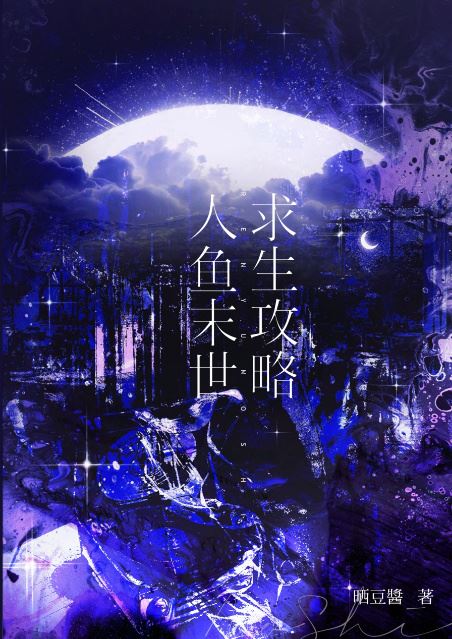
... Read More
There's something so hauntingly beautiful about the lighthouse as a setting in this whole thing. Think about it — a tower of light in the foggy sea, guiding sailors home while standing vulnerable against the roar of waves. When they settle down for the night sleeping on the floor, the lighthouse beams become "a guiding star in the foggy sea." That line alone gives me chills every time. The author really understands how to make a location feel like a character. Outside, the fog is thick, threatening, hiding all those fishing boats and cargo ships. Inside, there's this fragile warmth between Mo An, Xia Yu, and Mi Dou. The contrast is everything. And then there's the sea itself. It's never just water — it's alive, it's dangerous, it's where Mo An's people live. When Talos carries the little mermaid to the window and Mo An stops struggling to stare into the fog, you can feel the pull. The sea is home and threat all at once. What I love is how specific the author gets with sensory details. The sea breeze streaming through the window, the dark red wound on Mo An's inner thighs after the transformation, the lighthouse beam cutting through fog. These aren't just decorations — they ground you in a world that feels tangible and real. The Black Sea port mentioned as a gathering place for sirens adds another layer too, making the world feel larger than just this one lighthouse. You start imagining all these different locations waiting to be explored. Honestly, this is the kind of world-building that makes you want to trace the map in your head.

Leave a comment

You must be logged in to leave comments. or
