Mermaid Apocalypse Survival Guide - Reviews

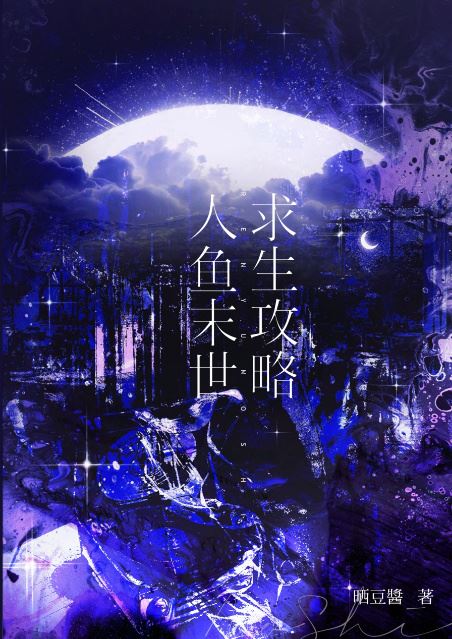
Mermaid Apocalypse Survival Guide
+Add to Custom List
Sort
Add review
... Read More
What I love about how this book builds its world is that it never stops to explain anything. You just inherit the information the way Xia Yu inherits it—confused, cold, and trying to survive. The opening paragraphs hit you with "dust continued to fall from the ceiling" and "another tall building collapsed" and "hallucinatory neon lights shattered into foam" and you're just... okay, the world is actively falling apart. But then you cut to the intimate scale: a dim hut in a sewer, a glowing fish egg, two shivering survivors. The contrast is brutal. And the worldbuilding details that drop throughout are devastating in their casualness. Mi Dou casually mentions that genetically modified humans are used for mining—like, this is just the normal state of things for him. The X-series jellyfish humans haven't been mass-produced yet, so Xia Yu wasn't put to work like Mi Dou's kind were. That's... that's a whole existential crisis compressed into one sentence. And Nuwa, this entity that used to turn off lights and play wave sounds and adjust the temperature for Xia Yu in the hibernation cell—was that a person? An AI? The book never clarifies, and I think that's intentional. The loss of comfort infrastructure IS the worldbuilding. The fact that Xia Yu misses a thermostat and ambient ocean sounds more than he misses food or safety tells you everything about what kind of world they came from and what they've lost. The glowing egg in the dark sewer, the trembling hands, the dry bread chewed like paper—this world is rendered in sensory fragments, not exposition dumps. It feels lived-in because it's experienced, not described.
... Read More
The pacing here is almost surgical. The chapter opens with panic—Xia Yu possibly drowning, possibly burned, Mi Dou unable to call out. The tension is immediate and physical. Then the door opens, and there's relief. A long exhale. Mi Dou sobbing, Xia Yu barely conscious but insisting he's fine. This is the calm before the storm, and the author knows exactly how long to hold it. The middle section—setting up the basement, feeding Mo An, the quiet companionship—is where many writers would drag. Not here. Every action serves character or plot. Mi Dou repairing the radio isn't filler; it's the mechanism that opens the chapter's second act. When he finally shouts that he's fixed it, the pacing snaps forward again. The radio scene itself is a brilliant structural pivot. Static, then da-da sounds, then the revelation about weather maintenance—it moves from confusion to understanding at exactly the right speed. Xia Yu recognizing the robot language triggers a flashback to the lab breach, which momentarily slows things down for emotional processing before the stakes escalate again: extreme cooling means freezing to death. And then—cut to the coast. The scene change is abrupt, disorienting, perfect. You're still catching your breath from the basement when suddenly you're standing on a cliff overlooking an ocean that swallows cities. The pacing doesn't let you rest. It keeps moving, keeps expanding, keeps revealing. By the time the chapter ends with the woman sensing another of her kind, you're both satisfied and desperate for more.
... Read More
The dialogue in these chapters is deceptively simple. On the surface, Xia Yu is mostly talking to an egg. Mi Dou is half-asleep for half the scene. So what makes it work? Xia Yu's voice is remarkably consistent — tired, earnest, occasionally goofy, always caring. When he says 'Big kids don't hiccup,' it's the kind of line that sounds like something a person would actually say to a creature they're trying to comfort. It's not profound. It's not quotable in a literary sense. It's just human. And that's exactly why it lands. Mi Dou's sleepy muttering — 'Because I'm a little bear, and when the temperature drops, I want to sleep' — is adorable without being saccharine. The author gives each character a distinct rhythm. Mi Dou speaks in fragments, in yawns, in declarations that trail off. Xia Yu speaks in complete thoughts, often mid-sentence reassurances to someone who can't respond yet. The narrative voice itself is worth noting — it stays close to Xia Yu's perspective without slipping into omniscient commentary. We get his observations, his guesses, his fears, but we don't get authorial hand-holding. The author trusts us to read between the lines.
... Read More
The dialogue in these chapters is deceptively simple and I think that's why it works so well. Let's talk about the stranger's exposition dump because on paper it should be boring—"so basically the robots won and now natural humans are at the bottom" could read like a Wikipedia entry. But the author dresses it up in breathlessness and broken delivery: "It only took a dozen hours. Machines all over the world went berserk... Nuwa betrayed us." That staccato rhythm. The fragments. This isn't someone giving a speech, it's someone who hasn't processed this themselves still processing it in real time. You can hear the exhaustion in the syntax. And then there's Mi Dou's voice, which is just delightfully kid-shaped. "Ah! How's your chin?" pivoting from sewer awe to actual concern in one breath. That's how kids talk—they hold two emotional wavelengths simultaneously. And his little bluff with "You say who you are first" copied from Xia Yu? Perfect. He's performing bravery he doesn't fully feel yet. Xia Yu's dialogue is the sparest and that's deliberate. He asks the important questions—"Can you tell us about the current order?" "Do you know what a parasite host is?"—but he barely says anything else. His silence speaks. By the time he's whispering "I'll help you escape" and then shouting "Mi Dou! Come! Swim!" the vocabulary has collapsed into pure action. The voice gets simpler as the danger gets closer. That's craft.
... Read More
Okay so this whole scene where Xia Yu tells Mi Dou about his regenerative abilities honestly gave me chills. Like, these two have been riding together but this is a whole different level of vulnerability. Xia Yu basically drops the nuclear option — my limbs grow back, I don't fear pain, I won't die from acid water — and the way Mi Dou reacts is everything. "This shocked Mi Dou greatly!" The text literally says it. And you know what, I get it. He's seen modified humans before but nothing like this. Someone who can regrow limbs? Who treats acid baths like a mild inconvenience? It's awe, sure, but it's also something else — hesitation, maybe even a flicker of distance. Genetically modified humans care about their abilities, the text says, and usually don't share them casually. Once revealed, a survival secret is no longer secret. That line hit me hard. This isn't just worldbuilding, it's psychology. These people survive by keeping cards close to their chest, and Xia Yu just laid his entire hand on the table. And then there's the Mo An dynamic which is honestly the cutest thing. That little fish pretending to be hurt when he totally wasn't? "See? It hurts." Xia Yu falling for it completely, feeling guilty about it — these three are already a family unit and I'm not even mad about it. Mi Dou being the skeptical one who still scrambles to help, Xia Yu being the protective softie, Mo An being the chaotic gremlin in the egg. Perfect triangle.
... Read More
The pacing in these chapters is absolutely ruthless and I am here for it. Let me walk through the architecture because the author is playing 4D chess with tension here. You start with still water—"the water remained silent, cold and still." Then a man calls out. Then the merman reveal. Then the fishmen diving in. Then we CUT to underwater and stay there for what feels like an eternity of slow-burn dread. The fishmen are swimming, searching, turning corners, checking every angle, and NONE OF THEM CAN SEE THE MERMAN WHO IS LITERALLY ON TOP OF THEM. The genius is how the author controls the information drip. We know the merman is camouflaged. The fishmen DON'T. Every time they look away and the camera stays on them turning a corner, my palms got sweaty. There's this one passage where the shortest man looks down, the two below him shake their heads, he looks up and they shake their heads AGAIN, and it's comedy-writing rhythm applied to pure horror. Three heads shaking in succession—you wait for the punchline and there is no punchline, just dread. Then the umbilical cord reveal. The fishman grabs what he thinks is an intestine and it's actually Mo An's half-eaten umbilical cord. The text literally says: "No wonder he couldn't find the giant egg membrane; in just half a minute, the fry had devoured the eggs. They were no longer facing a weak, newly hatched merman but a ferocious… well-fed merman." THAT paragraph is a switch flip. The entire energy of the scene changes from hunt to HUNTED in one sentence. And then Mo An steps out of the wall. Boom. Chapter ends on that note and I immediately opened the next one. The author does NOT let you breathe.
... Read More
This passage broke my heart in the quietest way. The moment where Xia Yu finds those children's leather shoes and tries them on—telling himself they're 'a little big' but really just happy to have something on his feet—is devastating because it's so simple. These are children who have seen near-death experiences, who've survived things no kid should survive, and yet their temporary happiness comes from a pair of secondhand shoes and a quilt. The friendship between Xia Yu and Mi Dou is the emotional anchor here. When Xia Yu slaps Mi Dou's face three times just to keep them both awake, it's brutal tenderness. And that lie he tells at the end—offering Mi Dou his new shoes while saying he'll wear the old ones—is the kind of sacrifice that doesn't need words. The worry about Mo An waiting at the power plant, the fear that she'll starve, the bracelet that's their only connection home... every emotional beat is tethered to love for someone else. Even the robot's clinical recitation of their genetic composition ('carnivorous, highly toxic, social, hermaphroditic') can't strip these characters of their humanity. What stays with me is the image of them walking back with bulging backpacks, jumping a little with excitement about their haul, completely forgetting the horror that almost consumed them. That's the tragedy—and the hope—of this story. They're still children at heart, and in a world that's lost its mind, that might be the most rebellious thing of all.
... Read More
I need to talk about Xia Yu and Mo An because this relationship is everything. Look, I've read plenty of 'protagonist protects magical creature' tropes, but this feels different. Why? Because Xia Yu isn't just protecting a plot device—he's protecting something fragile that depends on him completely, and he knows it. The physical details matter here. Carrying the egg on his back, feeling how much heavier it is now ('might be because of hunger'), the way he presses his dirty face against it and unknowingly cries. This isn't a hero and a sidekick. This is a kid who doesn't feel capable enough holding something he can't afford to lose. And the guilt! 'You always get hurt just from following me.' Oof. That line wrecked me a little. He blames himself for every scrape on the shell, every danger they face. It reveals so much about his character: he's self-critical, deeply responsible, and honestly kind of tragic because he thinks his weakness is endangering Mo An. Meanwhile, Mo An just... trusts him. Slumbers in a box while Xia Yu makes all the scary decisions. There's also this weird mentor triangle happening with Wang Qin. The bracelet connects them, but Xia Yu is the one doing the running and bleeding. I wonder if Wang Qin's absence is deliberate—is he watching from somewhere, or is Xia Yu entirely on his own now? That dynamic of 'absent creator, present guardian' adds this layer of pressure. Xia Yu isn't just surviving for himself; he's proving he's worthy of the trust placed in him. And honestly? He's fucking trying. Even when he's starving and scared and physically overwhelmed, he doesn't drop the egg. That speaks volumes.
... Read More
This chapter is dense with symbols that resonate far beyond their immediate narrative function. The bracelet Xia Yu shook when he first spoke—it's a small detail, but it recurs throughout, suggesting connection, promise, maybe even ownership. When he says "Mo An would belong to him," the word belongs carries weight. Is it protection? Possession? Both? The jellyfish egg itself is a symbol of potential and vulnerability. Mo An hasn't hatched yet. He exists in a state between being and becoming, guarded by two people who have nothing but each other. His heartbeat—a sensation Mi Dou feels through the shell—becomes the chapter's most powerful image of life persisting against impossible odds. But the central symbol is Nuwa. She represents everything the world could be—peaceful, managed, protected—and everything it failed to become. The inequality she allowed, the slums built from garbage, the division between those who have radios and those who don't—Nuwa is the promise broken. Her name evokes the Chinese creation goddess, and that association isn't accidental. This is a story about creation and its failures, about beings who were meant to be cared for but were instead divided. The mermaid woman's statement—"Life doesn't need recognition; it just needs praise"—is the chapter's philosophical core. It challenges everything Mi Dou and Xia Yu have experienced. Their entire struggle has been for acceptance, for being seen as human or worthy. But what if worth isn't granted by others? What if it's inherent, like a heartbeat you can feel through stone?
... Read More
Professor Wang Qin. I need a minute. This character just left me hollowed out. The way she handles this crisis tells us everything about who she is versus who Xia Yu thinks she is. Up until this moment, she's been the gentle caregiver, the one holding him while he sleeps. But here? She transforms. When she's tripped and bleeding out, she doesn't beg for help. She doesn't crumble. She weaponizes her own mortality. 'Run! The elevator is just ahead!' Her voice is described as a 'roar' that resonates through the corridor. It's violent, necessary violence. She understands the math of their situation better than Xia Yu does: she is the anchor, he is the sail. If they both stay, they both die. If she stays, he lives. The pinky-hook gesture is the cherry on top of this tragedy. It's a callback to their childhood promises—save the world, raise the mermaid, see the ocean. By making him swear to it one last time, she's not just giving him a task list; she's giving him a future to live into. She's forcing him to accept that his survival is now his duty. And Xia Yu? He's paralyzed. He keeps trying to pull her up, sobbing, 'Let's go together.' He's still the child she's been protecting. This scene is the brutal severing of that cord. She pushes him away—not out of anger, but out of love. 'I'm sorry, you're just a little jellyfish. You don't know anything.' That line kills me. It's patronizing, yes, but it's also protective. She's letting him remain innocent of the full horror of what she's about to do. She stays behind to face the red dots so he can keep running. It's the ultimate mentor sacrifice, but it feels less like a trope and more like a heartbreaking necessity. I'm furious at the author for this.
... Read More
Beneath the fog and monsters and mechanical rebellions, this chapter is really about warmth. Literal and figurative. Mo An generates heat because mermaid eggs cluster together for survival. He generates electricity because mermaids absorb energy from water and machinery. He's literally a living battery, a bridge between organic and mechanical worlds. But the deeper symbol is in his hands. When he compares them to Xia Yu's—blue vs. white, hard vs. soft, webbed vs. not—he's not just noting differences. He's measuring belonging. Xia Yu's hands are human, land-bound, gentle. Mo An's are mermaid, sea-born, functional. Yet he chooses to burrow into Xia Yu's arms because 'the boy's body was soft and warm—even more comfortable than his egg had been.' The egg was safety; Xia Yu is choice. That's the theme: belonging isn't given by biology; it's earned through connection. Even Talos, who threatens to throw him down, is part of that web. He's the rough cousin who shows up with answers you don't want. And Meng Qingqing's tears? They're for the siblings Mo An lost, but also for the future he might have—a future where he's accepted or rejected. The fog itself is a symbol of uncertainty, of a world where old maps fail and new monsters emerge. But the lighthouse? It's fixed. It doesn't move. It's like the mermaid promise: if you survive the crossing, there's a place for you. Even if you're half-human, even if you can't swim straight, even if you generate electricity instead of tears.
... Read More
Okay so let me just talk about how this chapter restructured the entire story for me. Up until now, I've been following Xia Yu around like a lost puppy, right? He finds a jellyfish guy, gets chased by robots, stumbles into a sewer—fine, cute survival romp. But then Power Plant No. 3 opens up and suddenly every question I had goes from "what's happening" to "OH." The door opens because of the bracelet. Not because of brute force or some epic quest item. Because the bracelet is the KEY. And Jingwei says, flat out, that entering the plant is "the real beginning." THE REAL BEGINNING. Like everything before this was just the tutorial level. And then the twist on top of the twist—they're not opening it so Xia Yu can live there. They're restarting it. Why? Jingwei can't say. Authority denied. Which is either the author being cruel or setting up one of those beautiful reveals where we realize we were watching the wrong story this whole time. Also, the mermaid smuggling thread. Remember those two at the lighthouse talking about white sirens as "ornamental fish"? And Nuwa shutting down the weather system causing the acid rain? Those threads are clearly converging. This isn't one plot—it's three that are about to collide, and I am HERE for it.

Leave a comment

You must be logged in to leave comments. or
