Learning Romance Through Writing - Reviews

Learning Romance Through Writing
+Add to Custom List
Sort
Add review
... Read More
I need a minute. Just let me sit with this. Ian. Calrod. Edelrof Calrod Eliza Ian — which Jane absolutely calls out as an obviously fake name, and honestly she's not wrong, but the man is so smug about it that I can't even stay mad. He sits there sipping five-gold-coin tea like he hasn't just weaponized ancient law against a woman who threw his letters into a fireplace because she thought they were trash. What I love about this character is the complete lack of self-awareness about how terrifying he comes across. When Jane storms out of her chair and yells about the 80% interest rate, Ian doesn't flinch. He doesn't get angry. He smiles. He says "Kidding? Jane, you'd be surprised if you knew how serious I am right now." Sir. SIR. You are a menace to society and also I cannot look away from you. But the real genius is the push-and-pull dynamic between these two. Jane is fiercely intelligent and she knows she's being played, but she's also trapped by circumstances — debt, fallen nobility, the weight of her mother's legacy (Olivia). And Ian? He knows she's smart. He's been reading her books. He's tracked her career, her choices, her every move. There's something almost intimate about how thoroughly he's studied her, even if he's doing it for selfish reasons. There's a scene where Jane's hairpin breaks and her golden hair cascades down at the worst possible moment. She's flustered, scrambling to gather it, and Ian watches her without mocking her. No one should have this much power over someone and then just... not use it cruelly. It throws you off. You start rooting for the villain's side instead of the hero's because he's the only one who seems to take Jane seriously as an equal. "If you do that, you'll have to bear 80% monthly interest." That's a threat. But he says it the same way someone might say "I'd recommend against the espresso." The casual cruelty is so calibrated that I don't even know if he's malicious or just genuinely enjoys watching Jane squirm. Either way, their dynamic has this razor wire tension where every word exchanged is a negotiation, a power play, and secretly, maybe something else. I keep waiting for Ian to slip up and reveal genuine feeling underneath that calculated exterior. He's too composed, too prepared, too eager. Suspiciously eager. For someone who claims he won't explain until the contract is signed, he sure does a lot of explaining while they're talking around each other like two boxers circling the ring. This is going to end badly. I can feel it. But also — I will absolutely read the next 200 chapters even if it destroys me.
... Read More
So Ian's plan gets rejected by basically everyone in one meeting and he just... bounces back like it's Tuesday? The woman is eating cookies, unbothered, and he's already planning his next move. When he says 'Have I ever failed?' it's either the most confident line in the book or the most concerning one, I can't decide. The Generald situation is the kind of setup that makes you lean forward. A former High Priest hiding for three years in the land of monsters—of course he survived, because Ian himself pointed out that persuasion is his real power. And now he's heading North toward the Crown of the Goddess, which brought the dead back to life. The implications are absolutely massive. If Generald gets his hands on it, we're talking about someone who could literally cheat death, and he's already proven he can manipulate entire populations. Ian's theory about Olivia's novel threatening the Ports family instead of the Holy Scripture itself is the kind of clever maneuvering I live for. He's not trying to destroy a thousand-year-old institution—he's just making the people who hide behind it feel unsafe. That's chess, not checkers. But the real plot twist is Jane. Here's this woman who signed some contract she probably didn't fully understand, who's drowning in debt and considering fleeing the country, and the text drops that everyone thinks she's 'a magical artifact that spits out money.' She's not just a debtor—she's apparently a walking goldmine that everyone wants to control. Ian needs her novel, the Ports family presumably has reasons to stay hidden, and Generald is going North like he knows something nobody else does. Three separate storylines orbiting around power, debt, and hidden knowledge. They're all converging and I have a very strong feeling Chapter 2.4 is just the calm before everything explodes.
... Read More
'Narrow and dark, located in the deepest part of El's Maze, a place even most citizens of the capital avoided.' This one sentence built an entire world. I can SMELL that tavern. Cheap moonshine, worn wood, the kind of establishment where people go to disappear and Rick is just... there, pouring drinks and internally questioning his life choices. The atmosphere in these chapters is just *perfect*. You've got this opulent political scheming happening somewhere—dukes and queens discussing divine relics and military strategy—and then you cut to Rick's bar where a woman is arguing with a bartender about closing time while literally teetering on the edge of a breakdown. The contrast is everything. And that scene where Ian walks in and the tavern seems to hold its breath? Rick subtly moving away, the cloaked man who'd been sitting silently, Jane laughing at absolutely nothing—all of it creates this thick, suffocating tension. The bar itself becomes a character. It's the kind of place where someone COULD die and Rick would just swipe the blood off the floor and pour another drink. He literally says he has no intention of cleaning up a corpse, which is the funniest understatement in modern literature. Then Ian takes that first sip of moonshine and his face twists like he's been poisoned. From 'pitch black hair and red eyes, an incredibly handsome man' to coughing like he's choking on his own dignity in three seconds flat. The man who commands entire armies got absolutely wrecked by unrefined alcohol in a dive bar. Some atmospheres just swallow people whole.
... Read More
The pacing in these chapters is doing something really interesting that I want to unpack. It opens with what could be a comedy beat—Vivianne getting lost in an emotional 'Mary and Marianne' moment with Jane, Ian tactlessly trying to separate them and getting glared at by BOTH women. This is LIGHT. It's almost sitcom energy. And then it pivots HARD into Ian asking Jane to write something more famous than the Goddess. The whiplash is intentional and it works because we need that comedic pressure release before the emotional bomb drops. After the big 'write a story more famous than the Goddess' moment, the chapter doesn't stay on that high note. It deflates. We get the two-hour argument about staying at the mansion, the Jonian contract dispute, the chocolate maneuver. The emotional peak is followed by mundane negotiation, which makes the peak feel even more earned because the chapter isn't trying to keep us hyped the whole time. What's clever is the section break (the ***). The author uses it to signal that while the deal is technically struck, problems remain. It's a micro-cliffhanger that says 'yes she got the deal but now what?' which propels us forward without being dramatic about it. And ending on Ian beginning to critique her novel's depiction of Elpendor society? That's a perfect hook. It's both a craft note AND a power play, and it leaves us wanting to know what Jane will say next. The author knows exactly when to tighten the screw and when to let it breathe.
... Read More
Okay so let me talk about one specific moment because I think the author is a visionary. Jane is in the middle of this high-stakes confrontation with Ian, who's essentially blackmailing her with a debt that doesn't exist in any form that makes rational sense, and her hairpin SNAPS. Right then. Not during a quiet moment. Not in private. During the single most important negotiation of her life, her hair falls down like a cinematic betrayal and she has to fumble to gather it while Ian watches with what I can only describe as amused detachment. This is THE moment where the pacing of the entire scene shifts. Up until that point, it's been fast — quick dialogue exchanges, sharp retorts, Ian dropping information bombs, Jane firing back. It's got the rhythm of a verbal sparring match, breathless and relentless. And then — click. Something breaks. Her hair, her composure, the carefully constructed armor she's been wearing since she walked into that office. I think what makes this scene work so well is that the author uses physical detail to punctuate psychological beats. Every time Jane tries to regain the upper hand — calling out his fake name, refusing to sign without knowing his identity, turning his own threat back on him — there's a small collapse that undercuts her confidence. The hairpin breaking isn't random comedy. It's the story telling us, in plain language, that this woman is running on fumes. She's exhausted, she's cornered, and the universe is reminding her of it with maximum dramatic timing. The chapter endings are also surgical. You finish one exchange and immediately you're thrown into the next. There's no breathing room, no filler descriptions of the wallpaper or the weather. Even the exposition about Ancient Jonian and debt law is woven into dialogue — Ian explains the legal technicalities while Jane is having an internal meltdown about her mother's name being used as a pen name. Two tracks running simultaneously. My only minor complaint: the transition between Chapter 1.5 and 1.6 feels slightly jarring. You're in one argument and then suddenly you're in another with no clear spatial or temporal marker. But honestly? That's also kind of the point, isn't it? Jane's life is chaos. The narrative structure mirrors her internal state. So maybe the jarring transitions are intentional. Maybe the author is saying: this is what it feels like to be outmaneuvered. Time blurs. Arguments loop. Nothing lands the way you planned.
... Read More
Okay, can we just take a moment for this drunk girl and this smug Duke because WOW. Jane is absolutely losing her mind but somehow still roasting everyone around her like a pro, and Ian? Ian keeps getting pulled off his high horse and honestly it's beautiful. The scene where she just... takes his glass and drinks it because he won't finish it? I SCREAMED. She's dead broke, standing on the edge of bankruptcy and disgrace, and she's roasting HIM for having an informal tone. Duke Hixston himself, reduced to being told his manner of speaking is 'a bit informal.' And then she calls him 'shameless' and compares him to a villain and he just... accepts it? But the real goldmine is Ian's internal monologue when he realizes she might not actually be drunk. He describes those eyes—'as if he were trash'—and for once, this guy who never fails, who never doubts himself, he HESITATES. He even asks 'Is that too harsh?' Like actually considers moderating his approach. This is a man who literally says 'Have I ever failed?' in his head, caught off guard by a woman who can barely stand on her own two feet after ten drinks. And Jane calling him 'a somewhat funny villain'? She already decided his role in her story before they even started talking. She's reading people like novels. How ironic that she's writing the most entertaining character interactions of the book while pretending she wants to escape it all. The Vivianne-Ian dynamic is also doing so much heavy lifting. She eats the cookies Jane abandoned while watching him fail. She's the only person who can tell him 'but she refused, didn't she?' and actually mean it as a genuine concern rather than opposition. And that ending thought—how failing once wouldn't be so bad—that's not just observation, that's someone who cares about this rigid man enough to want him softer.
... Read More
The line that stopped me cold in this whole chapter is Jane's drunken rambling: "The goddess fell, so maybe it's the villain's turn to fall." This is not just a drunk person making metaphors. This is the author—within the story—articulating the entire thematic architecture of what's happening. The goddess (who?) fell. The villain (Ian) is next. And the mechanism of his fall isn't a sword or a battle—it's a contract. A piece of paper. A negotiation at a bar. Let me unpack the symbolism because there's so much happening beneath the surface. Alcohol is the great equalizer here. Jane drinks herself into honesty. Ian drinks himself into recklessness. The cheap moonshine tastes awful but its high alcohol content makes it "perfect for doing something crazy." Drink as catalyst. Drink as truth serum. This is a recurring motif—what happens when people stop performing their social roles and start being themselves. Jane's true self is brutal and funny and scared. Ian's true self is... well, we barely see it yet, but the glimpses are telling. The contract itself is a massive symbol. It represents choice versus coercion. Ian is offering Jane a deal that sounds like salvation but functions as imprisonment. Twenty, then thirty gold coins a month. Housing, food, clothing, debt forgiven. The terms sound generous but the condition—residing in Hixston—means she's bound to him geographically, legally, and increasingly emotionally. A contract is supposed to protect both parties equally. In romantic fiction, it's almost always a metaphor for entanglement. You sign away something you didn't know you had. And Jane signs anyway. "Life is a gamble." She knows it. We know it. The book knows it. She's choosing the cage because the alternative—running away, forging documents, crossing borders—seems impossible. The contract isn't just a plot device; it's the physical manifestation of the theme: freedom versus security, independence versus connection, self-reliance versus surrender. The eyes symbolism is inseparable from all of this. Jane claims her eyes are broken. Ian is transfixed by them. They're described as green within pitch-black pupils, his image blurred within them. Eyes as windows, eyes as mirrors, eyes as sites of power and vulnerability. When Ian says he won't fall for her beautiful eyes, he's lying. He already has. The eyes are where recognition happens—where one character truly sees another. That's romantic, yes, but it's also terrifying for people who've built walls around themselves. Then there's the luxury duvet with golden embroidery that Jane notices immediately upon waking. White duvet = purity, innocence, a blank page. Golden embroidery = wealth, power, gilding the lily. She's waking up in the villain's world, wrapped in his symbols. The contrast between her drab, debt-plagued existence and this opulent unfamiliarity is the visual representation of her life changing irrevocably. The publishing industry exploitation angle is the most quietly powerful theme here. One shilling per book sold. A hit novel that doesn't pay. This isn't just backstory—it's systemic critique wrapped in a romance novel. Jane's economic precarity makes her vulnerable to Ian's offer. Her poverty is the plot mechanism that makes the contract possible. The author is showing us that romance, like any relationship, doesn't happen in a vacuum. It happens between people with different amounts of power, different resources, different reasons for saying yes. And the ending—Olivia showing up, Jane not remembering the night, the blacked-out hours—this reinforces the theme of lost agency. Jane signed the contract while drunk. Did she truly consent? Or did Ian exploit her vulnerable state? The text invites us to ask this without answering it. That ambiguity is the whole point. Romance and manipulation occupy the same spectrum, and the distance between them is sometimes just one good night's sleep. The title reference—"Understanding Misunderstandings"—isn't accidental. Everything in this chapter is a misunderstanding waiting to be understood. The goddess fell. The villain rises. The author signs. The reader watches. And somewhere in all of it, love is happening despite everyone's best efforts to prevent it.
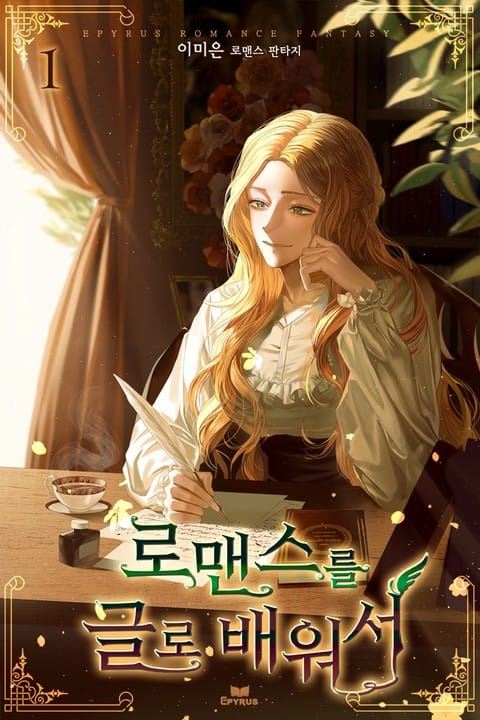
... Read More
I need to talk about this moment. Just this one moment. Ian steps on the Holy Scripture with his foot, holds Jane's delicate hand, looks into her eyes, and says: "I want you to write a story more famous than the Goddess, Jane." I am not okay. Let me break down why this is such a brilliantly constructed turning point in the plot. Up until this point, Jane has internalized this idea that novels are worthless—just quick money, time-killing fluff, not something to build a life on. Her editor literally told her this for over an hour. And then Ian arrives and tells her she's going to create something that makes the entire continent KNEEL for Elpendor not because of divine blessing but because of STORY. The structure of his argument is genuinely genius from a plot perspective. He doesn't say novels are ART. He doesn't appeal to literary merit. He says: people will STOMP their feet waiting for the next chapter. Merchants will fold the page carefully. Children will beg their fathers. Even in the furthest countries they'll demand trains deliver the newspaper. He's selling her on REACH, not prestige, and it works BECAUSE it's the truth and because he means it. And then right after this huge emotional moment, the scene just... pivots. They negotiate her room, she complains about the Jonian contract, he offers chocolate, and THEN brings up that her depiction of aristocratic society is shallow. The tonal shift from epic to mundane is so deliberate it hurts. Also: that opening with Vivianne almost confessing she knows Jane is the author of Understanding Misunderstandings? That's planted and it hasn't been resolved yet. Three pages in and I already have theories.
... Read More
There's something deeply unsettling about the Great Temple scene that I can't shake. On the surface it's just opulence porn — marble floors, ivory pillars, a golden ceiling. But every detail Ian mentions screams decay underneath. The statue of the Goddess has NO crown, NO scepter, NO jewelry. Everything sacred was either stolen a century ago or looted by the High Priest when he fled three years ago. A building this magnificent standing completely naked, dressed in nothing but its own architecture. That's not a temple — that's a tomb for something that already died. And the Crown of the Goddess supposedly having the power to bring the dead back to life? That lore hangs over everything like a dark promise. The High Priest didn't just steal religious artifacts — he stole the only thing that could undo his own cowardice. He ran because he couldn't face consequences, and now he's probably still running with a crown that couldn't save him from himself. Meanwhile Ian is using all this decayed sacred infrastructure as a backdrop to stage-manage Jane's career. He brought her to a hollow temple to show her a country 'worth dreaming of.' The irony is so thick you could cut it with a knife. Elpendor itself is this gilded shell — beautiful from the outside, missing its sacred center, held together by people like Ian who know how to play the system. The Temple isn't just a setting. It's the thesis statement.
... Read More
"What on earth had she been thinking? No matter how hard he tried to understand, he couldn't. Annoyed, Ian was just about to rise from his seat when—Bang!" This moment. This exact moment. Ian Hixston—the man who plans, who calculates, who never fails—is caught completely off guard. And not just mildly inconvenienced. His entire scheme, weeks of preparation, is rendered useless because Jane made a choice he didn't predict. She chose self-destruction over submission. And that terrifies him more than any rebellion ever could. Because here's the thing: if Jane had signed, Olivia would have been delivered, Generald would have been drawn out, and everything would have proceeded according to plan. But now? Now Jane is OUT THERE, running, possibly forging new identities, possibly exposing secrets she swore to keep. And Hixston doesn't know where she is or what she'll do next. The stakes just shifted. It's no longer just about using Olivia as bait. It's about a woman who refuses to be used, a woman who would rather burn everything down than play along. And that makes her infinitely more dangerous than a debtor who signs a contract. I'm not sure who I'm more worried about—Jane or the people around her. Because when someone like Hixston loses, they don't just accept it. They rebuild. They retaliate. And Jane is running straight into the crossfire.
... Read More
Okay so let me just say this part where Vivianne grabs Jane's hand and says 'status doesn't matter when it comes to friendship' and then drops that whole quote about suppressing the first and last emotion of one's life—I literally stopped reading and stared at my phone. The way these two women connect? It's so sudden but also so earned. They just *get* each other. And Jane's response, calling her 'Vivianne' instead of 'Grand Duchess Alister'? That's not just polite, that's a choice. She's saying I see you, not your title. But the real emotional electricity is between Jane and Ian. Like, read the carriage scene again. 'Her long hair cascaded down like a waterfall, following the tilt of her head. Without even bothering to fix it, she supported herself with one arm and extended her other hand toward Ian.' He couldn't take her hand. He was caught off guard. This man who controls everything around him—this Duke who moves people like chess pieces—gets completely disarmed by a woman who refuses to play by his rules. That's the chemistry right there. Not a single romantic moment and yet I'm screaming. And then Ian rubbing his forehead like 'I have a bad feeling' when he introduces them? Bro really knows he just handed a loaded weapon to another loaded weapon. I need this trilogy yesterday.
... Read More
Okay so let me just say this—I absolutely lost it when Jane's gaze went from Vivianne's shoulder down to Ian's outfit and realized WHO this guy actually was. Like she's sitting there half-dead from a hangover and BAM, the Duke of Hixston. That moment when she internally screams D*mn it? Chef's kiss. The power dynamic here is everything. She thinks she's dealing with some guild folks who pulled a fast one, but turns out she's been drinking with nobility this whole time. And Ian? The man is shameless. I love him. He admits to being part of a family famous for shamelessness like it's a badge of honor. "It's a lineage of people who prioritize their desires and impulses above all else"—this line made me laugh out loud because he literally just confirmed he's manipulating her and is proud of it. What I find genuinely fascinating is how Jane handles herself despite having zero memory of the night before. She's hungover, confused, and still somehow保持着最后的体面. She doesn't panic or beg. She just sits there calculating and then immediately tries to negotiate. The fact that she considers grabbing him by the collar at one point? That's not someone who folds easily. And Ian clearly respects that because he's not treating her like some damsel—he's pushing her to take his hand like she's an equal in this negotiation, even if the terms are stacked against her.

Leave a comment

You must be logged in to leave comments. or
