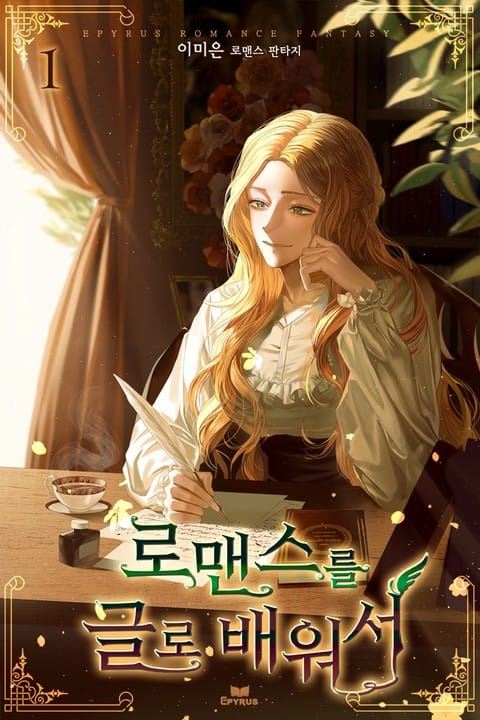
Learning Romance Through Writing
Novel Info
  • Author:
  • Status:Ongoing

Summary

... Read More

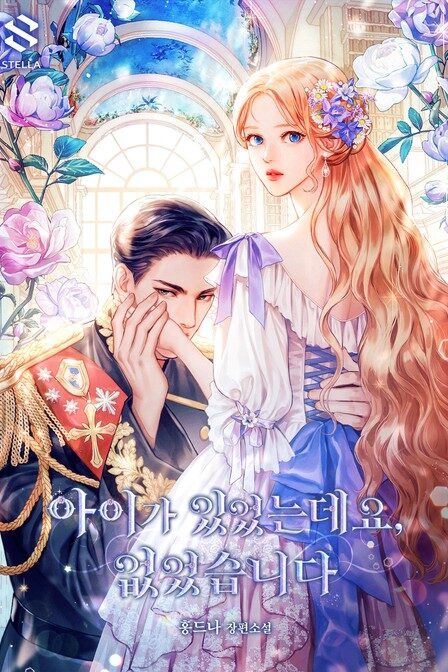
Jane Wilston is a fallen noblewoman in the Empire of Elpendor who survives by writing popular romance novels under the pen name Olivia. Burdened with generational debt from her disgraced family, she works as a secretary while secretly publishing her works to pay off creditors. Her life takes a dramatic turn when she receives a letter from Calrod Guild, a loan shark operation that has acquired her family's debt. Upon investigation, Jane discovers that Calrod is a front operated by Ian Renschtein Hixston, the infamous Duke of the powerful Hixston family. Ian reveals that his true motivation is not money, but rather his fascination with Jane's literary alter ego, Olivia. He proposes a contract that would erase her massive debt in exchange for her collaboration on a new project.

The core conflict arises from the clash between Jane's desire for independence and Ian's calculated manipulation. Ian orchestrates a scheme to force Jane into a partnership, using legal loopholes to impose an astronomical 80% monthly interest rate if she refuses. Jane, recognizing the danger of entangling herself with the Hixston family, initially attempts to flee the capital. She seeks the help of Rick, a tavern owner with underworld connections, to forge new identities and escape the Empire. However, Ian anticipates her move and intercepts her at Rick's tavern, leading to a tense confrontation where he demonstrates his superior resources and determination.

A key turning point occurs when Ian reveals the deeper political stakes behind his actions. He explains that his interest in Olivia is tied to a larger conspiracy involving the fall of the Great Temple and the disappearance of divine relics. A fugitive former High Priest named Generald and the rival Ports family are actively seeking power, and Ian believes Olivia's writings can serve as a psychological weapon to disrupt their plans. The narrative establishes that the literary world and political intrigue are inextricably linked, with Olivia's stories having unforeseen influence over the empire's factions.

As the story progresses, Jane is drawn deeper into Ian's world. Despite her resistance, she finds herself unable to completely sever ties with the Duke. The dynamic between them evolves from adversarial to a complex alliance, with Jane leveraging her wit to negotiate terms that protect her remaining autonomy. Ian, in turn, begins to acknowledge Jane's intelligence and resilience, shifting from viewing her merely as a tool to respecting her as an equal partner in his schemes. The plot thickens as threats from the Ports family and Generald's agents materialize, forcing Jane and Ian to cooperate more closely than either intended.

The story direction points toward a convergence of personal and political resolutions. Jane must confront the legacy of her noble past while forging a new identity as Olivia, a role that has become increasingly dangerous due to Ian's involvement. Meanwhile, Ian faces pressure from the young Queen and his own peers to deliver results against the rising threat of Generald. The narrative sets the stage for a struggle that will test Jane's courage and Ian's strategic prowess, as they navigate a landscape where literature, debt, and power intertwine. Their relationship remains fraught with tension, balancing mutual attraction against the distrust born from their conflicting interests and backgrounds.

Themes of class disparity and personal agency permeate the storyline. Jane's journey from a indebted secretary to a central figure in imperial politics highlights her transformation and resilience. Ian's characterization as a pragmatic duke willing to bend rules for a greater goal adds moral complexity to his actions. The supporting cast, including the loyal Vivianne and the street-smart Rick, provides contrast and assistance, enriching the narrative tapestry. As external pressures mount, the protagonists are forced to rely on each other, suggesting that their eventual success depends on bridging the gap between their disparate worlds.

The conclusion of this arc leaves Jane at a crossroads. With her debt hanging over her head and her secret identity exposed to one of the empire's most powerful men, her future is uncertain. Yet, the prospect of fighting back against those who seek to exploit her gives her a renewed sense of purpose. Ian's relentless pursuit of Olivia indicates that he sees potential in her that extends beyond her writing. Their interaction becomes a catalyst for change, not only in their personal lives but potentially in the political fabric of Elpendor itself. The story builds toward a climax where literary creation becomes a battlefield, and Jane's voice emerges as a powerful force against oppression and conspiracy.

Latest Release
DateGroupRelease
2026-10-03dusk blossoms c56
2026-10-03dusk blossoms c55
2026-10-03dusk blossoms c54
2026-10-03dusk blossoms c53
2026-10-03dusk blossoms c52
2026-10-03dusk blossoms c51
2026-10-03dusk blossoms c50
2026-10-03dusk blossoms c49
2026-10-03dusk blossoms c48
2026-10-03dusk blossoms c47
2026-10-03dusk blossoms c46
2026-10-03dusk blossoms c45

Community Reviews

Rating(0 / 5.0, 37votes)
5 stars
0(0%)
4 stars
0(0%)
3 stars
0(0%)
2 stars
0(0%)
1 stars
0(0%)

Popular reviews

... Read More
I need a minute. Just let me sit with this. Ian. Calrod. Edelrof Calrod Eliza Ian — which Jane absolutely calls out as an obviously fake name, and honestly she's not wrong, but the man is so smug about it that I can't even stay mad. He sits there sipping five-gold-coin tea like he hasn't just weaponized ancient law against a woman who threw his letters into a fireplace because she thought they were trash. What I love about this character is the complete lack of self-awareness about how terrifying he comes across. When Jane storms out of her chair and yells about the 80% interest rate, Ian doesn't flinch. He doesn't get angry. He smiles. He says "Kidding? Jane, you'd be surprised if you knew how serious I am right now." Sir. SIR. You are a menace to society and also I cannot look away from you. But the real genius is the push-and-pull dynamic between these two. Jane is fiercely intelligent and she knows she's being played, but she's also trapped by circumstances — debt, fallen nobility, the weight of her mother's legacy (Olivia). And Ian? He knows she's smart. He's been reading her books. He's tracked her career, her choices, her every move. There's something almost intimate about how thoroughly he's studied her, even if he's doing it for selfish reasons. There's a scene where Jane's hairpin breaks and her golden hair cascades down at the worst possible moment. She's flustered, scrambling to gather it, and Ian watches her without mocking her. No one should have this much power over someone and then just... not use it cruelly. It throws you off. You start rooting for the villain's side instead of the hero's because he's the only one who seems to take Jane seriously as an equal. "If you do that, you'll have to bear 80% monthly interest." That's a threat. But he says it the same way someone might say "I'd recommend against the espresso." The casual cruelty is so calibrated that I don't even know if he's malicious or just genuinely enjoys watching Jane squirm. Either way, their dynamic has this razor wire tension where every word exchanged is a negotiation, a power play, and secretly, maybe something else. I keep waiting for Ian to slip up and reveal genuine feeling underneath that calculated exterior. He's too composed, too prepared, too eager. Suspiciously eager. For someone who claims he won't explain until the contract is signed, he sure does a lot of explaining while they're talking around each other like two boxers circling the ring. This is going to end badly. I can feel it. But also — I will absolutely read the next 200 chapters even if it destroys me.
... Read More
So Ian's plan gets rejected by basically everyone in one meeting and he just... bounces back like it's Tuesday? The woman is eating cookies, unbothered, and he's already planning his next move. When he says 'Have I ever failed?' it's either the most confident line in the book or the most concerning one, I can't decide. The Generald situation is the kind of setup that makes you lean forward. A former High Priest hiding for three years in the land of monsters—of course he survived, because Ian himself pointed out that persuasion is his real power. And now he's heading North toward the Crown of the Goddess, which brought the dead back to life. The implications are absolutely massive. If Generald gets his hands on it, we're talking about someone who could literally cheat death, and he's already proven he can manipulate entire populations. Ian's theory about Olivia's novel threatening the Ports family instead of the Holy Scripture itself is the kind of clever maneuvering I live for. He's not trying to destroy a thousand-year-old institution—he's just making the people who hide behind it feel unsafe. That's chess, not checkers. But the real plot twist is Jane. Here's this woman who signed some contract she probably didn't fully understand, who's drowning in debt and considering fleeing the country, and the text drops that everyone thinks she's 'a magical artifact that spits out money.' She's not just a debtor—she's apparently a walking goldmine that everyone wants to control. Ian needs her novel, the Ports family presumably has reasons to stay hidden, and Generald is going North like he knows something nobody else does. Three separate storylines orbiting around power, debt, and hidden knowledge. They're all converging and I have a very strong feeling Chapter 2.4 is just the calm before everything explodes.
... Read More
'Narrow and dark, located in the deepest part of El's Maze, a place even most citizens of the capital avoided.' This one sentence built an entire world. I can SMELL that tavern. Cheap moonshine, worn wood, the kind of establishment where people go to disappear and Rick is just... there, pouring drinks and internally questioning his life choices. The atmosphere in these chapters is just *perfect*. You've got this opulent political scheming happening somewhere—dukes and queens discussing divine relics and military strategy—and then you cut to Rick's bar where a woman is arguing with a bartender about closing time while literally teetering on the edge of a breakdown. The contrast is everything. And that scene where Ian walks in and the tavern seems to hold its breath? Rick subtly moving away, the cloaked man who'd been sitting silently, Jane laughing at absolutely nothing—all of it creates this thick, suffocating tension. The bar itself becomes a character. It's the kind of place where someone COULD die and Rick would just swipe the blood off the floor and pour another drink. He literally says he has no intention of cleaning up a corpse, which is the funniest understatement in modern literature. Then Ian takes that first sip of moonshine and his face twists like he's been poisoned. From 'pitch black hair and red eyes, an incredibly handsome man' to coughing like he's choking on his own dignity in three seconds flat. The man who commands entire armies got absolutely wrecked by unrefined alcohol in a dive bar. Some atmospheres just swallow people whole.
... Read More
The pacing in these chapters is doing something really interesting that I want to unpack. It opens with what could be a comedy beat—Vivianne getting lost in an emotional 'Mary and Marianne' moment with Jane, Ian tactlessly trying to separate them and getting glared at by BOTH women. This is LIGHT. It's almost sitcom energy. And then it pivots HARD into Ian asking Jane to write something more famous than the Goddess. The whiplash is intentional and it works because we need that comedic pressure release before the emotional bomb drops. After the big 'write a story more famous than the Goddess' moment, the chapter doesn't stay on that high note. It deflates. We get the two-hour argument about staying at the mansion, the Jonian contract dispute, the chocolate maneuver. The emotional peak is followed by mundane negotiation, which makes the peak feel even more earned because the chapter isn't trying to keep us hyped the whole time. What's clever is the section break (the ***). The author uses it to signal that while the deal is technically struck, problems remain. It's a micro-cliffhanger that says 'yes she got the deal but now what?' which propels us forward without being dramatic about it. And ending on Ian beginning to critique her novel's depiction of Elpendor society? That's a perfect hook. It's both a craft note AND a power play, and it leaves us wanting to know what Jane will say next. The author knows exactly when to tighten the screw and when to let it breathe.
... Read More
Okay so let me talk about one specific moment because I think the author is a visionary. Jane is in the middle of this high-stakes confrontation with Ian, who's essentially blackmailing her with a debt that doesn't exist in any form that makes rational sense, and her hairpin SNAPS. Right then. Not during a quiet moment. Not in private. During the single most important negotiation of her life, her hair falls down like a cinematic betrayal and she has to fumble to gather it while Ian watches with what I can only describe as amused detachment. This is THE moment where the pacing of the entire scene shifts. Up until that point, it's been fast — quick dialogue exchanges, sharp retorts, Ian dropping information bombs, Jane firing back. It's got the rhythm of a verbal sparring match, breathless and relentless. And then — click. Something breaks. Her hair, her composure, the carefully constructed armor she's been wearing since she walked into that office. I think what makes this scene work so well is that the author uses physical detail to punctuate psychological beats. Every time Jane tries to regain the upper hand — calling out his fake name, refusing to sign without knowing his identity, turning his own threat back on him — there's a small collapse that undercuts her confidence. The hairpin breaking isn't random comedy. It's the story telling us, in plain language, that this woman is running on fumes. She's exhausted, she's cornered, and the universe is reminding her of it with maximum dramatic timing. The chapter endings are also surgical. You finish one exchange and immediately you're thrown into the next. There's no breathing room, no filler descriptions of the wallpaper or the weather. Even the exposition about Ancient Jonian and debt law is woven into dialogue — Ian explains the legal technicalities while Jane is having an internal meltdown about her mother's name being used as a pen name. Two tracks running simultaneously. My only minor complaint: the transition between Chapter 1.5 and 1.6 feels slightly jarring. You're in one argument and then suddenly you're in another with no clear spatial or temporal marker. But honestly? That's also kind of the point, isn't it? Jane's life is chaos. The narrative structure mirrors her internal state. So maybe the jarring transitions are intentional. Maybe the author is saying: this is what it feels like to be outmaneuvered. Time blurs. Arguments loop. Nothing lands the way you planned.
... Read More
Okay, can we just take a moment for this drunk girl and this smug Duke because WOW. Jane is absolutely losing her mind but somehow still roasting everyone around her like a pro, and Ian? Ian keeps getting pulled off his high horse and honestly it's beautiful. The scene where she just... takes his glass and drinks it because he won't finish it? I SCREAMED. She's dead broke, standing on the edge of bankruptcy and disgrace, and she's roasting HIM for having an informal tone. Duke Hixston himself, reduced to being told his manner of speaking is 'a bit informal.' And then she calls him 'shameless' and compares him to a villain and he just... accepts it? But the real goldmine is Ian's internal monologue when he realizes she might not actually be drunk. He describes those eyes—'as if he were trash'—and for once, this guy who never fails, who never doubts himself, he HESITATES. He even asks 'Is that too harsh?' Like actually considers moderating his approach. This is a man who literally says 'Have I ever failed?' in his head, caught off guard by a woman who can barely stand on her own two feet after ten drinks. And Jane calling him 'a somewhat funny villain'? She already decided his role in her story before they even started talking. She's reading people like novels. How ironic that she's writing the most entertaining character interactions of the book while pretending she wants to escape it all. The Vivianne-Ian dynamic is also doing so much heavy lifting. She eats the cookies Jane abandoned while watching him fail. She's the only person who can tell him 'but she refused, didn't she?' and actually mean it as a genuine concern rather than opposition. And that ending thought—how failing once wouldn't be so bad—that's not just observation, that's someone who cares about this rigid man enough to want him softer.
See all reviews

Custom lists

See all custom Lists