Let me talk about stakes, because this novel understands stakes on multiple levels simultaneously.
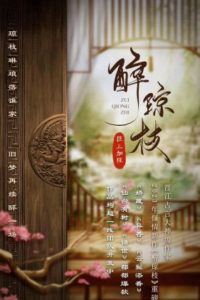
On the surface, the conflict is about a concubine. Yin Xuefang is coming into the household, and Chu Linlang is expected to accept it. But the author keeps pulling back the camera to reveal that this is never just about one woman entering another woman's marriage. The stakes are layered like an onion that makes you cry.
For Chu Linlang, the stakes are existential. She is an illegitimate daughter of a salt merchant. She married up, struggled through years of hardship, built a reputation for competence and loyalty, and still—still—she is considered expendable. The hundred-day mourning period detail she throws at Yin Xuefang isn't just knowledge; it's armor. She's using the rules of their society as a weapon because it's the only weapon she has.
For Zhou Sui'an, the stakes are about reputation and control. He's a magistrate. His family's status is fragile. His mother's plans threaten his authority as head of the household. But his personal stakes are deeper—he's caught between a wife who represents everything he's built (and finds exhausting) and a ghost from his past who represents everything he feels he's missing.
For Madam Zhao, the stakes are lineage. "Will you end the Zhou line?" she cries. This isn't just about having an heir—it's about her legacy, her power, her identity as matriarch. When she deliberately keeps Chu Linlang in the dark, she's not just being manipulative; she's asserting that her son's household is HER domain, and Chu Linlang is a tenant, not an owner.
The most terrifying moment in these chapters isn't the confrontation between husband and wife. It's the scene where Madam Zhao and Madam Liu discuss Chu Linlang behind her back, calling her "clever, but not refined," and Madam Liu says her daughter seeks "only true affection, children, and a kind mother-in-law." The contrast is brutal—Yin Xuefang is being positioned as the desirable alternative because she wants love, while Chu Linlang, who has given everything, is dismissed as a problem to be managed.
And the stakes keep rising. Because once Yin Xuefang enters the household, Chu Linlang's position becomes untenable. Not because she'll lose her husband's love—she already has. But because she'll lose her place. Her purpose. Her identity as the woman who held this family together.
What do they stand to lose? Everything. And the author makes you feel it at every turn.