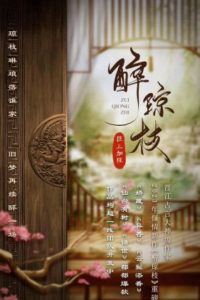
Intoxicating Jade Branch
Novel Info

Summary

... Read More

Chu Linlang, an illegitimate daughter of a Jianghuai salt merchant, endured a childhood of neglect and near-sale into concubinage before being rescued by Zhou Sui’an, a poor scholar who defied his family to marry her as his principal wife. Seven years into their marriage, Chu Linlang has transformed the Zhou household from destitution to prosperity through shrewd business management, yet she faces constant tension with her mother-in-law, Madam Zhao, who resents her low birth and childlessness. The central conflict ignites when Zhou Sui’an, newly appointed magistrate of Lianzhou, drunkenly slaps Zhang Xian, a powerful imperial censor, during a banquet. Fearing Zhang Xian’s revenge in the capital, Chu Linlang secretly intercepts Zhang’s sister-in-law, Madam Lin, and fabricates a forged account book implicating Zhang’s brother-in-law in grain embezzlement. She uses the document as leverage to force a mediation, successfully neutralizing the immediate threat through psychological manipulation rather than legal evidence.

Her gambit is interrupted when she accidentally rescues Liu Ling, the Sixth Prince, who is incognito and under assassination by local tyrants seeking revenge for his anti-corruption campaign. Chu Linlang seizes the prince’s carriage to save him, holding a hairpin to his throat in a moment of high tension that nearly results in her execution for assaulting royalty. The prince, charmed by her wit and beauty, pardons her, but the incident draws the attention of Situ Sheng, the prince’s enigmatic tutor. Situ Sheng discovers the forged account page Chu Linlang dropped and confronts her privately. Instead of exposing her, he tests her resolve, forcing her to swallow the evidence. He recognizes her accent from Jiangkou and a past connection to a salt merchant’s family, though she does not immediately recall him.

Domestic strife escalates when the Yin family, old friends of the Zhou household, arrives in Lianzhou. Yin Xuefang, a newly widowed woman of refined upbringing, is revealed to be Zhou Sui’an’s childhood sweetheart. Madam Zhao orchestrates the reunion, hoping Yin Xuefang will become a concubine to produce an heir and elevate the family’s cultural status. Zhou Sui’an, drawn to Yin Xuefang’s literary grace, secretly corresponds with her, viewing their bond as a pure intellectual connection distinct from his marriage. Chu Linlang, perceptive and jealous, uncovers the affair and confronts her husband. She outmaneuvers her mother-in-law by revealing that Yin Xuefang’s uncle serves under Prince Kang, a political rival of the Sixth Prince, thereby framing the marriage as a dangerous political liability rather than mere jealousy. Madam Zhao, fearing for her son’s career, abruptly cancels the union.

Despite resolving the concubine crisis, Chu Linlang’s relationship with Zhou Sui’an deteriorates. He retreats to the study, resentful of her interference, while she continues to support his official duties by providing him with intelligence gathered through her merchant networks. The story concludes with a new complication: Chu Linlang’s father, Chu Huaisheng, arrives in Lianzhou, claiming her mother is ill. This summons threatens to drag Chu Linlang back into the manipulative dynamics of her natal family, where her father seeks to exploit her husband’s official position for personal gain. Meanwhile, Situ Sheng’s lingering interest and the unresolved political tensions surrounding the Sixth Prince’s inspection suggest that Chu Linlang’s carefully constructed domestic peace is fragile and subject to the volatile forces of imperial politics.

Latest Release
DateGroupRelease
2026-08-11shanghai fantasy c90
2026-08-11shanghai fantasy c89
2026-08-11shanghai fantasy c88
2026-08-11shanghai fantasy c87
2026-08-11shanghai fantasy c86
2026-08-11shanghai fantasy c85
2026-08-11shanghai fantasy c84
2026-08-11shanghai fantasy c83
2026-08-11shanghai fantasy c82
2026-08-11shanghai fantasy c81
2026-08-11shanghai fantasy c80
2026-08-11shanghai fantasy c79

Community Reviews

Rating(4.1 / 5.0, 15votes)
5 stars
3(20%)
4 stars
10(67%)
3 stars
2(13%)
2 stars
0(0%)
1 stars
0(0%)

Popular reviews

... Read More
The pacing in these chapters is absolutely masterful, and I want to talk about how the author controls the tension like a musician controlling tempo. Chapter 6 opens with Zhou Sui'an rushing out to meet the Yin family, and Chu Linlang watching him go. The author doesn't tell us anything is wrong. She just gives us this single line: "watching Zhou Sui'an walk a little more hurriedly than usual." That's it. A slightly faster pace. But combined with the poem that suddenly occurs to her—someone who has never cared for poetry—it signals to the reader that something has shifted. The ground is moving, and we feel it before the characters fully acknowledge it. Then the dinner scene. The author slows everything down. Every glance, every bite of food, every carefully chosen word at the table. Yin Xuefang eating shyly. Madam Zhao's disapproving look at Chu Linlang peeling prawns. The way the prawns themselves become a symbol—Chu Linlang eating with the same devotion she gives everything, unashamed, while everyone else performs elegance. And then ZHANG. The sister-in-law's accidental revelation. The author doesn't rush this moment. She lets the silence hang. Let's every character react in turn—Zhou Sui'an offering shrimp loudly, Yin Xuefang blushing, Madam Zhao glaring, Chu Linlang smiling and cutting in with devastating precision about the hundred-day mourning period. After that explosion, the pacing accelerates. The confrontation under the umbrella. The argument in the bedroom. Zhou Sui'an storming to the study. All of it moves fast, almost breathlessly, like the characters can't slow down enough to process what's happened. Then—the next morning. The mother-in-law confrontation. And the pacing suddenly SLOWS again, like the eye of a storm. Madam Zhao and Zhou Sui'an's exchange is measured, almost casual, but the stakes have never been higher. The chapter ends with Madam Zhao's internal monologue about her defeat, and it's this quiet, calculating moment that makes the tension even worse than any shouting match could. The author knows exactly when to speed up and when to slow down, and it's relentless.
... Read More
Let me be honest — on paper this chapter doesn't have a huge amount of plot action. A father visits, extracts what he can, the husband gets drunk, a political figure shows up at the door. But the pacing is absolutely relentless because the author understands something most writers miss: tension doesn't require explosions. It requires consequences. The chapter opens at maximum intensity — Chu Huaisheng already angry, already demanding, already threatening. There's no warm-up. We're dropped into the middle of a confrontation and we have to figure out who these people are as we go. That's smart pacing. Most authors would give us a long exposition about the family history before the conflict starts. This author just starts the fire. Then the chapter does something I really appreciate: it lets the conflict breathe. Chu Huaisheng isn't defeated in one scene. He gets shut down on one point (Zhou Sui'an won't come greet him), then pivots to another demand (the brother's job), then gets shut down again, then insults the mother, then demands opium and retreats. Each beat escalates slightly, each retreat is temporary, and Chu Linlang's patience visibly thins. The reader feels the exhaustion of it — which is exactly the point. This is what dealing with a toxic family member actually feels like. After that heavy family scene, the chapter shifts to the domestic space — Zhou Sui'an drunk, the garden, the flowers. This isn't a slowdown; it's a pressure release that makes the final tension even sharper. By the time Situ Sheng appears at the gate, we're already on edge, and the author knows it. The transition from the greenhouse to the political intrigue is seamless because Chu Linlang is thinking about political threats the whole time — the prince, the concubine situation, her mother-in-law's schemes. The chapter ends on a cliffhanger that's quiet but devastating. No action, no dialogue — just eyes meeting across a threshold. And I immediately needed to read the next chapter. That's pacing mastery.
... Read More
I need to talk about the salt license. On the surface, it's just a business detail—Chu Linlang kept a secret license years ago, handed it to Xia He's brother, and is now reconsidering whether to renew it. But this is HUGE thematically. It represents her independence, her hidden agency, the power she's built outside the marriage that everyone assumes defines her. When she decides to continue it, she's literally choosing financial survival over emotional disappointment. "One must always keep a retreat"—that line hit me like a truck. Then there's the snow. She eats it in the middle of the night, covering herself in frost, and the cold replaces the warmth she can't get from her husband. It's self-destructive, yes, but it's also her way of punishing herself for hoping too much. The madwoman from her hometown who cursed faithless men in the streets—Chu Linlang explicitly refuses to become her. The snow-eating is somewhere in between: not public breakdown, not composed silence, but a private, physical act of self-harm that says everything she won't say out loud. And the carriage itself—her private space invaded by a wounded man. She's literally trapped with him, unable to escape, while also being the only one who can save him. The blood she smears on the road to mislead pursuers? That's her rewriting the narrative, controlling the story everyone else will tell about what happened. She's been writing her own survival strategy since page one. The recurring motif of women performing composure while internally unraveling—Chu Linlang drinking tea like water in front of her mother-in-law, smiling at Madam He while secretly gathering intelligence, pretending to be sick so her husband sleeps elsewhere—all of it points to the same question: what does a woman do when the world won't let her be honest about her pain?
... Read More
Let me just say this upfront: Zhou Sui'an is the most infuriating man I have ever encountered in fiction, and I read a lot of fiction. Here's a man who came home seething because his wife nearly got them both in trouble at the yamen, and his FIRST instinct is to yell at her instead of asking if she's okay. She pricked her finger sewing and he didn't even notice. Not once. In the opening scene, the author writes: "Normally, he would rush to comfort her. But today, he only vented his fury." That one sentence. ONE SENTENCE. It tells you everything about how far they've drifted. And then the poetry thing. The man literally had an emotional affair with a childhood crush and his defense is "exchanging poetry was not the same as romantic entanglement" and "his heart was upright and untainted." UPTAINTED. He's comparing himself to a saint while his wife is eating snow in the courtyard because she's heartbroken, and he thinks SHE'S the unreasonable one. But here's what complicates my hatred—I caught myself almost sympathizing with him at one point. The pressure from his mother, the constant questioning about heirs, the social expectations. He's trapped too. Just... in a completely different way. His trap is emotional suffocation; hers is being treated as an obstacle to be managed. The moment that changed everything for me was when Chu Linlang says: "If Mother insists on taking a concubine for you, I cannot oppose it. But... it must not be Yin Xuefang." She's willing to accept the unacceptable, as long as it's not HER. That's not weakness—that's a woman who knows exactly what she's worth and refuses to compete with a ghost. And Zhou Sui'an's response? "Why slander her?" Slander. He calls her pain slander.
... Read More
There's a story within a story in this chapter that I think is absolutely critical to understanding what the novel is really about. The madwoman next door — the woman who went crazy because her husband took a concubine after she urged him to seek rank and title. She shouted in the streets, was cast out, and her young son defended her with a stone so heavy it splattered blood and flesh. I can't stop thinking about that boy. Chu Linlang remembers him vividly: "those skinny arms lifting a heavy stone and smashing it onto a man's head, blood and flesh splattering, while his large eyes did not blink even once." What is this story doing here? On the surface it's just gossip, a piece of family history that Madam Sun shares while they're chatting. But it's clearly a warning, a dark mirror held up to Chu Linlang's own situation. The madwoman urged her husband to seek advancement, and it destroyed her. Chu Linlang also urged Zhou Sui'an to study and advance — and look what happened. Her father showed up, her husband is terrified, her mother-in-law is pressuring her to find a concubine. The madwoman's fate isn't far away; it's the shadow lurking at the edge of every ambitious man's success. And the flowers. "Born in the warm, moist south, they were delicate. Only thanks to her careful tending had they survived in this harsh land." Chu Linlang sees herself in those flowers. She's also been transplanted, also struggling to survive in hostile soil, also relying on constant, careful attention to stay alive. The divination she remembers — two "goods" joined together, promising a better climate — is her hope that this suffering will eventually end. But here's what haunts me: the madwoman's son. Where did he go? The text says relatives took him away, and Chu Linlang can't remember what happened to him. He was the only one who stayed by his mother's side, who fought for her. He's the only male figure in that tragedy who showed loyalty and ferocity. And Chu Linlang, as a child, responded to him with cruelty — dumping food on her dress, beating him. The author is asking us to sit with the uncomfortable question: who becomes the monster, and who becomes the protector? Is Chu Renfeng (the useless brother) the son who fails, while the madwoman's son — the one she cast aside — is the one who proves his worth?
... Read More
Okay so this whole chapter is basically a masterclass in layered conflict, and I need to talk about how the author uses Chu Huaisheng as this walking, talking, opium-smelling problem that keeps escalating. On the surface it's a family drama — father comes to extort money and favors from his successful daughter — but the plot keeps pulling the camera back to reveal bigger and bigger stakes. First you think it's just about an annoying dad wanting a job for his useless son, then suddenly we're talking about the Sixth Prince's assassination attempts, public executions, and Zhou Sui'an's political survival. That line where Chu Linlang basically tells her father "do you want my husband to lose his head?" — that's not just a clever retort, that's the plot slamming the door on the family drama and opening the political thriller. And then just when you think the chapter is done with its conflict resolution, Situ Sheng shows up at the gate. Boom. New thread, new tension. The author doesn't even let us catch our breath. It's like reading a snake that keeps changing colors. What I love most is how the plot ties personal stakes to political ones. Chu Huaisheng threatening Zhou Sui'an's reputation isn't just petty family nonsense — in this world, reputation IS survival for an official. The divorce plotline with the eldest sister, the stepmother scheming to insert a concubine, the madwoman story — all of these are threads that could pull apart Chu Linlang's carefully constructed life. The plot doesn't just move forward, it spirals.
See all reviews

Characters

See all characters

Custom lists

See all custom Lists