In Another World with my Smartphone - Reviews

In Another World with my Smartphone
+Add to Custom List
Sort
Add review
... Read More
At its core, this chapter is about what happens when personal desire collides with political necessity, and the stakes feel genuinely high even though nothing violent is happening. Ririel doesn't want to participate in the matchmaking process — she's embarrassed, she's reluctant, she'd rather stay home and read. But the Emperor needs her to marry for diplomatic reasons, for national prosperity, for succession planning. That's the central conflict and it's universally relatable because it's every young person facing family expectations. The stakes escalate through small details: the phone becomes a bargaining chip, which establishes Touya's leverage and Ririel's dependency. Then the Emperor reveals he can't just give the phone back because 'she would definitely not attend' — that's a brilliant escalation because it shows the father understands his daughter's stubbornness too well. The Ridis/Tia subplot raises the stakes by showing what 'normal' looks like — a properly arranged engagement at thirteen years old. It makes Ririel's situation seem even more precarious by contrast. And Touya's internal worry about his own future daughters? That personalizes the conflict across generations. The suspense isn't about whether Ririel will marry — we know she will — but about WHO she'll marry and whether Touya will accidentally become involved in the selection process. The author maintains tension through dramatic irony: we know Touya is being set up as an unofficial consultant while he thinks he's just helping a friend.
... Read More
I need to process something and I'm not sure I can. The protagonist sees through the mask. He sees the golden eyes, the absence of a heartbeat, the mechanical truth beneath the human facade. And his reaction is… not what I expected. There's no disgust. No horror at the deception itself. Just this quiet, almost sad certainty: “I knew it.” Not “I can't believe this happened.” Not “How could they do this to her?” Just… recognition. Like he saw something he always suspected was possible, and now it's confirmed, and the weight of that confirmation is heavier than any surprise could be. And then—the worst part. The part that's sitting in my chest like a stone. We've been reading Imelda as a person. She has lines. She has interactions. She has moments that matter to the story. And now we're told that's all code. All simulation. All performance by something that doesn't even have a heartbeat. But here's the question that won't leave me alone: does it matter? Because if a golem can perfectly mimic human behavior—can participate in parties, maintain relationships, hold positions of social significance—then at what point does the simulation become real enough to deserve real consideration? The protagonist says “golems don't grow,” but the text itself seems haunted by the possibility that maybe, just maybe, the line between program and person is thinner than anyone wants to admit. I keep thinking about the Emperor's line: “I've known Miss Imelda since she was still small.” Those memories—were they real? Did they happen to a real girl who got replaced? Or did the golem learn to perform childhood nostalgia so perfectly that even the Emperor couldn't tell the difference? Either way, something precious got lost. And I don't know which version hurts more.
... Read More
I have to talk about how Sakura treats her new brothers because this is genuinely one of the most fun character dynamics I've read recently. The way she absolutely destroys Faron while being weirdly sweet to Fares? Chef's kiss. "You seem like an idiot, though." That's it. That's the line. She meets her elder brother for the first time ever and immediately establishes the pecking order with three words. What I love is that the narrative actually justifies this. They were never raised together, they don't share the same mother, and Sakura was raised as an illegitimate child despite having royal blood. Of course she wouldn't just roll over and call this muscular dude "Nii-san" with warm feelings. And yet... the text notes something really interesting. When Fares apologizes for the assassination plot his family orchestrated, Sakura's response is genuinely generous. "Honestly, if that thing never happened, I might not have met the Grand Duke or the others." She reframes trauma into gratitude. That's not someone who holds grudges—that's someone who's processed her pain and moved forward. Then there's the Demon Lord himself. The fact that he gets visibly dejected when both his children gang up on him? That's father energy right there. He's loud, he's performative, he puts his hands on his hips and announces himself like a shonen protagonist, but underneath all that ego, he clearly just wants his family to be close. And when Sakura and Fares instantly click while he's left out? He whines about it like a toddler. It's hilarious but also kind of touching when you think about it.
... Read More
This is the part where I need to sit down. Because the entire emotional weight of these chapters rests on ONE moment that takes up maybe three sentences. Touya is standing on the balcony. He's surrounded by Kings and Queens and political intrigue. And he looks down into the courtyard and SEES HER. Princess Ririel. Alone. By a tree. Typing on her phone. And he doesn't call out to her. Doesn't wave. Doesn't join her. He just... watches. And then when her father appears behind him — THE EMPEROR, the man who confiscated her phone — Touya's immediate instinct is to PHYSICALLY POSITION HIMSELF between the Emperor and Ririel. 'As I laughed nervously, I hurriedly stepped forward attempting to keep their view from eventually reaching Princess Ririel.' He's protecting her. From her own father. Over a NOVEL she's writing. Something she considers more important than royal duty, more important than appearances, more important than literally anything else in that room. And the funniest, most tender thing is how casually he handles it. He doesn't confess anything. Doesn't have a dramatic moment. He just invents a reason to take the Emperor away — 'where's Prince Ridis by the way? Can you take me to where he is?' — and then walks right into the situation while the Emperor is too distracted by snow globes to notice what's actually happening ten feet away. Meanwhile Ririel's internal monologue — 'Why did I have to go to an event like this at such a time!?' — is so genuinely relatable that I almost forgot this is a fantasy romance novel with talking beasts and magical smartphones. She's not dramatic. She's not being theatrical. She's just... a person who has a deadline and doesn't want to be at a party. That's it. That's the emotion. Not grand declarations. Just the quiet terror of someone who would rather be anywhere else, doing something real, while the world expects them to perform happiness in a mask. Touya sees her. He always sees her. And he does absolutely nothing that would compromise her secret. That's the whole romance in a nutshell.
... Read More
Okay, can we just talk about how layered the character dynamics are in this chapter? Lucrecion is one of the most interesting ones here. This poor guy has this incredible psychic ability—Mystic Eyes of Memory Perception—but he's basically helpless in social situations. Elze steps in to blindfold him, and it's such a small moment but it says SO much about her character. She's observant, she's kind, she reads the room immediately and fixes the awkwardness without making a big deal out of it. Meanwhile, Dr. Babylon is just... Dr. Babylon. Leading the boy's hands toward Imelda's chest while making crude comments. Is she a good person? Probably not in the traditional sense. But there's something almost comedic about the power imbalance here—the oldest person in the room disguised as a child, weaponizing innuendo against an innocent teenager. That's dark humor at its finest. And then you have Touya-kun, who apparently caused the death of one of the Five Great Golem Meisters without even remembering it. 'Weren't you the one who caused his death?'—Elluka drops that line like it's nothing and Touya is just standing there like 'me?!' It got me wondering: what did he do? And more importantly, how will this revelation affect the group's trust in him? He's already established as a leader of a nation, but now there's this loose cannon energy around him. Someone died because of him and he doesn't even remember. That's either a huge red flag or a massive plot twist waiting to happen.
... Read More
Okay let's just appreciate for a moment how vividly this author paints scenes because I was genuinely transported to this ballroom. From page one we're hitting us with: "Woaaaaah! The ballroom's so big, desune!" Linze sighed as she looked down the enormous ballroom from the second floor. Glittering decorations are scattered all over the place, and a gigantic chandelier hangs from the ceiling. Is that a dwarf-made chandelier that has been enchanted with【Light】? Uwah… I wonder how much did it cost. I love that Linze's first instinct is literally just awe at the size and cost. That's such a her thing. But the description keeps going and it gets better. We get the balcony overlooking the shore of Refreese—deep blue water, blue sky, white clouds, white townscape. And then Touya literally takes out his phone to snap a photo. A PHONE. In a fantasy world. The whiplash of seeing a smartphone camera next to enchanted dwarven chandeliers is exactly the tone this series thrives on. Then there's the garden below: a flower bed filled with flowers blooming magnificently, a brick path with a huge fountain, benches, tables, and a lush green lawn that looked like a picnic spot. Yae spots it and comments that the whole setup seems designed for finding a partner at the ball and having romantic private talks in the garden. Which is both observant and painfully accurate for a matchmaking event. The dual-level party structure is such a smart worldbuilding touch too. Downstairs you've got the blind matchmaking party where commoners and nobles mingle over masks. Upstairs you've got the real diplomatic heavy hitters—royalties with established partners, young princes and princesses who are too young to marry yet, and the grand delegates from other nations. It creates this layered social ecosystem where the surface-level fun hides the actual political maneuvering happening above it. And the masks! Obviously people judge by clothing quality first since fancy dresses scream wealth, but underneath that the masks at least create some illusion of meritocracy. Or so Touya thinks. The Mediterranean comparison between Leen and Touya's honeymoon was such a tiny, perfect detail. Two lines that made the whole world feel lived-in and shared. This isn't just a fantasy setting—it's a place where people vacation, compare scenery to Earth, and have inside jokes about travel. That's worldbuilding that breathes.
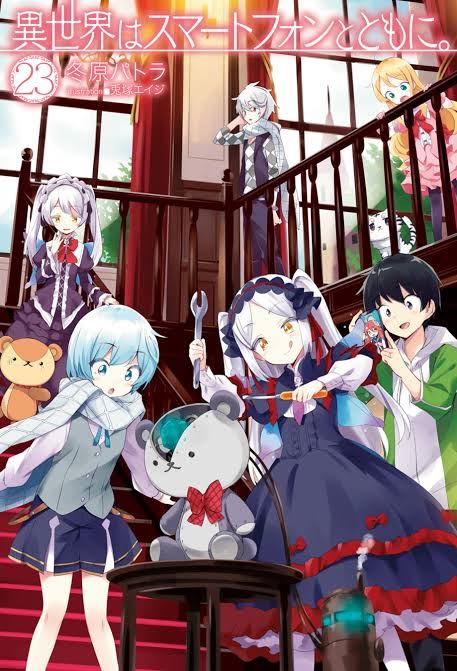
... Read More
Can we just appreciate how efficiently this chapter builds the world without any info-dump agony? The silver horns on Faron and Fares—they appear in the first paragraph and immediately tell us everything we need to know. Same horns as the Demon Lord means royal blood. Same horns means succession rights. And Sakura's horns just appeared recently, which explains why she was treated as illegitimate despite being the true heir. One physical detail does SO much narrative heavy lifting. Then there's the cultural worldbuilding dropped casually through conversation. Demonkin have longer lifespans so there's no rush to marry. They freely choose partners instead of arranged marriages. Fares even says he forfeited his succession rights voluntarily. These aren't dry exposition paragraphs—they're woven into character interaction and reveal everything about how this society operates. And the library mention! Brunhild's castle library with books from all over the world, translated from ancient scripts. This connects back to earlier chapters and shows how the Grand Duke's influence and collection methods have evolved. The author also drops this little detail about Fares being interested in the library and potentially connecting with Princess Ririel—which sets up future plot threads without telegraphing them too obviously. Every piece of worldbuilding here feels earned because it's attached to character moments, not dropped from the sky.
... Read More
This chapter is literally obsessed with masks and I think that's the whole point. Let me go back and trace through every single mask moment because this is way more deliberate than I initially thought. First, the protagonist is wearing a mask to hide her identity—she specifically goes outside to avoid creeps. She's controlling how people see her. Then the golden mask guy sees through her mask because of her PHONE, not her face. The smartphone is essentially an unmasking device in a world where everyone is hiding behind literal masks. That's such a brilliant symbolic inversion. Kurokamen wears a simple black mask. Black, not gold. While the creep wears gold—a color associated with superficiality, wealth, and false charm. The black mask is understated, functional, real. He doesn't need flashiness to be dangerous or credible. Then there's the pale pink dress and red domino mask of the suspicious woman in Shizuku's photo. She looks completely normal at a glance, which is exactly why she's suspicious. The theme continues: appearances are deceiving, and the masquerade setting is the perfect metaphor for the entire story—a world where everyone is performing roles, hiding true identities, and pretending. The protagonist herself is living this literally. She's a writer who entered her own novel and is now trapped in a story she supposedly authored. She's wearing masks on every level: social mask, identity mask, and the meta-level mask of being both author AND character simultaneously. "Suspicious Individual Sighted" is such an apt title for the whole chapter. Because in a world of masks, how do you know who's trustworthy? Who's the creep? Who's the knight? Who's the suspicious woman? The ambiguity itself IS the theme.
... Read More
This chapter operates as what I'd call a 'breather' chapter — the kind that gives you space between major plot explosions but somehow does more narrative heavy lifting than most action scenes. The pacing starts in media res with Ririel snapping at her friends, immediately establishes the marital tension, then spirals into the matchmaking crisis, before landing on that beautiful philosophical moment about Touya understanding the Demon Lord. Each beat serves a purpose: the embarrassment establishes Ririel's character, the phone negotiation creates stakes, the Emperor meeting expands the political landscape, and the Ridis/Tia subplot plants seeds for future conflict. What I appreciate is how the author controls reader engagement through tonal shifts rather than pure plot momentum. We go from comedic (Ririel's glare at Yamato mention) to political (the Emperor's speech about Refreese's history) to introspective (Touya's Demon Lord empathy) without losing coherence. The structure mirrors real conversation — tangential, emotional, circling back to main points. The transition from Ririel's room to the Emperor's presence feels earned because we've watched Touya's internal debate about whether to help. And that final note about the King of Panaches lending a hand? Perfect cliffhanger that promises resolution without rushing to deliver it. The chapter trusts readers to sit with questions rather than flooding them with answers.
... Read More
"No, don't listen to her! That's not what I meant! Don't lump me in with you!" —I laughed out loud at this line. Touya is the most relatable protagonist ever, honestly. He's stuck in this ridiculous situation, his perverted companions won't let him escape, he has to face the wall while they do something uncomfortable, and he keeps yelling but nobody listens. The emotional tone of this entire chapter is just pure comedic chaos, and I love it. But there's also this undercurrent, right? Like underneath all the teasing and chaos, Touya is genuinely worried about whether he made the right call. When the Q-Crystal resets and he realizes their clue is gone, the humor drops and for a second you feel his panic. It's not a big dramatic moment—it's quiet, internal—but that contrast between the comedy and the sudden drop in stakes makes the emotional beats hit harder.
... Read More
'There is only one nation who has a flag like that, located right next to the Gardio Empire.' That line hit me like a freight train. Because suddenly the world clicked into focus. Gandhilis—the Steel Nation. Second only to Isengard in magical engineering. Two crossed hammers on a flag. I can just see it. I don't even need an illustration. The author didn't spend three paragraphs describing the flag, just dropped a single image and my brain built the whole thing. That's how you do worldbuilding. Not by info-dumping geography and history, but by anchoring it to a visual symbol that carries weight. And the way they wove it into the mystery—Lucrecion sees crossed hammers in his vision, and BOOM, you've just narrowed down the entire suspect pool to one nation. That's elegant storytelling. But what I also appreciate is how mundane the worldbuilding feels. The mention of the Professor staying at the Royal Palace of Panaches doing routine maintenance checks on 'Distortion Blau'—it's treated as everyday business. Golems break down, you call a specialist, life goes on. That sense of normalcy around magic-tech infrastructure makes the world feel lived-in rather than constructed. You can tell the author knows exactly what they're building, even when they're not explaining it directly.
... Read More
Here's what I appreciate about this chapter's approach to conflict—the surface read is 'family meets at a party' but underneath there's this whole layer of genuine danger and betrayal that was only partially resolved. Remember: someone hired an assassin to kill Sakura. Her own uncle, essentially, because she nearly inherited the throne. The text says the culprit was tracked and decapitated, which sounds like closure, but the reader knows how deeply personal this was. A child was targeted for her bloodline. Her memory was wiped. She almost died. And Fares is apologizing for it, feeling responsible, carrying guilt for something he didn't directly orchestrate. That's the kind of moral complexity that raises stakes even in quiet moments. There's also the subtle political tension around succession—Fares voluntarily gave up his claim, Sakura's horns just appeared, and now she's married to the Grand Duke. What does that mean for Xenoahs' power structure? The author isn't shouting about these conflicts but they're present, humming underneath every conversation. And that ending tease about Princess Ririel and Fares potentially connecting? That's a relationship thread that could shift alliances. The chapter may seem low-stakes on the surface but the foundation it's laying has real consequences ahead.

Leave a comment

You must be logged in to leave comments. or
