Imperial College Student (Food) - Reviews

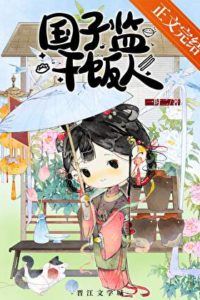
Imperial College Student (Food)
+Add to Custom List
Sort
Add review
... Read More
"Brother Shuoqing, I've only just arrived and don't know Bianjing well at all. Since we're both from Jiangnan, would you mind if I stayed at your place for a while?" Du Lang. I don't know whether to laugh or cry. This guy is so transparently scheming but also so genuinely desperate that I can't even be mad at him. Yes, he wants the food—don't get me wrong, he devoured three meat buns and then immediately started planning his full-time residence at Shen Qingsong's house—but there's something underneath that. He's a boarder at this Academy, far from home, and Shen Qingsong is the first person who's shown him any warmth. The food is just the excuse. And Shen Qingsong! He sees right through it. He calls out Du Lang's scheming as "practically jumping out at him" and still manages to be gentle about it. Their dynamic is so good—Du Lang is loud and greedy and shameless, and Shen Qingsong is calm and patient and just... endures him. It's the classic odd couple setup and I am already emotionally invested. Then there's Zhou Tianang, who's somehow even more chaotic. He claimed six portions for himself and then tried to blame it on a nonexistent brother. The man has zero survival instincts but I love him anyway. And Yu Youren, who went from jealous and hostile to begging for one pastry in the span of five minutes—people are so easily corrupted by good food, it's a universal truth.
... Read More
'For a moment, she had clearly seen the library of University A from her past life—every row, every column, even the shelf numbers marked along them.' This is the moment the entire novel shifts. Up until this point, Mingtang's past-life memories were just background texture—hints of who she used to be. But the cat touching the red ink and triggering that vision? That's not a coincidence, that's a KEY. The stakes just went from 'survive in a new life' to 'I have access to an entire library from my past life through this cat.' And the poem she quotes—'With salt and branch I welcome my little cat, to guard ten thousand scrolls within my hut'—she's not just being poetic, she's literally describing the mechanism. The cat is the vessel. The adoption ceremony wasn't just sentimentality, it was a ritual that unlocked something. What does this mean for the plot? Everything. She can now access knowledge—books, recipes, possibly even the skills and memories tied to that library. But here's what keeps me up at night: the vision came with a headache, cold sweat, blinding light. This power has a cost. And she's using it while her mother is still recovering, while they're struggling financially, while Father Shen is dealing with academy politics. The stakes aren't just personal anymore—they're existential. What happens when someone else discovers what Mingtang can do? The chapter ends on a comedic note with the father catching her mid-insult, but I'm not laughing anymore. I'm watching her like she's walking a tightrope over a very deep cliff.
... Read More
Okay so this section is doing something really clever with parallel plotting. On one side you've got Mingtang, quietly scheming her way toward independence—she's already got the library, the cat, the snack-selling plan, and now she's testing the waters with her father about opening an eatery. The father-daughter scene is deceptively simple on the surface but it's actually a full power negotiation. She wants to open a shop, he subtly shuts it down by suggesting she copy books instead, and she plays along while internally laughing because she's got bigger plans. The mark on the oil-paper packet? That's a brilliant plot device. It's how Xu Shouben discovered the eatery, and it shows Mingtang's already building her brand without even realizing it yet. Meanwhile, Zhao Yu's storyline is a completely different flavor of tension. He's at the Academy, surrounded by people who think they know him, and he's playing chupu like a weapon. The scene where Ma Ronghuan calls him an idler and threatens he'll be expelled next year—that's not just drama, that's the plot tightening its noose. Zhao Yu knows things these kids don't. He's marked, he's waiting, and the fact that he lets them think they're winning while he stacks silver in front of him? That's a character who's playing a longer game than anyone in the room. The chapter structure itself is interesting because it moves from domestic warmth to cold calculation, from a father worried about tuition to a son of a minister threatening ruin. Two families, two different kinds of pressure, and they haven't even crossed paths yet.
... Read More
The structure of these chapters is really clever, and I want to highlight how the author uses a single meal as the anchor for everything. We open with an intimate, quiet scene — Mingtang feeding her recovering mother. Very slow, very tender. Then the wind changes, the brother arrives with a chicken, and suddenly the father brings home this mysterious guest. The pacing accelerates naturally, like real life does when unexpected visitors show up. But here's what I love: the author doesn't rush the reveal. Gongsun Sheng says he's poor, we believe it for a while, and then the silver drops. That's a structural pivot — everything about how we've been reading this scene up to that point gets recontextualized. He wasn't being humble; he was being discreet. And Mingtang wasn't feeling guilty about accepting help from someone worse off; she was about to receive something far more significant. Then the meal itself becomes this wonderful extended sequence where the pacing slows right back down. Gongsun Sheng's stomach rumbles, he devours the steamed eggs, he discovers the ginseng, he's offered rice cakes — each course is a mini-beat that keeps us engaged without any action scenes or plot twists. The author trusts that food and conversation are enough to hold attention, and honestly? It works. The chapter ends on that note of warmth and fullness, which is the perfect emotional landing after all the tension of the family's financial situation.
... Read More
I need to talk about this one moment. Just one. Father Shen leaves after telling Mingtang he'll always stand behind her, and the text says: 'The warm breeze did nothing to lift his spirits. Stepping over the threshold, he rubbed his face hard and did not look back. His figure shrank into the distance, looking strangely lonely and worn.' And then Mingtang whispers: 'Forgive me, Father.' That's it. That's the whole emotional payload. No melodrama, no tears, just a daughter who knows she's lying to the man who would move heaven and earth for her. He thinks she's just keeping a cat for company. She's actually planning to build an empire. And he's out there rubbing his face because he can't provide enough for his sons' education, and she's sitting there with a magical library and a cat named Little Mi and she can't tell him because he'd worry himself sick. The father-daughter bond in this book is so understated it almost hurts. He catches her making up stories to cheer up her mother and instead of being mad, he's worried she's been lying about him all along. That's a man who's so insecure about being loved that he can't even process his daughter's joke. And she protects him from his own temper every single time. She pours his tea, changes the subject, plays the obedient daughter—but the moment he leaves, she's already plotting her next move. The cat Little Mi isn't just a pet, is she? She's the first thing Mingtang chose for herself. Something to keep, something to protect, something that hisses at his father. I think that's the most honest relationship in the whole scene.
... Read More
This entire section is basically a treatise on food as love language, and I'm here for it. Every emotional beat is communicated through what someone cooks, serves, or refuses to eat. The Five-Red Soup isn't just soup — it's Mingtang's way of saying "I'm taking care of you" without having to say it. The ginseng fibers she saves for the broth represent something deeper too: these are precious ingredients, the kind you hoard for emergencies, and she's choosing to use them for a guest. That's generosity as a value system. The silver hidden in the egg basket is probably the richest symbol in these chapters. Eggs are a traditional postpartum gift in Chinese culture — nourishment, new life, recovery. By hiding silver inside them, Gongsun Sheng is wrapping financial aid in the language of care. He could have just given them money directly, but that would have felt like charity. Instead, he makes it feel like a gift between friends. And then there's the mathematical text — the Nine Chapters on the Mathematical Art. Shen Fu and Mingtang found an ancient fragment and expanded it into something teachable. This is knowledge as inheritance, as something passed down and built upon. The fact that Gongsun Sheng is being sent to Yanqi — a land "without order or law" — to teach makes this even more meaningful. He's not just going abroad; he's going to transmit civilization itself. The book, the food, the silver — they're all the same thing. They're all ways of sustaining people when the world is hard.
... Read More
The Zhao Yu storyline is where the real stakes live in this section, and I need to unpack why this teahouse scene is so much more dangerous than it appears. On the surface, it's a board game. Kids gambling silver, one guy winning too much, another guy getting angry. But read between the lines and this is a power struggle dressed up as entertainment. Ma Ronghuan isn't mad because he lost money—he's mad because Zhao Yu exposed him. Every round, Zhao Yu let these kids think they had a chance, and when Ma Ronghuan finally snapped and revealed his hand—'I hear you are to be expelled from the Academy next year'—that's when the real conflict started. Because Zhao Yu now knows exactly what Ma Ronghuan knows, and more importantly, he knows Ma Ronghuan is willing to use that information as a weapon. The stakes here are enormous and they're barely stated outright. Zhao Yu is already a marked man. Supervisor Zhu and Director Chao are watching his self-criticisms. His household is in a 'delicate state.' And Ma Ronghuan, son of the Minister of Revenue, just declared war on him in front of witnesses. But the most interesting conflict is the one happening in the background—the father-daughter tension between Shen and Mingtang. He thinks he's protecting her by steering her toward safe work. She's protecting him by hiding her real plans. Both are making choices for the other without consent, and both are doing it out of love. That's the kind of conflict that doesn't resolve with a dramatic confrontation—it simmers. And simmering is way more dangerous.
... Read More
The worldbuilding in this chapter is subtle but incredibly effective. The author never stops to give us a full description of the Academy—instead, we learn about it through the students' suffering. The canteen food is described in such vivid, almost comedic detail: noodles "stuck together like dough or porridge," sesame buns "hard as a stone" with no filling, and the egg-and-tofu buns where they "boiled whole eggs and mixed them in" like the cooks are trying to choke them before lessons even start. And then there's the contrast. The setting sun gilding the Imperial College in "a layer of warm gold" while students trudge along "like walking corpses." That image is so cinematic. You can see it—the golden light, the sea of heads, the mechanical movement. It's beautiful and bleak at the same time, and it tells you everything about what life is like here. The classroom scene where the students crowd around Shen Qingsong is also incredibly vivid. The oil-wrapped parcels, the rich savory juices soaking through the bread, the way the scent alone makes stomachs rumble. The author writes food like it's a character itself. And the moment when the crowd surges in, the door flies open, and Du Lang is caught red-handed with his cheeks puffed out like a squirrel—that's pure visual comedy. I could see this as a film frame.
... Read More
Let me just say this once: Zhou Tianang is the best dialogue writer's creation in this entire chapter. The man speaks in complete sentences that are somehow both ridiculous and completely sincere. "I told you my nose never lies!" he declares after divining that Shen Qingsong brought breakfast. His entire personality is contained in that line—he's dramatic, superstitious, and utterly convinced of his own brilliance. And the dialogue between him and Du Lang when they're arguing over who gets priority for tomorrow's order? Pure gold. "I was the very first to ask—no taking from my share!" versus "I paid Brother Shuoqing for a whole month in advance—I was first!" These two are so competitive over food it's almost impressive. Their voices are completely distinct—Zhou Tianang is all grand declarations and dramatic gestures, while Du Lang is more practical and transactional. But the real standout is Shen Qingsong's voice. He's so calm and measured compared to everyone else. Even when he's being pressed for food or when Du Lang is making outrageous requests, he responds with polite deflections: "My sister creates her recipes as she pleases." "I must first seek her permission." The author gives him this gentle, almost formal way of speaking that makes him stand out from the chaotic energy of everyone around him. It's a masterclass in using dialogue to establish character.
... Read More
Okay so I need to talk about how Shen Qingsong basically built a business empire on day one and I am HERE for it. The whole setup is genius—his dad tells him to make friends at the Academy, and instead of just making friends, he weaponizes friendship for profit. The moment he spots Du Lang and realizes this guy is loaded, you can practically hear the cash registers going off in his head. "Already he'd found one who seemed very well-off"—I literally gasped. And then the canteen reconnaissance! He's not just eating, he's doing MARKET RESEARCH. The five packed counters versus the empty ones at the back? That's not a student, that's a CEO in training. But the real plot twist for me was how the business expands so organically. First it's just two oil-paper packages of scallion meat pies, and suddenly Du Lang is pre-paying for an entire month. Then Mingtang steps in with the roujiamo concept, and the whole family gets pulled into the operation. Even Father Shen—who honestly I found myself rooting for in the funniest way—gets his own sandwich and then tries to figure out how to monetize it himself. The subplot with Supervisor Zhu Chongli wanting to buy from them is just the cherry on top. This isn't just a side business anymore, it's becoming a full-blown Academy enterprise. What I love is how the plot doesn't feel forced. Every expansion happens naturally through character interactions. Du Lang's wealth opens the door, Mingtang's cooking talent builds the product, and Father Shen's connections at the Academy create the distribution network. The author is playing 4D chess while the other students are still figuring out where the dining hall is.
... Read More
Let me just say this once and be done with it: Mingtang is the most underrated character in this entire novel and I am losing my mind over her. While Shen Qingsong is out here doing his charming businessman thing, Mingtang is the one actually running the kitchen, developing the menu, and holding the family together. The scene where she's making the roujiamo with such precision—caramelizing sugar, braising meat until it falls apart, stuffing it into bread so generously it threatens to spill—this is a woman who knows exactly what she's doing. And their sibling dynamic? Chef's kiss. They work in perfect sync without needing to communicate. One kneads, the other minces. He flips flatbreads while she prepares the filling. It's the kind of partnership that only comes from years of growing up together and relying on each other. When she says "When you pass the imperial exams and become a jinshi, you'll have to look after me" and he responds with "whatever rank I earn, you'll share in it"—I literally had to put the book down because that is the most wholesome thing I have ever read. But here's what really got me: Mingtang is the one carrying the emotional weight of this whole venture. She's worried their business might fail, worried Shen Qingsong's grades might slip, worried they might lose their reputation. She's the one reminding him "studies first" even as she's packing him enough food to feed an army. And then she lies to Father Shen about saving him a sandwich because she was too busy planning the business to remember. The guilt on her face when she sees his disappointment? That's a sister who would move mountains for her family and then apologize for making them wait. Meanwhile Shen Qingsong is over here thinking he's the clever one for befriending Du Lang, while his sister is literally building a food empire from their kitchen. Respect.
... Read More
The pacing in these chapters is absolutely masterful, and I need to break down why it works so well. We start with what seems like a simple encounter—Shen Qingsong meets Du Lang, they bond over shared hometown fabric, and he sells him one pastry. That's it, right? Wrong. Within a few paragraphs, we've gone from a chance meeting to a month-long contract, from one pastry to an entire breakfast operation, from Shen Qingsong's first day to the whole family being recruited into the business. The author never rushes, never drags. Every scene has a purpose and builds on the last. The canteen scene establishes the market opportunity. The morning kitchen scene shows the product development. Father Shen's breakfast scene introduces the next layer of the business network. And then Zhou Tianang's appearance at the end? Perfect cliffhanger that raises the stakes without feeling forced. What I love most is how the chapter transitions work. We go from the bustling canteen to the quiet intimacy of the kitchen, then to Father Shen's awkward but touching moment in the faculty hall, and finally back to the classroom where the real tension is building. Each transition feels natural, like we're following the scent of braised meat from one room to the next. The tension building is also worth noting. On one level, it's a business story—will they succeed? On another level, it's a survival story—can they maintain their reputation while making money? And on a third level, there's the looming threat of Zhou Tianang, who seems to know more than he should. Three threads of tension, all running simultaneously, and the author never lets any of them go slack.

Leave a comment

You must be logged in to leave comments. or