Imperial College Student (Food) - Reviews

Imperial College Student (Food)
+Add to Custom List
Sort
Add review
... Read More
I've been thinking about this book a lot since I finished these chapters, and I keep coming back to the roujiamo. On the surface, it's just food—a clever street food invention that Shen Qingsong and Mingtang decide to sell at the Academy. But the more I think about it, the more I realize it's the central symbol of the entire narrative. The roujiamo is imperfect. It's half-open, the filling peeks out, the sauce drips. It's not like the sealed pastries Shen Qingsong is used to. And that's exactly the point. This is a family that doesn't fit neatly into the Academy's world of powerful families and inherited wealth. They're outsiders, just like the roujiamo is an outsider among traditional pastries. But they're also better. Richer. More flavorful. More willing to take risks. The braised meat itself is symbolic—slow-cooked until it falls apart, transformed through patience and care into something extraordinary. This is exactly what Shen Qingsong and Mingtang are doing: taking whatever they have (a bit of flour, some meat, a recipe from home) and transforming it into something that can compete with the wealth and privilege around them. And then there's the sharing. The roujiamo isn't just a product; it's a bridge. It connects Shen Qingsong to Du Lang, to Father Shen, to Supervisor Zhu, to the entire Academy community. Every sandwich sold is a relationship built, a connection made, a barrier broken down. The food becomes a language that everyone can understand, regardless of their background. The deeper theme here is about dignity and survival. Mingtang's warning—"gains aren't worth losing your reputation or your future career. We want to earn money, yes—but never at the cost of your name"—this is the philosophical core of the story. They're not just selling food; they're navigating a world where every choice has consequences, where family loyalty and personal ambition constantly pull in different directions. The roujiamo is their answer: yes to survival, yes to family, but never at the cost of who they are.
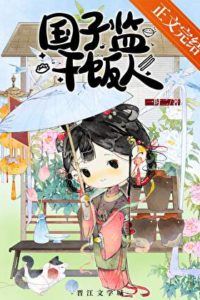
... Read More
This chapter is fundamentally about food, but it's also about so much more. The roujiamo isn't just breakfast—it's power. Shen Qingsong, who entered the Academy through his father's connections and lives a relatively comfortable life, holds something the other students desperately want. Food becomes a currency, a bargaining chip, a way to build alliances. Zhou Tianang offers charms for examinations. Yu Youren drops his pride and begs. Du Lang offers to pay rent for a bed. But the deeper layer is family. Every time the food is mentioned, it's traced back to someone's home, someone's care. Shen Qingsong's sister made the roujiamo. Mingtang prepared the meat sauce. The canteen food is bad precisely because it's institutional—made by faceless cooks for faceless students. The contrast is deliberate. Good food comes from love, from someone waking up before dawn to prepare something for you. Bad food comes from obligation, from a system that doesn't care. The empty jar at the end is symbolic too—it represents how quickly love gets consumed, how generosity gets used up. But Shen Qingsong doesn't throw the jar away. He keeps it. He goes back to his family. And Du Lang? He's already planning his next move. The cycle continues. What does it say about a world where the only warmth you can find is something you can eat?
... Read More
I need to talk about the stakes because they're quietly massive and the author never lets us forget them. Gongsun Sheng is being sent to Yanqi — described as "a land without order or law" — for three to five years. That's not a promotion; that's a sentence. The fact that he's going as an envoy to teach means he's carrying cultural and diplomatic weight on his shoulders, and the danger is real. Meanwhile, the Shen family is surviving on sold books and whatever Mingtang can cook up — literally and figuratively. Her father sold his precious collection. Her brother is about to enter the Academy, which means tuition, living expenses, the whole future hanging in the balance. And right when everything seems like it might finally stabilize — Gongsun Sheng's silver solves the tuition problem — he's leaving. The timing is almost cruel. But here's what makes the conflict so effective: the author never dramatizes it. There's no weeping, no frantic planning sessions, no dramatic farewells. The stakes are communicated through what's NOT said. When Shen Qingsong says "I shall find work—copying books, if nothing else," he's already making plans to contribute, but there's this underlying tension of "what if I fail?" that hangs over every conversation. And Mingtang's final thought in this section — "She would find a way to earn plenty of money—enough to keep her family safe and happy in this world, no matter what" — that's the real stakes. It's not just about surviving this month. It's about building something permanent in a world that keeps taking things away. The conflict isn't a battle; it's a slow, grinding pressure that never lets up, and that's what makes it so compelling.
... Read More
Let me just say this chapter structure is a masterclass in controlled pacing. You start in a domestic space—Mingtang's kitchen, her father visiting, the cat hissing, the oil-paper packet with its wheat-and-meat scent still clinging to it. It's slow, it's warm, it's the kind of scene where nothing explosive happens but everything is happening. And then—bam—you cut to the Imperial Academy on examination day, students streaming out, and immediately single out ONE person who doesn't go home. Zhao Yu. The transition is so clean you don't even notice the shift in temperature. One moment you're worrying about tuition fees, the next you're in a teahouse where a man is about to get his head handed to him in a board game. The author doesn't waste a single sentence on exposition. We learn about chupu through the scene itself—the rules, the stakes, the cultural context—all woven into Zhao Yu's actions and the other players' reactions. And the teahouse scene? It starts quiet, almost sleepy. Scholars sipping tea, debating philosophy. Then Ma Ronghuan arrives with his silk robes and his folding fan, and the energy shifts. The game becomes the battlefield. Hours pass—'the incense burner still sent up wispy trails of pine smoke, but the tea had long grown cold'—and by the time Ma Ronghuan snaps, we've been riding this tension for what feels like a full chapter even though it's probably only a few thousand characters. The pacing here is deliberate, almost meditative, until it isn't. And then it snaps like a bowstring.
... Read More
Okay so this entire chapter is basically one gloriously chaotic domino effect and I am HERE for it. It starts with Shen Qingsong casually showing up to class with homemade breakfast and within twenty minutes he has turned into some kind of street vendor with a waiting list. The plot structure here is so satisfying—every scene builds on the last like a snowball rolling downhill. First it's just Zhou Tianang and Du Lang wanting food, then the entire class catches wind, then Supervisor Zhu walks in at the worst possible moment, and then Professor Qi just... appears. The author never lets up. Every time you think the scene is over, someone new shows up and complicates things. The real plot twist though? Shen Qingsong isn't even trying to be the center of attention. He's just a quiet kid who wanted to eat breakfast in peace, and somehow his sister's cooking has made him the most popular person in the entire Academy. The irony is delicious. And then on top of that, Du Lang's scheme to move in with him—"I'll share your bed, no need for a separate room"—that's a whole new subplot that just dropped like a bomb. Where does this go? Is Du Lang really just after the food, or is there something else underneath? I need to know.
... Read More
I need a moment. I genuinely need a moment. The papaya and milk stew scene. Let me just sit with this for a second. Mingtang lying about what the midwife said just so her mother will eat something nutritious—that's not manipulation, that's love. Pure, desperate, protective love. She's a daughter who remembers a past life and somehow still chooses to pour every ounce of her heart into this family that didn't even choose her first. And then Jiang—her mother—she sees right through the lie immediately. Doesn't call her out harshly, just laughs and says 'I don't recall my daughter ever training to be a midwife!' And then Auntie Zhang bursts out laughing and suddenly the whole room is warm and soft and I was right there in that courtyard feeling the steam rise off that bowl. The way Mingtang feeds her mother spoon by spoon, praising her beauty, saying they'll look like sisters—this is the kind of tenderness that makes your chest ache. But then the father walks in right as Mingtang is joking about his face being 'as dry and dull as arithmetic' and she's caught red-handed. The shift from laughter to frozen terror in one beat? Chef's kiss. But underneath all the comedy, there's this quiet devastation: Mingtang has this whole inner world of past-life memories, of a library she can now access through the cat, and she's holding it all while trying to keep her family alive and happy. She's carrying so much and she never lets them see it.
... Read More
Okay so this whole sequence from chapters 14-20 is genuinely masterful plotting and I need to talk about it because the way the author layers everything is just *chef's kiss*. Let me start with the Shen Wenhan confrontation because WOW. The uncle and aunt show up uninvited at the third-day bathing ceremony—which is already a huge deal in this culture—and Shen Wenhan literally starts sizing up Mingtang for marriage to his boss. And then Shen Fu punches him. In the face. On the spot. No dramatic buildup, no speech, just a fist and thud and the guy is on the floor unconscious. The author doesn't even linger on the fight itself; it's over in two sentences and that's what makes it so satisfying. It's not a drawn-out battle of wits or words—it's pure, immediate action that says everything about this character. But here's what really impressed me: the backstory about Aunt Su is woven in so naturally. It's not an info-dump. The author drops it right when Shen Fu is recalling those "ugly days," and suddenly we understand WHY he's so protective, WHY the family rift matters, WHY Mingtang is the way she is. She outsmarted an adult woman who was trying to manipulate her into becoming a concubine, and she did it while smiling and acting innocent. That's not just clever plotting—that's character-building through backstory that feels organic. And the bathing ceremony itself? It's the emotional anchor of the whole sequence. All these tensions—the uncle's schemes, the father's fury, the sibling dynamics—all converge in this one ritual scene. The midwife chanting those blessings, the coins dropping into the basin, Shen Bozhou threatening to cry over not having copper... it's domestic, it's warm, and it's the perfect contrast to the violence that just happened outside. One thing I found really clever: the author uses the uncle's failed schemes as a kind of foreshadowing for Mingtang's own future. She was almost sold off as a child, and now she's fifteen and still navigating these dangerous social waters. The plot keeps reminding us that the world is not safe for women in this setting, which makes every small victory—like her father defending her—feel earned and meaningful.

Leave a comment

You must be logged in to leave comments. or
