I’m A Villager, So What? - Reviews

I’m A Villager, So What?
+Add to Custom List
Sort
Add review
... Read More
Here's the thing that makes this passage hit different: Cordelia isn't going to die. Lute knows this. The dragon is coming. He's lived through this exact scenario before. Every slash, every wound, every near-miss is something he's already witnessed. So why intervene? That's the conflict that matters. This isn't a battle for survival—it's a battle for *meaning*. If Lute does nothing, the outcome is identical. Cordelia lives. The village is saved (barely). History proceeds as written. But he remains exactly what he was six years ago: a villager who watched a girl bleed for him and couldn't do a damn thing. The real stakes here are internal, and that's what makes the external goblin swarm feel so charged. Every goblin between him and Cordelia represents the distance he's crossed since the first timeline. Five hundred enemies. That's not just a number—it's the gap between helpless observer and protector. "Just for what…… has I been silently sharpening my fangs? Right now, it's for moments like right now isn't it?" This line detonated me. Because it reframes every training session, every point of MP, every level of Body Strengthening. None of it was about becoming the strongest for its own sake. It was about having the power to make a choice he couldn't make before. And the tension? Insane. Not because we don't know if Cordelia will survive, but because we *do* know—and Lute is about to change the one thing that was supposed to be fixed. The dragon might not come. The timeline might fracture. He's gambling with causality itself because a twelve-year-old girl looked at him and said "I'm here!" while bleeding out.
... Read More
"Then, you also get the hole in this position, right?" "...yes." "Then, you also get the hole in this position, right?" ...okay I'm just going to say it: the running joke of Lute calling it a "pitfall" when he literally means "hole" is one of the funniest pieces of dialogue in this entire section. The fact that Lilith understands the concept of a pitfall but the Japanese word for pitfall and hole are the same thing—and she just goes along with it with a straight face—is comedic gold. And her "...in Japanese please" response?? She sees through it immediately but still plays along. That's character work. That's two people who have developed this weird communication rhythm where they're constantly slightly misaligned but it works. The rest of their dialogue has this same quality. Lilith's speech pattern—those ellipses, the hesitant delivery, the blunt honesty underneath—versus Lute's more casual, almost flippant exterior that occasionally drops to reveal genuine vulnerability. When he says "I seriously cannot let this girl go to the outside world alone" after being all joking about the hole, that tonal whiplash is intentional and effective. And Lilith's slap followed by "...Selfishly… don't decide everything on your own" — the ellipses everywhere, the fragmented sentences, the way she can't quite deliver her emotions cleanly. It's not polished dialogue. It's messy and real and exactly how people actually sound when they're upset and caring at the same time. The author's voice throughout is this perfect blend of deadpan humor and genuine warmth. Even the stat dumps—the level-up screens—have this comic timing where you're reading numbers and suddenly something deeply human happens right after.
... Read More
I need to talk about the slave crest because this story is layered in ways that reward careful reading. On the surface it's this action-adventure about a kid leveling up in a dungeon, but underneath there's this whole examination of ownership, identity, and what it means to be free—or not free—in a system that decides your worth for you. Lilith's slave crest is literally engraved under her collarbone. A magic circle. Something that functions as 'mental brainwashing' according to the text. It's a physical mark of someone else's ownership over her body and her choices, and the fact that it's a 'sex slave crest' makes it even more violating. But what strikes me is that the crest only becomes actively dangerous when she loses her guarantor. Before that, she's safe in the Dragon Village. After that, she's hunted like a criminal. The system doesn't care about her humanity—it only cares about her status within the ownership hierarchy. And then there's Lute. He's a human in a village of dragons, treated like one of them, welcomed like a young dragon. He occupies this strange liminal space—not fully belonging anywhere, but valued for his utility. His motivation for saving Lilith isn't pure altruism either. When he says 'If I abandon Lilith here… I feel like that person is going to laugh at me' and then calls it 'self-satisfaction,' he's deflecting. He's a kid who's been shaped by a childhood friend's expectations, someone whose entire sense of self is tied up in being the kind of person who shows up for others. The rite of passage into the labyrinth is literally about proving you're a 'true dragon'—that you have the strength and wisdom to warrant full identity and personhood. Lute is trying to do this as a human, which is another layer of that identity question. Can someone who isn't a dragon claim dragon identity? Can someone who's branded a slave reclaim their freedom? The text seems to be asking these questions without ever stating them directly.
... Read More
This fight is everything. Let me be clear about the stakes here — Lute is level 100 with roughly 18,000 MP, yes, but this is a GROWN dragon zombie with combat experience spanning centuries. Lilith herself admits that her father 'must have been classified as one of the really strong grown dragons.' The math is brutally simple: if Villager's Anger doesn't one-shot him, Lute has zero MP left and will be killed. There is no plan B. The author doesn't soften this at all — halfway through the fight, Lute explicitly realizes 'at this rate my situation will gradually get worse' and that 'at some point, I will make a fatal mistake. And that mistake will push me off my foothold in one go… and I'll die.' That's not dramatic foreshadowing, that's a straight-up death countdown. What makes this sequence so tense is that the dragon isn't just strong, it's SKILLED. It's not some mindless monster; it has combat technique, experience, and it LAUGHS during the fight like it's enjoying itself. The back-and-forth exchanges where they're trading blows, Lute sliding under fangs, the metallic ringing of axe against claw — every single moment feels like it could be the one where things go wrong. And then the acceleration, the burst of speed from Body Strengthening and Oni Gate Method combined, the decision to throw away his axe and commit everything to one punch… 'here.' Just one word before he strikes. The restraint in that single syllable is masterful. He doesn't monologue, he doesn't prepare a speech — he sees the opening and he takes it. Every fiber of the narrative is pointing toward this one gamble, and the relief when it lands is almost physical.
... Read More
'The cave of the altar is infested with vicious monsters… A dungeon where even actual dragons have been killed by accidents.' This line alone tells you everything you need to know about what kind of world this is. This isn't some beginner-friendly tutorial dungeon. Young dragons—literal dragons—are dying here. Ten percent mortality rate among those undergoing the rite of passage. And our protagonist, a twelve-year-old human level 1 villager, is walking into it barefoot. The sheer audacity of it establishes the world's danger level in a way no exposition dump ever could. I also want to talk about the sensory details the author gives us in this section. The dimly lit passage, the rusted iron door knob, the clay walls that you can actually dig through. There's something so tactile about this writing. When Lute stabs his knife into the mud wall and a part crumbles down, you can feel the texture. When the black smoke and hot air billow out of the minotaur's room after ten hours, you can almost taste the acrid air. These aren't generic fantasy dungeon descriptions—they feel specific and lived-in. The Dragon Village itself is fascinating worldbuilding. It's a place where humans are treated similarly to how dragons are treated elsewhere, where there's a whole system of slave crests and guarantors and banishment rules. The fact that Lute was 'welcomed like a young dragon' suggests there's something deeper going on with how this society categorizes and values beings, and that's just casually dropped into dialogue without any infodump. Brilliant. And the stat screen at the end? Don't even get me started. Level 1 to 12 in one fight. Attack power jumping from 35 to 185. The title 'Cow Killer: Level 0 → 2' made me actually laugh out loud. It's such a perfect blend of game-like mechanics and narrative progression that makes you want to keep going just to see what other titles he earns.
... Read More
Okay so this entire arc has been building toward something, right? And then the Dragon King drops this bomb about how their existence literally broke the world's script. Let me just... wait. Let me process that for a second. The whole setup was always about this guy being a villager with absurd MP, level 1 on purpose, grinding in secret. We thought it was just a quirky MC strategy. But no—it's way deeper than that. The Goblin Army defeat wasn't supposed to happen the way it did. Cordelia was supposed to get seriously injured, to have that awakening moment that forces her to become a hero, to grow into the Dragon Killer by fifteen. But he saved her instead. And in saving her, he removed the very catalyst that was supposed to define her destiny. That's the kind of plot twist that makes you sit back and go 'oh.' It's not just 'the MC is strong' or 'the MC is OP.' It's 'the MC's mere existence is an existential threat to the world's narrative structure.' The goblin attack was supposed to be her origin story—and he stole it from her. That's actually kind of tragic when you think about it. She becomes the Dragon Killer because she compensates, because she trains like a maniac, because she's carrying the weight of what should've been a forced awakening but now became an obsession. And then there's the timeline math the MC does—which is honestly the most brilliant beat in the whole chapter. He immediately calculates backwards: if she gets the title at fifteen, he needs to slay the Evil Dragon by fourteen. Because she dies at fifteen in the original timeline, right? The knights get annihilated, she's on the brink, and then... she parts the Evil Dragon's neck with its own torso. That's the repayment. That's the moment that defines her. So if he can do it before she has to, then she doesn't have to go through that. He's essentially trying to rewrite her fate by outpacing tragedy. The plot here isn't just 'get stronger and fight stuff.' It's 'the MC is racing against a countdown to prevent a tragedy that was written into the world's fabric.' That's some serious narrative weight. The Dragon King saying the world is on the brink of destruction because of this branching path—it makes every level-up feel like a timer ticking down. And the MC's response? He just laughs. Because he's not scared of the timeline. He's using it as motivation. Also—side note—the structure of revelation here is perfect. First the MP number shocks the Dragon King. Then the wisdom skill. Then the blessing. Then the library access. Then the guarantor swap. Each step peels back another layer of 'this person is operating on a completely different level than anyone expected.' It's not one big info dump—it's gradual, almost playful, and then BAM, the fate thing hits you out of nowhere. Masterful pacing.
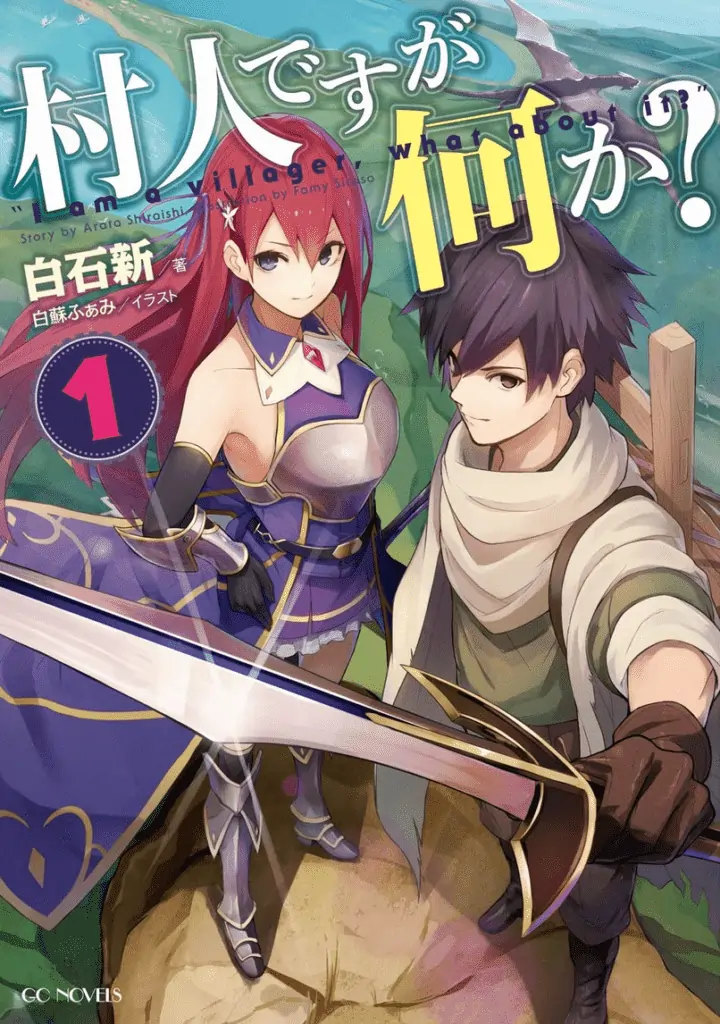
... Read More
The chapter structure here is absolutely vicious in the best way. You go from a quiet, intimate scene—Lute curing Bernard's liver in his filthy apartment, sharing bad whiskey, establishing a mentor bond—and then *bam*, six years pass. One line. "Six years have passed since that." No transition chapter, no montage, just a hard cut to the goblin attack. And that's where the pacing gets really clever. Because the goblin fight isn't just action for action's sake—it's a *replay*. The author forces us to watch the same sequence twice: first as memory (helpless, anguished, watching Cordelia deteriorate), then as present-tense reality (Lute knowing exactly what's coming, muscles coiled, waiting for the diagonal goblin). The battle sequence itself is written with this staccato rhythm that's almost hypnotic: "Slash. Evade. Tear. Slash. Evade. Tear." Short, sharp sentences. No flourish. It reads like someone actually swinging a sword. And the acceleration—the way the narration speeds up, the scenery moving in slow motion, vermilion fighting spirit overflowing—is perfectly calibrated. It doesn't drag. It doesn't rush. It *builds*. The cliffhanger ending? "A line of blood formed across my cheek from the graze" and then—cut. Chapter ends right as things get lethal. Of course I opened the next chapter immediately. Also worth noting: the status screen dump at the end of the Bernard arc is oddly effective. Instead of infodumping in prose, the author just slaps the numbers on the page and lets the reader process how absurd Lute's stats are. MP 12,050. Physical Strengthening MAX. Oni Gate Level 5. It's a punctuation mark on six years of implied training.
... Read More
Let's talk about what's actually at risk here. Lute started this whole training regimen because he knew he'd eventually face threats way beyond his current level. The orcs killed Bernard's entire family. He's clearly preparing for something similar happening to his own village or people he cares about. That's not abstract worldbuilding—that's personal survival instinct encoded into his entire personality. The MP depletion mechanic alone creates constant tension. He's playing with fire every single day. Zero MP causes headaches described as "being swung at with a metal bat every few tens of seconds," and he voluntarily walks into that state to grow stronger. One wrong move, one day his Indomitable skill isn't enough, and he's done. The risk is always there, simmering beneath the surface of every training session. And now he's approaching Bernard—a man who lost everything and chose isolation—while Lute himself has built an entire hidden infrastructure of wealth and power. The question isn't whether he's strong enough. It's whether he can protect the people he's already attached to, and whether Bernard will even trust a stranger child with his knowledge. The stakes went from "I want to be strong" to "my whole world depends on this" somewhere between chapter 3 and 4, and I didn't even notice it happen until now.
... Read More
I need to sit with this. Just sit with it. Because Lilith asking "Just what am I to Lute? Is my will reflected in Lute's actions?" while crying?? That's not a throwaway line. That's the entire relationship crystallized into one devastating question. Think about the trajectory. This girl showed up barely knowing how to function in the outside world, raised in this rigid dragon society where the weak don't deserve to live. And somehow, against all of that programming, she learns to care about someone outside herself. She engraves three gold threads on her bracelet—that's not nothing. That's ritual. That's devotion. And Lute—he keeps trying to protect her by keeping her close, by making all the calls, by deciding what's safest. But safety isn't love. Safety is control. And Lilith knows it. When she slaps him and tells him to stop deciding alone, she's not being dramatic. She's fighting for the right to exist as a person beside him, not as someone he manages. "I won't allow you to go to the Dragon's Village! Leaving for years… I definitely hate that!" — this echoes from Cordelia, and now Lilith is saying the exact same thing in her own voice. Two women, different contexts, same core demand: don't disappear on me. The ending with the head bonk and "shall we survive together?" — that's not romantic in the traditional sense. It's deeper. It's two people choosing to carry each other's weight instead of one person carrying everything. And honestly? That hit harder than any romance confession ever could.
... Read More
There are symbols stacked in this text like layers of meaning and I'm barely scratching the surface. The scar on Cordelia's hand is the biggest one—literally and figuratively. She hides it with long sleeves even in summer. It's a wound she'll carry forever, a permanent reminder of a battle where a village of adults abandoned a child to fight a thousand goblins. The scar isn't just physical damage; it's the mark of systemic failure. Society created a Hero, then expected the Hero to bleed alone. Then there's the Oni Gate Method itself. A forbidden technique that consumes the soul when magic power runs out. Lute uses it freely because his MP is over ten thousand. The symbolism is almost too on-the-nose: power that borders on self-destruction, available only to those who can afford its cost. He's become an Oni—not by choice, but by necessity. The very thing that makes him strong is the same thing that could consume him. But the most profound symbol is Bernard's liver. The old man destroyed himself with heretical techniques and drinking, and Lute cures him with a blue elixir made from tap water—a substance worthless in this world but priceless to someone who knows its value. It's a perfect metaphor for the story's thesis: what looks worthless to most is everything to those with knowledge. The "cheat" isn't just power; it's *seeing* what others miss. And Cordelia's vermilion hair, repeatedly described as growing brighter through blood—her own and others' mixed together. Red hair as a halo of suffering. The Oracle Hero painted as a martyr before she even understands what martyrdom means.
... Read More
There's a pattern running through these chapters that I can't shake. It starts with a hole—a literal depression in the ground, a pitfall designed to trap. Lute digs it to control the golem's movements, to create a scenario where he dictates the terms of engagement. But then the water scene undoes all of that. The catfish doesn't care about his plans. The documents don't matter. His Wisdom skill—which literally lets him read all the world's books—turns out to be insufficient against something that operates outside the recorded knowledge. "Fish cannot live in a river that is too clean" — this line about Lilith needing a little cunning to survive is the thematic thesis of the whole sequence. Knowledge alone isn't enough. Plans alone aren't enough. The hole he dug was a good trap, but it couldn't account for the son catfish that wasn't in the textbooks. And then the whiskers—these delicate, almost beautiful appendages that become instruments of entrapment. They're what catch Lute, what nearly drown him. But they're also what connect him to Lilith across the water, because she uses her own power (electricity, gold threads) to sever them. The things that bind us can also be the things that release us, depending on who's holding the other end. The title progression is telling too: Goblin Slayer, Saint, Heretic Mage, Oni Child. These aren't just achievements—they're labels imposed from the outside. And the central tension of these chapters is Lute learning that he can't just accumulate titles and skills and expect to survive. He needs someone who will slap him when he's being reckless. He needs shared survival, not solitary heroism.
... Read More
'Muscle-brained cow… for the likes of meat, you shouldn't underestimate the humans who swept the earth, you know?' I have been carrying this line around in my head ever since I read it. It's delivered right after the minotaur is convulsing on the floor from carbon monoxide poisoning, Lute has a bandaged head wound, and he's showing the monster a middle finger. It's equal parts menacing, ridiculous, and perfectly in character for someone who just outsmarted a dungeon mid-boss using chemistry homework knowledge. The dialogue throughout these chapters has this wonderful asymmetry between Lute and everyone else. Lilith keeps asking practical questions—'For what?' 'Why?' 'What are you doing?'—and Lute keeps giving these evasive, almost cryptic answers that are somehow both unhelpful and deeply reassuring at the same time. When she says 'I don't really understand the meaning' about going into the dungeon, he doesn't really explain it. He just says 'let's go.' And somehow that works. The scene where he drops the 'I'm the strongest Level 1 in this world' line is peak comic timing. Lilith's response—laughing in amazement, listing all the reasons why this is absolutely insane—is perfectly calibrated. She's the straight man to his absolute chaos energy, and their dynamic feels genuinely natural. I also appreciate how the dialogue reveals character without any narration telling us how to feel. When Lilith says 'There is no need to risk your life. Getting banished from the Dragon's Village, returning to the human world and brought back to my owner to become a sex slave, I was already prepared for that'—the casual way she states her own potential fate says everything about her despair and resignation. No melodrama needed. And then Lute's reply, 'Falling into slavery on your own accord… don't make such decision,' is simple and direct and hits like a truck.

Leave a comment

You must be logged in to leave comments. or
