Summary

... Read More

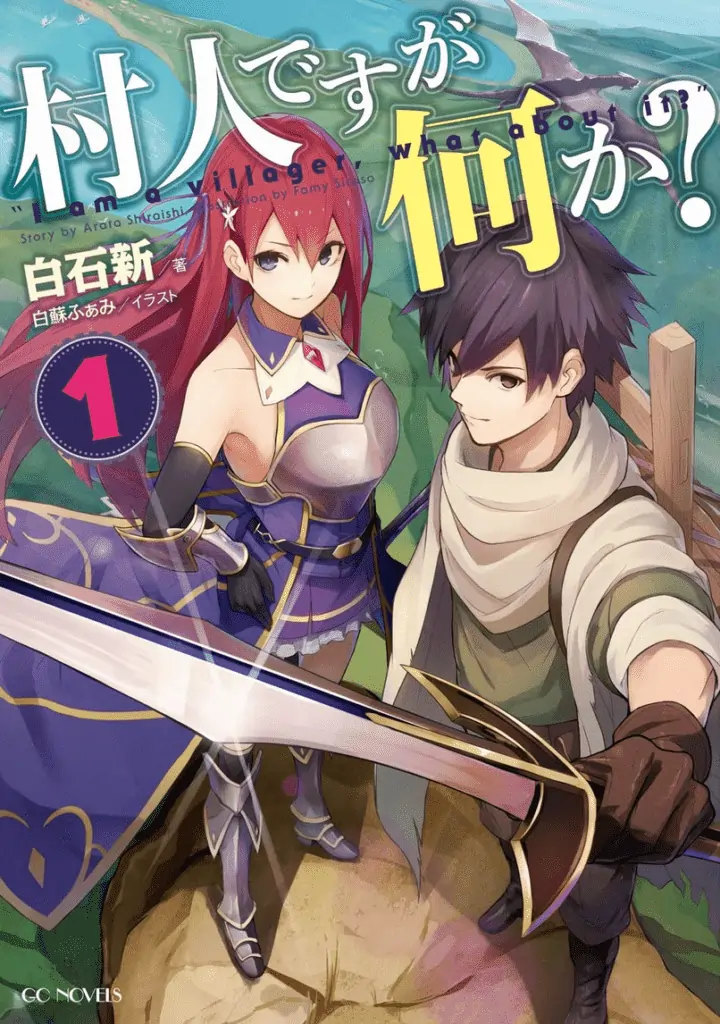
Ryuto Iijima is a reincarnated individual who, despite his expectations of receiving powerful cheats, is reborn as Lute Marklen with the lowest-tier occupation: Villager. He grows up in a poor commoner household alongside two childhood friends who possess legendary aptitudes: Cordelia Allston, the Hero known as the Ikkitousen, and Moses, the Sage. While Cordelia displays superhuman strength and combat prowess from a young age, Lute remains ordinary, leading him to feel inferior and unable to stand beside her as an equal. The central conflict emerges when Moses, driven by jealousy over Cordelia’s affection for Lute, betrays him. During a camping trip in the Manakiss Great Forest, Moses drugs Lute and abandons him in a river, declaring that a mere villager has no place beside a Hero.

Lute washes downstream and falls from a fifty-meter waterfall into the Dragon’s Residence, where he encounters a red dragon. Recognizing Lute as a reincarnated person with a unique fate, the dragon grants him a chance at survival on one condition: Lute must die and return through the skill Return by Death, which he used during his first life in Japan. Lute dies as agreed and is transported to a white void where a goddess offers him two new skills. He chooses Indomitable, which grants him supreme mental and physical tolerance for pain, and Crop Cultivation, a deceptive skill he believes will serve his hidden purposes. He returns to his second life at the age of two, retaining all his memories and the knowledge of his past.

Understanding the world’s magic system, Lute discovers that infants have extraordinary magic power absorption rates. He begins a brutal training regimen from toddlerhood, deliberately depleting his mana daily to expand his reserves far beyond normal limits. At age four, his status reveals over ten thousand MP, a value that dwarfs adult mages. To fund his studies and sustain his lifestyle, he operates an underground healing magic business along trade routes, charging low prices to undercut competitors while rapidly accumulating wealth. He also seeks out Bernard Alabaster, a former Knight Order commander living as an outcast due to liver failure caused by reckless physical training. Lute cures Bernard with an elixir purchased from his earnings and becomes his apprentice, learning advanced swordsmanship and forbidden techniques like the Oni Gate Method, which sacrifices the soul for explosive power boosts that Lute can sustain due to his infinite mana.

By age twelve, the day of the goblin attack on his village arrives, mirroring the events of his past life. In the previous timeline, Lute had watched helplessly as Cordelia fought hundreds of goblins alone while the village adults hid, resulting in her being severely wounded. This time, Lute intervenes. He activates his strengthened skills and single-handedly slaughters the goblin horde, saving Cordelia from the fate that had previously defined their separation. When the red dragon arrives to rescue the Oracle’s Hero as foretold, Lute steps forward. He has fulfilled the dragon’s requirement by clearing the crisis and proving his worth, but he also realizes that Cordelia’s natural growth as a Hero will eventually close the power gap between them. Refusing to be left behind or treated as a subordinate, he insists on entering the Dragon Village to train further.

Cordelia protests, angry that Lute is making unilateral decisions about their future and hiding the extent of his efforts. Lute leaves without a proper farewell, promising to return so he can stand beside her as an equal. Upon arriving at the Dragon Village, he faces a strict social hierarchy based on strength. However, his immense magic power and status immediately catch the attention of the librarian and the Dragon King. He is granted an audience with the ruler of the dragons, who recognizes the unusual nature of Lute’s existence. The story concludes with Lute beginning his advanced training within the Dragon’s Great Library, setting the stage for his long-term goal of surpassing the heroes and altering the catastrophe predicted by the oracle.

Latest Release
DateGroupRelease
2026-10-01light novels translations c189
2026-10-01light novels translations c188
2026-10-01light novels translations c187
2026-10-01light novels translations c186
2026-10-01light novels translations c185
2026-10-01light novels translations c184
2026-10-01light novels translations c183
2026-10-01light novels translations c182
2026-10-01light novels translations c181
2026-10-01light novels translations c180
2026-10-01light novels translations c179
2026-10-01light novels translations c178

Community Reviews

Rating(3.9 / 5.0, 46votes)
5 stars
9(20%)
4 stars
23(50%)
3 stars
13(28%)
2 stars
1(2%)
1 stars
0(0%)

Popular reviews

... Read More
"It looked like the back of a 12-year-old girl—a tiny little back that was taken for granted." I need to sit with that line for a second. Because that's when everything clicked for me. Lute doesn't save Cordelia because the plot requires it. He saves her because he finally *sees* her—not as the Oracle Hero, not as the protagonist of some grand destiny, but as a kid who's carrying the weight of an entire village on shoulders that should've been holding backpacks. Their relationship is so layered. In the first timeline, Cordelia bled for him while he cried in an alley. She literally told him "I'm here! I'll get rid of all of these guys so—!" while her hair turned red with someone else's blood and her own. And now? The positions have flipped. He's standing in front of her, sword in hand, saying "You have done your best yourself until now." What hits me hardest is Bernard's role too. This broken old man who almost died of cirrhosis becomes the person who turns a monster-child into something capable of protection. There's a beat where Bernard pats his head and says "You…… can be stronger, you know" and Lute responds with literally just "That's what I said" while offering his hand for a handshake. That exchange says so much about how their dynamic works—no dramatic speeches, just mutual recognition. But honestly? Cordelia is the emotional anchor here. The fact that she wears long sleeves in summer to hide a scar, that she's worshiped and monitored like a resource rather than a child, that she fights until her MP runs out refusing to abandon the boy behind her—she's the tragic heroine who doesn't know she's tragic yet. And Lute? He's the only one who truly sees her.
... Read More
I need to talk about stakes because this chapter redefined what 'the clock is ticking' means in fiction. Normally, when a story has a deadline, it's external—the demon lord will destroy everything in ten years, the princess will be sacrificed on the solstice, the poison will kill the king by midnight. Those are clear, visible timers. But here? The timer is invisible. It's written into the world's logic, into the oracle's prophecy, into the branching paths of fate itself. And the worst part—it's not even wrong. The MC did the right thing. He saved Cordelia. He prevented her from getting scarred. He stopped the goblin army. But in doing so, he broke the story the world was supposed to tell. The stakes aren't 'will he save the girl?' The stakes are 'will he save the girl without breaking reality?' And then it gets worse—the Dragon King reveals that the world is already on the brink of destruction, and the MC's interference might be the cause. So the hero is also the catastrophist. The savior is also the destroyer. That's not dualism; that's tragic complexity. But here's what makes the conflict so gripping: the MC knows this. He understands exactly what he's walking into. When he calculates that he needs to slay the Evil Dragon at fourteen to prevent Cordelia's death at fifteen, he's not being reckless. He's being surgical. He's looking at a disaster scenario and saying 'I have eleven months to fix this.' That's not heroism; that's engineering. And it's far more compelling because it's deliberate. The internal conflict is equally sharp. The MC could have stayed in the dragon village, stayed safe, stayed level 1 forever. He could have enjoyed the blessing, the library access, the protection. Instead, he chooses to go out and hunt monsters immediately. 'I have to raise my level like an idiot.' That line—colloquial, self-deprecating, almost flippant—is the sound of someone who has accepted a burden they didn't ask for and is choosing to carry it anyway. There's no angst about it. No 'why me.' Just 'what now?' The external conflict is the Evil Dragon—a non-standard monster that annihilates knights and leaves a hero on the brink of death. But the real antagonist isn't the dragon. It's time itself. It's the branching timeline. It's the oracle that says Cordelia must become the Dragon Killer. The Dragon King is right—the world is uncertain now, and uncertainty is more dangerous than any prophecy because there's no map for it. The MC is navigating blind, and that's what makes every monster hunt feel like walking off a cliff. The stakes escalate from personal to cosmic in three paragraphs. First, it's about getting stronger. Then, it's about rewriting fate. Then, it's about preventing the destruction of the world. And the MC's response to all of it is the same: a grin, a handshake, and a plan.
... Read More
The way this narrator talks to himself is everything. Just completely unbothered, absolutely feral energy wrapped in calm analysis. Lines like "who in the world is masochistic enough to willingly do a seppuku everyday" coming from a six-year-old who just admitted he does exactly that? The self-awareness is immaculate. And then immediately following it with "But…… I smiled." Like, yeah, I enjoy the pain apparently. No shame. The external dialogue is pretty sparse but when it lands it works. Cordelia's "I also wanna go~to the back of the mountain~with Lute" with the tildes is perfectly kid-like, and then her full pivot to "I take back what I said you know?" is so strategically adorable it made me laugh out loud. Bernard's single line "Go home." while drinking—a man of few words, maximum grump—and you instantly understand who he is. The narrative voice itself has this dry, almost deadpan humor that makes the absurdity of the situation land perfectly. He'll calmly explain his ten-million-yen secret stash and then follow it with "Honestly, I think I may have overdone it in many ways." Like bro, you're hiding currency in a jar in the woods and you think THAT'S the problem?
... Read More
Lilith is honestly one of the most interesting characters I have encountered in this genre, and this batch absolutely proves it. She is described as inflexible, lacking facial expressions, and robot-like. And yet, the way she interacts with Lute creates such a fun dynamic. She is always the voice of reason, constantly pointing out why his plans are impossible. 'That can't be done.' 'I absolutely can't understand.' These little exclamations of hers are so endearing because they show how genuinely confused she is by someone who operates on an entirely different wavelength. But the moment that really sold me is when she starts laughing. 'Kuku... Kukuku... Hahaha...' Tears spilling from her eyes. After all this buildup of her being this cold, serious, expressionless dragon, she just loses it over Lute's insane arson plan. It is such a human moment. It reveals that beneath all that rigidity, she is not immune to genuine amusement and wonder. And Lute notices it too — he calls her beautiful and says it is a waste that she never shows expression. That line hit me hard because it shows how observant he actually is about people, even if he acts completely unhinged. Their relationship is built on this push-and-pull where she grounds him and he drags her out of her shell. She is the one reminding him about the Dragon King's wrath and the sacredness of the labyrinth, while he is the one treating an entire trial ground like an XP farming simulator. I love how she keeps saying '...' throughout their conversations. It is like her default state is just speechless acceptance of his madness. And somehow, it works.
... Read More
I need to talk about the white bread sandwich scene because it's been living in my head rent-free. Here's this kid who has the mental framework of an adult, who makes million-yen business decisions before breakfast, who can calculate his entire power progression down to the stat point—and the thing that closes the gap with a crying three-year-old girl is a sandwich with bacon, lettuce, and cheese. The detail about him remembering she likes it, the way he pulls it out of his pocket like it's always been there (because honestly, for someone who plans everything, it probably was), and then her immediate emotional whiplash from angry to happy while eating it with "tremendous momentum"—it's so small and so perfect. This is the kind of moment that makes a story feel human even when the protagonist is essentially a cheat-coded superhuman. And the ending where they walk home holding hands, her pretending she never said she wouldn't talk to him anymore, both of them just… fine. It's the kind of quiet warmth that sneaks up on you when you've been reading about magic systems and power levels for three chapters straight. Sometimes the best part of a story isn't the epic confrontation, it's the kid and the sandwich.
... Read More
The stakes in this section are operating on so many levels simultaneously and it's making my brain hurt in the best way possible. On the surface, there's the immediate physical stakes: Lute just fought 400+ goblins with nothing but a tattered sword and sheer willpower, and his body is literally shutting down. But the REAL stakes — the ones that have me absolutely hooked — are internal and future-oriented. Lute knows Cordelia will catch up to him in a year or two if he stays. He KNOWS he needs to get stronger, and he KNOWS the Dragon Village is the fastest path. So he leaves without telling her, carrying this enormous secret alone. The mystery layer is what really drives the tension though. Lilith reading Lute's status plate and immediately trembling, saying "How distorted…… no… but…this is……" — the magic barrier protecting his heart that prevents even the Red Dragon from fully reading his memories, his 2000+ MP when he's supposedly level 1 — ALL of this is screaming that Lute is hiding something massive. And the author is just TOYING with us, dropping hints without ever confirming anything. What's brilliant about the conflict structure is that Lute's greatest weakness is also his greatest strength: his determination to protect Cordelia drives him to push beyond his limits, but that same determination is what makes him make selfish decisions like leaving without telling her. Cordelia's conflict — wanting him to stay safe versus needing him to grow strong — mirrors his own internal struggle perfectly. And the Dragon King's introduction adds yet another layer: there are other "adrift" people like Lute, there are magic barriers around his heart that even dragons can't penetrate, and his level 1 status with 2000+ MP suggests his growth mechanic is fundamentally different from everyone else. I am SCREAMING. I need to know what happened in his third life. I need to know what that magic barrier is. Just give me the answers or keep torturing me like this — I cannot lose either way.
See all reviews

Custom lists

See all custom Lists