I’m A Villager, So What? - Reviews

I’m A Villager, So What?
+Add to Custom List
Sort
Add review
... Read More
Lilith's dialogue style is honestly a comedic goldmine. Her entire personality is communicated through ellipses and deadpan reactions. '...So... that is the exit to the next floor.' '...I don't like jokes that aren't funny.' '...How are you going to do it?' Each time she uses those pauses, it feels like she is genuinely processing information that her brain was not designed for. Lute's world does not operate on logic, and she is forever caught off guard. Lute's voice, on the other hand, is casually unhinged. 'Oraoraoraoraoraoraoraoraーー!' He is literally chanting like a shonen protagonist while setting fire to a wall. And then he follows it up with the most deadpan explanation: 'Undead are weak against fire, right?' As if he just proposed the most obvious thing in the world. The contrast between his energetic delivery and his complete lack of self-awareness is hilarious. The line that stands out to me the most is when Lilith says, 'I absolutely... can't understand.' and Lute replies, 'Well, I might be, but you really don't like jokes, huh?' This exchange perfectly captures their dynamic. She is trying to engage with him on a logical level, and he is operating on a completely different frequency. But instead of being frustrated, he finds it amusing. He is not trying to convince her; he is just enjoying the ride. The narrative voice itself is also worth noting. It is first-person, and Lute's internal monologue is so casual and self-deprecating. He calls himself a 'Villager' profession, references his level as if it is nothing special, and treats sacred dragon trials like a shopping mall. The author has nailed a voice that is confident without being arrogant, silly without being annoying. It is easy to read and impossible to put down.
... Read More
There's this one line from the goddess that keeps looping in my head: 「The real intention for that skill…… There were many people who realized it functions like a tutorial.」 A skill that requires you to die in order to use it. Most reincarnated people would hesitate—nobody wants to voluntarily die, even as a test. But Lute chose it without blinking. Why? Because he's already dead. He's already lived this story once. The dragon eating him wasn't a tragedy—it was a checkpoint. The entire concept of death in this book is flipped. It's not an ending. It's a mechanic. A reset button. And the symbolism runs deeper than that. Lute's second birth isn't a fresh start—it's a *re-do* of the exact same life, same poor family, same creepy mom, same everything. He's choosing to walk into the same牢 cage because he now knows where the keys are. The flower imagery at the end is what really got me though. 「That person……likes flowers. Her murderous daily life……at the very least, I want to grow flowers to keep her smile.」 A skill for gardening. In a world full of combat magic and forbidden human experimentation texts, he picks something gentle. Something that grows. While the world around him is built on violence and manipulation—dragon residences that consume humans, cults doing experiments, a society that ranks knowledge by danger level—his act of rebellion is literally planting seeds. He's playing the long game. Every death, every rebirth, every quiet moment of magic practice at 3am when his parents are asleep—it all points to one thing. He's not trying to survive. He's trying to rewrite the ending.
... Read More
Okay so the catfish scene. THE CATFISH SCENE. I am still not over this. Lute goes in for a quick water refill—just a simple REFILL, folks—and gets snagged by a whisker like a damn fishing lure. He's being dragged under and my heart just… stopped. Do you know what the worst part is? He's stabbing that thing for TEN MINUTES underwater. Ten. Minutes. And then just when you think he's going to make it, ANOTHER catfish wraps around his neck and boom—blackout territory. "Memories of my past are coming back like a revolving lantern." REVOLVING LANTERN. That line hit me so hard because we suddenly remember—this guy died by drowning before. In his past life. AND NOW HE'S DOING IT AGAIN. The parallel is brutal. I was sitting there like absolutely not bro absolutely not. And then Lilith zaps the thing with electricity and hauls him out. But the stakes weren't just physical—they were emotional. She risked her life for him, and then SLAPPED him for making decisions alone. That slap echoed in my head for hours. The conflict here isn't just monster-vs-human, it's Lute versus his own tendency to isolate himself and shoulder everything. And honestly? The author made me care SO much because we've seen what happens when Lute tries to go it alone. We've seen him fail. We've seen him die. Every time he says "don't worry about it, I've got this" my anxiety meters go through the roof.
... Read More
There's this one sequence where Lute just sets up a mat by the roadside, puts up a price list, and starts healing travelers' foot blisters for two copper coins. Two copper coins! The market rate would be way more. And he does this repeatedly across different post towns, day after day, just to burn MP while earning money. The image of a six-year-old with a price list sitting on a mat, casually casting recovery magic on peasants' tired feet—it's so mundane and yet so absurd that it loops back around to being hilarious. The worldbuilding details slip in so naturally too. The black bread that's so hard you have to soak it in soup. White bread being a luxury reserved for celebrations. The mountain behind his house, the rice fields, the forest path to the post town. None of this is described in exhausting detail, but you can totally picture it. It feels lived-in, not constructed. Even the bit about Cordelia slipping on moss and crying "Idiot! Lute is an idiot!" while running home—it's such a specific, grounded moment that makes the whole fantasy setting feel like a real place where real kids live.
... Read More
Okay so let me just… breathe for a second. The Villager's Anger skill is literally described as a joke, a garbage skill, something even worse than the academy's Magic Strike because it consumes ALL your MP instead of half. And he uses it against a DRAGON ZOMBIE. Like, a grown dragon that has centuries of combat experience and scales harder than anything he's faced before. The way the author sets this up is absolutely brilliant — we see him level up to 100, the status screen dumps all this info, and he's just standing there thinking about how his class skill is trash. Then he faces the catfish, punches a 7-meter crater through it, collapses from magic exhaustion, and then immediately walks into a boss fight with a dragon. The plot doesn't let him catch his breath. And when he DOES activate Villager's Anger, he literally says 'If this doesn't work, I'll cross that bridge when I get there!' which is such a perfectly casual line for someone about to spend their entire magical reservoir on one punch. The tension here is insane because we KNOW he can only do this once. If the dragon survives, he's done. And honestly? I held my breath through that whole fight scene. The author makes you forget about the stakes for a moment by having Lute actually enjoy the battle — 'The strong seek the strong' — which makes the gamble even more terrifying because he's having fun while standing on the edge of death. When his fist pulverizes the dragon's bones and he collapses again, I actually exhaled out loud.
... Read More
This section is a masterclass in escalating absurdity and then delivering on the promise. The author sets up the undead maze floor as seemingly unbeatable — 500 by 500 meters, no water, starvation combo, countless high-ranking undead. Any normal protagonist would be grinding for months here. And Lute? He decides to do it in half a day and then immediately walks into the magma floor below to set BOTH layers on fire at once. The pacing here is relentless. First, the setup of the maze and its rules. Then the reveal of the magma floor with its own threats. Then the arson plan, which takes twelve hours of actual fire-casting in-universe, and the author just... lets it play out. No rushing. No skipping. We watch the wall catch, the staircase burn, the ceiling collapse. It feels like watching a slow-motion disaster and loving every second of it. Then comes the descent back up, grabbing the minotaur axe, carving a boulder into a sphere like butter, and immediately heading back down to finish the golem. The chapter structure is almost circular — down, up, down again — but it never feels repetitive because each trip serves a purpose. The stats update at the end acts as this satisfying bookend, confirming that yes, the grind paid off. Level 99 to 100. Attack power nearly doubled. It is the literary equivalent of a boss music drop after a long trek. If I had one complaint, it is that the transition between the maze floor and the magma floor happens almost too smoothly. But honestly, that is kind of the point. Lute does not dwell. He plans, executes, and moves on.
... Read More
I need to talk about the Dragon King because OH MY GOD. This character is an absolute scene stealer and I am HERE FOR IT. The moment he appears, the narrator describes him as looking like a ridiculous handsome man in his twenties, wearing a black suit and purple gala cutter shirt, with slicked silver hair with gold symmetry, jade green right eye and red left eye, rose perfume drifting around him, and the narrator literally comparing him to "Tokyo's Shinjuku, no, Kabukicho's sense of fashion" and a host club host. And the Dragon King himself RESPONDS to this observation with a smile and says it's his hobby and that only a few people understand its beauty? I literally fell out of my chair laughing. The dialogue throughout these chapters is also just fantastic. Lilith's deadpan delivery is perfection — "You should have come the day before yesterday" as her opening line, her exasperated sighs, the way she says "Not you" when told to wait, her genuine shock when she reads Lute's status plate. She has such a distinct voice from every other character. And Red Dragon-otchan's casual informality compared to the formal Dragon King creates this great contrast. Lute's internal monologue is another highlight. The way he narrates with self-deprecating humor — comparing himself to a car with a flashing red gasoline meter, joking about his sword being covered in "blood and fat," mentally calling Cordelia annoying while clearly adoring her — it's all so natural and character-specific. He doesn't sound like a generic protagonist; he sounds like someone who's been through hell and developed a dry, wry sense of humor as a coping mechanism. The Dragon King's line "Drifting things…… the souls of people like you who arrived in this world…… we call them adrift" followed by casually mentioning he collected five suitcases worth? That casual delivery of world-shattering information is exactly how you write a character who has existed for centuries and finds human concerns mildly amusing.
... Read More
I need to take a moment to appreciate the dialogue writing here because the Dragon King has one of the most distinct voices I've encountered in any web novel. Listen to this: 'You know the method to do it?' followed immediately by 'One of my old friends…… there was someone who tried the same thing as you…… Well, his occupation isn't villager though…… but still, level 1 huh…… Naturally, your aim here is perhaps…… the Blessing of The Dragon.' That voice—the pauses, the trailing thoughts, the slight confusion, the assumption, the correction—it's perfect. He's an ancient being who processes information slowly, who thinks out loud, who mistakes things before correcting himself. He doesn't speak in declarations; he speaks in explorations. And the MC matches him perfectly. The MC's responses are short, precise, almost economical: 'That's a good discernment.' 'I see.' 'Yeah.' Every word costs something. The contrast is what makes it sing. The Dragon King rambles, theorizes, laughs, threatens, softens—all in the same conversation. The MC is a stone in a river,不动 (wait, wrong language), unyielding, focused. But he's not cold. He has warmth when he's talking about protection, about Cordelia, about his goals. His line 'Of course, that is a 'no thank you' if possible. That is why I am bowing down to you'—that's humor, that's self-awareness, that's personality. The threat-to-comedy ratio in the Dragon King's dialogue is masterful. 'Do you want to die from lèse-majesté?' comes right after Otchan freaks out about identity guarantees, and Otchan's response—'dogeza posture at mach speed'—is physically comedic. But then the Dragon King immediately follows up with genuine menace: 'Maybe this guy usually has the dignity of a king…… just that he's in a strangely light hearted mood right now. If I were to get him angry in his usual state, I would instantly be turned into charcoal.' That's the MC's internal observation, and it reframes the entire interaction. The humor was real, but so is the danger. Both are true simultaneously. Lilith's dialogue is quieter but equally distinct. 'I... won't tell.' repeated three times like a broken record. The simplicity is the point—she's a child who's been hurt, who doesn't have the vocabulary for her pain, so she just repeats the one phrase that keeps people at a distance. The MC's responses to her are different from his responses to the Dragon King. With Lilith, he sighs. He says 'how troublesome.' He doesn't offer solutions; he offers presence. 'There is no way I could just go in this kind of situation, you know...' That's a completely different vocal register—softer, patient, almost tired. The author gives every character a rhythm. The Dragon King is jazz—improvisational, sprawling, full of unexpected notes. The MC is classical—structured, deliberate, each note placed with intention. Lilith is ambient—whispered, atmospheric, barely there but surrounding everything.
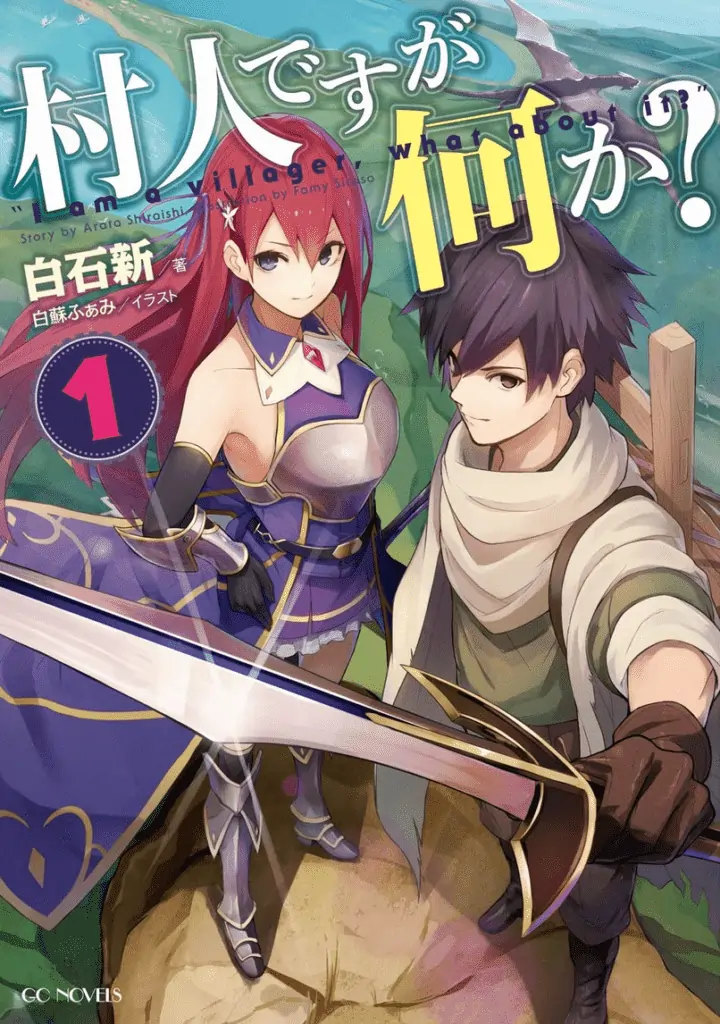
... Read More
There's something almost religious about how the author treats this dragon ritual, and I think that's the point. The dead dragon passing its power to the living one — it's basically a baton pass, a succession ceremony disguised as combat. 'A selection of the living people who are worth living for the next generation, carried out by the dead.' That line alone carries so much weight. It's about how strength isn't just hoarded or inherited passively; it has to be EARNED through struggle, through proving yourself worthy of carrying what came before you. The dragon breath that wraps around Lute like a magical barrier is almost symbolic too — fire that should burn him but instead protects him, because his magical power itself becomes the veil. And then the black monoliths arranged like Stonehenge around the altar… there's something deeply ancient about that imagery, like the whole labyrinth is a temple where life and death exchange hands. But the most powerful symbol, honestly, is the difference between dragon and human grief. The dragons treat this as sacred joy — ascension to godhood, the natural order — but Lilith cries because her HUMAN heart can't reconcile losing someone she loved with the idea that this is supposed to be HAPPY. The story seems to be asking whether there's a difference between accepting death as part of a cycle versus Accepting it as personal loss. And Lute's answer — letting her have her own funeral rite, her own moment to say goodbye as a human rather than forcing the dragon tradition on her — suggests that both can coexist. The ritual matters, but so does the tears.
... Read More
Okay, I need to just... sit with this scene for a second. Lute deciding to leave Cordelia and going to the Dragon Village to get stronger — on his own, without telling her — and the way she reacts is just EVERYTHING. She literally stomps her foot and yells at him with tears in her eyes, saying she doesn't want him deciding everything alone. And then HE just kisses her forehead and runs off? Like, what even is this man. But here's what got me: when he says "I said that I would definitely come back. So it's fine," and then the dragon asks whether that farewell is okay, and Lute just... smiles and says yes. He's lying to himself, isn't he? He knows he won't be back for years. And that single tear rolling down his cheek as the dragon flies away? Chef's kiss. Absolutely chef's kiss. The whole dynamic between these two is so layered. Cordelia calls him an idiot repeatedly but it's clearly because she's scared of losing him. And Lute, this guy who just solo-cleared 400 goblins while exhausted and covered in blood, is basically a softie who can't say no to her pouting. The line where he thinks "Ahh…… She is annoying after all, this girl…… For a long time…… she is really annoying" — that is NOT annoyance, bestie. That is pure love. I swear I re-read that entire goodbye sequence like four times. The way he hugs her, kisses her forehead, then ACTIVATES his Physical Strengthening and bolts before she can stop him? That's not cowardice, that's self-awareness. He knows if he stays one second longer he won't be able to leave. And Cordelia's final scream of "Even if you came back, I'm not speaking to you anymore!" — we both know she absolutely will be talking to him again. I just know it.
... Read More
There is a deeper theme running through this section that I think is worth examining. The underground labyrinth is explicitly described as a 'sacred sanctuary for the Dragon Tribe' — a place of trials where young dragons prove themselves. It is a symbol of tradition, of inherited meaning, of a world that operates on rules and respect. And then Lute arrives. A human with the profession of 'Villager.' He does not respect the sanctity of the place. He does not follow the unwritten rules of honorable combat. He sets fire to the wooden passages, collapses ceilings, and treats what the dragons consider a rite of passage as nothing more than experience points to be farmed. The line 'this underground labyrinth is a sacred sanctuary' followed immediately by Lute's arson is not accidental. The author is playing with the tension between institutional meaning and individual agency. The dragons built this place to test their young, to pass down wisdom through struggle. But Lute, as an outsider, sees only the loopholes. 'Even if they are aware of it, they won't dare to use it. That is why I, who is not a dragon, can do whatever I want.' This is the story's central question: does tradition deserve reverence just because it is traditional? Or can an outsider dismantle something sacred simply by not recognizing its authority? Lute is not doing this out of malice. He is doing it because, to him, this is just a dungeon. The symbolism is rich — the wooden walls representing fragile tradition, the orichalcum foundation representing the unbreakable core of the system, and Lute's fire representing the chaotic force of someone who refuses to play by rules that were never meant for him.
... Read More
I keep going back to the Cordelia scene. Like, on paper this kid is basically a sociopath—he's running an underground healing empire, hoarding ten million yen in a jar in the woods, and showing zero interest in normal childhood stuff. But then he gives her a white bread sandwich. Of COURSE that's the thing that bridges the gap. White bread is a luxury item in this world, basically impossible for a farmer's family to eat, and he remembered she likes it. And her reaction—puffing her cheeks, refusing to talk, then immediately taking it back five seconds later when he holds her hand—that's real kid behavior. Not performative. The way she says "I take back what I said" with a big smile while eating the sandwich? It's like she already forgave him before he even asked. There's this underlying warmth in their dynamic that catches you off guard when you've been bracing for cold calculation this whole time. Also the Bernard stuff hits different because you can see Lute's motivation isn't just power—it's protection. He's training so hard because he knows the world is dangerous. The orcs killed Bernard's family. He's preparing for something worse. That's the part that makes me genuinely care about him instead of just being impressed.

Leave a comment

You must be logged in to leave comments. or
