I Woke Up and Got Married - Reviews

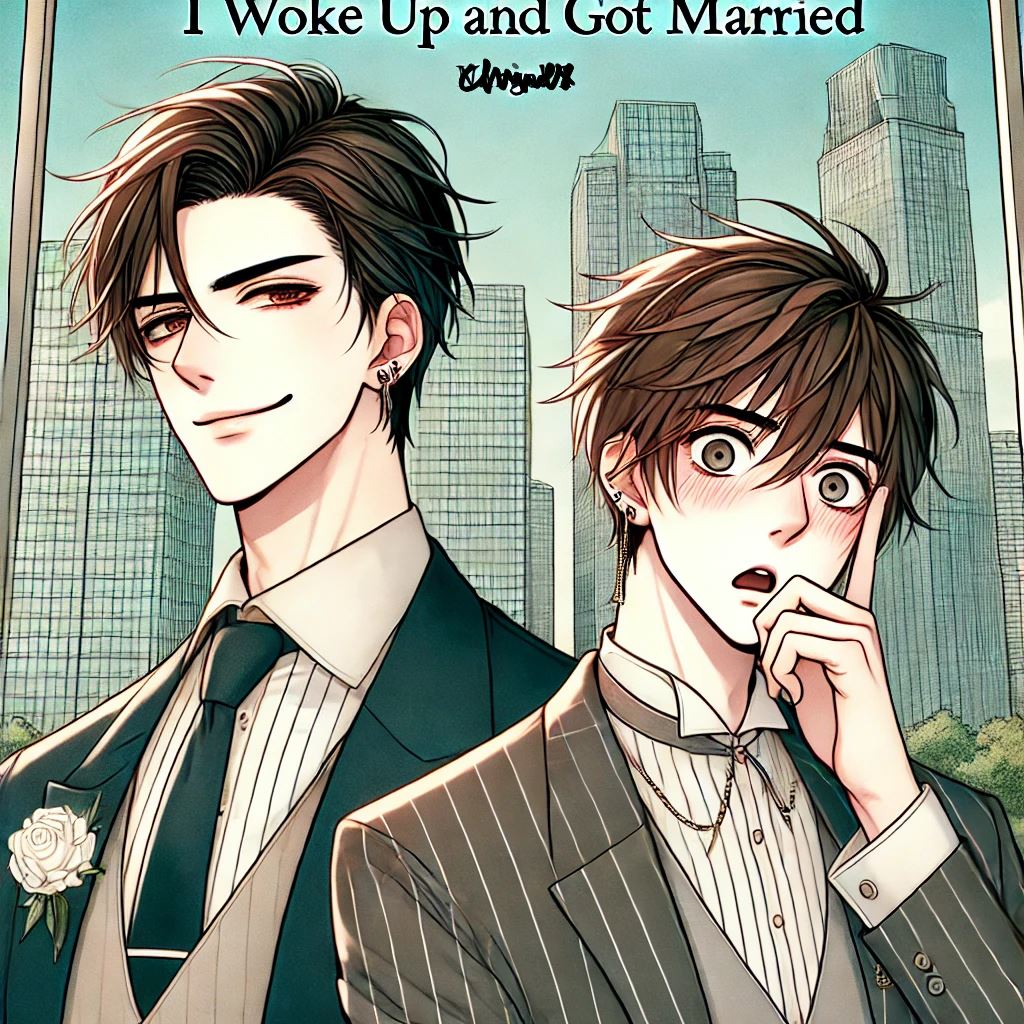
I Woke Up and Got Married
+Add to Custom List
Sort
Add review
... Read More
Okay so this chapter is pure drama fuel. We get Lin Weixing showing up with breakfast like he owns the place, only to be shut down by Lu Zhiyue in the most satisfying way. The scene where Lu Zhiyue just closes the door on him? Chef's kiss. It's clear Lu Zhiyue sees through Lin Weixing immediately - another love rival trying to get close. The tension between these two is insane. And then we cut to Lu Zhiyue handling business while still half-asleep. He's dealing with the factory production issues AND planning a team-building event all in the same morning? This man is a multitasking machine. Meanwhile Chi Suinian is just trying to exist peacefully and accidentally calls himself Lu Zhiyue's assistant in front of Uncle Pang. Classic comedic timing. The subplot with Lin Weixing asking Lu Heng for information is interesting too - it shows how persistent this guy is. He really isn't going to give up on Chi Suinian. But honestly, watching Lu Zhiyue handle this situation with such calm dominance was so satisfying. He didn't even raise his voice, just shut the door and that was it.
... Read More
Let's talk about how these characters actually speak because it is genuinely excellent. Chi Suinian's dialogue has this razor-edged economy to it — he says very little and every word is deliberate. 'Move your hand.' 'Not happening.' 'Hurry up.' That's it. Three words maximum most of the time. But it works because the author has given him a physical vocabulary that compensates: the scoff, the sneer, the curling lips, the tooth-grinding. His silence is its own voice. Lu Zhiyue is the opposite — he talks more, he prompts conversation, he toys with Chi Suinian like a cat with something it refuses to actually kill. 'Which side should I sleep on?' is a line that contains multitudes. It's innocent on the surface but absolutely loaded with subtext given everything we know about their dynamic. And then there's Lin Weixing, who functions as this comic relief valve but also has his own distinct rhythm — he's excited, physical, slightly chaotic, completely unaware of the tension he's walking into. His line 'You guys played the live-action battle game, right?' is delivered with genuine enthusiasm, not irony. Tang Jin's brief appearance is perfect in its minimalism — wheeled up, delivers one line about blocking Ye Xu, gets dragged away by Lu Heng. Everyone has a recognizable voice. The humor lands because it's character-driven rather than author-inserted. The bedroom exchange is basically a stand-up routine disguised as prose: Lu Zhiyue listing reasons he might need to stay on the floor ('If I get sick...', 'Do you think there are bugs...', 'Will you get up to use the bathroom...') and Chi Suinian's increasingly furious responses, culminating in the pillow throw and the legendary 'Shut up!' I laughed out loud. Twice.
... Read More
Every conflict in this passage is internally focused, which is honestly more stressful to read than any external threat. Chi Suinian has literally nothing at stake except his pride, and he's betting it on something he clearly isn't ready for. The core conflict: he claims he's not afraid, that if he hadn't been drunk last time the roles would be reversed, that he's in control. But every action betrays him. He turns off the lights because he can't handle being seen. He stays fully clothed because undressing would mean admitting what's happening. He tries to leave mid-act and gets pulled back. His body responds involuntarily and he explodes in anger at himself. "You're hard?" Chi Suinian exploded instantly. "Get off me!" That explosion isn't at Lu Zhiyue—it's at himself. He's furious because his own body is contradicting every lie he's telling himself about this arrangement. The stakes keep rising through micro-conflicts. First it's the couch versus the bedroom. Then it's the lights on versus off. Then it's fully clothed versus not. Then it's staying versus leaving. Each time Chi Suinian makes a choice that narrows his escape routes, and each time Lu Zhiyue gently but firmly removes another option until there's nothing left but surrender. But here's what makes it genuinely tense: we know Chi Suinian's going to lose this fight. He's going to end up exactly where he started—physically closer to the person he's trying to drift apart from. The real stakes aren't about sex, they're about whether he'll ever get to have the clean break he told himself he wanted.
... Read More
I keep going back to this line: "I've been chasing him for ten years." Not pursuing. CHASING. As in running after someone who keeps getting away. And before that—thirteen years ago, a confession that was fundamentally misunderstood. Every single attempt Lu Zhiyue has made to reach Chi Suinian has landed wrong. The tragedy here is enormous but it's also kind of beautiful in a painful way. Lu Zhiyue didn't lock himself up for three days after the accident to plan revenge. He came out of that three-day silence with a plan to deceive Chi Suinian... but not for malicious reasons. Because he couldn't bear the thought of losing him, even if it meant being the villain in his story. And then he gets drunk, hugs him, and his first conscious thought upon waking is joy—"Chi Suinian, with his face flushed, lying sweetly in his arms"—before the nightmare hits him awake with teeth-gritting curses in his sleep. Meanwhile Chi Suinian is at the police station at 4pm, no lawyer, handling his own family's crisis alone, still sharp-tongued and independent to the bitter end. These two are so profoundly disconnected from each other even when they're physically close.
... Read More
Okay can we just talk about what just happened because my heart rate is absolutely through the roof right now. "He even helped you bathe." Those five words from Qin Suitian made Chi Suinian's vision go dark. I literally gasped. The author dropped that information like a sledgehammer and I am not okay. Think about what this means from every angle. In the public eye, Lu Zhiyue is now the devoted, perfect husband who showed up at the hospital every single day during his partner's coma. The media reported on it — this isn't private, this is public narrative. If Chi Suinian files for divorce, the story paints him as the heartless jerk who abandoned his sick spouse. Lu Zhiyue gets to be the saint while Chi Suinian becomes the villain. How do you fight a narrative like that? But the bathing detail — that's intimate beyond measure. This isn't just "I visited him at the hospital." This is someone performing acts of extreme personal care to build their image. Whether it was genuine devotion or calculated manipulation, I can't tell, and honestly, that's what makes it so emotionally charged. Chi Suinian's reaction is perfect — pure disgust mixed with horror. He's trapped not just legally but emotionally in a web woven by someone he clearly didn't choose to be married to. And yet here's the thing that's got me theorizing: why did his previous self pursue Lu Zhiyue so relentlessly? What happened at that auto show? The emotional history between these two is buried under amnesia, and reading between the lines, something profound happened that changed everything. The CP dynamics here are absolutely delicious — power imbalance, secret motives, public performance vs private reality. And I'm completely invested.
... Read More
Zhao Yunzhen drops this information like it is nothing: Ding Xuxing's dad was in prison for intentional assault. Built his fortune starting on construction sites with a group of reckless young laborers who showed up at companies with hammers and steel rods to pressure payment deadlines. This is not a guy who sues people in court. This is a guy who breaks kneecaps. And Ding Xuxing himself — petty, vengeful, publicly humiliated Chi Suinian at a birthday party in front of dozens of people. Claimed Chi Suinian was being kept. Do you know how humiliating that is? And then Lu Zhiyue had to post that Weibo to defend him. The fact that Chi Suinian didn't even tell Lu Zhiyue about this when they got back shows how much he was carrying alone. Lu Zhiyue's reaction to all of this is fascinating. He immediately offers to hire a bodyguard, which is his version of taking care of someone. And when Chi Suinian scoffs and says "Who ambushes who is still up for debate" — that is either supreme confidence or supreme stupidity, and honestly I cannot tell which one this author is going for. Either way, the stakes have genuinely escalated here. This is no longer just about gossip and reputations. We are talking about someone whose father uses steel rods as negotiation tools. But what really made me sweat was Lu Zhiyue's memory of Ding's father at that business salon — skinny, wiry, sallow skin, eyes full of hostility, shifty and cold, always scheming. The man tried to start conversations several times and Lu Zhiyue brushed him off every time. Reading that now, I find myself wondering if Ding's father was already sizing someone up. Planning something. The tension between what is said and what is left unsaid in this entire scene is suffocating in the best way.
... Read More
The external conflict is simple—Lu Zhiyue confessed, Chi Suinian is processing, and neither of them knows what to do next. But the INTERNAL conflict here? Oh, this is where the real stakes live. Chi Suinian is facing something he's never had to confront before: a confession he can't reject, because his rejection hasn't worked in seventeen years. Think about that. Every time he's pushed Lu Zhiyue away, every cold look, every sharp word—he interpreted it as successful boundary-setting. And now he learns that Lu Zhiyue was actually interpreting those same rejections as confirmation that Chi Suinian wasn't interested. Their entire dynamic was built on a mutual misunderstanding so deep it became structural. The stakes are enormous because this isn't just about romantic feelings. This is about two people who have defined themselves in opposition to each other for nearly their entire adult lives. If Chi Suinian lets go of the hostility, what's left? If Lu Zhiyue stops provoking him, who is he without the chase? The question hanging over every scene is: can these two exist outside the framework of conflict they've built? Chi Suinian's attempt to normalize the situation by talking to Lu Heng is telling. He literally frames it as "a friend" having a problem. He can't even hold the reality of his own feelings yet. The fact that Lu Heng sees through it immediately—"you look totally helpless"—shows how transparent this actually is to everyone except the two people involved. The most terrifying moment for me isn't the confession reveal itself. It's when Chi Suinian closes his eyes and tries to recall their entire history of interaction, looking for evidence that Lu Zhiyue is just messing with him again. He's searching for the exit strategy. He's looking for a way to dismiss this. And the reader knows—before Chi Suinian does—that there is no exit. Lu Zhiyue's final line, offered casually as he pats Chi Suinian's head through a blanket like nothing happened, is the highest-stakes moment of all. He's betting everything on the idea that Chi Suinian will eventually understand. The赌注 (stakes) couldn't be higher, and yet he places the bet with the lightest possible touch.
... Read More
The opening line hits so hard on a re-read. "He was made of clay and would shatter from one fall." This image of Chi Suinian as fragile clay runs through the entire chapter like a dark current beneath everything. He literally jumps in front of a horse — an act of enormous courage — and his first thought afterward is that he's weak and would have ended up being a burden. The clay metaphor is his own internalized self-image, and the irony is brutal. But then there's the heartbeat motif. The text keeps returning to hearts — Chi Suinian's own heartbeat returning to normal, the unknown thunderous heartbeat he can't identify, Lu Zhiyue's heart pounding visibly or maybe just perceived through Chi Suinian's increasingly aware senses. The heartbeat becomes this symbol for the thing neither of them can name yet. It's anxiety, it's attraction, it's fear, it's care — all of it running beneath the surface like a second pulse. And the white horse itself — startled, wild, dangerous — mirrors their emotional state. Something has been triggered in both of them and now it's galloping somewhere neither can quite control. Lu Zhiyue trying to manage the horse while simultaneously managing his own panic about Chi Suinian getting hurt is a beautiful visual parallel. The three girls at the end asking if they're a couple? That's the external world finally catching up to what they've both been running from. The audience knows. The other characters know. Only the two protagonists seem unable to admit it out loud.
... Read More
Can we just take a moment to appreciate how differently these two men communicate? Chi Suinian's dialogue is all restraint. Short. Sharp. Defensive. "No need." "We can team up, but don't touch me. Otherwise..." "Get up. Come with me." "Just come. Stop talking nonsense." Every sentence is a boundary being drawn or reinforced. He's constantly managing the distance between himself and everyone else, verbally and physically. Lu Zhiyue? His dialogue is either completely flat and practical — "We're a four-person team, so we don't need a playmate. Thanks." — or it's the kind of thing that would make any reasonable person dissolve into the floor. He discusses tea DURING COMBAT. He pulls strangers into physical contact without asking. He has been described as having "no filter on his mouth" and the text treats this as both a endearing trait and an actual problem. The narrative voice itself is fascinating too. It slips into Chi Suinian's head pretty frequently — we get his internal commentary (cursing Lu Zhiyue for being insane, judging him for being scared of ghosts, feeling like he punched cotton). But it also gives us access to the outside perspective through the girls' gossip and Tang Jin's bafflement. Three distinct lenses on the same relationship, all with different tones. And Xu Qing's dialogue is perfectly calibrated as the straight man throughout — nervous, self-deprecating, constantly apologizing. He's the audience surrogate and he works.
... Read More
The dialogue in these chapters is one of those things you don't always notice until you step back and realize how good it is. Every character has a distinct voice, and more importantly, they sound different when they're performing versus when they're being honest. Tang Jin's voice is immediate and specific. He's loud, observational, physically expressive even in dialogue—'holy sh*t, are you insane?!' and 'I'm feeling it on your behalf!' These aren't just funny lines; they reveal a person who processes the world through his body and his mouth simultaneously. He's the friend who cares by being annoying, and that's exactly how his dialogue works. Even his silence—'Tang Jin shut up'—feels like an extension of his voice. Lu Zhiyue's dialogue is sparse but devastating in its economy. When he says 'That's not going to happen,' it's four words that carry the weight of an entire relationship history. He never explains, never justifies, never begs. His silence around Chi Suinian's delirium speaks louder than any declaration could. And the fact that Chi Suinian can't remember what he said in that vulnerable moment? That's the author using absence of dialogue as emotional data. Zhou Minru's voice is the most interesting study in performed warmth. She enters the scene with tears and soup and genuine concern, and for a moment, you believe her. But Chi Suinian's internal narration cuts through it—'It was obvious who had informed her.' Her dialogue shifts subtly after that realization. She becomes more pleading, more desperate, and when Chi Suinian says he's tired, she leaves quickly. Her voice changes when she's no longer performing the role of the caring aunt but becoming the mother of a criminal son. Chi Suinian himself is a masterclass in controlled dialogue. Short sentences. Deflections. 'Get lost.' 'No need.' 'I'm tired.' He says the minimum and means everything with it. Even his internal monologue is sparse and precise—never over-explaining, never wallowing. He's a person who has learned that words are dangerous and therefore hoards them.
... Read More
I need to talk about Uncle Zhang because honestly this man is the quiet MVP of the entire series and nobody gives him enough credit. The moment Chi Suinian starts dragging Lu Zhiyue upstairs and Uncle Zhang appears with honey water, Lu Zhiyue wiggles his fingers — just wiggles them — and Uncle Zhang immediately retreats. Retreats. Like he's been doing this dance before. Like he understands exactly what kind of private conversation is about to happen between these two and he's giving them space. This tiny gesture tells us so much about the Lu household dynamic. Everyone knows. The staff knows, Qin Suitian clearly suspects, and now we see that even the butler is complicit in protecting whatever fragile thing is happening between Chi Suinian and Lu Zhiyue. Meanwhile, Chi Suinian himself is this tangle of contradictions — furious at first, then physically exerting himself to carry a drunk man upstairs, sweating and annoyed the whole way, but never actually abandoning him. And then there's Ning Chen, who exists purely as a catalyst. He's warm, he's domestic, he's everything Lu Zhiyue isn't allowed to be in this moment. The fact that Chi Suinian has to literally drag Lu Zhiyue up stairs while thinking about how he's going to empty the wine cellar tomorrow — that's not hatred. That's something messier. Lu Zhiyue asking 'what about me' while half-conscious isn't manipulative. It's raw. And Chi Suinian's response — leaning down, gripping his chin, asking the question he's been avoiding — that's the most honest either of them has been in a long time. The power dynamic flipped so quietly I almost missed it.
... Read More
There's something so cinematically perfect about the opening scene of this chapter—the drive home in near darkness, the phone screen glow, Chi Suinian half-asleep on the passenger seat. The author doesn't need fancy descriptions to make you feel the atmosphere. You just KNOW this moment. The engine humming, the slow crawl of a car that could've made it in an hour taking three, the charged silence between two people who just had their entire dynamic upended. "Where are we?" "The garage. We're home." That exchange. That deliberate pause before Chi Suinian catches himself. The way the dark becomes a kind of confessional space where both of them say things they wouldn't dare say in daylight. And then the bedroom scene—the wall lamp casting cold light, the thermostat showing 19°C, Chi Suinian sitting cross-legged on the edge of the bed looking absolutely furious. These small details do so much work. The cold glow mirrors Chi Suinian's emotional state—cold on the surface, simmering underneath. The thermostat bit? Chef's kiss. Because of COURSE Lu Zhiyue checks it and deadpans "Yup, pretty warm." That's character-building through environmental detail right there. The contrast between the claustrophobic car and the intimate bedroom is no accident. Both spaces force proximity. Both spaces strip away the public performances these two have maintained for years. In the car, Chi Suinian falls asleep anyway—his body betraying his exhaustion, his guard finally down. In the bedroom, there's nowhere to hide. The flush on his ears, the way he pulls the blanket over his head like a turtle retreating into its shell—every physical detail maps onto an emotional landscape. And Lu Heng's pool hall scene afterward? Sudden shift in lighting, sound, social energy. The interruption of the flirty couple, the jab of the cue ball. It's a completely different world—public, loud, casual—and yet it's where Chi Suinian tries to make sense of the most private, vulnerable moment of his life by framing it as someone else's problem. The settings in these chapters aren't just backgrounds. They're emotional containers.
Leave a comment

You must be logged in to leave comments. or
