I Woke Up and Got Married - Reviews

I Woke Up and Got Married
+Add to Custom List
Sort
Add review
... Read More
I cannot stop thinking about their dialogue. The way they banter is so natural, so alive, it reads exactly like two people who know each other really well but are still navigating something new between them. Chi Suinian: 'Do you even understand what it means to be brave and righteous? I didn't twist my ankle on purpose.' Lu Zhiyue: 'The kid had a coach right next to him. You took over someone else's job, got yourself injured, and still think you were heroic?' This is NOT a romantic response. This is a MAN who is clearly furious but doesn't know how to say 'I was terrified and I thought I was going to lose you' so instead he critiques your heroics. And Chi Suinian, bless him, doesn't even realize it. He just sits there accepting the verbal dressing-down. But then later when he brings up the carrying situation: Chi Suinian: '...But you didn't have to carry me out like that. It was really embarrassing.' Lu Zhiyue: [reaches out as if to pick him up again] THE SUBTEXT IS SCREAMING. And then the wallpaper revelation — Lu Zhiyue saying 'Unless we take a new one?' as if it's a completely reasonable follow-up to having a photo of someone flailing over his shoulder as his phone background. His line delivery in this entire chapter is so flat and dry it's honestly comedic. 'Don't move.' 'And fall again?' 'Don't be stubborn.' Three sentences. Three masterspells of low-key domination. And Chi Suinian's voice is just perpetual exasperation wrapped around something softer, and the interplay between them is everything.
... Read More
I need to talk about the nightmare sequence because it is genuinely the most emotionally compact scene in these chapters and it wrecked me in the funniest way. Chi Suinian doesn't just have a bad dream about Lu Zhiyue. He has a recurring, sleep-destroying nightmare where Lu Zhiyue's voice echoes in his head like, "kiss me once." Once. That's it. That's the threat. That's the demand. And somehow that's more terrifying than any ghost story because it's so casually cruel—it's Lu Zhiyue being Lu Zhiyue, treating Chi Suinian's autonomy like a bargaining chip. The morning after, Chi Suinian looks like he witnessed a crime scene. Tang Jin is genuinely frightened. "What's wrong with you? You've been losing your temper a lot lately. Who pissed you off? Just tell me—I'll break every bone in their body!" And Chi Suinian says, deadpan: "Lu Zhiyue." Then when Tang Jin asks what he'd need the bones for, he replies: "Crush them and make tea." Tang Jin, a loyal friend who clearly cares deeply, responds with the only sane reaction possible: "Don't joke like that. Seriously." This is the kind of dark humor that comes from genuine emotional exhaustion. Chi Suinian isn't just angry—he's hollowed out. He can't even access clean anger anymore, it's all mixed with sleep deprivation and the memory of being manipulated. And then the birthday party happens, and Lu Zhiyue decides to make it worse by performing affection publicly. Everyone around them is clapping, saying things like "you two really are the perfect couple!" while Chi Suinian sits there looking like he'd rather be anywhere else. The crowd doesn't see the tension. They don't see the bloodshot eyes or the clenched fists. They see a romantic display and they eat it up. But Lu Zhiyue hesitates. WHEN SOMEONE ASSES WHAT HE LIKES ABOUT CHI SUINIAN, HE HESITATES. The crowd perks up, Chi Suinian tenses up, and then Lu Zhiyue says... "I like the watch he gave me." The most material, deflecting, perfectly Lu Zhiyue answer imaginable. He can't—or won't—say anything real. And Chi Suinian, who was steeling himself for romantic nonsense, probably doesn't know whether to be relieved or more frustrated.
... Read More
That moment when Qin Suitian says "your husband" and Chi Suinian's hand TREMbles and he SPILLS the wine—this is the emotional climax of these chapters and I could NOT recover. The wine itself is such a loaded image. Bright red, expensive vintage, swirling between two fingers. And then it's just... everywhere. On the table. Like his carefully composed life falling apart in real time. The glass slamming down, his face going dark and stormy—literally and figuratively, because the storm outside is matching the one inside. What makes this so devastating is that Chi Suinian hadn't even told Qin Suitian about the amnesia yet. He's been carrying this enormous secret alone, pretending everything is fine, and the second someone casually mentions needing to BORROW MONEY from Lu Zhiyue, he completely breaks. Not into tears, but into violence against objects. That's how much this hurts. And the worst part—the absolute worst part—is that this IS the only solution. He has to go to the person whose face gives him a toothache and ask for money. His pride, his dignity, his entire sense of self-worth is on the line. And Lu Zhiyue? He's probably sitting somewhere in his perfect apartment knowing exactly what it will take to get Chi Suinian to come crawling back. I'm not okay. This hurt.
... Read More
The dialogue in this chapter is absolutely vicious and I mean that as the highest compliment. These two people cannot have a single conversation without it functioning as a wrestling match, and the author writes their exchanges with the precision of someone who understands that what people refuse to say is often louder than what they do. Take this exchange: "If you dare say 'offer yourself to me,' I'll beat you to death." "That's what you thought of?" "You were expecting me to ask for that?" Chi Suinian immediately jumps to the sexual interpretation because that's his defense mechanism—he turns every vulnerability into a joke so he never has to sit with the actual feeling. And Lu Zhiyue? He catches the deflection instantly, plays along, and then pivots to something real so casually that Chi Suinian doesn't even have time to brace. That's masterful character voice. Each line tells us everything about who these people are. The casual register throughout is deceptive. On the surface, it reads like banter between people who are comfortable with each other. But read it closely and you'll find the tension in every other sentence. When Lu Zhiyue says "Relax, I didn't mean it that way" after Chi Suinian threatens him with violence, there's genuine fondness underneath. He's not offended. He's delighted. The man WANTS the chaos. And the narrative voice—oh god, the narrative voice. It slides between Chi Suinian's POV and omniscient observation with such natural ease that you forget you're being guided. The aside about "anyone who went out in this weather had to be either a god or an idiot" is pure character insertion, that brief comedic beat that makes you feel like the narrator is standing right there judging the weather alongside you. The author knows exactly when to let silence do the work. The ellipses. The "……" That's not lazy writing. That's trusting the reader to feel the weight of unspoken things.
... Read More
Okay so let me just say — this chapter had me emotionally wrecked and I'm not even mad about it. The whole setup with the white horse going crazy is basically classic tension-building 101, but the execution was *chef's kiss*. Chi Suinian doesn't hesitate. Like at all. He just sees the kid and goes. No internal monologue about whether he should, no dramatic pause for effect, just pure instinctual action. And then immediately afterward he's like 'clearly I'm not cut out to be a hero, my body is too weak, I'd just end up being a burden.' Oh honey, you literally just dove in front of a galloping horse and told yourself you were useless. The narrative is really playing with this whole theme of Chi Suinian's self-perception versus reality and it's giving me LIFE. Then Lu Zhiyue comes running after him with this look on his face that the text describes as 'rare and unfiltered anger' and I was immediately suspicious. Suspicious in the best way. Because obviously this isn't anger — or at least, not just anger. It's something messier than that. The author has this gorgeous way of layering plot beats on top of emotional beats so you can't separate them. The horse incident creates a physical consequence (the sprained ankle) which then becomes the excuse for Lu Zhiyue to carry him everywhere, which escalates the romantic tension, which then explodes when we find out about the wallpaper photo. Every single plot point in this chapter serves at least two narrative purposes and I am here for it.
... Read More
Okay so the Xiaoyaoke setting was actually kind of perfect for this whole chapter. Like, I get why Chi Suinian chose the biggest entertainment venue in Jin City - he wanted chaos to drown out his thoughts after that Chi Kaidong encounter. The author really nails the atmosphere here. 'The place was packed, and there were some unfamiliar faces' - immediate sense that this is a place where everyone knows everyone else but some people still don't fit in. And that transition from the company to the car to the bar felt so natural, like you're actually moving through this world with him. The detail about Lin Qi almost losing his job because his boss is going to a nightclub? That's the kind of specific, lived-in worldbuilding that makes me feel like this place actually exists. Plus the perfume comparison - 'used to Lu Zhiyue's faint pine scent, he had grown extremely sensitive to any other perfumes' - wow, just wow. The author uses sensory details to show emotional history without explaining it outright. This is how you build a world that feels alive.
... Read More
I need to talk about this entire confrontation scene because honestly it was one of the smoothest power moves I have ever read. Chi Suinian just walks into the lion's den, Father Ding throws money at him like it's 1995, and instead of crumbling or getting angry, he casually drops these vague hints about shady dealings and competitive reporting and tax evasion—none of which he actually has proof of—and Father Ding literally loses his mind. The fact that Lu Zhiyue later confirms he was completely bluffing made me laugh out loud. He asked Qin Suitian to investigate and barely got anything, then just started throwing darts in the dark and hit a bullseye. That is some next-level confidence. It also raises a really interesting plot question: does Chi Suinian's amnesia make him reckless in this way, or is this just the real him finally freed from whatever held him back before? The Ding family subplot feels like it's setting up something bigger—a corporate war that's about to explode. And the dream sequence at the end with the desert and the giant snake? That felt like the author deliberately inserting a plot twist inside his subconscious, foreshadowing danger that Chi Suinian isn't even consciously aware of yet.
... Read More
I need to just — can we talk about Lu Zhiyue for a second because this man is fascinating and terrifying in equal measure? His line 'Who let you come here?' is delivered with such jealous, possessive energy that I literally stopped reading and stared at my phone. And Chi Suinian's internal reaction is everything: 'Listen to this jealous, possessive tone—did Lu Zhiyue think he was somebody special?' Oh honey, you little oblivious disaster. But here's what gets me — Lu Zhiyue doesn't ask, he doesn't negotiate. He just grabs Chi Suinian's wrist and says 'Come home with me' and when Chi Suinian struggles, he literally hoists him over his shoulder. This is a man who operates on pure instinct and占有欲, and honestly? I'm here for it. Meanwhile Chi Suinian — bless his heart — is too drunk and physically weakened to actually do anything about it. Remember when the text says 'If this were before the accident, Chi Suinian would've broken free easily. But now his body was pathetically weak'? That contrast is killing me. He's still fighting with his words even though his body has betrayed him. And Lu Heng and Tang Jin are just sitting there watching this whole circus unfold. Tang Jin worried about his stomach, Lu Heng too embarrassed to intervene. The friend group dynamics are so natural and funny. Lu Heng's KTV incident backstory also tells us SO much about how intense this love triangle situation is. Who is this girl anyway? I need answers.
... Read More
The pacing in these opening chapters is absolutely relentless and I am here for it. Let me walk through how the author constructs this narrative pressure cooker. Chapter structure-wise, we start in media res—Chi Suinian already awake, already weak, already annoyed. No boring rehabilitation montage, no slow build. We're thrown into his disorientation immediately with details like his arm trembling while scooping rice porridge, which does double duty: establishes his physical vulnerability AND his irritability in one vivid image. Efficient storytelling. Then Tang Jin drops the first bomb: Lu Zhiyue is coming. Small stuff. We think, oh, more rivalry nonsense. Then the second bomb: they're married. By this point I'm already re-reading paragraphs. The author uses Tang Jin as a comic relief valve between revelations—chip-eating, gawking at nurses, making inappropriate jokes—which actually makes the serious moments hit harder because the tonal whiplash works so well. The doctor scene is where things get structurally clever. We get exposition about the amnesia, but Chi Suinian's internal monologue immediately contradicts it—he remembers the car crash, knows it was minor, knows he crashed because of the sports car incident with Lu Zhiyue. This creates dramatic irony: the reader knows he doesn't believe the diagnosis, which means we're watching him navigate a world that's lying to him. That's a fantastic narrative position to put a protagonist in. And the ending? Lu Zhiyue walks in. Cold voice. Reaches for his hand. Chi Suinian dodges. The assistant says the word "Madam." The assistant calls him "Madam." The chapter ends mid-reaction—"Chi Suinian clenched his fists, barely holding back the urge to thro"—and cuts off. I am literally shaking with the need to know what happens next. The cliffhanger isn't cheap; it's earned because every beat leading up to it has been building this suffocating sense of dramatic irony and emotional tension. This is professional-grade web novel pacing. The author never lets the reader breathe for too long but also never rushes through emotional moments. Each revelation lands with weight.
... Read More
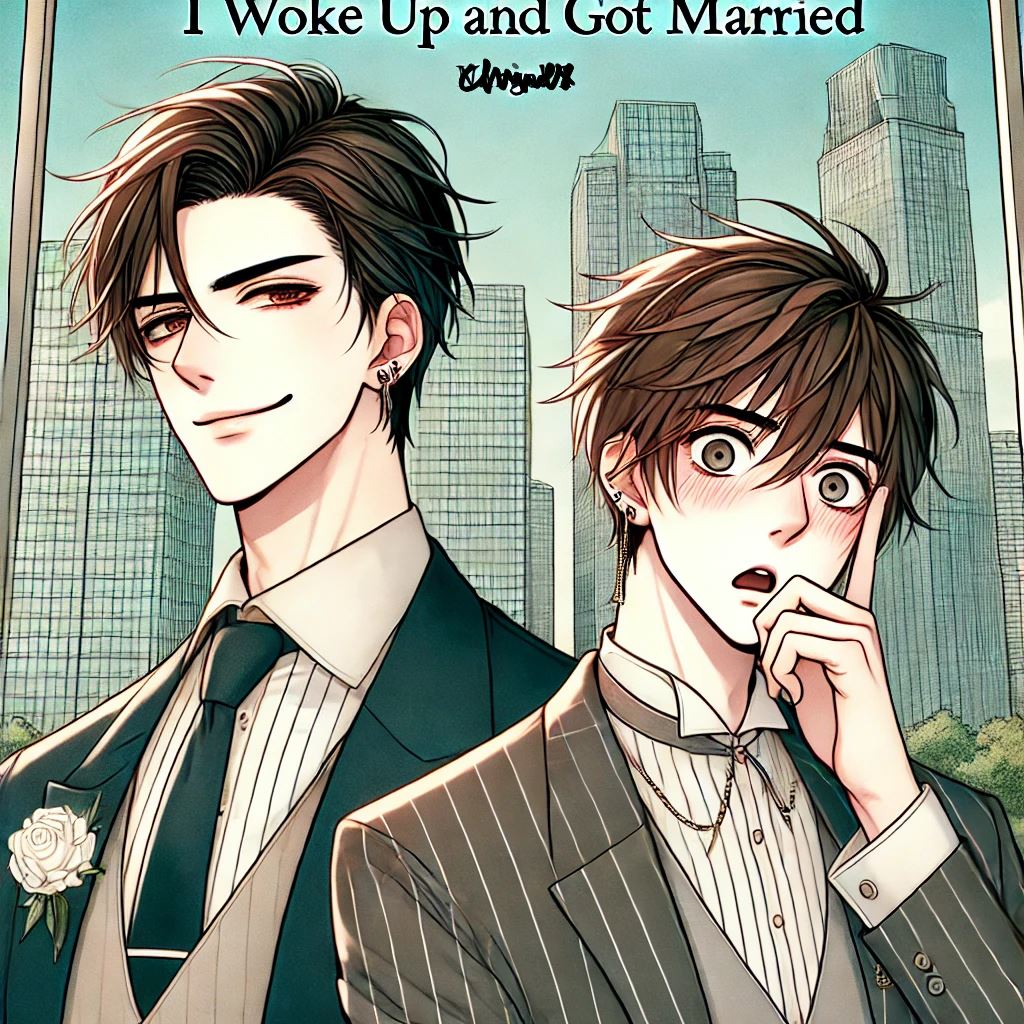
Let's talk about how this chapter sneaks up on you. It starts SO casually — buying milk tea, settling into a movie, the mundane stuff. You're like okay this is a slice-of-life date scene, no big deal. And then Chi Suinian starts spiraling internally, wondering when Lu Zhiyue began developing feelings, and the whole thing tilts. By the time Lu Zhiyue leans in, you're already breathless because the author spent 800 words building this slow, simmering pressure and then RELEASES it all in one move. The structure is basically: Act 1: Mundane setup (milk tea, sitting down, watching a movie nobody's actually watching) Act 2: Internal panic (Chi Suinian's thoughts spiral, he catches himself staring, the swallowing, the almost-confession) Act 3: Physical escalation (the lean-in, the first kiss, the intense second kiss, the aftermath) Act 4: Comedic deflation (friends wake up, the hand-holding reveal, Lu Heng being an absolute menace with "what happened to your mouth") That fourth act is crucial. Without it, the chapter would just be... heavy romance content. But the author slaps in Lu Heng and Tang Jin like a comedic emergency brake, pulling you back from the intensity and making you laugh at the same time. And then the cliffhanger — Chi Suinian's mouth is swollen, his friends are catching on, and we know something bigger is coming. The blood test. The hospital visit. Whatever Chi Suinian is hiding. The chapter ends not with a romantic high but with impending doom disguised as a casual dinner invitation. The pacing here is really tight. No filler, no wasted beats. Every paragraph either deepens the romance or advances the mystery. That's how you write a chapter that makes you immediately open the next one.
... Read More
Okay so let me just process this for a second because my entire understanding of the past decade has been shattered like a dropped wine glass. Xu Lingtang has been sitting there thinking Lu Zhiyue is some calculating manipulator, right? Planning some elaborate revenge plot after Chi Suinian's accident. And then—bam—Lu Zhiyue just casually drops that he confessed thirteen years ago. Thirteen. Years. Ago. In the school cafeteria. During detention cleaning a pond. WHICH TO EVERYONE ELSE INCLUDED CHI SUINIAN, sounded like pure provocation. This is the kind of plot twist that makes you slam the book shut and just stare at the ceiling. The author planted all these breadcrumbs about their ten-year bickering history, about how Lu Zhiyue always tolerated and spoiled Chi Suinian without ever arguing back, but we (and Xu Lingtang) interpreted it as scheming. It was actually decade-long unrequited devotion that got misread as hostility at every single turn. And now Chi Yu is arrested, and Chi Suinian is at the police station, and Lu Zhiyue is too scared to go home because he hugged him while drunk and got yelled at in his sleep. The plot is converging from so many directions at once.
... Read More
On the surface, this scene is a comedy of errors — two men accidentally outed as married, an overzealous uncle, a jealous third party. But read deeper and there's a persistent theme about performance versus authenticity running through every interaction. The central symbol is the marriage itself. Lu Zhiyue's marriage to Chi Suinian exists in a gray zone — is it real? Is it a convenience? A arrangement? A genuine love affair disguised as something else? The text deliberately keeps this ambiguous, and that ambiguity IS the point. The theme isn't 'what IS their relationship?' but rather 'why does it matter what anyone else thinks it is?' Pang Mingda represents the social gaze — the need to categorize, to name, to fit people into legible boxes. 'Who's the lucky girl?' He can't process a same-sex marriage without a moment of surprise, and even then he falls back on heteronormative assumptions ('lucky girl'). Lu Zhiyue's responses are simultaneously honest and performative — he gives Pang Mingda enough truth to satisfy but enough theatricality to maintain control. The wedding plans that emerge from nowhere become a symbol of societal expectations pressing in on a private relationship. Elders wanting to celebrate, traditions demanding ceremony, the public acknowledgment of something that may have been chosen specifically to exist outside those frameworks. Then there's Lin Weixing, who embodies a different kind of gaze — one tinged with personal desire and confusion. His dissonance when seeing their physical closeness is the reader's dissonance reflected back. He can't reconcile what he knows (they're married, therefore straight) with what he sees (the intimacy between them doesn't fit that category). The most telling symbolic moment: Lu Zhiyue rubbing his fingertips where Chi Suinian's waist had been. Touch as memory, touch as evidence of a reality that exists only between two people and cannot be performed for an audience. In a scene full of social performance, that tiny gesture is the only honest thing that happens.

Leave a comment

You must be logged in to leave comments. or
